Clickbait Checker
The video title says:
"Stanford's Top AI Economist: The Next 10 Years Will Be the Best AND the Worst in History"
Reality:
The title accurately reflects the episode's discussion of potentially contrasting outcomes (best vs. worst) for the next decade due to AI’s impact, though it leans towards sensationalism.
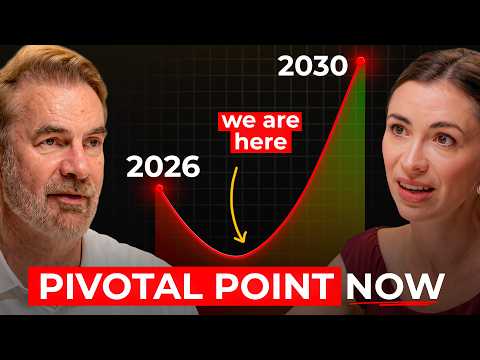
The thumbnail says:
"2030 AI POOR VS AI RICH 2026 WIN WITH AI NOW"
Reality:
The thumbnail's promise of 'winning with AI now' to avoid becoming 'AI poor' by 2030 is a significant oversimplification and misrepresentation of the episode's nuanced discussion about adaptation, education, and potential wealth redistribution strategies; it implies a simple solution where none exists.
AI Opinion
The episode convincingly argues that AI’s impact on employment will be uneven, disproportionately affecting young workers and potentially creating a “diamond” workforce structure with fewer junior roles—a point supported by data on entry-level job declines. However, the claim of the next decade being either humanity's "best or worst" period relies more on speculative projections than concrete evidence, and the discussion of wealth redistribution policies like universal basic income lacks specific implementation details. Listeners should critically evaluate predictions about future job creation and consider that the pace of AI adoption, as well as its ultimate societal effects, remains subject to considerable uncertainty.
Avatars are AI rewrites of the same facts — style changes, not substance.
Summary
The next decade presents a potentially bifurcated future, with artificial intelligence poised to be either the best or worst period in human history depending on societal adaptation. Recent data indicates AI is already impacting young workers, causing a decrease of approximately 16% in entry-level jobs. While full automation can lead to job displacement, augmenting work with AI demonstrates increased productivity and security. The evolving landscape necessitates shifts in education, exemplified by Stanford’s integration of coding practices utilizing tools like Replit, and workforce strategies, such as Infosys' focus on training and project management rather than routine tasks. Experts predict a “diamond” shaped workforce structure if junior roles are eliminated without adequate replacement, highlighting the need for investment in education and retraining programs. While job displacement is inevitable, new opportunities will emerge, though predicting their nature remains challenging. Ultimately, human improvisation and adaptability will be crucial, alongside proactive measures to address potential wealth concentration through strategies like universal basic income and progressive taxation, while embracing AI as a collaborative tool rather than a complete replacement for human expertise.
Avatars are AI rewrites of the same facts — style changes, not substance.
Key Points
The Dual Nature of AI's Impact - Best vs. Worst Decade
Stanford economist Eric predicts the next decade could be either the best or worst in human history, depending on how effectively society adapts to advancements in artificial intelligence. This hinges on proactive measures and responsible implementation of AI technologies, as the potential for disruption is significant.
AI's Disproportionate Impact on Young Workers
A recent paper, "Canaries in the Coal Mine," reveals that AI has already led to a 16% decrease in entry-level jobs for individuals under 25. This impact is concentrated within occupations deemed 'most exposed' to automation, highlighting a potential challenge for young people entering the workforce.
AI Augmentation vs. Automation - A Key Differentiator
The study found that individuals using AI to *augment* their work, rather than automate it entirely, performed significantly better. This suggests a strategic approach where humans and AI collaborate can lead to increased productivity and job security, contrasting with the negative effects seen when AI fully replaces human tasks.
The Shifting Landscape of Coding Education
A notable shift is occurring in coding education at Stanford University. Students are now required to incorporate running code into their projects, demonstrating how rapidly AI tools like Replit and Cloud Code have transformed the skillset needed for even introductory programming roles.
The Evolution of Learning
The traditional 'cookbook' approach to learning, where students follow step-by-step instructions, is becoming obsolete. The new model emphasizes presenting unstructured problems and encouraging learners to identify core questions and develop solutions independently. This shift requires a combination of technical skills, problem understanding, and domain knowledge for optimal value creation.
The Infosys Approach to Workforce Adaptation
Infosys is proactively addressing the displacement of junior roles by shifting their focus towards training and project management. Instead of routine tasks handled by LLMs, junior employees are now engaged in learning broader skills and gaining experience. This approach acknowledges the need for a pipeline of experienced talent to fill senior positions.
The 'Diamond' Workforce Structure
When companies eliminate junior-level roles without adequately preparing replacements, the traditional workforce pyramid transforms into a diamond shape. This creates a structural imbalance and highlights the need for societal solutions like public investment in education and training to ensure job creation and skill development.
The Inevitable Job Displacement
The speaker emphasizes that AI is already causing significant job displacement, citing 'canaries data' as evidence. While acknowledging the negative impact, he stresses that this is only part of a larger narrative involving the creation of new jobs and opportunities driven by technological advancements.
The Unpredictability of Future Job Creation
The speaker emphasizes that predicting the future is inherently difficult, as historical attempts to foresee societal changes consistently underestimate unforeseen developments. He uses the example of imagining a conversation two centuries ago where predictions about the disappearance of farmers due to automation would have failed to account for the emergence of entirely new professions like podcasters and other modern jobs. This highlights the crucial role of entrepreneurs in creating these unexpected opportunities.
The Role of Risk-Taking and Ecosystems in Innovation
A venture capitalist's experience, shared during brunch, illustrates the high-risk nature of innovation. She revealed that a significant portion of her investment portfolio (around 5-10%) generates most of the returns, while the majority fail to yield profit. This underscores the importance of an ecosystem where entrepreneurs and investors are willing to take risks and experiment with new ideas, as exemplified by Silicon Valley's culture.
Human Improvisation as a Key Advantage in the Age of AI
Drawing on Reed Hoffman’s insights, the speaker identifies 'improvisation' as a core human superpower. While machines excel at defined tasks, humans possess the ability to adapt and solve unexpected problems that arise. Hoffman used an analogy of a chess game where a human facing a superior AI might win not through skill but by creatively disrupting the conditions of the match – like introducing a virus or causing a distraction.
The Potential for Wealth Concentration and Need for Redistribution
The speaker expresses concern about AI-driven automation leading to concentrated wealth, potentially exacerbating existing inequalities. He acknowledges that this outcome isn't inevitable but emphasizes the need for proactive measures to ensure shared prosperity. He suggests considering redistribution strategies like universal basic income and progressive taxation as potential safeguards against extreme economic disparity.
Interactive Prompting for Personalized AI Use
The speaker suggests a meta approach to leveraging AI by directly asking it how it can be useful. This involves prompting tools like ChatGPT or Claude with questions such as, 'Tell me how you can be useful to me and ask me questions,' even requesting an interview format. The AI will then generate personalized recommendations based on the user's job, family situation, and concerns.
AI as a Collaborative Tool, Not a Replacement
The speaker emphasizes that while AI can be helpful, it shouldn’t completely replace human judgment, particularly in critical decisions like medical consultations. They advocate for a partnership model where AI provides suggestions and data analysis, but the final decision remains with a human expert. This collaborative approach allows leveraging AI's strengths while mitigating its limitations.
AI Accelerates Research Cycles
The speaker illustrates how AI, specifically Claude, has dramatically accelerated their research workflow. Previously, a routine process involving grad students and weekly meetings now takes place in minutes with AI providing data analysis and insights. While acknowledging potential drawbacks compared to human interaction, the speed and access to diverse datasets offered by AI significantly enhance productivity.
The J-Curve of AI Adoption
The speaker references the 'J curve' concept, explaining that despite technological advancements, the full economic and societal impact of AI is often delayed. While breakthroughs are already occurring in medicine and other fields, widespread transformative effects may not be immediately apparent. They predict significant change by 2030 but acknowledge a gradual progression towards realizing AI’s potential.
Chapters
Claims & Fact Check
The next decade could be the best or worst in human history.
AI has already wiped out 16% of entry-level jobs for those under 25.
AI is leading to falling employment for coders.
Junior software engineer positions are disappearing due to AI.
Companies that don't adapt their workforce strategies will be negatively impacted.
Paralegal roles are highly susceptible to automation.
AI will automate a lot of work, a lot of jobs.
Creating value is the most important thing people can do to participate in a changing economy.
We need to have things like universal basic income and progressive income taxes.
Silicon Valley friends are going to yell at me for suggesting wealth taxes.
AI has not yet had the expected economic impact.
Significant transformative effects from AI are expected by 2030.
We are turning a corner in AI adoption, indicating progress out of the 'J curve' dip.
Was this digest good?
More from Silicon Valley Girl
Digest any single YouTube video — free.
3 free digests — no card, no sign-up wall.
Or just swap the domain of any YouTube link → instant digest