Clickbait Checker
The video title says:
"Thoughts Your Therapist Has, But Doesn't Tell You"
Reality:
The episode does cover thoughts and techniques therapists use but rarely share, such as admitting to being unable to help some patients and the shift from 'I' to 'we', which aligns with the title's promise of revealing unspoken therapist perspectives.

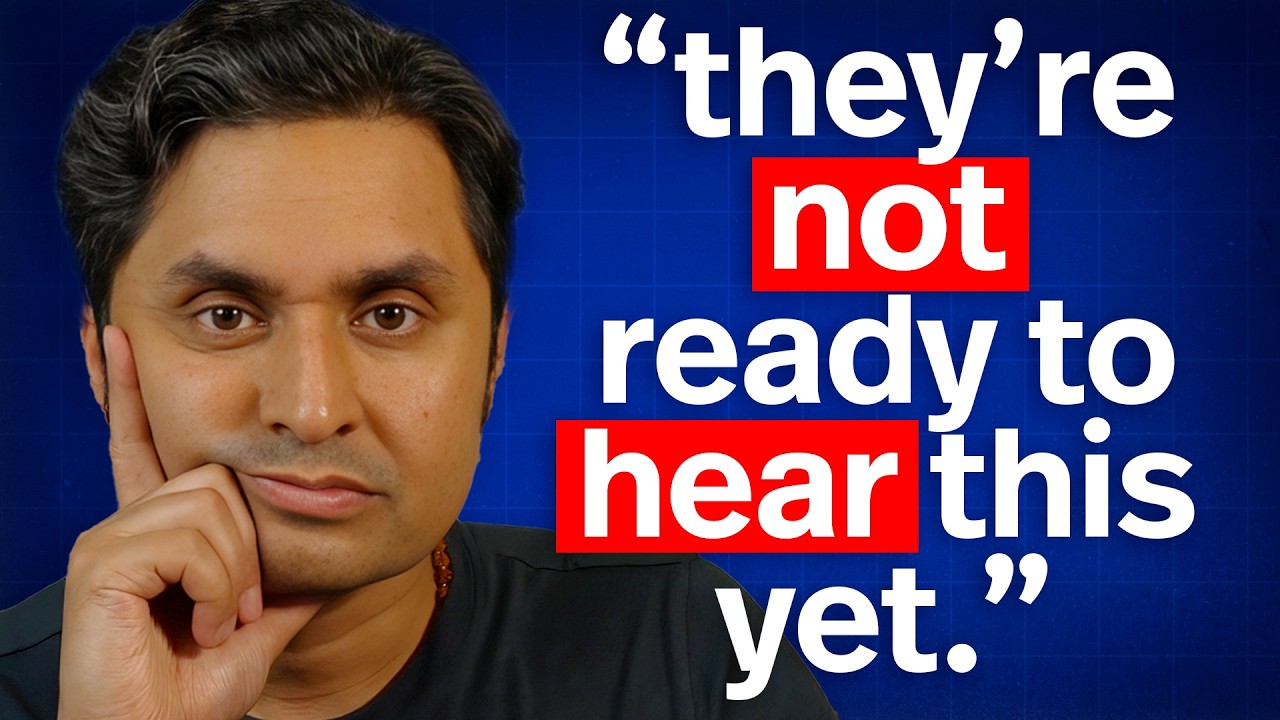
The thumbnail says:
""they're not ready to hear this yet.""
Reality:
The thumbnail's claim that audiences are 'not ready to hear this yet' is overstated, as the episode presents standard therapeutic concepts like reflective listening and depression as anger turned inward, which are not particularly shocking or beyond common understanding.
AI Opinion
The episode most convincingly argues that therapy must move beyond venting to pattern analysis, using Lamar's case to show how cumulative treatment failures can embed a hopelessness that makes standard approaches ineffective. Its claim that only three out of 500–1,000 patients were unhelpable is striking but rests on the therapist's self-report without independent verification or a clear definition of "unhelpable," leaving room for bias. Thoughtful viewers should double-check whether the therapist's framing of depression as "anger turned inward" and the notion that patients won't notice improvement are supported by broader clinical consensus, as these assertions are presented as universal truths rather than debated theories.
Voices are AI rewrites of the same facts — style changes, not substance.
Summary
A psychiatrist explains that effective therapy goes beyond simply venting; it involves analyzing patterns and themes in a patient's life. Using a case study of a veteran named Lamar, the episode explores how repeated treatment failures and a sense of systemic betrayal can create a deep-seated hopelessness. Lamar's severe PTSD, exemplified by sleeping in a closet for six months, illustrates a profound inability to reintegrate into civilian life. The therapist demonstrates techniques like reflective listening to validate the patient's experience and planting seeds of curiosity rather than giving direct answers. A critical moment in therapy is identified when a patient shifts from using "I" to "we," signaling a partnership. The therapist admits to being unable to help only three out of 500 to 1,000 patients, framing this as a challenge to the patient. The discussion delves into the psychological shift from thriving to mere survival when hope is repeatedly punished, and references the idea that depression is anger turned inward, with its expression seen as a step toward healing. The episode concludes by showing the therapeutic technique of mirroring a patient's state when they close off after opening up.
Voices are AI rewrites of the same facts — style changes, not substance.
Key Points
Therapist's Core Message: Therapy Is Not Just Venting
The psychiatrist explicitly agrees that simply talking about feelings once a week is not helpful. He distinguishes supportive psychotherapy from the real goal of therapy, which is to analyze patterns and themes in a patient's words and behavior. He uses a play-by-play analysis of a Jubilee video featuring a veteran named Lamar to demonstrate how therapy works in practice.
The 'Conclusion' Mindset and Cumulative Failure
Lamar's opening words, 'this is like the conclusion,' reveal a belief that nothing can change. The psychiatrist highlights this as a critical theme. He explains that each failed treatment (medication not working, being categorized) builds a narrative of failure, where Lamar feels blamed and labeled. This creates a sense of hopelessness and being 'left behind' after military service.
Lamar's Severe PTSD Symptoms: Sleeping in a Closet
Lamar describes that after only one week of adjustment to civilian life, he began sleeping in a closet for six months. The psychiatrist notes that this is a severe impairment, far beyond what most veterans experience, indicating a profound inability to live a normal life. This symptom is presented as a key indicator of the depth of Lamar's trauma and difficulty reintegrating.
Reflective Listening as a Therapeutic Technique
The psychiatrist demonstrates 'reflective listening' by repeating Lamar's story back to him, summarizing the sequence of events: trauma from the Marines, failed treatments, and being bucketed. This technique validates the patient's experience and helps the therapist identify underlying themes. It is presented as a core skill for understanding patients beyond their literal words.
Therapist's struggle with knowing when to give up on a patient
The therapist admits he doesn't know when to stop trying with a patient who isn't improving. He asks whether to give up after 2 years or wait 3 years in case things turn around. This highlights the uncertainty therapists face about persistence versus futility in treatment.
Planting seeds of curiosity instead of giving direct answers
When asked if he can help hopeless people, the therapist avoids a direct yes/no answer. Instead, he reframes the question to make the patient think about when to stop trying, using the example of 2 vs 3 years. This technique aims to shift the patient from skepticism to curiosity, opening them up to new perspectives.
The critical shift from 'I' to 'we' in therapy
The therapist notes that the patient uses the word 'we' for the first time in the conversation, which he considers critical to therapy's efficacy. This linguistic shift indicates the patient is beginning to see the therapeutic relationship as a partnership rather than a one-sided struggle, a key moment for progress.
Three unhelpable patients out of 500–1000
The therapist reveals that out of 500 to 1,000 people he has seen, he believes he was unable to help only three. He offers the patient the possibility of being number four, framing this as a challenge. This admission is used to plant a seed: the patient might be in the category of 'unhelpable' people, which the therapist says absolutely exist.
Turning Away from the Rainbow: The Survival vs. Thrive Dilemma
The therapist explains that when people are repeatedly punished for hoping, they adapt by stopping hope altogether. This creates a shift from thriving to mere survival, where the goalpost is lowered so much that the future feels gone. For Lamar, after eight years overseas, thriving stopped working long ago, leaving only survival mode.
The Traumatic Nidus: One Crushing Disappointment
The therapist suspects that a single traumatic event—like going to war with the hope of returning to a supportive system, only to find it all gone—calcifies hopelessness. Lamar did everything right (honorable discharge, following the rules) yet was shattered when America didn't take care of him. This betrayal makes him distrust any new advice, even from a Harvard-trained psychiatrist.
Depression as Anger Turned Inward: The Healing Process
The therapist references Freud's idea that depression is anger turned against the self. Converting depression into anger is a step in healing. Lamar's pent-up emotion of being let down emerges as anger, which the therapist welcomes as a sign of progress, noting that niceness is temporary without real connection.
The Cycle of Openness and Closure: Reflecting Back
After Lamar opens up briefly, he closes off again, and the therapist decides to reflect back rather than plant new seeds. This illustrates a therapeutic technique: when a client regresses, the play is to mirror their state, not push further. The therapist acknowledges that millions will watch this moment and form judgments.
Chapters
Claims & Fact Check
Just going to a place once a week and blabbing about how your life sucks is not super helpful.
?UnverifiedVery few veterans end up sleeping in the closet for 6 months.
?UnverifiedEach failure of treatment crafts a story of failure that the patient feels blamed for.
?UnverifiedMost therapists or psychiatrists don't truly believe in the ways in which to help; they feel stuck in the profession and just play the game.
?UnverifiedThe therapist has seen between 500 and a thousand people and believes he was unable to help only three of them.
?UnverifiedThe nature of depression is that even if you're getting better, you won't notice it.
?UnverifiedThe only option left for Lamar is survival, running on empty.
?UnverifiedLamar did everything right—honorable discharge, following the rules—and still got shattered.
?UnverifiedDepression is anger turned against the self.
?Unverified