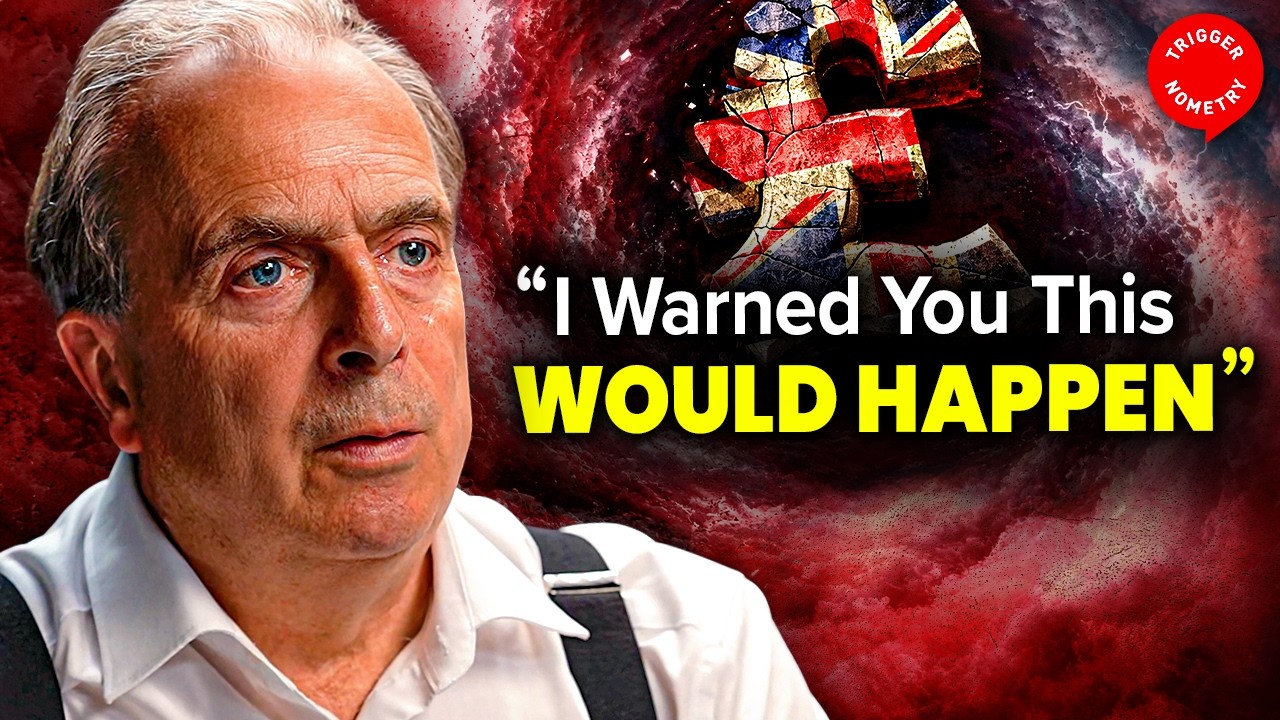
"We Live in the Age of Delusions" - Peter Hitchens
AI Opinion
Hitchens’s argument that unsustainable government borrowing and a decline in critical thinking contribute to societal vulnerabilities resonates, particularly given the verified data on UK debt repayment strategies. However, his claims regarding specific political shifts – like characterizing Cameron's takeover as wholly "Blairite" or definitively identifying 2010 as a singular missed opportunity—rest on interpretations of events that require further contextualization and independent verification. Listeners should critically evaluate Hitchens’s sweeping pronouncements about national decline and societal gullibility, especially those relying on anecdotal evidence or comparisons to hypothetical scenarios like mandatory pink nose extensions. A more nuanced understanding would benefit from examining statistical data on immigration trends and educational outcomes alongside his broader historical analysis.
Voices are AI rewrites of the same facts — style changes, not substance.
Summary
Peter Hitchens argues that contemporary British society is characterized by widespread delusion and a failure to confront critical issues. He attributes this to factors including the decline of industry beginning with Thatcher, a degraded education system that discourages intellectual curiosity, and a shift towards dependence on government intervention—a departure from historical notions of British independence. Hitchens contends that political narratives often obscure reality, facilitated by a lack of critical thinking and engagement with foundational texts like *The Prince*. He highlights the missed opportunity to alter course in 2010 and expresses concern over unsustainable borrowing practices where interest payments are funded through further debt. Furthermore, he dismisses recent claims of national improvement as misleading, pointing to underlying vulnerabilities exposed during the COVID-19 pandemic and a general societal gullibility.
Voices are AI rewrites of the same facts — style changes, not substance.
Key Points
Summary, Key Points and AI Opinion are shown in the selected voice. Claims & fact-checks, chapter names and clickbait checks always show in the neutral voice.
Distinguishing Pretext from Reality in Politics
Hitchens emphasizes the importance of discerning pretexts from reality, particularly when politicians make statements justifying actions. He notes that many people fail to see through these deceptive tactics due to a lack of critical thinking and engagement with foundational texts like Machiavelli's *The Prince*. This failure allows for manipulation and unquestioning acceptance of political narratives.
Education System Discourages Intellectual Curiosity
Hitchens criticizes the modern education system, arguing that it prioritizes a 'child-centered' approach which discourages genuine intellectual development. Instead of challenging students to learn and understand complex subjects, it fosters a sense of unknowing, preventing them from discovering knowledge already present in books and hindering their ability to think critically.
COVID Panic Revealed Societal Gullibility
The COVID-19 pandemic served as a stark warning of the general lack of skepticism and trained minds within society. Hitchens suggests that if the government had imposed an absurd mandate, such as requiring everyone to wear a pink nose extension, many people would have complied without question, highlighting a disturbing level of societal obedience.
Shift in British Identity Towards Dependence on Government
Hitchens expresses shock at the British public's desire for extensive government intervention and support. He contrasts this with a historical perception of British independence, attributing the shift to a 'revolution' following World War I, where government involvement dramatically increased and fundamentally altered societal expectations.
UK's Borrowing Practices
Peter Hitchens points out a critical flaw in the UK’s economic strategy, stating that the country is currently borrowing money simply to pay the interest on its existing debts. This unsustainable practice indicates severe financial instability and foreshadows potential future difficulties for the nation.
Struggles to Publish 'Abolition of Britain'
Peter Hitchens recounts the significant difficulties he faced in getting his book, 'Abolition of Britain,' published. Major publishers rejected the manuscript, and a prominent literary agent refused to represent him. He ultimately secured publication through a small publisher who required extensive promotional efforts from his family, demonstrating a lack of mainstream support for his ideas at the time.
Cameron's Takeover as a Defining Moment
Hitchens identifies David Cameron’s takeover of the Conservative Party as a pivotal moment, viewing it as a 'Blairite takeover' that signaled the end of meaningful opposition. He believed allowing this to happen would be detrimental and urged people not to vote Tory simply for a change in government, emphasizing that they wouldn't receive what they desired.
Gordon Brown’s Unexpected Conservatism
Hitchens surprisingly asserts that Gordon Brown was likely more conservative than David Cameron, particularly concerning the European single currency. He clarifies that this observation wasn't initially apparent but became clearer with time, highlighting a shift in political alignment and policy priorities within the Conservative Party.
The Missed Opportunity of 2010
Hitchens expresses regret that 2010 represented a final opportunity to alter the course of events. He believes that if action had been taken then, a different outcome might have been possible, but now it's too late. This sentiment underscores his frustration with the perceived failure to address critical issues and the missed chance for meaningful change.
Loss of Industrial Capacity
Hitchens highlights a significant factor contributing to the UK's vulnerability – the decline in its industrial capacity, largely occurring during the Thatcher era. This loss severely limits the country’s ability to recover from economic shocks and rebuild essential industries, hindering long-term resilience.
Trashing of Education System
Hitchens criticizes the state of the UK's education system, arguing that it has been significantly degraded. This deterioration results in a lack of skilled individuals both for essential tasks and for leadership roles requiring rational thought, contributing to widespread irrationality and ignorance within society.
Starmer's Claims vs. Reality
Keir Starmer claimed that the UK is now 'stronger and fairer' than it was two years ago, citing improvements in the economy, public services, poverty reduction, immigration control, defense, and international reputation. Hitchens dismisses this claim as audacious, arguing that many of the country’s problems predate Starmer’s leadership.
Chapters
Claims & Fact Check
The UK is borrowing money to pay interest on its debts.
?UnverifiedThe country is finished, it's just a question of when this will become evident to everybody.
?UnverifiedImmigration is down significantly.
?UnverifiedMany people don’t read Machiavelli’s *The Prince* despite thinking they have.
?UnverifiedThe education system discourages intellectual curiosity and critical thinking.
?UnverifiedPeople would have complied with an absurd government mandate, like wearing a pink nose extension.
?UnverifiedDavid Cameron’s takeover of the Conservative Party was a 'Blairite takeover'.
?UnverifiedGordon Brown was probably more conservative than David Cameron.
?Unverified2010 was the last moment at which it might have been doable to change course.
?UnverifiedDigest any single YouTube video — free.
3 free digests — no card, no sign-up wall.
Or just swap the domain of any YouTube link → instant digest