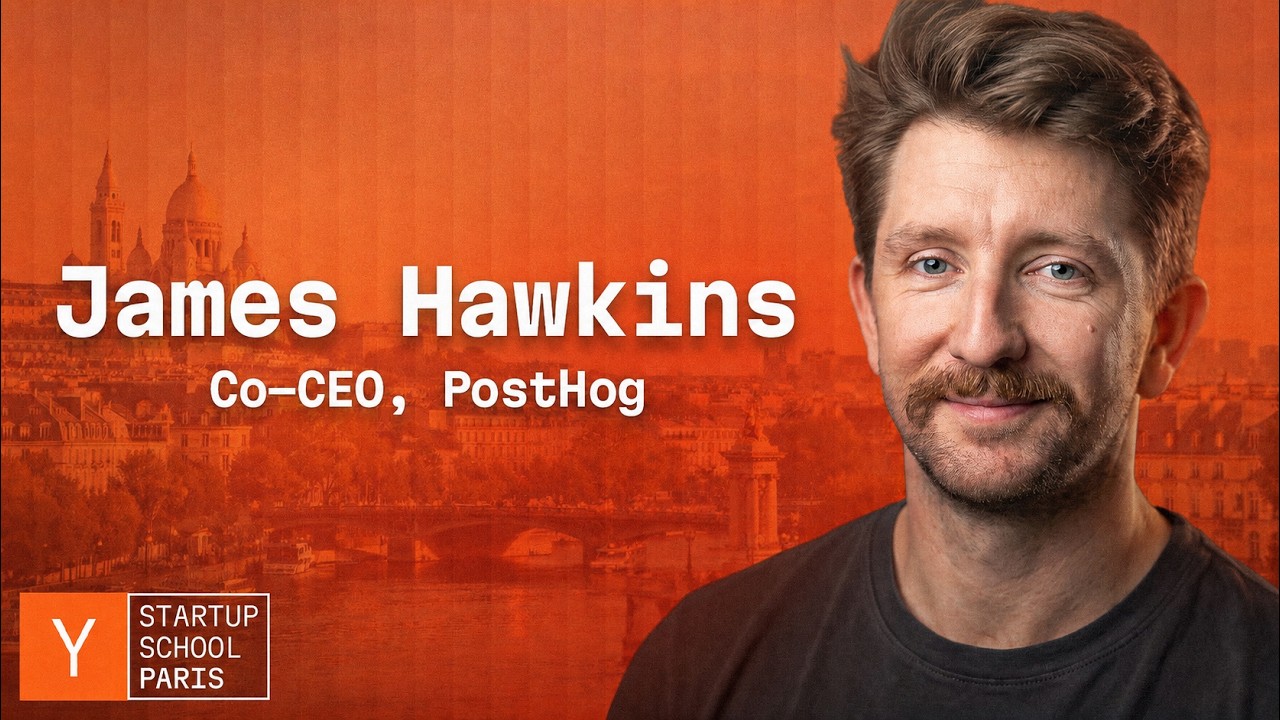
No clickbait detected — the title and thumbnail deliver what they promise.
AI Opinion
The episode’s most convincing argument is that Y Combinator’s primary value was normalizing extreme ambition and crushing imposter syndrome, a verified claim that resonates with the psychological reality of startup culture. However, the core thesis—that ambitious ideas are easier to sell because investors prefer massive upside—rests on unverified assertions, such as the claim that a computer can outperform a human product manager or that shipping speed is uniquely critical for ambitious projects. A thoughtful viewer should treat these as provocative hypotheses rather than established facts, and double-check whether the anecdotal pivot from PostHog’s analytics to “self-driving software” actually demonstrates easier fundraising or simply a compelling narrative.
Voices are AI rewrites of the same facts — style changes, not substance.
Summary
James Hawkins argues that ambitious startup ideas are paradoxically easier to sell because investors are drawn to massive, unrealized upside potential rather than downside protection. He illustrates this through PostHog’s pivot from open-source product analytics to building "self-driving software" that autonomously identifies and fixes engineering problems, creating a recursive AI loop for product improvement. The company is also developing a desktop tool to capture engineer intent, aiming to outperform human product managers by synthesizing data from sales calls, meetings, and user behavior. A key theme is that the more ambitious the idea, the more critical it is to ship quickly, as ambitious projects are more likely to go wrong. Hawkins credits Y Combinator with normalizing high ambition and crushing imposter syndrome, noting that inside YC, even early-stage companies felt chaotic and underwhelming, which was liberating. He contrasts this with European culture, where declaring ambitious goals is often frowned upon. A verified claim is that YC’s main value was normalizing high ambition and boosting confidence, rather than just providing a network. Other claims—such as a computer outperforming a product manager or the importance of shipping speed for ambitious ideas—remain unverified but are central to the episode’s philosophical and psychological themes about ambition, execution, and the human side of building startups.
Voices are AI rewrites of the same facts — style changes, not substance.
Key Points
Each key point shows the surrounding transcript with the exact relevant line highlighted — tap the timestamp to jump there.
Key points and summaries are AI-generated by Sumzup; the highlighted quotes are verbatim from the video's captions.
Want the full transcript?
We show short source quotes as evidence — not the full transcript, which belongs to the creator (republishing it could infringe copyright). The Sumzup desktop & mobile app (coming soon) generates the full transcript locally on your own device, for your personal use.
Investors Prefer Massive Upside Potential
James Hawkins argues that strong investors focus on the 'what if it all works out' scenario because 99.99% of a startup's upside hasn't been realized yet. This makes ambitious ideas easier to sell, as the potential reward dwarfs the risk. He contrasts this with focusing on downside protection, which he sees as a losing strategy.
So it is all upside. You you just can't win on downside. It's the biggest thing I found dealing with investors who are stronger.
PostHog's Shift from Analytics to Autonomous Action
PostHog, originally an open-source product analytics tool, has pivoted to building 'self-driving software.' The core insight is that it's better to entirely solve a user's job rather than just providing data. The company now aims to automatically identify problems across data types (logs, session recordings, support tickets) and even ship pull requests to fix simpler engineering tasks.
of to build AI native self-driving software. Can you talk a little bit about that, like how that happened and where you're up to right now? Sure. So yeah, Postto now provides self-driving software. It's our new kind of oneliner.
Building a Recursive AI Loop for Product Improvement
The new PostHog system operates as a self-contained recursive loop: it takes in input data (user behavior, support tickets, Slack conversations), feeds it to an AI with rules and policies, takes action (e.g., fixing a bug), and then observes the impact to iterate. The goal is to move beyond just telling users their graphs are going up or down to actually making them go up.
fix as many of the sort of simpler engineering tasks that we can. we're also doing a bunch of stuff at the top end too, but that's further out from now. Okay, this is an idea I'm I'm really really interested in. I'm gonna give a talk later today about building AI native companies.
Capturing Intent to Outperform Human Product Managers
PostHog is developing a desktop product to capture engineer intent, aiming to understand why a product exists rather than just its technical requirements. Hawkins argues a computer can do a superhuman job of synthesizing information from every sales call, internal meeting, email, and user behavior to decide what to build, potentially outperforming a human product manager.
Shipping speed is critical for ambitious ideas
The speakers argue that the more ambitious an idea is, the more important it is to ship quickly because ambitious projects are more likely to go wrong. They emphasize breaking down big ideas into small bits and getting them out the door, rather than disappearing for three years to build a perfect product. At PostHog, the first question for any innovative idea is when they can launch it and how to launch it sooner.
goal. And so having that kind of short-term practicality combined with the long-term intense ambition kind of hurts your brain sometimes. But I think you kind of need both. Yeah. you must you have to ship. It's like the longest and short of it.
YC normalized high ambition and crushed imposter syndrome
James describes how before Y Combinator, he and his co-founder had strong imposter syndrome, looking up to YC participants as superstars. Once inside YC, they found most companies were much earlier and more chaotic than expected, which was underwhelming but also liberating. This experience normalized aiming really high and made them 100 times more confident, which he contrasts with European culture where declaring ambitious goals is often looked down upon.
it's so like implausible or impro you know like it's they can can't possibly know the future are they all just liars I think a few things that have really struck me or observations along this as we've grown like in the early days like before we did YC we'd look up to people doing…
Even huge companies are run by ordinary humans
As PostHog grew, the founders realized that even people running companies worth $100 billion or more are just human beings, not necessarily smarter than anyone else. They approach meetings with billionaires by treating them as peers and seeing through the marketing veneer. James cites Anthropic as an example of a company that looks undefeatable but is actually run by humans at a different stage who have just been working at it for a while.
rocket and take off. but it was far more underwhelming on average I would say than we expected per person. But as we keep growing we think the same thing over and over again.
Chapters
Claims & Fact Check
99.99% of your startup's upside hasn't been done yet.
?UnverifiedA computer can do a superhuman job of understanding everything happening in your customer base.
?UnverifiedWe can build something far superior to a product manager.
?UnverifiedThe more ambitious your idea is, the more important it is to ship because you're more likely to screw up.
?UnverifiedYC gave us a network to sell to people and fundraise, but the reality was it just normalized aiming really high and made us 100 times more confident.
?UnverifiedIn the US, it's not looked down upon to declare you're going to solve cancer; in Europe it is.
?Unverified