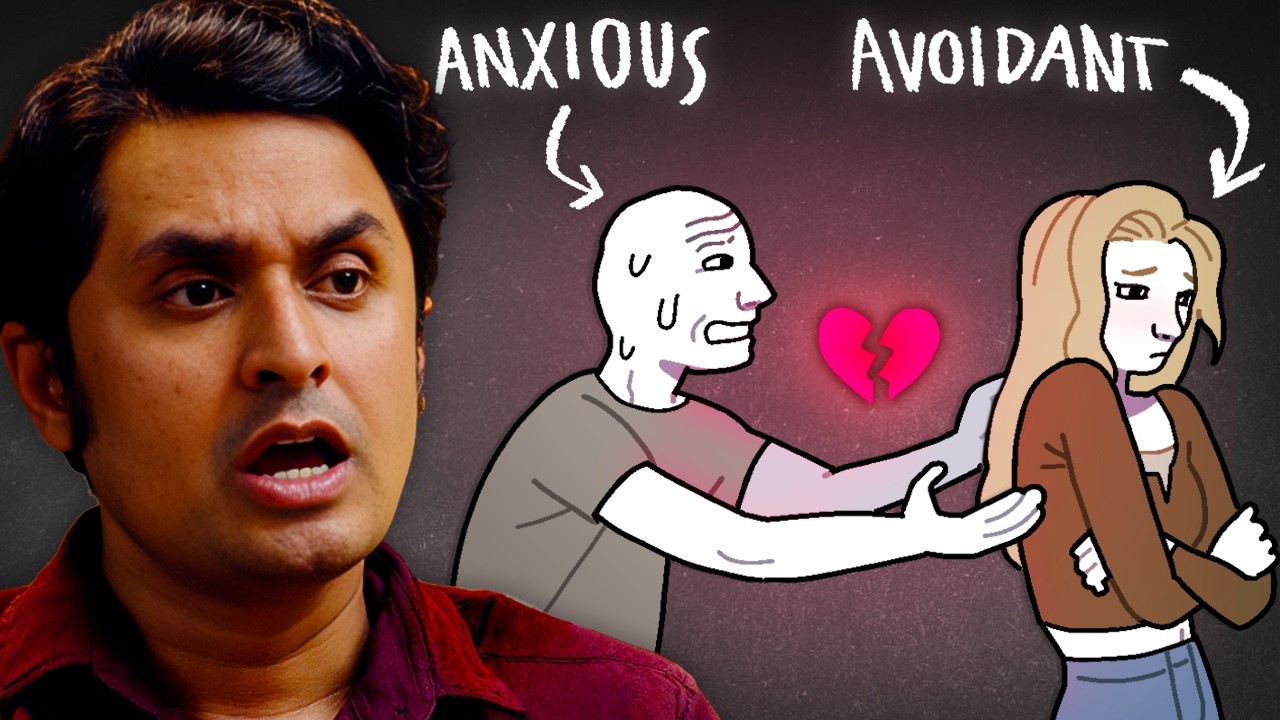
No clickbait detected — the title and thumbnail deliver what they promise.
AI Opinion
Dr. K makes a compelling case that anxious-avoidant couples can progress toward secure attachment, particularly when the avoidant partner actively seeks help, and his key insight—that the avoidant partner mislabels normal needs as pathological due to low self-worth—offers a concrete path forward. However, the episode’s most provocative claim, that couples should learn from “mistakes” but not “failures,” is presented without clear evidence or definition, and the advice to avoid overcorrecting for every conflict risks minimizing genuine attachment wounds that do require repair. Thoughtful viewers should double-check whether the distinction between a situational breakdown and a fundamental attachment failure is as clear-cut as Dr. K suggests, and whether the proposed spiritual integration practice has any empirical support beyond his personal experience.
Voices are AI rewrites of the same facts — style changes, not substance.
Summary
In this episode, Dr. K addresses a couple with anxious and avoidant attachment styles who, despite five years together and a year of couples therapy using nonviolent communication, still struggle during crises like illness. He acknowledges that while this pairing is often called a "match made in hell," many couples can move toward secure attachment, and the avoidant partner’s willingness to seek help is a positive sign. The core challenge is distinguishing between genuine personal growth and old attachment-driven behaviors, especially when both partners are highly self-aware. Dr. K advises against overcorrecting for every conflict, noting that some breakdowns are situational—caused by illness or exhaustion—and do not require a fundamental relationship overhaul. He explains that each partner operates from a different internal template, creating confusion, and recommends addressing the underlying fears rather than surface behaviors. For the avoidant partner, the key insight is that he labels normal needs as avoidant due to low self-worth; once he accepts that he is enough, he can let his partner fall apart without taking responsibility, while still offering support. The episode concludes with the avoidant partner seeking spiritual integration, and Dr. K promises to teach a specific practice in the membership community.
Voices are AI rewrites of the same facts — style changes, not substance.
Key Points
Each key point shows the surrounding transcript with the exact relevant line highlighted — tap the timestamp to jump there.
Key points and summaries are AI-generated by Sumzup; the highlighted quotes are verbatim from the video's captions.
Want the full transcript?
We show short source quotes as evidence — not the full transcript, which belongs to the creator (republishing it could infringe copyright). The Sumzup desktop & mobile app (coming soon) generates the full transcript locally on your own device, for your personal use.
Couple with anxious-avoidant attachment seeks advice on mismatched needs during illness
A couple describes a conflict where both had food poisoning but their needs diverged: the anxious partner wanted comfort and company (e.g., watching The Lord of the Rings), while the avoidant partner wanted to attend to his own needs after feeling better. They have been dating for 5 years, completed a year of couples therapy focused on nonviolent communication, and have moved toward secure attachment. The anxious partner struggles to distinguish between reasonable expectations and codependency, especially when physical illness is involved.
I'm Lucas. Hi Lucas. So nice to meet you both. Nice to meet you, too. First off, I just want to say thank you so much for taking time to chat with the community and answer all the questions that everybody has. So, grateful and thankful for that.
Dr. K acknowledges the 'match made in hell' dynamic but affirms progress
Dr. K references his earlier statement that anxious-avoidant pairings are a 'match made in hell,' but immediately reassures the couple that many successfully navigate to secure attachment. He highlights that the avoidant partner's willingness to appear on a couples stream to ask for help is a positive sign of commitment and growth. This sets the stage for exploring how to balance self-care with relationship care during crises.
pieces there. Oh, no. Not made in hell is what Dr. K said. So, we're trying to climb the ladder out of hell here, Dr. K. We need your help desperately. Yeah, yeah, yeah. No, you guys can do it.
Nonviolent communication framework used by the couple to express needs
The couple explains they use nonviolent communication (NVC) as a tool: stating feelings, the reason for those feelings, and the underlying need. They apply this framework to navigate conflicts, but acknowledge it's not perfect. In the food poisoning scenario, the anxious partner felt a physical need for comfort (e.g., presence during pain waves) and struggled to determine if expecting her partner to set aside his own recovery was reasonable or a relapse into old manipulative patterns.
therapy about We stopped 6 months ago. and our therapist focused on nonviolent communication. I'm not sure if you've talked about what nine nonviolent communication is, but I feel like a lot of the tools are things that you talk about lean that way a little bit.
Even conscious couples face attachment clashes
The host emphasizes that even when both partners are highly self-aware, attend therapy, and actively work on their attachment styles, the core conflict between anxious and avoidant patterns remains difficult. He uses the couple's own situation—backpacking, doing qigong, and showing up on the stream—as evidence that love and effort do not eliminate the confusion. The key challenge is distinguishing between a partner's genuine personal growth and a lapse into their old attachment-driven behaviors, which can be nearly impossible to tell apart in the moment.
you guys are completely unconscious and and everyone is getting torn apart all the time. What's really scary is that when two people love each other a lot, when they go to couples therapy, when they show up on a stream, when they watch when they're becoming Qigong masters, they're backpacking together, you guys are…
Don't overcorrect for every attachment failure
The host advises against treating every relational breakdown as a systemic problem that requires a fundamental change. He introduces the concept of 'learning from mistakes, not from failures,' arguing that some conflicts are simply situational—caused by physical illness, travel stress, or exhaustion—and do not indicate a broken dynamic. Using the analogy of a restaurant not stopping serving shrimp pasta after one allergic reaction, he warns that overcorrecting can destabilize a relationship that is otherwise on the right track. He recommends accepting that some days will be messy without overhauling the entire approach.
growth, right? I I think one thing that we've learned, I don't know if Kirti would even agree with this. I think there are sometimes where there's just an L. There's just a loss. This is actually not a moment of growth.
Conflicting templates fuel anxious-avoidant confusion
The host explains that each partner operates from a different internal 'template' for interpreting the same event. For example, the anxious partner may see a lack of action as proof of not caring, while the avoidant partner may see the same situation as a moment of overblown anxiety. This mismatch creates a feedback loop where neither person knows how to respond—feeding the anxious attachment might either soothe or worsen it, and the avoidant partner becomes paralyzed in their own head. The solution, he suggests, is to get 'underneath the template' to understand the core fears driving each interpretation, rather than reacting to the surface behavior.
right? Because then you guys need to develop a dynamic that will account for this outlier. Second thing is I think this is a really good example of conflicting templates. So, Ori has an idea of in this situation, this thing means this thing, right?
Avoidant self-pathologizing and the need for self-acceptance
The speaker tells Lucas that his struggle is more about his own self-worth than avoidant attachment. He labels normal needs as avoidant because he feels bad for not meeting his partner's emotional needs. The insight is that once he understands he is enough, he can recognize his partner's anxious attachment as separate from his own deficiency.
I I I I would actually say neither, right? So, I I I I think here's how I would just speedrun it, right? So, yes, we're overtime, but you guys have also been incredibly patient. Y'all have been waiting for 4 hours. so let let's do our best to honor that.
Letting go of responsibility for partner's emotions while still offering support
The speaker explains that when Lucas gains confidence in who he is, he will be able to let his partner fall apart without taking responsibility. He emphasizes the distinction: 'Not your fault that she's falling apart, but you're still going to pick her back up.' This allows something beautiful to happen in the relationship.
ideal to have, but you're still, you know, working your way to like, okay, I have done it. I'm no longer avoidant.
Spiritual journey and the search for resonance
Lucas shares he has been on a spiritual journey for 10 years, reading books, meditating, doing yoga, and therapy. He feels he has puzzle pieces about his understanding of the world but hasn't met people who can help him put them together. He asks for resources or people to talk to, seeking spiritual awareness.
sort of like a weird place. so thank you for putting words in adding a bit of perception there. I have a slight request. I've been in a spirit's journey for like 10 years. I need I'm looking for resources or people to reach out to. I've read a bunch of books.
Speaker promises to teach a practice for spiritual integration
The speaker, hesitant to share specific recommendations on stream, suggests Lucas post in the membership community. He promises to think about what practice Lucas needs and teach it to everyone in memberships. He references a past experience where he was asked about heart chakra and, after meditating, received insight, indicating he will seek help to provide the right practice.
have made me not feel insane maybe and I'm sort of just holding my hands out I think sort of trying to process a lot of the pieces. Okay. So this is the best that I can do.
Chapters
Claims & Fact Check
Anxious-avoidant relationships are a 'match made in hell' but couples can graduate to secure attachment.
?UnverifiedThe avoidant partner showing up on a couples stream to ask a question indicates the relationship is doing something right.
?UnverifiedThe anxious partner used to engage in manipulative behaviors by placing responsibility for her needs on her partner.
?UnverifiedWhen two people love each other a lot, go to couples therapy, show up on a stream, become qigong masters, and backpack together, the attachment clash is still hard.
?UnverifiedNot every failure is a mistake; we should learn from our mistakes, not from our failures.
?UnverifiedIf you feed the anxious attachment, it sometimes gets better and sometimes gets worse.
?UnverifiedLucas labels completely normal needs as avoidant because he feels bad for not living up to his partner's emotional needs.
?UnverifiedOnce Lucas understands he is enough, he will be able to let his partner fall apart without taking responsibility, and then something beautiful can happen.
?UnverifiedThe speaker will teach a practice for Lucas's spiritual integration in the membership community, similar to how he figured out heart chakra after being asked.
?Unverified