Clickbait Checker
The video title says:
"What The Odyssey Is Actually About"
Reality:
The title promises a straightforward explanation of what *The Odyssey* is about, but the episode primarily uses it as a springboard to discuss themes, historical context, Nolan’s film, and philosophical connections, rather than directly explaining the plot itself.
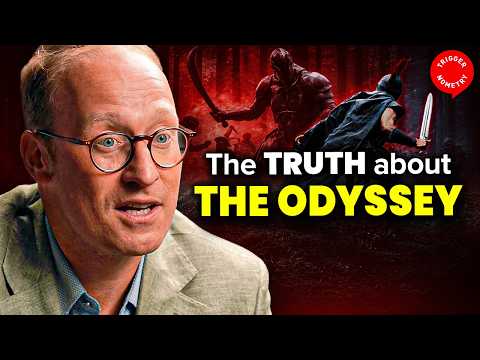
The thumbnail says:
"The TRUTH about THE ODYSSEY TRIGGER HOMETRY"
Reality:
While the thumbnail claims to reveal 'the truth' about *The Odyssey*, the content focuses on interpretations, historical context, and comparisons with modern filmmaking, not a definitive unveiling of hidden facts.
AI Opinion
The episode compellingly argues for the *Odyssey*'s enduring relevance, connecting ancient Greek values like honor and self-examination to contemporary struggles with introspection, and highlighting Nolan's film’s ambition for historical accuracy. However, claims about Christopher Nolan’s directorial importance and the film's potential to depict a civilization on the brink of collapse rely on speculative interpretations that require further substantiation; similarly, assertions regarding Helen’s beauty and the centrality of Greek thought in modern problem-solving lack concrete support. Listeners should consider these points alongside their own understanding of both Homer’s poem and Nolan’s filmmaking style, recognizing potential biases inherent in interpreting ancient texts through a contemporary lens.
Avatars are AI rewrites of the same facts — style changes, not substance.
Summary
The episode explores themes from Homer’s *Odyssey* and their relevance to contemporary culture, particularly through the lens of Christopher Nolan's upcoming film adaptation. It highlights a shift in storytelling away from easily digestible narratives toward more complex explorations of sacrifice and quiet heroism. The discussion connects ancient Greek thought, exemplified by Socrates’ emphasis on self-examination, to modern struggles with genuine introspection. Examining the historical context reveals that early Greek myths often presented fatalistic views, which evolved through philosophical inquiry into concepts of individual agency. Nolan's film aims for historical realism, depicting Bronze Age Greece and its worldview, including interactions with gods and monsters as meaningful realities. The narrative structure mirrors Homer’s poem, focusing on Odysseus’s journey home, his captivity by Calypso, and the challenges he faces upon returning to Ithaca, including a contest orchestrated by his wife Penelope to deter unwanted suitors. Ultimately, the episode emphasizes the enduring legacy of Greek culture and its continued importance for understanding human experience, values like honor and family, and the paradoxes inherent in heroic ideals.
Avatars are AI rewrites of the same facts — style changes, not substance.
Key Points
Nolan's Odyssey Challenges Hollywood Norms
Christopher Nolan’s upcoming film adaptation of *The Odyssey* represents a departure from typical Hollywood storytelling, focusing on themes like sacrifice and quiet heroism rather than conventional action. The director is known for films that resonate more deeply with audiences as they age, revealing truths often obscured by distractions. This choice reflects a broader cultural shift away from easily digestible narratives.
Historical Realism as a Guiding Principle
Nolan's film aims for historical realism, incorporating extensive research by the director and his classicist wife to recreate what Bronze Age Greece might have been like. This includes depicting interactions with gods and monsters as meaningful realities within that ancient worldview, rather than purely fantastical elements. The goal is to portray the society just before its collapse in the 12th century BC.
The Film's Structure Mirrors Homer’s Poem
While details are still emerging, Nolan's *Odyssey* is expected to follow the structure of Homer’s poem. The film will likely focus on Odysseus’s journey home after the Trojan War, charting his ten-year struggle and reunion with his son and wife, who faces suitors vying for her hand and the throne.
The Mythological Backstory of Helen's Abduction
Helen’s abduction by Paris is rooted in a complex mythological narrative involving the sea nymph Thetis and Zeus. To prevent Thetis’s offspring from threatening his power, Zeus forced her to marry a mortal, diminishing their divine potential. This event ultimately led to Helen's involvement in the Trojan War and became a pivotal moment in Greek mythology.
The Iliad vs. The Odyssey: Focus and Scope
The Iliad, chronologically earlier than the Odyssey, focuses on a specific character flaw – Achilles’ wrath – during the Trojan War. Unlike the Odyssey, it doesn't depict key events like the Trojan horse or Achilles’ death by heel. The Iliad is considered the more complex poem, likely due to its earlier composition and narrower scope centered around Achilles' anger and its tragic consequences.
Tmicus's Coming-of-Age During Adysius's Absence
While Adysius is away at war, his son Tmicus grows into a man without a father figure. The first four books of the Odyssey detail this period, showing Tmicus seeking guidance from other warriors to understand how to assert authority over the suitors who are consuming his household resources. This absence creates a void and shapes his journey toward manhood.
Adysius's Captivity on Ogygia and His Yearning for Home
After the Trojan War, Adysius is trapped by the nymph Calypso on the island of Ogygia for seven years. During this time, he experiences intense 'algos' – a profound longing for his homeland and family. This concept of 'nostos,' or homecoming, becomes the central driving force behind all of Adysius’s struggles and actions throughout the Odyssey.
Athena's Intervention and Hermes' Message to Calypso
Recognizing Adysius’s cleverness and potential, Athena intervenes on his behalf. She persuades Zeus to send the messenger god Hermes to Calypso with a command to release Adysius from her island. This divine intervention sets in motion the next phase of Adysius's journey, preventing him from dying in obscurity and allowing him to pursue his quest for nostos.
The Paradox of Dying in War for Glory
Homer presents a paradox where the most honorable death for a warrior defending his family is to die in battle, achieving 'ktos' – being talked about and remembered. This creates a catch-22; while fighting for family protection, dying ensures fame but denies that very family their protector. The concept highlights the complex values of ancient Greek society regarding honor, legacy, and sacrifice.
Achilles' Choice: Glory vs. Mortal Life
Achilles is granted an unusual choice by his mother: die young as the greatest warrior or live a long life with family. He initially chooses glory, driven by the death of his companion Patroclus, but later regrets prioritizing fame over a fulfilling mortal existence. This illustrates the conflict between heroic ideals and personal happiness.
Calypso's Offer: Mortality vs. Immortality
Calypso, a nymph goddess, offers Adysius immortality and eternal life on her island. However, he rejects this offer, choosing instead a mortal existence with his wife and the possibility of returning home. This pivotal moment encapsulates the central theme of the Odyssey – the importance of family, connection to one's homeland, and embracing the human experience despite its limitations.
The Lotus Eaters and Loss of Purpose
Adysius's crew encounters the Lotus Eaters, a community who consume a flower that eliminates longing for home or family. This represents a profound loss of purpose and motivation, as individuals become content with an existence devoid of meaningful goals. Adysius recognizes this danger and forcibly removes his men to prevent them from succumbing to this apathy.
Penelope's Strategy to Delay Marriage
Penelope, Odysseus’ wife, attempts to delay her remarriage by claiming she will marry a suitor once she finishes weaving a burial shroud. This tactic reflects the domestic role of elite Greek women who were expected to weave and provides a way for Penelope to postpone making a decision while clinging to hope that Odysseus is alive. She spends days weaving but secretly unravels her work each night, prolonging the process indefinitely.
Odysseus's Disguise and Triumph in the Contest
To avoid detection, Odysseus returns to Ithaca disguised as a beggar. He strategically allows suitors to believe he is incapable of stringing the bow and shooting an arrow through twelve axe heads, which Penelope uses as a contest to select her new husband. Odysseus then effortlessly strings the bow and completes the task, demonstrating his strength and skill while setting up the slaughter of the suitors.
The Mystery Surrounding Homer's Identity
The speakers discuss the lack of concrete information about Homer, the presumed author of The Odyssey. They question whether 'Homer' was a single individual or a collective representation of oral storytellers who passed down tales through generations. This highlights the ambiguity surrounding the origins of epic poetry and its transition from oral tradition to written form.
The Greek Dark Ages and the Reintroduction of Writing
The discussion explains that the Greeks experienced a 'dark age' after the Bronze Age collapse, during which they lost their ability to write. This period significantly impacted the development of oral traditions as stories were passed down through song and performance. The Phoenicians later reintroduced an alphabet to Greece in the 8th century BC, allowing for these oral poems to be written down.
Socrates' Philosophy on Self-Examination
The discussion highlights Socrates’ famous assertion that the “unexamined life is not worth living.” This emphasizes the necessity of critically evaluating one's character and flaws to achieve a truly human existence, suggesting that failing to do so prevents genuine self-understanding and growth. The speaker connects this concept directly to the Greek understanding of what it means to be human.
The Evolution of Greek Thought Beyond Fatalism
While early Greek myths often presented a fatalistic view of life, the emergence of philosophers like Socrates, Plato, Aristotle, and Epicurus led to diverse schools of thought. These schools explored different approaches to responding to the challenges of human existence, questioning whether life is predetermined or shaped by individual agency.
Greek Culture's Disconnect from Modern Self-Reflection
Despite modern society’s focus on self-reflection, the speaker argues that we are surprisingly uninterested in truly interrogating our personal and societal problems. He contrasts this with the Greeks' willingness to engage in difficult conversations, suggesting a gap between outward appearance of introspection and genuine examination.
The Enduring Relevance of Greek Culture
The speaker emphasizes that Greek culture maintains a unique continuity with modernity, as modern Greek is directly descended from the language of Homer. This unbroken lineage makes engaging with ancient Greek literature akin to exploring the heritage of contemporary Greeks and highlights the importance of integrating Greek perspectives into current cultural conversations.
Chapters
Claims & Fact Check
Christopher Nolan is probably the most important director in the business.
The film will attempt to depict what civilization might have looked like at that moment just before it actually did collapse.
Helen was the most beautiful woman in the history not just of the world but in the history of all world literature.
It would be inconceivable for the queen of Sparta to be a black woman.
The Iliad does not talk about the Trojan horse and the fall of Troy.
Achilles' madness leads to tragic consequences, including the death of many comrades.
The best thing a man fighting a war can do is to die in that war.
Homer's Odyssey is more impactful than Christopher Nolan’s film adaptation.
The Trojans believed they were descended from the Greeks.
Penelope still has faith that Odysseus lives.
The suitors were getting very heavy-handed about Penelope marrying one of them.
Homer created amazing works of literature, but nobody knows if he wrote it or existed.
The Greeks evolved intellectually into realizing that they have more agency over their lives than the great tales might suggest.
We are acutely uninterested in interrogating our own personal and societal problems.
Greeks should be a more central player when it comes to thinking about what to do in the world.
Was this digest good?
Digest any single YouTube video — free.
3 free digests — no card, no sign-up wall.
Or just swap the domain of any YouTube link → instant digest