Clickbait Checker
The video title says:
"The Science of Sleep, with Matt Walker"
Reality:
The episode broadly discusses the science of sleep, but doesn't specifically address sleep paralysis.

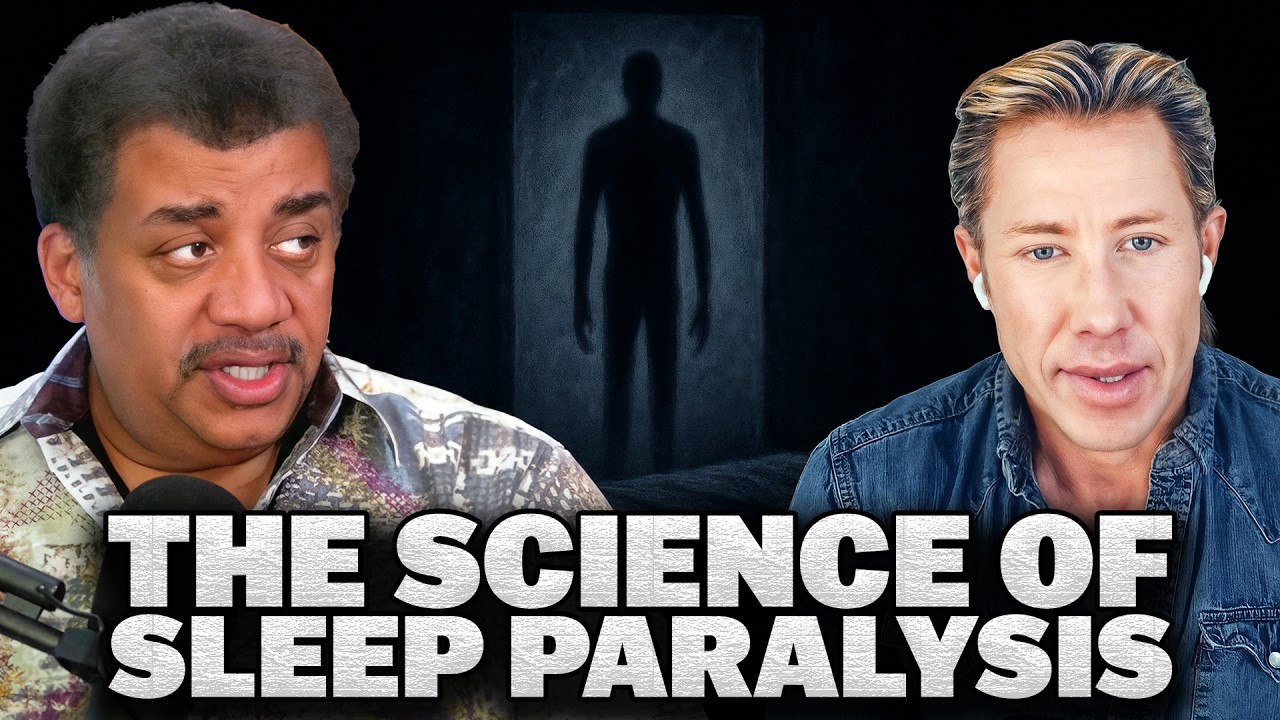
The thumbnail says:
"THE SCIENCE OF SLEEP PARALYSIS"
Reality:
The thumbnail explicitly promises a discussion on sleep paralysis, which is entirely absent from the episode’s content.
AI Opinion
The episode most convincingly argues for sleep’s crucial role in emotional processing, framing it as a vital form of “emotional first aid” that helps consolidate memories and mitigate the impact of trauma—a compelling perspective supported by research linking disrupted sleep to mental health conditions. However, Walker's concept of "informational alchemy" within dreams, while intriguing, relies more on theoretical interpretation than definitive empirical evidence, and his anecdotes about astronaut dream experiences are difficult to independently verify. Listeners should approach claims regarding specific interventions like hot baths for sleep with a degree of skepticism, recognizing that individual responses can vary significantly.
Avatars are AI rewrites of the same facts — style changes, not substance.
Summary
This episode explores the science of sleep, highlighting its surprising complexity and vital role in human health. Matt Walker explains that dreaming functions as "informational alchemy," forging unexpected connections between memories to foster creativity. He discusses the challenges astronauts face with disrupted circadian rhythms due to frequent sunrises and sunsets in space, debunking a misleading marketing claim about Tempur-Pedic mattresses. The episode also delves into the emotional impact of isolation on astronaut dreams and introduces Walker’s new center focused on brain performance and sleep innovation. Sleep is presented as a form of “emotional first aid,” processing difficult experiences and contributing to mental well-being, with disrupted sleep patterns linked to various psychiatric conditions. Finally, the discussion touches upon the body's natural 25-hour circadian rhythm, the impact of shift work, and strategies for optimizing sleep quality, emphasizing that respecting our biological needs is crucial for overall health.
Avatars are AI rewrites of the same facts — style changes, not substance.
Key Points
Dreaming as Informational Alchemy
Matt Walker describes dreaming as a form of 'informational alchemy,' likening it to group therapy for memories. During dream sleep, the brain gathers disparate pieces of information and forces connections between them, even those that wouldn't normally be associated. This process is theorized to drive evolutionary fitness by fostering biological creativity through unexpected associations – exemplified by the bizarre imagery like a zebra in women’s lingerie.
Matt Walker's New Center for Brain Health
Professor Matt Walker has relocated to UT Dallas and established a new center focused on 'advanced brain performance and sleep innovation.' This center aims to explore methods of augmenting both waking and sleeping brain function. His work suggests an interest in not just understanding sleep, but actively enhancing its capabilities for improved cognitive outcomes.
The Paradox of Sleep from an Alien Perspective
Neil deGrasse Tyson humorously poses the question of how to explain sleep to extraterrestrial visitors. He highlights the seemingly illogical nature of dedicating roughly a third of one's life to a state resembling death, during which bizarre hallucinatory experiences occur. This underscores the profound mystery surrounding the fundamental necessity and purpose of sleep.
The Doctor’s Announcement: A Metaphor for Sleep
Matt Walker uses a compelling hypothetical scenario presented by a doctor to illustrate the perplexing nature of sleep. The doctor's announcement—that a child will regularly lapse into a state of non-consciousness with hallucinatory experiences—highlights how bizarre and inexplicable sleep appears when framed in such stark terms, emphasizing the lack of complete understanding surrounding its function.
Dreaming's Informational Alchemy
According to Matt Walker, dreaming provides a unique process called 'informational alchemy.' This involves taking recently learned information and colliding it with long-term memories stored across a lifetime. The purpose isn’t to make obvious connections – that's what happens when we are awake – but rather to forge distant, non-obvious associations which is crucial for biological creativity.
Sleep as Emotional First Aid
Dreaming serves as a form of 'overnight therapy' or emotional first aid. During REM sleep, the brain processes difficult and potentially painful experiences, softening the sharp edges of those memories. This allows individuals to wake up feeling better equipped to handle those challenges the following day.
Sleep Duration Following Trauma
A man recounts his experience after the 9/11 attacks, noting he slept for an unusually long time (11 hours). Matt Walker explains that this extended sleep duration is a common response to traumatic events, as the brain requires additional time to process and consolidate the overwhelming amount of information and emotional distress experienced.
Sleep's Connection to Mental Health
Matt Walker emphasizes that in two decades of studying sleep and mental health, researchers have not found a single psychiatric condition where sleep is normal. This underscores the profound and intimate relationship between sleep and overall psychological well-being, suggesting that adequate rest is essential for maintaining mental health.
Stages of Non-REM Sleep
Matt Walker explains that non-REM sleep is subdivided into four stages, labeled one through four in increasing order of depth. Stages three and four represent the deepest restorative sleep, crucial for physical recovery and hormone regulation. Understanding these stages provides a framework for appreciating the complexity of the sleep process beyond simply 'deep' or 'light' sleep.
REM Sleep Distribution Across Night
The ratio of non-REM to REM sleep shifts throughout the night. The first half is dominated by deep, restorative non-REM sleep with minimal REM, while the second half sees a shift towards more REM (dreaming) sleep and less deep sleep. This change in proportion explains why dreams are often forgotten upon waking early in the morning.
Cycle Length Variation
While commonly cited as 90 minutes, Matt Walker clarifies that a complete sleep cycle can vary significantly. The typical duration ranges from 70 to 120 minutes depending on the individual and factors influencing sleep architecture. This variability highlights the importance of personalized approaches to understanding one's own sleep patterns.
Sleep Inertia Explained
Matt Walker describes 'sleep inertia,' the groggy feeling experienced when awakened from deep non-REM sleep. He uses an analogy of a classic car engine needing time to warm up, explaining that waking abruptly from deep sleep disrupts brain activity and requires a period for full cognitive function to return.
The Circadian Rhythm and Sunlight
Studies where participants lived without watches demonstrated that humans naturally operate on a roughly 25-hour cycle. This highlights that our internal clocks aren't perfectly aligned with the standard 24-hour day, and require external cues to synchronize. Sunlight acts as a crucial regulator, 'tweaking' our circadian rhythm back to a precise 24-hour pattern.
The Role of Retinal Cells in Circadian Rhythm
Even individuals who are blind can experience circadian rhythm problems, particularly those with damage to the retina. Specialized cells within the eye, independent of vision, act as light meters, relaying information about daylight and darkness to the brain. Loss of these cells disrupts this signaling pathway, impacting the body's natural clock.
Circadian Rhythm Disruption and Health Risks
Rotating night shifts disrupt the body’s natural sleep-wake cycle, leading to negative health consequences. The World Health Organization has classified night shift work as a probable carcinogen due to its association with disrupted rhythms and increased cancer risk – emphasizing the importance of respecting biological needs.
Optimizing Daytime Sleep for Shift Workers
Shift workers can improve their sleep quality by creating an environment conducive to nighttime rest during the day. This includes using blackout curtains, ensuring a cold room temperature, employing eye masks and earplugs, and potentially taking melatonin two to three hours before attempting to sleep – all aimed at mimicking natural nighttime conditions.
Astronauts sleep in strapped sleeping bags due to zero gravity.
Due to the lack of up or down in zero gravity, astronauts on space stations must sleep in sleeping bags that are strapped to the wall. This prevents them from drifting and bumping into equipment. Without gravity, a pillow isn't necessary as there is no pressure against the head.
Frequent Sunrises/Sunsets Disrupt Astronaut Circadian Rhythms.
Astronauts orbiting Earth experience approximately 16 sunrises and sunsets every 24 hours. This drastically disrupts their internal circadian rhythms, which are naturally tuned to a single sunrise and sunset per day. To combat this, astronauts blackout windows, wear eye masks, and adhere to strict schedules with timed light exposure and melatonin supplementation.
Tempur-Pedic's Marketing Claim About Astronaut Use Was Misleading.
Tempur-Pedic mattresses were once marketed as being used by astronauts in space. However, this claim was misleading because the pressure-relieving properties of memory foam are irrelevant in a zero-gravity environment where there's no pressure on the body.
Emotional Isolation Likely Impacts Astronaut Dreams.
While gravity itself likely doesn’t alter dreams, the emotional experience of being isolated in space—a small crew far from loved ones and viewing Earth from a distance—is expected to significantly influence dream content. The integration of this monumental experience into their subconscious is anticipated to be profound.
Chapters
Claims & Fact Check
Dreaming provides a form of informational alchemy.
Sleep is an inescapable part of our daily lives.
I am desperately shallow, but I have a very deep surface.
Dreaming provides a form of informational alchemy.
Dreaming acts as emotional first aid, softening the edges of painful memories.
The best bridge between despair and hope is a good night’s sleep.
Matt Walker discovered the 90-minute cycle length during his college studies.
A typical sleep cycle lasts 90 minutes.
Waking up during deep non-REM sleep can cause a 'sleep hangover' effect.
Rotating night shifts are classified as a probable carcinogen.
A tired driver is not dissimilar to a drunk driver.
Taking a hot bath or shower before sleep can aid in falling asleep.
Your brain carries this internal clock for 3 and 1/2 million years, and it's been set to only one sunrise and one sunset every 24 hours.
Astronauts typically black out the windows, wear eye masks, and keep a very strict schedule.
Astronauts probably don't have altered dreams due to gravity.
Was this digest good?
More from StarTalk



Digest any single YouTube video — free.
3 free digests — no card, no sign-up wall.
Or just swap the domain of any YouTube link → instant digest