
Clickbait Checker
The video title says:
"Neil deGrasse Tyson: The Whistleblowers Were Right About Aliens"
Reality:
The episode touches upon Obama’s comments about aliens, but primarily discusses space exploration, geopolitical competition, UAPs, and philosophical concepts with only a tangential connection to the 'whistleblowers' or alien claims.
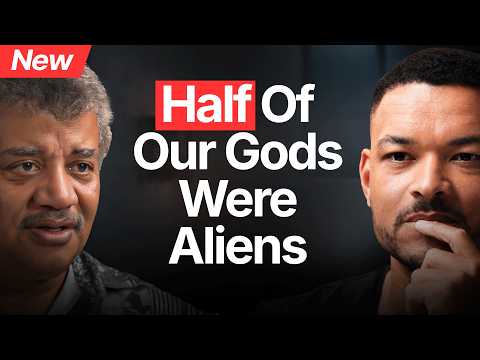
The thumbnail says:
"DOAC Half Of Our Gods Were Aliens"
Reality:
The thumbnail's claim that half of humanity's gods were aliens is not supported by the episode’s content, which focuses on broader themes of space exploration and extraterrestrial life without directly addressing ancient deities.
AI Opinion
The episode most convincingly argues that geopolitical competition, particularly between the US and China, is reshaping space exploration priorities, pushing lunar missions beyond purely scientific or economic goals—a claim supported by observations of the Artemis program and NASA’s historical focus. However, assertions about the probability of simulated realities and advanced civilizations creating universes rest on highly speculative theoretical physics and lack empirical grounding. Listeners should critically evaluate claims regarding specific percentages (like HeyJen's market share) and consider that Tyson’s exploration of altered states represents a personal philosophical inquiry rather than established scientific methodology.
Voices are AI rewrites of the same facts — style changes, not substance.
Summary
The discussion explores several interconnected themes surrounding space exploration, extraterrestrial life, and human understanding of reality. Former President Obama’s comments about aliens sparked speculation regarding government transparency and potential withheld information. Geopolitical competition, particularly between the United States and China, is driving renewed lunar missions, overshadowing purely economic or scientific motivations. The current legal framework governing space activities is described as a "Wild West," lacking clear regulations on resource ownership and potentially leading to conflict. A surprising bipartisan interest in unidentified aerial phenomena (UAPs) has fostered unusual unity in Congress. Scientists are increasingly focused on utilizing resources found on the moon, like water ice, for long-term sustainability beyond Earth. Neil deGrasse Tyson emphasizes that science expands human senses and allows us to measure objective reality through shared observation, while also considering unconventional approaches, such as exploring altered states of consciousness, to gain new insights. The conversation then delves into theoretical concepts like universe creation, the possibility of simulated realities, and humanity's place within a vast cosmos, ultimately questioning the nature of meaning and purpose. Finally, it highlights the distinction between education and schooling, the importance of avoiding anthropocentric assumptions when considering extraterrestrial life, and how popular culture can influence our understanding of the universe.
Voices are AI rewrites of the same facts — style changes, not substance.
Key Points
Obama's Comments on Aliens Spark Speculation
Following comments made by former President Obama about the possibility of aliens, discussion arises regarding whether he was joking or if information is being withheld from him. The conversation suggests that even the president might not be privy to all knowledge concerning extraterrestrial life, implying a potential secrecy surrounding such matters. This highlights the public's fascination with alien existence and government transparency.
Geopolitical Motivations Drive Lunar Exploration
The discussion shifts to why nations are returning to the moon, dismissing economic incentives. Instead, it's presented as a geopolitical strategy, exemplified by China’s planned lunar missions 50 years after the United States. This suggests that space exploration is driven more by national competition and strategic positioning than scientific or economic gain.
Pop Culture Influences Beliefs About the Universe
The conversation explores how popular culture, like the movie 'Ghost,' can significantly shape public beliefs. Tyson points out that polls showed increased belief in ghosts after the film's release, demonstrating pop culture’s power to influence perceptions of reality and reinforce existing ideas about phenomena such as extraterrestrial life.
Human Vulnerability and Cosmic Perspective
Neil deGrasse Tyson proposes a unique theory about human curiosity, linking it to our innate ability to sleep on our backs. This posture exposes our vulnerability but also provides an unobstructed view of the night sky, fostering a natural inclination to ponder the cosmos and its mysteries. He argues this inherent connection is likely embedded in our DNA.
Caloric Value Traceable to Stars
Neil deGrasse Tyson explains that even the food we eat, like a steak from a cow which eats plants, ultimately derives its caloric value from the sun. Plants utilize photosynthesis to convert sunlight into energy, and this energy is then passed up the food chain. Therefore, he concludes that 100% of our caloric intake can be traced back to stars, specifically the sun, highlighting our direct connection to the cosmos.
Critique of Religious Labels & Analysis
Tyson discusses his evolving perspective on religion, moving from simple dismissal to a more nuanced understanding. He explains that belief systems often operate outside the realm of critical analysis because they are designed to provide comfort and meaning rather than objective truth. He now engages with religious beliefs in a more informed way, recognizing their profound influence on culture, politics, and economics.
Rejection of Simple Labels: Atheist vs. Agnostic
Tyson rejects the label 'atheist,' arguing that it's a reductive term defining someone by what they *lack* rather than what they are. He finds such labels divisive and counterproductive, leading to unnecessary conflict. Instead, he identifies more with the agnostic perspective – acknowledging uncertainty and avoiding definitive claims about the existence or non-existence of God.
The Big Bang Explained
Responding to a request for an explanation, Tyson prepares to explain the Big Bang theory. He states that approximately 13.8 billion years ago, everything we observe in the universe originated from an extremely dense and hot state. This event is supported by extensive observations and experiments, despite its seemingly fantastical nature.
Rapid Emergence of Life on Earth
Neil deGrasse Tyson explains that life emerged on Earth surprisingly quickly, within approximately 100 million years after the planet's formation. He emphasizes that this timeframe represents only about 5% of Earth’s total history and occurred rapidly given the available ingredients. This rapid development suggests that the emergence of life might not be an improbable event in the universe.
The Sheer Number of Exoplanets & Potential Habitable Worlds
Tyson highlights the discovery of 6,000 exoplanets within a relatively small region of space. He notes that this number is likely just a fraction of what exists across our galaxy and suggests that there could be millions or even billions of planets potentially capable of supporting life. This vast abundance significantly increases the probability of extraterrestrial life existing elsewhere.
Dealing with Uncertainty in Cosmic Measurements
Tyson discusses how estimations of cosmic quantities, such as the number of galaxies or stars, are inherently uncertain due to the vast scales involved. He explains that being off by a factor of two might seem significant in everyday life but is acceptable when dealing with numbers spanning trillions, demonstrating a basic understanding of structure and scale.
The Possibility of an Infinite Universe
Responding to a question about the possibility of infinity, Tyson refuses to impose limitations on the universe based on human cognitive constraints. He argues that just because humans find it difficult to comprehend infinity doesn't mean the universe cannot be infinite, and cautions against letting personal philosophies dictate scientific understanding.
The Singularity and Black Holes
Neil deGrasse Tyson explains that the center of a black hole, known as the singularity, is a point where general relativity predicts infinite density and an infinitely small volume. He notes that this prediction presents a significant problem for physicists because it's unclear how such a phenomenon can physically occur, suggesting that our current understanding of physics may be incomplete at these extreme conditions.
Consistency in Sales Teams
The speaker discusses the importance of consistency in sales teams as they grow. He explains that when a team is small, everyone knows every deal and nothing gets missed. However, as teams expand, deals can slip, follow-ups are neglected, and leads go cold—a problem often attributed to 'people problems' but which he argues is usually a systemic issue requiring structured processes like those provided by CRM tools such as PipeDrive.
AI Video Translation with HeyJen
The speaker highlights the capabilities of AI video technology from sponsor HeyJen, which allows for content to be translated into multiple languages while preserving the original voice, timing, and expressions. He emphasizes that this technology is accessible even without a professional studio setup, enabling individuals to create localized content with ease and reach a wider global audience.
Human Brain Size Relative to Other Animals
Neil deGrasse Tyson corrects the common misconception that humans have the largest brains relative to body size. He clarifies that while humans were previously thought to be at the top of this list, it's actually only true when comparing mammals. He points out that birds like magpies and parrots possess a higher ratio of brain size to body weight, demonstrating a human tendency to inflate our perceived intelligence.
The Wild West of Space Law
Neil deGrasse Tyson and the speaker discuss the current state of space law, characterizing it as a 'Wild West' due to the lack of established regulations. They highlight uncertainties regarding ownership of celestial bodies like the moon and asteroids, posing questions about mineral rights and resource exploitation. This absence of clear legal frameworks creates a sense of competition and potential conflict in space exploration.
Artemis Program Driven by Geopolitical Competition
The discussion reveals that the Artemis program, NASA's initiative to return humans to the moon, was largely spurred by China’s ambition to land astronauts on the lunar surface. Tyson explains that previous periods of inactivity regarding lunar missions were followed by renewed interest when China announced its plans, demonstrating a reactive geopolitical strategy rather than purely scientific motivation. He draws parallels with the Soviet Union's launch of Sputnik and the subsequent creation of NASA.
Congressional Unity Through Shared Interest in UFOs
Tyson notes a surprising moment of bipartisan agreement in Congress during recent hearings concerning unidentified aerial phenomena (UAPs). He observed Republicans and Democrats engaging with the same questions regarding aliens, highlighting an unusual convergence of political perspectives. Tyson characterizes this shared attention as 'a beautiful fact,' suggesting that even divisive issues can temporarily unite lawmakers.
Resource Utilization on the Moon
NASA's focus is shifting towards in-situ resource utilization (ISRU), specifically seeking water ice at the lunar South Pole. The potential to extract and utilize resources like water and silicates for 3D printing tools and other necessities on the moon is a key driver of renewed interest in lunar exploration, reducing reliance on Earth-based supplies. This approach aligns with long-term sustainability goals for human presence beyond Earth.
Science Extends Human Senses
Neil deGrasse Tyson explains that science allows us to measure phenomena beyond our natural senses, using ultraviolet light detection as an example. He emphasizes that measurements can be taken and verified without relying on sight or brain function, highlighting the power of scientific instruments to reveal aspects of reality otherwise inaccessible. This demonstrates how science transcends individual human perception.
Objective Reality and Shared Measurement
Tyson argues that if a measurement can be made and agreed upon by multiple observers, it's likely representing an objective reality. He uses the example of Einstein’s E=MC² and its application in atomic weapons to illustrate how scientific discoveries have profound consequences beyond subjective interpretation. This underscores the importance of shared observation and verification in establishing scientific truth.
The Potential for Altered States to Reveal New Realities
Discussing psychedelic experiences, Tyson suggests that if a drug allowed someone to access an objective reality, it would be worth exploring. He proposes conducting experiments on individuals experiencing altered states, such as those under DMT, to see if their perceptions could match others and yield new information. This highlights the possibility of using unconventional means to probe beyond conventional understanding.
Science Provides Tools Beyond Human Physiology
Tyson points out that science has developed tools like microscopes and telescopes, which extend our ability to observe beyond the limitations of human physiology. He explains that evolutionarily, humans only develop senses necessary for survival, meaning many aspects of reality remain unseen. Science provides a means to overcome these limitations and explore realms far beyond what we could perceive naturally.
Universe Creation as a Process
The discussion explores the possibility that creating universes isn't an instantaneous event but requires technological advancement, including inventing computers and establishing free will. This process involves stages where civilizations must develop the capacity to create new universes, implying a lineage of universe creators rather than a single origin point.
The Probability of Being 'Real'
Neil deGrasse Tyson presents a thought experiment where the probability of our reality being the original versus a simulated one is initially framed as a one-in-two chance. This concept expands to consider branching universes, where each branch creates multiple new universes, further complicating the calculation and highlighting the vastness of possibilities.
Civilizations and Universe Creation
The conversation delves into the hypothetical scenario where advanced civilizations could possess the technology to create new universes, potentially mimicking a 'big bang' moment. This raises questions about whether simulated universes would necessarily start from the beginning or if they might be populated with pre-existing intelligent life and memories.
The Question of Meaning and Purpose
Tyson addresses the fundamental question of life's meaning, acknowledging that it’s a query often answered by religion. He expresses skepticism about the notion that an all-powerful creator would require praise or obedience and suggests that deriving personal meaning through creation and exploration is a more fulfilling approach.
Distinction Between Education and Schooling
The discussion highlights a crucial distinction between education, which is the process of learning, and schooling, which is a structured system. The speakers note that these two concepts are often conflated, leading to a flawed perception of how knowledge should be acquired. They suggest that if schools fostered genuine curiosity and fulfillment rather than simply adhering to a curriculum, the world would be significantly different.
Understanding Alien Perspectives
The book 'Take Me to Your Leader' explores how aliens might perceive human customs and behaviors. An example given is the seemingly bizarre act of humans lying down horizontally for a third of Earth’s rotation (sleep), which would likely be incomprehensible to an alien species with different biological rhythms. This illustrates the importance of recognizing that our norms are not universal.
Avoiding Anthropocentric Assumptions When Interacting With Aliens
The speaker emphasizes the critical need to avoid applying human assumptions and behaviors when encountering extraterrestrial life. He uses the example of shaking hands, a common gesture in Western cultures but not universally practiced, to illustrate how seemingly innocuous actions can be misinterpreted or even offensive to aliens. The core message is that cultural norms are relative and should not be imposed on other species.
Aliens' Misinterpretation of Human Dependence on Automobiles
The speaker humorously imagines aliens observing human behavior in Los Angeles and concluding that automobiles are the dominant life form. They would observe cars being transported, repaired, and even 'fed' through drive-through restaurants, leading them to believe that humans are merely passengers within these vehicles. This scenario serves as a satirical commentary on humanity’s reliance on technology.
Key moments
Claims & Fact Check
Obama may not be fully informed about alien existence.
?UnverifiedSpace law is a 'wild west' with unclear ownership of the moon.
±Partially supportedHumans are uniquely comfortable sleeping on their backs, leading to cosmic curiosity.
?UnverifiedA cow is a machine that we invented to turn grass into steak.
?UnverifiedBelief systems don't have to make sense; that’s why they are belief systems.
±Partially supportedI am a scientist, not an atheist.
?UnverifiedLife emerged on Earth within 100 million years of its possible formation.
±Partially supportedBeing off by a factor of two is acceptable when estimating cosmic quantities spanning trillions.
?UnverifiedThere are likely billions of planets across our galaxy.
±Partially supportedGeneral relativity predicts the center of a black hole is infinitely dense and small.
±Partially supportedBusinesses that scale well commercially all have a system their team uses every single day.
±Partially supportedHeyJen is already used by 85% of the Fortune 100.
?UnverifiedThe current legal framework governing space activities resembles a 'Wild West'.
±Partially supportedThe Artemis program was primarily motivated by China's lunar ambitions.
±Partially supportedCongress was unified by shared interest in UFOs.
?UnverifiedNASA has not historically prioritized scientific research as the primary driver for lunar missions.
±Partially supportedEinstein's E=MC² led to the creation of atomic weapons.
?UnverifiedScience separates measurements of objective reality from brain activity.
?UnverifiedIf a drug could reveal an objective reality, it would be worth using.
?UnverifiedWe're either the starter universe who hasn’t figured out how to make another one, or we are the last in that line.
?UnverifiedThe probability of our reality being original versus simulated is a one-in-two chance.
?UnverifiedAdvanced civilizations could potentially create new universes through technology.
?UnverifiedSchooling often stifles curiosity rather than fostering it.
?Unverified'Take Me to Your Leader' offers an informed and fun perspective on UFO sightings and the possibility of alien presence.
?UnverifiedAliens might find human sleep patterns incomprehensible.
±Partially supportedHumans are overly reliant on automobiles, to the point where aliens might misinterpret them as the dominant life form.
±Partially supportedMore from Diary of a CEO

The Man Who Made $100M Before 32: The Secret Was To Stop Letting Them Control Me | Alex Hormozi
Jul 20, 2026

Cancer Scientist: This Common Daily Diet May Be Feeding Cancer! - Thomas Seyfried
Jul 16, 2026

He Risked Everything To Warn You: No One Is Ready For What's Coming, And The AI Companies Know It!
Jul 13, 2026

Women’s Fitness Expert: What You NEED To Know About Dieting & Exercise | Dr. Stephanie Estima
Jun 29, 2026