No clickbait detected — the title and thumbnail deliver what they promise.
AI Opinion
The episode convincingly explains how wave pools produce precise, repeatable waves and clarifies the physics of water motion, particularly the circular paths that diminish with depth and the net forward drift caused by faster motion at the top of each loop. Its verified claims—such as the 1 Hz wave amplitude being limited by the wave maker, motion ceasing at half the wavelength, and higher-frequency waves traveling slower than lower-frequency ones—rest on solid ground. However, the episode does not provide direct experimental data or citations for the drift and spiral path mechanism, so a thoughtful viewer should double-check whether this forward drift is always present or depends on specific wave conditions. Keep in mind that while the frequency dispersion explanation is correct, the real-world interaction of irregular waves can be more complex than the simplified overtaking scenario presented.
Voices are AI rewrites of the same facts — style changes, not substance.
Summary
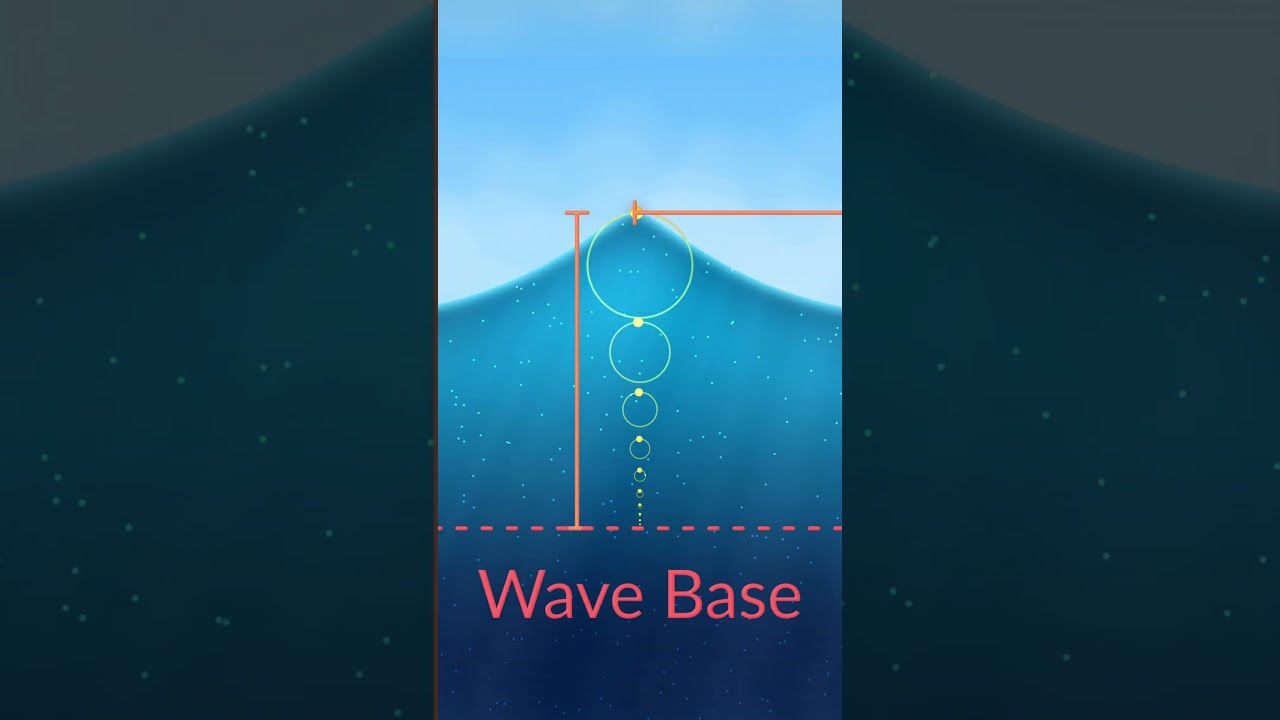
The episode explains how wave pools generate precise, repeatable waves, such as a 1 Hz wave with a maximum amplitude of 0.078, limited by the wave maker's mechanics. It describes the physics of water motion, noting that molecules move in circular paths that diminish with depth and stop entirely at the wave base—a depth equal to half the wavelength. A key insight is that water molecules drift slightly forward because they travel faster at the top of their loop than at the bottom, creating a spiral path and net water transport. The episode also covers frequency dispersion in irregular waves: higher-frequency waves travel slower than lower-frequency ones, allowing the latter to overtake and interact, producing a varied, peaky surface. Verified claims confirm that the 1 Hz wave amplitude is constrained by the wave maker, that motion ceases at half the wavelength, and that higher-frequency waves are slower than lower-frequency ones.
Voices are AI rewrites of the same facts — style changes, not substance.
Key Points
Wave Pool Control and 1 Hz Wave Generation
The wave pool allows precise control over wave amplitude and frequency, enabling repeated creation of specific waves. At 1 hertz, the largest possible wave has an amplitude of 0.078, limited by the wave maker's motion and power requirements. This produces unusually regular waves that look almost like an ocean but are far more uniform.
Wave Base and Water Molecule Motion
As a wave travels, water molecules move in circular paths, with motion decreasing with depth. All motion stops at a depth equal to half the wavelength, known as the wave base. This explains why deeper water experiences less wave-induced movement.
Drift and Spiral Path of Water Molecules
In an ideal water wave, molecules drift slightly in the direction of wave motion because they travel faster at the top of their loop than at the bottom. This creates a spiral path rather than a perfect circle, contributing to net water transport.
Irregular Waves and Frequency Dispersion
Irregular waves consist of multiple frequencies and amplitudes, unlike regular waves which have a single frequency and amplitude. Higher frequency waves travel slower than low frequency waves, causing the low frequency waves to overtake and interact with them, resulting in a peaky or dulled appearance.
Chapters
Claims & Fact Check
The largest wave at 1 hertz has an amplitude of 0.078, limited by the wave maker's motion and power.
?UnverifiedAll water molecule motion stops at a depth equal to half the wavelength, known as the wave base.
?UnverifiedHigher frequency waves travel slower than low frequency waves, causing low frequency waves to overtake them.
?Unverified