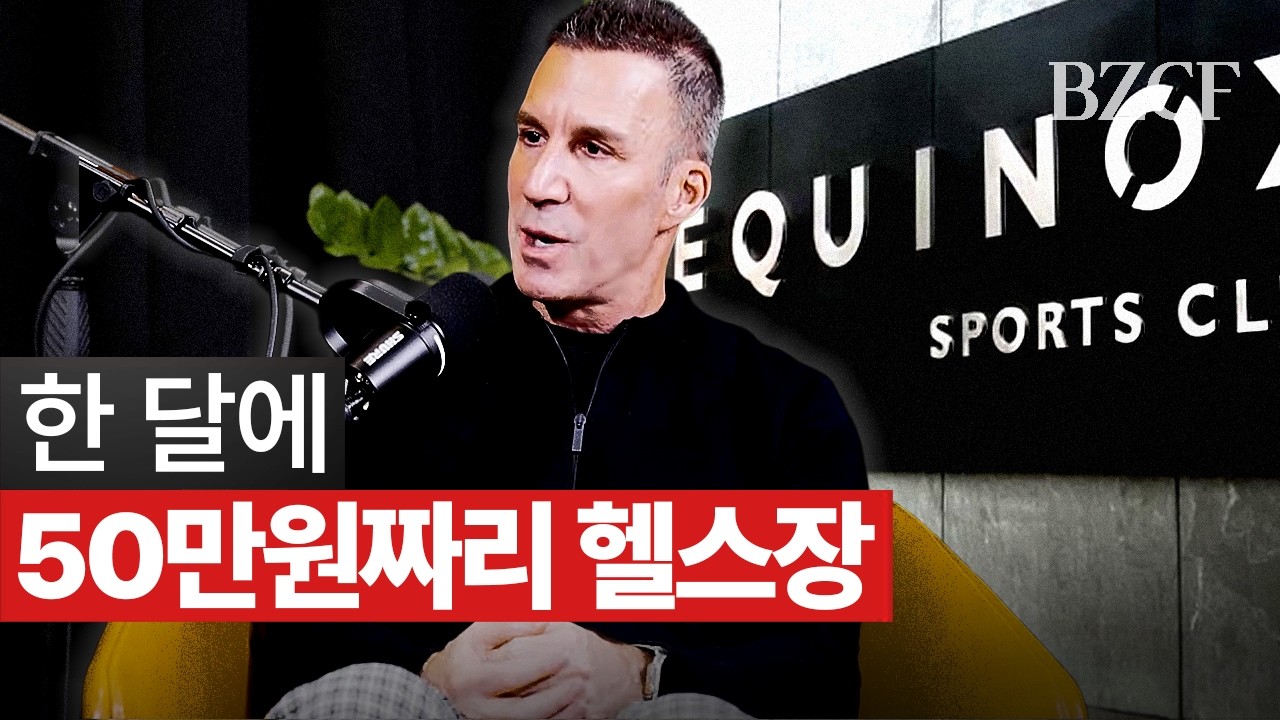
No clickbait detected — the title and thumbnail deliver what they promise.
AI Opinion
The episode makes its most convincing case by arguing that Equinox’s success comes from anticipating unspoken member desires and rigorously adapting each club to its local market, a strategy validated by the brand’s pop-culture cachet and strong post-COVID recovery. However, the claim that “nobody in Equinox’s category partners with top 100 designers like Robert Sterland” is only partially verified—while rare, it’s unclear whether competitors engage with similarly prestigious architects, and the CEO’s broader assertion that asking customers yields only “safe, boring answers” is a philosophical stance rather than a proven fact. A thoughtful viewer should double-check whether the brand’s physical-first, 98% in-person model truly drove the recovery, or if the pandemic’s forced closures merely compressed demand for luxury fitness, and also consider that the AI integration for site selection and 24/7 communication is promising but unproven at scale.
Voices are AI rewrites of the same facts — style changes, not substance.
Summary
Harvey Spevak, CEO of Equinox, explains that the brand's success stems from anticipating member needs rather than asking them, as most people don't know what they want. He shares his own path from a sneaker retail business to Equinox, emphasizing following passion over a rigid career plan. Equinox adapts each club to its local market, as seen in a new Chicago location with larger lounge and strength areas, and partners with top designers like Robert Sterland to avoid a cookie-cutter feel. The company uses pep rallies to inspire staff on opening days and maintains financial discipline through return analysis and leveraging its status as a desirable anchor tenant. The brand's pop culture relevance is organic, illustrated by mentions from Kanye West and collaborations with celebrities like Jay Balvin. During COVID-19, Equinox shut down over 200 locations and burned hundreds of millions in cash, but the CEO insists the physical experience remains 98% of the business, driving a strong recovery. The company is now integrating AI to speed up site selection and club openings, and to enable 24/7 member communication. The episode also covers how Equinox served as a sanctuary during 9/11, navigated the 2008 financial crisis by pioneering luxury amenities like Kiehl's, and weathered the pandemic as its biggest financial challenge.
Voices are AI rewrites of the same facts — style changes, not substance.
Key Points
Brand Philosophy: Anticipating Needs Over Asking Customers
Spevak states that you cannot ask people what they want because most don't know, and asking leads to safe, boring answers. Instead, Equinox focuses on anticipating the needs of its consumers and community, which has been key to the brand's success. He emphasizes that the brand must communicate what you belong to and inspire and motivate its members.
Harvey Spevak's Background and Entry into Business
Harvey Spevak grew up in Rockland County after being born in the Bronx, and worked at a local sneaker store called Sports Shed during high school, which sparked his passion for sneakers. He earned both his undergraduate and graduate business degrees from the University of Michigan, then briefly worked on Wall Street before returning to the sneaker business with his childhood best friend. They opened Manhattan Sports stores, starting near Columbia University at 112th and Broadway, next to Tom's Diner from Seinfeld. His father was initially skeptical of him leaving Wall Street to sell 'socks and jocks,' but the venture succeeded.
Philosophy of Following Passion Over a Career Roadmap
Spevak explains that he never had a strict career roadmap or specific goals for where he wanted to be in X years. Instead, he always followed what excited him, believing that if he was passionate about his work, he would put in strong effort and achieve great results. He attributes his tenacity and strong work ethic to his father, and notes that this approach guided him through transitions, including leaving the sneaker retail business because it was tough.
Transition from Sneaker Retail to Equinox
After realizing that retail is a difficult business, Spevak exited the sneaker industry and began figuring out his next move. He mentions that he had a neighbor on the Upper West Side who became a key connection, though the story is cut off in this chunk. This transition period set the stage for his eventual involvement with Equinox.
Equinox adapts club design to local market trends
Equinox tailors each club to its local market by analyzing consumer behavior and preferences. For example, their new West Chicago location features a larger lounge area for communal space, a bigger strength area with racks and free weights, and reduced cardio equipment. This shift reflects changing member demands, even though it is less efficient in terms of square footage for the business.
Equinox partners with top-tier designers to elevate club aesthetics
Equinox collaborates with high-profile designers like Robert Sterland, an Architectural Digest top 100 designer, to create unique, non-cookie-cutter club interiors. This partnership is rare in the fitness industry and helps Equinox maintain a luxury lifestyle brand image. The CEO personally oversees design meetings weekly to ensure each club meets their standards.
Equinox uses pep rallies to inspire staff and build brand culture
On opening day of a new club, Equinox holds a pep rally where group fitness instructors and trainers, described as world-class and passionate, take the stage to motivate employees. This ritual, likened to high school or college football pep rallies, creates excitement and reinforces the brand's heart: its team. The CEO notes it gives 'goosebumps' and is unique to Equinox.
Equinox maintains financial discipline through return analysis and landlord leverage
Equinox is disciplined in capital allocation, using return analysis to ensure each location meets required thresholds. They secure favorable terms from landlords because the brand is seen as an amenity anchor for buildings or mixed-use projects. The CEO is personally involved in design meetings to control costs and ensure consistency, while the company also invests in AI and future club concepts.
Equinox as a pop culture fixture: Kanye West mention and celebrity partnerships
The CEO recounts being mentioned in a Kanye West song after a call from legendary producer Steve Stout, emphasizing that the brand's pop culture relevance happens organically, not through paid placements. He also notes that celebrities like Jay Balvin actively seek association with Equinox, such as when Balvin created a viral mental health campaign for the brand on Mental Health Day, demonstrating that Equinox's cultural cachet attracts high-profile collaborators who want the brand association as much as the company wants theirs.
COVID-19 impact and digital pivot: Equinox's physical-first strategy
AI integration for operational efficiency and member experience
Equinox is deploying AI to shrink the lead time from site selection to club opening by months, affecting design, documentation, and lease negotiations—even warning that lawyers may be impacted. AI agents also enable 24/7 member communication, so a member waking up at 3 AM can get an immediate response. The CEO notes that AI is being infused across both the club and hotel businesses, with cross-learning between the two hospitality verticals.
9/11: Equinox Wall Street Club as a Sanctuary
During the 9/11 attacks, the Equinox club across from the New York Stock Exchange became a sanctuary for anyone needing cover from flying debris. General manager Denise Johnzik kept a plug-in phone line open after cell networks went down, allowing staff to coordinate. The club reopened quickly, recognizing its role as a safe haven for the community, providing comfort and normalcy amid chaos.
2008 Financial Crisis: Resilience and Strategic Investment
During the Great Recession, Equinox faced the bankruptcy of major corporate clients like Bear Stearns and Lehman Brothers. The CEO acted as a calming force, leading the team to achieve a flat year in 2009—considered heroic performance. In fall 2009, they pioneered luxury amenities by introducing Kiehl's into locker rooms, a move that members initially questioned during the recession but ultimately drove business growth.
COVID-19 Pandemic: The Biggest Financial and Operational Challenge
The pandemic forced Equinox to shut down locations for extended periods—nearly two years in LA and six months in New York, with mask mandates effectively closing operations. The company burned hundreds of millions of dollars in cash reserves, describing it as 'going to the toilet every day.' Despite the adversity, the CEO and team maintained positivity and faith, navigating the crisis with adept management.
Chapters
Claims & Fact Check
You can't ask people what they want because most people don't know; asking leads to safe, boring answers.
?UnverifiedHarvey Spevak earned both undergraduate and graduate business degrees from the University of Michigan.
?UnverifiedThe first Manhattan Sports store was opened near Columbia University at 112th and Broadway, next to Tom's Diner from Seinfeld.
?UnverifiedEquinox's new West Chicago club has a much bigger lounge area because people want more communal space.
?UnverifiedNobody in Equinox's category partners with top 100 designers like Robert Sterland.
?UnverifiedEquinox holds a pep rally on the day of opening a new club to inspire employees.
?UnverifiedEquinox's physical experience will remain 98% of the action, with digital as a complement.
?UnverifiedAI is being used to shrink the lead time from site selection to club opening by months.
?UnverifiedEquinox uses AI agents to provide 24/7 member communication.
?UnverifiedEquinox introduced Kiehl's into locker rooms in fall 2009, which was pioneering at the time.
?UnverifiedEquinox recently replaced their amenity brand Grown Alchemist with Lavo, receiving a similar positive response from members.
?UnverifiedDuring COVID-19, Equinox lost hundreds of millions of dollars in cash.
?Unverified