No clickbait detected — the title and thumbnail deliver what they promise.
AI Opinion
The episode convincingly explains how evaporative cooling through stomata keeps plants about 5°C cooler than their surroundings, with the claim that up to 50% of absorbed sunlight powers this process rather than heating the plant. The urban cooling effect of Madrid's El Retiro Park—reducing air temperature by up to 2.8°C and extending 600 meters into the city—is presented as verified, but the episode does not disclose the specific study or methodology behind this measurement, leaving room for questions about seasonal or weather-dependent variability. A thoughtful viewer should double-check whether the 2.8°C figure represents an average, peak, or ideal-condition measurement, and consider that the parallel drawn to the Anker Prime Charger's thermal management is more an analogy than a direct engineering inspiration.
Voices are AI rewrites of the same facts — style changes, not substance.
Summary
Plants can be about 5°C cooler than their surroundings, a phenomenon captured by thermal cameras. This cooling is not due to lower sunlight absorption or photosynthesis, which uses only about 1% of sunlight, but rather evaporative cooling. When plants open their stomata to take in carbon dioxide, water evaporates from the leaves, drawing away significant heat energy—up to 50% of absorbed sunlight goes into this process rather than heating the plant. This natural mechanism has a measurable impact on urban environments: Madrid's El Retiro Park, for example, cools the surrounding air by up to 2.8°C, with effects extending 600 meters into the city center. The episode also draws a parallel to thermal management in technology, highlighting the Anker Prime Charger, which uses a thermal silicone and L-shaped graphene structure to dissipate heat from AC-to-DC conversion, monitored by an Active Shield 4.0 that checks temperature 10 million times per day.
Voices are AI rewrites of the same facts — style changes, not substance.
Key Points
Plants are 5°C cooler than surroundings due to evaporative cooling
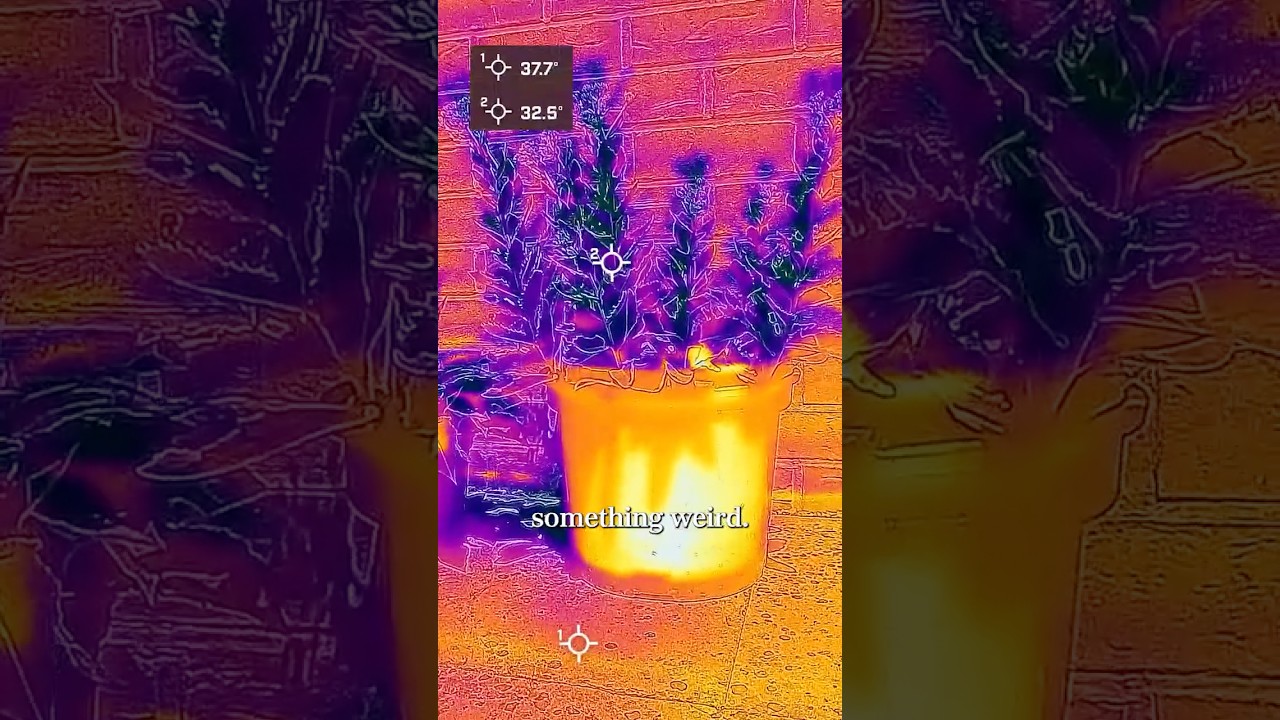
A thermal camera reveals that a plant sitting in the same hot sun and air as concrete is about 5°C colder. This is not because plants absorb less sunlight—they absorb similar amounts—nor because photosynthesis uses much energy (only about 1% of sunlight). Instead, the cooling comes from water evaporation through stomata: when a plant opens its pores to take in carbon dioxide, water inside the leaf evaporates into dry air, pulling energy (about 2,400 J per milliliter) directly from the leaf. Up to 50% of absorbed sunlight goes into evaporating water rather than heating the plant, keeping it cool.
Evaporative cooling can cool entire urban areas
The effect is noticeable in parks: Madrid's El Retiro Park cools the surrounding air by up to 2.8°C, and this cooling extends up to 600 meters into the dense city center. This demonstrates how plants' natural sweating mechanism can mitigate urban heat islands, providing a tangible benefit beyond the plant itself.
Anker Prime Charger uses thermal management inspired by plant cooling
Just as green spaces pull heat out of a city, the Anker Prime Charger manages heat from AC-to-DC conversion (which is never 100% efficient) using a unique thermal silicone and an L-shaped graphene structure that draws heat away from the hottest components. An Active Shield 4.0 checks temperature 10 million times per day to maintain optimal operating temperatures, preventing component breakdown.
Chapters
Claims & Fact Check
Plants are about 5°C colder than their surroundings when measured with a thermal camera.
?UnverifiedUp to 50% of sunlight absorbed by a plant goes into evaporating water instead of heating it.
?UnverifiedMadrid's El Retiro Park cools the surrounding air by up to 2.8°C, even 600 m into the city center.
?Unverified