Clickbait Checker
The video title says:
"The True Story Of The Odyssey (and why it matters) - Alex Petkas"
Reality:
The title accurately reflects an exploration of *The Odyssey*'s themes, narrative elements, and enduring relevance, though the 'why it matters' aspect is broad and encompasses a wide range of modern connections.
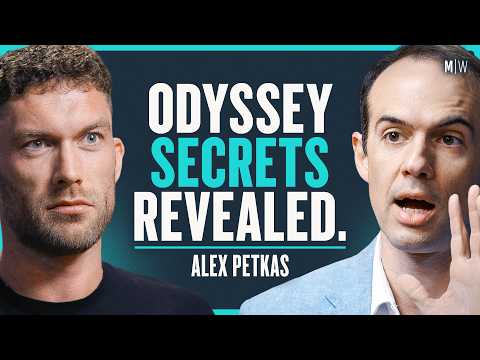
The thumbnail says:
"ODYSSEY SECRETS REVEALED. ALEX PETKAS M|W"
Reality:
While the thumbnail promises 'Odyssey Secrets Revealed,' the episode delves into thematic analysis, cultural context, and comparative literary discussion rather than uncovering previously unknown facts about the story itself.
AI Opinion
Alex Petkas’s exploration of *The Odyssey* effectively highlights the poem's enduring themes of temptation, societal order, and the value of cunning—particularly in contrasting Odysseus’s approach with that of the Cyclops. The episode convincingly argues for a connection between Homeric storytelling and modern anxieties surrounding information overload and the decline of uncomplicated heroism, drawing compelling parallels to contemporary rap music and narrative structure. However, some claims regarding cultural comparisons, such as equating Greek interactions with Phoenicians or the Cyclops’s behavior to libertarianism, rest on interpretations that require further historical context and are not universally accepted; viewers should consider these assertions as insightful perspectives rather than definitive conclusions. Ultimately, a thoughtful engagement with this episode necessitates recognizing *The Odyssey*'s inherent ambiguities and appreciating its capacity for ongoing interpretation across cultures and time periods.
Voices are AI rewrites of the same facts — style changes, not substance.
Summary
The episode explores key themes and narrative elements within Homer's *Odyssey*, examining its enduring relevance through modern perspectives. The story highlights the dangers of temptation, exemplified by the Lotus Eaters, and contrasts Greek societal norms with the individualistic lifestyle of the Cyclopses, emphasizing the value of cunning over brute force in Odysseus’s victory. A significant portion is dedicated to understanding Homer's depiction of the underworld, its rituals, and the nature of spirits, alongside a discussion of the origins of Homeric poetry and the contributions of women within heroic narratives. The episode also delves into philosophical contrasts between *The Iliad* and *The Odyssey*, Adysius’s testing of the suitors, and Penelope's deceptive strategies to delay choosing a suitor. Furthermore, it examines broader cultural trends like information overload and the decline of uncomplicated heroism in modern storytelling, drawing parallels between Homeric poetry and contemporary rap music while considering the significance of narrative structure for understanding complex ideas.
Voices are AI rewrites of the same facts — style changes, not substance.
Key Points
The Odyssey's Structure and Focus on Telemachus
The Odyssey is structured with the first four books focusing on Telemachus, Odysseus’ son, who is dealing with suitors vying for his mother Penelope's hand while Odysseus is absent. Books 9 through 12 feature Odysseus recounting his backstory to the Phaeacians, providing crucial context. The final books (13-24) detail Odysseus’ return to Ithaca and his confrontation with the suitors, highlighting the consequences of prolonged absence and leadership.
Telemachus's Upbringing and Vulnerability
Telemachus is only 20 years old when the story begins, having grown up without his father Odysseus. He was raised primarily by women – his mother Penelope and loyal servants – creating a vulnerability and lack of experience that contrasts with his absent father's heroic status. This absence motivates much of the narrative and sets the stage for Odysseus’ eventual return.
Penelope's Desirability Explained by Mimetic Desire
While Penelope is attractive, her desirability extends beyond mere physical allure. The concept of mimetic desire explains that suitors seek to marry her not just for personal gain but also to elevate their own status and emulate the heroism associated with Odysseus. This highlights a deeper societal dynamic where marriage becomes a symbol of power and prestige.
The Odyssey's Resonance Across Cultures
Director Chris Nolan has noted that the Odyssey serves as an archetypal story, appearing in many of his films. This suggests a universality to its themes and structure, resonating across different narratives and cultures. The story’s enduring appeal lies in its exploration of universal human experiences and challenges.
Parallelism with Helen of Troy
The suitors’ pursuit of Penelope mirrors the events surrounding Helen of Troy, serving as cautionary tales. Homer presents alternative scenarios where women make different choices, emphasizing the potential consequences of straying from traditional roles and highlighting Penelope's strength in resisting the suitors' advances.
Helen's Use of Deception and Self-deprecation
During the feast at Menelaus’s palace, Helen employs a manipulative tactic by initially insulting herself. This disarming strategy allows her to gain favor and deflect criticism, showcasing a complex portrayal of female power within the narrative. She strategically uses self-deprecation to manipulate perceptions and evade accountability for her past actions, demonstrating a shrewd understanding of human psychology.
The Significance of Pious Rituals in Homer's Odyssey
Homer emphasizes the importance of ritualistic practices like prayer and sacrifice as indicators of a well-ordered society within *The Odyssey*. These actions, consistently performed by those considered virtuous, contrast sharply with the behavior of the suitors who lack piety. The consistent depiction of these rituals serves to highlight moral distinctions and reinforces Homer’s values regarding proper conduct.
Tymicus's Act of Refusing Menelaus's Gifts
When offered a magnificent horse by Menelaus, Tymicus politely declines, explaining that his homeland is an 'ugly scraggly island' unsuitable for horses. This refusal isn’t mere politeness; it symbolizes his commitment to his duty and the challenges awaiting him at home. It underscores his desire to face adversity head-on rather than seeking comfort or indulgence.
The Suitors' Plot Highlights Their Moral Depravity
Homer explicitly portrays the suitors as morally reprehensible by revealing their plot to ambush and murder Tymicus upon his return. This act demonstrates their lawlessness and disregard for justice, solidifying their status as villains deserving of punishment. The narrator emphasizes this wickedness to ensure the audience understands the severity of their actions.
The Cooked vs. Raw Distinction in Homeric Society
Alex Petkas explains that the Odyssey uses the distinction between cooked and raw food as a symbolic marker of civilization versus barbarism, drawing parallels to concepts like nature versus culture and male versus female. This division highlights Odysseus's position within the narrative, emphasizing his adherence to civilized practices, particularly in contrast to those considered 'wild.' The act of cooking food represents a key step away from primal existence and towards societal refinement.
Odysseus's Symbolic Nakedness Upon Reaching Scheria
After Poseidon’s storm destroys his raft, Odysseus washes ashore on Scheria completely naked. This moment is laden with symbolism, representing a form of death and rebirth akin to baptism. The loss of his luxurious robes gifted by Calypso signifies a stripping away of the old identity and a preparation for a new chapter in his journey, highlighting vulnerability and dependence.
Nausicaa's Role as a Bridge to Civilization
Upon arriving on Scheria, Odysseus is discovered by Nausicaa, the princess, who embodies the values of civilization. Her bravery in approaching him despite his frightening appearance—described as resembling Tom Hanks from Castaway—is crucial to Odysseus's progress. She represents a willingness to engage with the unknown and facilitates his entry into Phaeacian society by directing him towards her mother, the queen.
Odysseus's Strategic Use of Women’s Agency
Alex Petkas points out that Odysseus strategically leverages women's agency to advance his goals and ultimately return home. His initial interaction with Nausicaa demonstrates a calculated approach, appealing to her sense of compassion and curiosity while subtly manipulating the situation to gain access to the royal court. This highlights a recurring theme in the Odyssey: Odysseus’s ability to navigate complex social dynamics through skillful manipulation.
The Lotus Eaters and Temptation
After a failed raid on the Thrians, Odysseus's men encounter the Lotus Eaters, inhabitants of an island who offer a flower that induces forgetfulness. The lotus flower’s effects cause those who consume it to lose all desire for home and return journey, effectively trapping them in a state of blissful oblivion. This episode serves as a symbolic representation of temptation and the dangers of succumbing to immediate gratification over long-term goals.
Cyclopses: A Study in Contrasting Societies
Odysseus's encounter with the Cyclopses highlights a stark contrast between Greek societal norms and the isolated, individualistic lifestyle of these giants. The Cyclopses reject the authority of Zeus and operate under a system where 'every man is a law to his own wife and children,' essentially a form of extreme libertarianism. This lack of social order makes them vulnerable to trickery and ultimately leads to their downfall at Odysseus's hands.
The Significance of Craftiness vs. Force
The Cyclops encounter underscores a central theme in the Odyssey: the power of craftiness and intellect over brute force. Odysseus defeats the formidable Polyphemus not through strength, but by employing cunning and deception – blinding him while he sleeps after plying him with wine. This victory emphasizes the value of strategic thinking and ingenuity in overcoming seemingly insurmountable obstacles.
The Complex Ritual to Contact the Dead
To consult the prophet Tiresias, Odysseus must journey to the underworld. This isn't a simple descent; it requires a lengthy sea voyage and performing a specific ritual upon arrival. He digs a trench with his sword, mixes honey, milk, and barley, and sacrifices lambs by draining their blood into the hole to summon the spirits of the dead – essentially bringing the underworld *to* him.
The Nature of Spirits in Homer's Underworld
Homer’s depiction of the spirits in the underworld differs significantly from traditional notions of souls. They are described as 'wraiths,' 'insubstantial remnants,’ and lack a complete sense of identity. To communicate with them, Odysseus must offer blood as a catalyst, granting them a temporary semblance of life to speak.
The Origins of Homeric Poetry
Modern scholars debate whether Homer was a single individual or a collective of contributors, highlighting the complex origins of the Iliad and the Odyssey. The tradition likely evolved over centuries, drawing upon shared Indo-European poetic roots that connect to narratives found in cultures like India's Mahabarata, demonstrating a common ancestral storytelling heritage.
The Significance of Women's Voices in Heroic Narratives
A notable detail is the order in which Odysseus encounters spirits – initially, not famous heroes from the Iliad, but women who are mothers, wives, or daughters of those heroes. These women narrate stories about their male relatives, providing crucial context and insight into the making of a hero that would otherwise be inaccessible to Odysseus. This highlights how women contribute to the construction and understanding of heroic legacies.
The Iliad vs. The Odyssey: A Philosophical Contrast
The encounter with Achilles in the underworld creates a philosophical tension between *The Iliad* and *The Odyssey*. In *The Iliad*, Achilles' choice to die young for eternal glory is celebrated. However, Odysseus, meeting his ghost, questions this decision, suggesting that perhaps a long life is preferable—a shift in Homer’s perspective on what constitutes a worthwhile existence.
Adysius' Testing of the Suitors’ Character
After disguising himself as a beggar, Adysius deliberately provokes the suitors to assess their character. He observes that throwing a bench at him is an ungentlemanly and unmanly act, confirming his suspicion that they are not serious men of honor or warriors who would handle situations with restraint. This testing serves as a crucial step in formulating a plan for eventual retribution.
The Maidens' Disloyalty and Penelope's Frustration
Homer portrays the actions of several maids as disloyal, having engaged in relationships with the suitors. Penelope expresses deep frustration and anger towards these women, viewing their behavior as disrespectful to her and a betrayal of Odysseus and his son Telemachus. This adds another layer of complexity to the household's turmoil and underscores the widespread corruption within.
The Significance of Endurance and Self-Control
Adysius reminds himself to endure the insults and provocations, drawing parallels to his past ordeal with Polyphemus. He recognizes that maintaining composure and restraint is a vital skill, just as it allowed him to escape the cyclops' cave; acting rashly would have sealed his fate then, and could do so now. This highlights the theme of self-control as a key virtue in Homeric epic.
Penelope’s Deception with the Funeral Shroud
To delay choosing a suitor, Penelope has been weaving a funeral shroud for her father-in-law, Leertes. However, she secretly unravels it each night, extending the process and postponing a decision. This deception is exposed by one of the maids, forcing Penelope to confront the suitors and ultimately leading to the archery contest that will reveal Odysseus’ identity.
The Unusual Ending of The Odyssey
The ending of *The Odyssey* deviates from typical heroic narratives, featuring a confrontation between the townspeople and Odysseus's supporters that escalates into a battle. This conflict is abruptly halted by Athena’s intervention, representing a *deus ex machina*, or divine intervention to resolve an otherwise intractable problem. While some individuals perish, peace is ultimately restored through divine influence, highlighting a shift from revenge-driven justice towards a more ordered resolution.
Zeus's Perspective on Divine Justice
Homer portrays Zeus as asserting that the world is fundamentally fair if individuals adhere to established rules and customs. This perspective challenges the notion that divine actions solely inflict suffering, suggesting instead that mortals often create their own misfortunes through disobedience and immoral choices. The story of Aristes serves as an example: his violent acts led directly to his deserved punishment.
Comparing Homeric Poetry to Modern Rap
The speaker draws a parallel between Homer's oral poetry and modern rap music, noting that both rely on memorization and performance. However, he highlights a key distinction: Homer’s work is characterized by piety and reverence for the gods, a quality less commonly associated with contemporary rap artists. This comparison explores how different cultural contexts shape artistic expression and moral values.
The Cyclops Incident as a Lesson in Hubris
Alex discusses Odysseus's mistakes within *The Odyssey*, specifically highlighting the incident with the Cyclops. He points out that Odysseus’s actions, such as revealing his name, demonstrate a lack of judgment and foreshadow potential consequences. This serves as an example of how curiosity, even when seemingly harmless, can lead to negative outcomes if not tempered by wisdom and caution.
The Decline of the Uncomplicated Hero in Modern Storytelling
Alex observes a shift in modern storytelling away from uncomplicated, virtuous heroes. He contrasts this with the simplicity of characters like Tom Cruise in *Top Gun 2*, arguing that contemporary protagonists often require complex backstories and redemption arcs involving familial or parental figures. This trend reflects a broader cultural desire for nuanced narratives but may also contribute to audience fatigue.
The Rise of 'Anti-Optimization' and Information Fatigue
Alex identifies an emerging “anti-optimization” trend, suggesting a growing dissatisfaction with the pressure to constantly improve and perfect oneself. This stems from information overload—a shift from scarcity of knowledge to abundance—leaving individuals feeling overwhelmed and seeking simpler, less demanding experiences. He uses the analogy of calorie consumption to illustrate how excessive information intake can feel like burdensome homework.
Information Overload Leads to Apathy
Alex discusses a theory from an information expert who worked for US intelligence agencies, suggesting that the primary goal of much online content isn't necessarily to convince people of specific narratives but rather to overwhelm them with so much information that they become apathetic and give up critical thinking. He explains this is done to create a population susceptible to manipulation at a later point, by forming their apathy into something useful. This 'fire hose' of information prevents reflection and thoughtful analysis.
Narrative Provides Structure for Understanding
The speaker argues that long narratives like the Odyssey offer a crucial antidote to information overload. They suggest that these stories slow down brain activity and facilitate reflection, acting as more than just entertainment. Humans are inherently wired to process information through narrative structures, allowing for better memory retention and the ability to draw lessons from them years later.
The Significance of Writing’s Arrival
The Greeks adopted writing from the Phoenicians around the 8th century BC and quickly produced literary masterpieces like the Iliad and the Odyssey. This timing is remarkable, as it coincides with the emergence of some of the greatest works of literature ever written, suggesting a unique cultural flowering facilitated by the new technology.
The Odyssey's Ambiguity Fosters Debate
Alex highlights that The Odyssey isn’t a simplistic tale of heroism; it is complex and open to interpretation. He notes that some ancient Greeks viewed Odysseus as a negative figure – a liar and cheater, while others considered him the greatest hero. This ambiguity fostered debate and critical engagement with the story's themes and characters, demonstrating the value of narratives that don’t present idealized or uncomplicated heroes.
The Character of Deodicus - A Homeric Figure
Within the Odyssey itself appears the character of Deodicus, a blind bard who mirrors aspects of Homer’s own persona. This inclusion may be an intentional parallel, where the gods have taken away his sight but granted him deeper insight into human suffering and universal mysteries, potentially reflecting a symbolic representation of the poet's role.
Chapters
Claims & Fact Check
Chris Nolan considers The Odyssey to be an archetypal story.
±Partially supportedThe Greeks 'stole' writing from the Phoenicians and modified it.
?UnverifiedHomer may have been blind, mirroring a character in The Odyssey.
?Unverified50% of the Odyssey is like Love Island.
?UnverifiedHomer wants to get you to feel viscerally what it's like when the father figure is absent.
±Partially supportedThe real reason Penelope is desirable is mimetic desire.
?UnverifiedThe suitors are trying to usurp the status of the greatest hero alive.
?UnverifiedHelen uses self-deprecation to manipulate others.
?UnverifiedHomer places greater emphasis on cultural order in the Odyssey than in the Iliad.
?UnverifiedThe suitors are universally portrayed as 'bad' and deserving of punishment.
?UnverifiedThe distinction between cooked and raw food signifies civilization versus barbarism.
±Partially supportedOdysseus's nakedness upon reaching Scheria symbolizes death and rebirth.
?UnverifiedNausicaa’s bravery in approaching Odysseus is essential to his progress.
?UnverifiedThe Cyclopses represent a form of extreme libertarianism.
?UnverifiedGiving wine to the Cyclops is comparable to giving whiskey to Native Americans.
±Partially supportedAdysius's blinding of Polyphemus demonstrates the triumph of craftiness over brute force.
±Partially supportedTo reach Tiresias, Odysseus must sail for many days and perform a ritual to summon the dead.
±Partially supportedThe spirits in the underworld are not fully formed souls, but rather insubstantial remnants.
?UnverifiedWomen play a crucial role in narrating the deeds of heroes and upholding order within the underworld.
?UnverifiedThe suitors are not serious men.
±Partially supportedHomer treats the maids' actions as their fault.
?UnverifiedPenelope is tricking the suitors with her weaving.
±Partially supportedThe ending of The Odyssey involves a battle between Odysseus's supporters and the townspeople.
?UnverifiedAthena’s intervention in the ending is an example of a *deus ex machina*.
±Partially supportedZeus believes that the world is fair if people follow the rules.
?UnverifiedCuriosity is a vice in some Greek philosophy.
?UnverifiedModern heroes require complex backstories and redemption arcs.
?UnverifiedPeople are experiencing information fatigue due to an abundance of knowledge.
±Partially supportedThe primary goal of much online content is to overwhelm people with information leading to apathy.
±Partially supportedNarratives slow down brain activity and facilitate reflection.
±Partially supportedSome ancient Greeks viewed Odysseus as a negative figure.
±Partially supported