Clickbait Checker
The video title says:
"URGENT UPDATE - Iran War Expert: A Mass Casualty Attack Is Coming! | Robert Pape"
Reality:
The title promises an urgent update about a mass casualty attack, but the episode focuses on geopolitical analysis, economic crisis, and ground operation probabilities, not an imminent mass casualty event.
AI Opinion
Robert Pape’s most convincing argument is that the U.S.-Iran conflict has entered a self-reinforcing escalation spiral where economic pressure from Hormuz and Red Sea disruptions leaves President Trump with few off-ramps, making a limited ground operation more likely than commonly assumed. However, his specific probability estimates—such as a 70% chance of ground operations “by the end of the week”—rest on unverified claims about real-time events, including Houthi shutdowns and Trump’s social media posts, that cannot be independently confirmed. A thoughtful viewer should treat Pape’s timeline and precise percentages with skepticism, and instead focus on the structural logic he outlines: that air power alone rarely topples regimes, that ground forces historically fuel insurgencies, and that congressional defunding remains a rare but historically viable brake on executive war-making.
Avatars are AI rewrites of the same facts — style changes, not substance.
Summary
Political scientist Robert Pape warns that the U.S.-Iran conflict has entered a dangerous new phase, with a global economic crisis imminent due to Iran’s control of the Strait of Hormuz and Houthi disruptions in the Red Sea. He assesses the probability of a limited U.S. ground operation in Iran at over 50%, bordering on 70%, driven by escalating economic pressure and Iran’s stated desire for revenge. Pape notes that MAGA Republican support for the war is high and hardening, and that the escalation spiral is no longer solely up to President Trump to control. He argues that air power alone cannot topple regimes and that ground forces, not airstrikes, fuel suicide terrorism. Pape claims that achievable offramps no longer exist, and the only way out may be for Democrats to win the midterms and defund the war, as Congress last did in 1974. He predicts ground operations into Iranian islands or coast within months, and warns that if Iran becomes a regional hegemon, it could acquire nuclear weapons within a year or two. The human cost is underscored by the 90 million Iranians caught in the conflict.
Avatars are AI rewrites of the same facts — style changes, not substance.
Key Points
Stage Three Prediction: Global Economic Crisis Imminent
Robert Pape warns that the world is entering the 'stage three' of his long-term model, comparing the situation to the Titanic about to hit an iceberg. He predicts a global economic crisis driven by the world running out of oil, exacerbated by Iran's control of the Strait of Hormuz and ongoing US bombing campaigns. This is based on 20 years of modeling and advice to multiple White Houses from 2001 to 2024.
US Ground Operation in Iran: 70% Probability by End of Week
Pape assesses the risk of a US limited ground operation in Iran as bordering on 70% by the end of the week. He expresses concern about terrorist attacks because controlling pieces of homeland territory is the biggest risk factor for suicide terrorism. The choice, he says, is between a global economic crisis or letting Iran control the Strait of Hormuz.
Iranian Regime Survived Decapitation Strike; Air Power Alone Never Topples Regimes
Pape explains that despite the US killing the supreme leader and 137 top Iranian leaders (equivalent to killing the US president, first lady, half the cabinet, all Pentagon and CIA leaders, and a third of Congress), the Iranian regime survived. He notes that air power alone has never toppled a regime since World War I, a historical pattern his 20-year model captured. This surprised many, including military personnel.
The Core Dilemma: How to Get Iran to Give Up Control of Hormuz
After a regime change bombing campaign on February 28th and a subsequent two-month blockade, Iran took control of the Strait of Hormuz within days. Ships stopped cold and have only reopened in tiny periods. Pape frames the dilemma: either physically retake Hormuz (since other tactics like a memorandum of understanding failed) or let Iran control it indefinitely. This has been the core issue since early March.
Trump's Deal Violations and Return to War
Pape explains that President Trump signed a deal to open the Strait of Hormuz, but within 48 hours his administration began undermining it. Secretary Rubio's framework accord in Lebanon violated Article 1 by locking in Israel's military presence, contradicting the guarantee of Lebanon's territorial integrity. Trump also encouraged ships to bypass Iran's control via the southern passage with transponders off, violating Article 5, and imposed conditions on unfreezing Iranian assets, violating Article 11. These actions led Iran to resume attacks, restarting the war.
Iran's Strategic Ambition for Regional Hegemony
Pape argues that the conflict is fundamentally about great power politics: Iran aims to become the dominant regional power, while the U.S. opposes that. He states that Iran's decision to shoot at ships was a response to U.S. violations of the deal, not a legal dispute. The war, ongoing since early March, is driven by this core rivalry, with Iran moving from survival to ambition after seeing a U.S. military gap in the region.
Iran's Shift from Survival to Ambition
Pape notes that before February 28, Iran did not control the Strait of Hormuz. However, after U.S. bombing and the absence of a U.S. naval presence, Iran saw an opportunity to assert control. This shift from survival to ambition allowed Iran to begin regulating passage through the strait, marking a significant change in regional dynamics.
Shipping Companies Refuse to Sail
The speaker argues that military assurances are insufficient because shipping companies, not the Pentagon, decide whether to sail. Each tanker crossing the Strait of Hormuz is worth up to $300 million (vessel plus oil), and crews refuse to risk their lives. This leads to more ships leaving than entering, with remaining ships diverting to Iran's ports, prompting Trump's blockade.
Economic Crisis from Oil Blockades
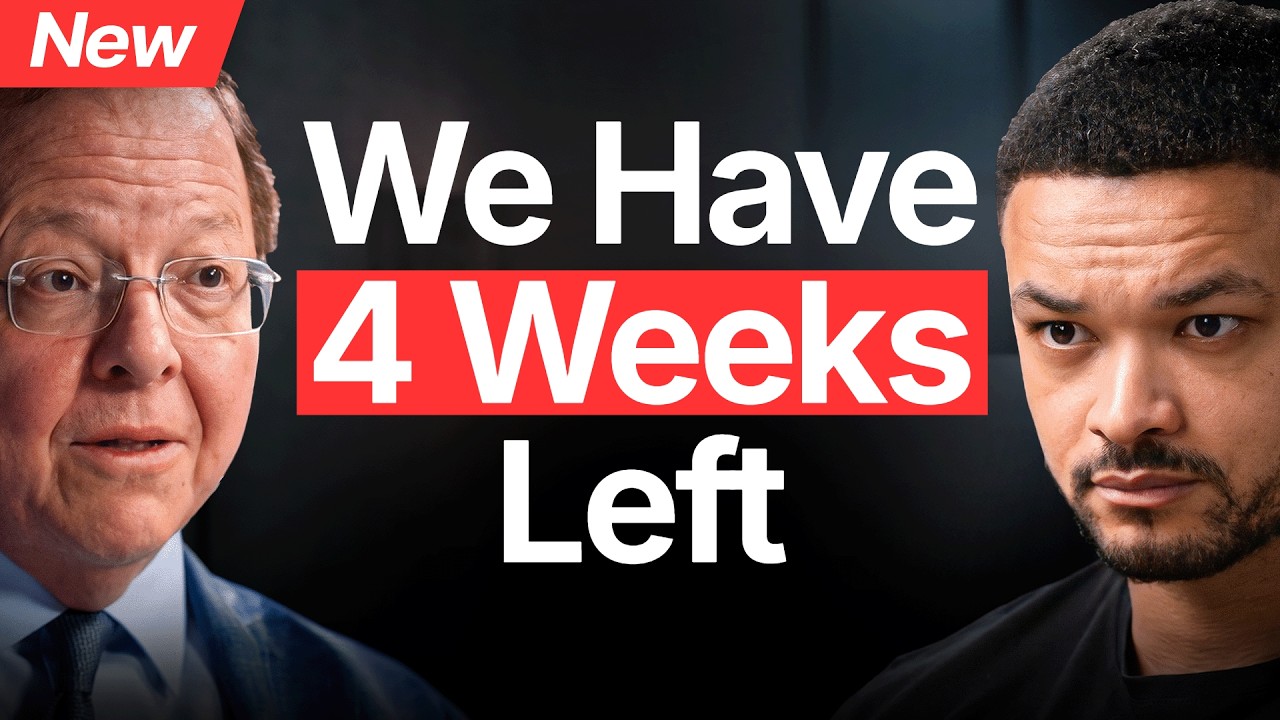
The speaker explains that the closure of the Strait of Hormuz and the Red Sea by Houthis (an Iran ally) is causing a global oil crisis. With 20 million barrels per day disrupted, only 13 million remain after Saudi and UAE bypass routes, and the US strategic petroleum reserve released 172 million barrels over 120 days as part of a 32-nation IEA effort totaling 400 million barrels. As of July 2026, the US reserve has dropped to 300 million barrels (lowest since 1983), and Trump warned of running out of oil in four weeks. Additionally, 25–33% of global refining capacity is in the Persian Gulf, now shut down, compounding the shortage.
Refining Capacity Crisis
Beyond crude oil, the world faces a refining capacity crisis because much of the world's refineries are located in the Persian Gulf, which is now blocked. The speaker notes that refined products like gasoline and diesel come through the region, and the shutdown affects about 25% to a third of global refining capacity. This is worsened by Ukraine blasting Russian refineries, creating a double blow to fuel supply.
Trump's Election Strategy and the Risk of Escalation
Pape compares Trump's current escalation with Iran to Lyndon Johnson's failed Vietnam War escalation, which forced Johnson to withdraw from reelection. He argues Trump is taking a similar risk by hoping a tiny chance of success will allow him to 'pull a rabbit out of the hat' in four or five months. Pape notes Trump has already planted seeds about China meddling in the election, suggesting he may blame foreign interference if the escalation does not improve his chances in November.
Escalation Ladder: From Limited Strike to Nuclear Threat
Robert Pape presents an upside-down pyramid graphic illustrating the escalation trap with Iran. Stage one begins with a limited strike, such as bombing leadership. Stage two involves retaliation and counter-retaliation, including a blockade and six weeks of bombing. Stage three is marked by an economic crisis, which was temporarily offset when China stopped buying 5 million barrels of oil per day after a summit with President Trump. Pape warns that if the U.S. does not exit the trap, Iran could become a regional hegemon and likely acquire nuclear weapons within a year or two.
Economic Crisis Offset by China's Oil Purchases
Pape explains that the economic crisis stage of the escalation trap was closer in March and April because China was still buying Iranian oil. However, after a summit with President Trump, China stopped purchasing 5 million barrels of oil per day, temporarily offsetting the crisis. Pape questions whether China got a good deal, noting that Trump later blamed China for election meddling. This shift moved the situation to the current point where the U.S. faces a choice between escalation or allowing Iran to become a rising regional power.
MAGA support for Iran war is high and hardening
Pape explains that opinion polls show a large portion of MAGA Republicans strongly support the war with Iran, contrary to the perception that MAGA has become anti-war like Tucker Carlson's audience. He cites polling from mid-2026 indicating that 77% to 85% of MAGA Republicans support the conflict, while only 5% to 14% oppose it. This support is likely to harden further as U.S. casualties occur, because deaths tend to reinforce pro-war sentiment in the short term rather than shift opinion toward opposition.
Risk of U.S. ground operation in Iran exceeds 50%, nearing 70%
Pape assesses the probability of a limited U.S. ground operation with boots on the ground in Iran as well over 50%, bordering on 70%. He attributes this to the escalating economic crisis, which President Trump was trying to prevent but is now becoming baked in, and the inability to de-escalate because Iran is in a mood for revenge. The Houthis closing the Red Sea port of Yanbu, where 4 to 5 million barrels of Saudi oil flow daily, further compounds the economic pressure and makes reversal increasingly difficult.
Escalation spiral is spiraling out of control, not solely up to Trump
Pape argues that the conflict is spiraling out of control because it is no longer solely up to President Trump to de-escalate; Iran must also stop its escalatory actions, such as allowing Red Sea oil flow and ships through the Strait of Hormuz. However, Iran is not in a mood to pull back but rather seeks revenge, as evidenced by the Supreme Leader's statement. Pape emphasizes that even if Trump were to withdraw immediately, Iran could reverse the situation the next day, making the crisis increasingly difficult to manage.
Iran's Supreme Leader vows 'unforgettable lessons' after U.S. soldier deaths
Pape reports that after two U.S. soldiers were killed in Jordan over the weekend, Iran's Supreme Leader used the exact phrase 'unforgettable lessons' to describe his intended response to America. This statement reflects Iran's emotional state of seeking revenge rather than pulling back, and it signals a hardening of the escalation spiral. Pape notes that Iran is now attacking U.S. bases in Jordan, closing the Red Sea via Houthi proxies, and that the situation in Kuwait over the weekend is a harbinger of more ferocious anger to come.
Ground forces trigger suicide terrorism, not airstrikes
Robert Pape explains that suicide terrorist attacks are driven by the presence of foreign ground forces, not by airstrikes or killing alone. He cites the example of Afghanistan: after the Taliban were toppled in fall 2021, suicide terrorism only began several years later when the U.S. poured in ground forces. The key mechanism is that ground forces impose political control and a deeper violation of local autonomy, which fuels resistance.
Trump's missed offramps and the current escalation trap
Pape states that an achievable offramp for the U.S. in the Iran conflict no longer exists. He advised Trump in early March to declare victory and walk away after killing the supreme leader, but Trump did not act. By April, Pape's advice shifted to militarily containing Israel, which Trump adopted months too late. Now, any offer to negotiate with Iran is not credible because the U.S. has violated previous agreements repeatedly.
Midterms as the only way out: Congress can defund the war
When asked if this is a 'forever war,' Pape says no, but the only way out is if Democrats win the House or Senate in the midterms and shut down funding for the war. He compares this to Congress's power used last in 1974 during Vietnam. Pape emphasizes that the period between now and the midterms is the most crucial, as it will determine whether the war escalates or ends.
Trump may lose midterms, leading to Democratic anti-war control
Pape predicts a good chance that Trump will lose one or both houses of Congress in the midterms. If Democrats take control, they will be 'hotly anti-war' and push to defund the conflict. He notes that the outcome hinges on whether America can physically open the Strait of Hormuz or if Trump pulls back, but ultimately 'it's always about the money.'
Pape's advice to Trump: pursue a multi-year strategy to rebuild regional power balance, not short-term electoral gains
Robert Pape says he would advise President Trump to design a several-year strategy to build a better balance of power in the Middle East, which could stabilize the world and the region over time. He argues that the current pressure to achieve an electoral victory for Trump is counterproductive, as it encourages the 'escalation trap' and makes true security for America and the Gulf less likely. Pape explicitly refuses to give advice focused on the next three months, stating that everything he would say about that timeframe has already been covered in the podcast.
China and Russia's strategic positions on the Iran crisis
Pape assesses that China does not want global instability but also does not want Iran to be 'smashed' militarily, and is unlikely to forcefully intervene. He notes that President Xi warned Trump about falling into a 'Thusidity trap' by launching a preventive war against China in Asia. Russia, meanwhile, sees an opportunity to economically squeeze Europe, especially as Ukraine increases pressure on Crimea and supply lines, and as the world economic crisis from Iran grows in the fall, making it harder for Europe to fulfill its $80 billion commitment to Ukraine.
Prediction: ground operations into Iranian islands or coast likely within months due to economic pressure on Trump
Pape predicts that in the next few months, the U.S. will cross the threshold into stage three of the conflict with ground operations into either one of the islands or part of the coast of Iran. He argues that as the world economic crisis grows and gasoline prices in the U.S. rise, President Trump will become more desperate to appear to have a plan to open the Strait of Hormuz, even if it's only symbolic. Pape warns that the more the crisis increases—especially if a mass casualty attack occurs—the more pressure Trump will face to demonstrate tangible progress, leading to escalation.
Human cost: 90+ million Iranians caught in the conflict
The host reminds listeners that there are over 90 million Iranians living in Iran who are caught in the midst of the craziness and chaos of the conflict. He emphasizes that in these geopolitical discussions, it's easy to forget that there is a nation larger than the United Kingdom right in the heart of the crisis. He notes that every time Trump claims to have bombed more people or fired bombs, he thinks about the real families caught in the middle of all of this.
Chapters
Claims & Fact Check
Iran is stronger today than it was before the war started.
The risk of a US limited ground operation in Iran is bordering on 70% now, probably by the end of this week.
Air power alone has never toppled a regime going all the way back to World War I.
President Trump signed a document to open Hormuz, then violated it within 48 hours via Rubio's Lebanon accord, bypassing Iran's control, and conditioning frozen assets.
Iran never charged ships to go through the Strait of Hormuz before the war.
Iran moved from survival to ambition after the U.S. bombing and lack of naval presence, enabling control of the strait.
The Houthis shut down the Red Sea route just hours before the interview, blocking 4–5 million barrels of Saudi oil per day.
Trump authorized emergency release of 172 million barrels from the strategic reserve over 120 days, part of a 400 million barrel IEA coordinated release.
The US strategic petroleum reserve has dropped to 300 million barrels as of July 2026, the lowest since 1983.
President Trump is running the same risk as Lyndon Johnson did with the Vietnam War escalation, which could lead to him pulling back from reelection.
China stopped buying 5 million barrels of oil a day from Iran after a summit with President Trump.
If Iran gains power with Hormuz as a sphere of influence, they are very likely to have nuclear weapons within a year or two.
77% to 85% of MAGA Republicans support the war with Iran, while only 5% to 14% oppose it.
The risk of a limited U.S. ground operation with boots on the ground in Iran is bordering on 70%.
Iran's Supreme Leader used the phrase 'unforgettable lessons' to describe his intended response to America after U.S. soldiers were killed in Jordan.
Suicide terrorism in Afghanistan started several years after the Taliban were toppled, only when the U.S. poured in ground forces.
Trump posted on Truth Social a few hours ago saying every time Iran kills an American soldier, they will pay many times over.
The last time Congress shut down funding for a war was in 1974.
President Xi told President Trump that the U.S. is a declining power and asked if Trump would fall into the 'Thusidity trap' by launching a preventive war against China in Asia.
Ukraine has been gaining strength in Crimea, with a mass exodus out of Crimea in the last weeks, and is putting more pressure on supply lines into Crimea and Ukraine from Russia.
In the next few months, the U.S. will cross the threshold with ground operations into either one of the islands or part of the coast of Iran.
Was this digest good?
More from Diary of a CEO

Ray Dalio: I Predicted The 2008 CRASH, I Know What Comes Next
Jul 30, 2026

This Doctor Quit To Warn You: If You Wake Up At 3AM, You NEED To Know This!
Jul 27, 2026

The Man Who Made $100M Before 32: The Secret Was To Stop Letting Them Control Me | Alex Hormozi
Jul 20, 2026

Cancer Scientist: This Common Daily Diet May Be Feeding Cancer! - Thomas Seyfried
Jul 16, 2026
Digest any single YouTube video — free.
3 free digests — no card, no sign-up wall.
Or just swap the domain of any YouTube link → instant digest