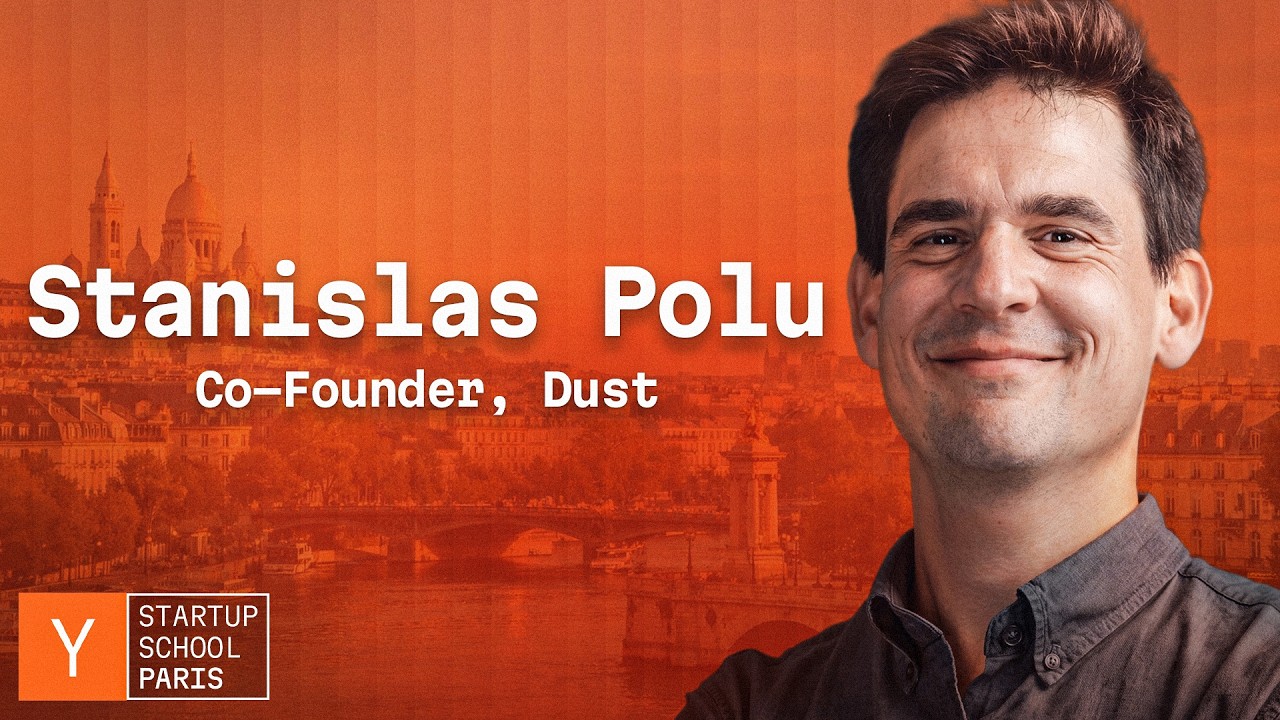
No clickbait detected — the title and thumbnail deliver what they promise.
AI Opinion
The episode most convincingly argues that model agnosticism is a strategic necessity for AI product companies, as it insulates them from vendor lock-in and allows rapid adaptation as models improve. However, its claims rest on weaker evidence when asserting that open-source models will inevitably pressure labs' margins, as this depends on unverified assumptions about the pace of open-source capability growth and the labs' ability to maintain differentiation through proprietary data or infrastructure. A thoughtful viewer should double-check the claim that Dust's credit-based pricing is the only way to maintain margins, as this may reflect the company's specific market position rather than a universal truth, and should also verify the assertion that work has radically changed for developers since November 2025, as this timeline is speculative and not supported by broad data.
Avatars are AI rewrites of the same facts — style changes, not substance.
Summary
Stanislas Polu, co-founder of Dust, argues that building a model-agnostic AI platform is a strategic necessity, as it decouples the product from any single AI provider and allows flexibility to switch between models as they improve. He left OpenAI after three years, giving up stock options worth more than Dust’s entire valuation at Series B, because he preferred the tangible impact of product development over research. Dust focuses on applying LLMs to the workplace, a thesis Polu believes is already transforming work for developers and will make work feel unrecognizable within two to three years. He acknowledges that building in France adds friction for fundraising and hiring but views it as a worthwhile trade-off for sovereignty. Polu argues that verticalized AI products must develop network effects to remain defensible as intelligence becomes commoditized. He notes that pricing pressure has forced Dust to shift from flat to credit-based models, as agent loops and token consumption have exploded, compressing margins. He claims AI labs like Anthropic and OpenAI capture massive margins at the token level, but believes open-source models catching up will eventually pressure those margins, while product-layer companies can still capture margin through differentiation.
Avatars are AI rewrites of the same facts — style changes, not substance.
Key Points
Model Agnosticism as a Strategic Advantage
Stanislas Polu argues that building a model-agnostic platform is crucial because it decouples the product from any single AI provider. He compares buying tokens and product from the same lab to buying machines that only work with one energy provider, which would be risky if that provider were unreliable. This flexibility allows Dust to switch between models as they improve, rather than being locked into one lab's ecosystem.
Stan's Journey from OpenAI to Founding Dust
Stan left OpenAI after three years because he wanted to return to building products rather than doing research. He describes research as a cycle of intense highs that last only five seconds before needing to scratch the surface again. He gave up stock options worth more than Dust's entire valuation at Series B, but does not regret leaving because he prefers the tangible impact of product development.
Dust's Focus on Applying LLMs to the Workplace
Dust was founded in early 2023 with the thesis that LLMs would fundamentally change how people work. Initially, applying LLMs to the workplace was considered a niche, but Stan was convinced it would be disruptive. He notes that as of late 2025, work has already radically changed for developers, and he expects other functions to follow, making work feel unrecognizable to past generations.
Work Will Feel Like 'Not Work' in 2-3 Years
Stan predicts that within two to three years, work will be so transformed by AI that it will no longer resemble what we consider work today. He draws a parallel to how our great-grandparents would view modern desk jobs as 'not work.' He is optimistic that this shift will make work more efficient and less laborious, though he admits precise predictions are impossible at this stage.
Building in France vs. Silicon Valley: A Sovereignty Trade-Off
Stanislas Polu acknowledges that building Dust in France rather than the US adds friction, especially for fundraising and hiring. He notes that when a company is performing well, VCs do not care about location, citing examples like Lovable and Spotify. The decision was driven by a desire to build something back in France for reasons of national preference and sovereignty, which he views as an additional constraint but a worthwhile trade-off for the greater good.
Verticalized AI Products Must Find Network Effects for Defensibility
Polu argues that verticalized AI products had an advantage when models were weaker, requiring scaffolding to be useful. As intelligence becomes commoditized, the only defensible moat is a network effect—value derived from multiple users interacting on the same platform. Without that, a verticalized product is vulnerable because the underlying intelligence is easily replicated, echoing advice from the 2010 SaaS era.
Pricing Pressure Forces Shift from Flat to Credit-Based Models
Dust originally used seat-based flat pricing to encourage usage, but over the past six months, agent loops and model token consumption have exploded, compressing margins. Polu states that credit-based pricing is now unavoidable for AI products because users will max out any flat allowance. He warns that margins will keep compressing under current conditions unless pricing adapts to usage.
Labs' Margins Are 'Humongous' and Open Source May Apply Pressure
Polu points out that AI labs like Anthropic and OpenAI capture massive margins at the token level, as seen in SpaceX's S1 filing. He believes that open-source models catching up will eventually put downward pressure on those margins. Meanwhile, product-layer companies can still capture margin by building well-differentiated, well-crafted products, citing precedents like Box and Dropbox that sold on top of infrastructure with zero-margin competition.
Chapters
Claims & Fact Check
Building a model-agnostic platform is something the labs themselves cannot do.
The stock options Stan gave up by leaving OpenAI were worth more than the entire Dust company as of six months ago.
Work has radically changed for developers since November 2025.
Credit-based pricing is the only way to maintain margins in current AI products.
Open source is catching up and will create pressure on the labs' margins.
The labs' margins are humongous, as shown in SpaceX's S1 filing.
Was this digest good?
More from Y Combinator
Digest any single YouTube video — free.
3 free digests — no card, no sign-up wall.
Or just swap the domain of any YouTube link → instant digest