No clickbait detected — the title and thumbnail deliver what they promise.
AI Opinion
Professor Cha convincingly argues that China’s use of trade to pressure nations into specific political alignments represents a novel form of coercion, distinct from traditional economic policies and fueled by self-censorship among targeted entities. The episode's analysis of the THAAD incident provides compelling evidence for this dynamic; however, claims regarding companies' immediate apologies or China’s complete denial of retaliation rely on potentially selective examples. Listeners should critically evaluate the extent to which observed corporate behavior is driven solely by fear of Chinese reprisal versus other business considerations and independently research the likelihood of troop reductions given evolving US foreign policy objectives.
Avatars are AI rewrites of the same facts — style changes, not substance.
Summary
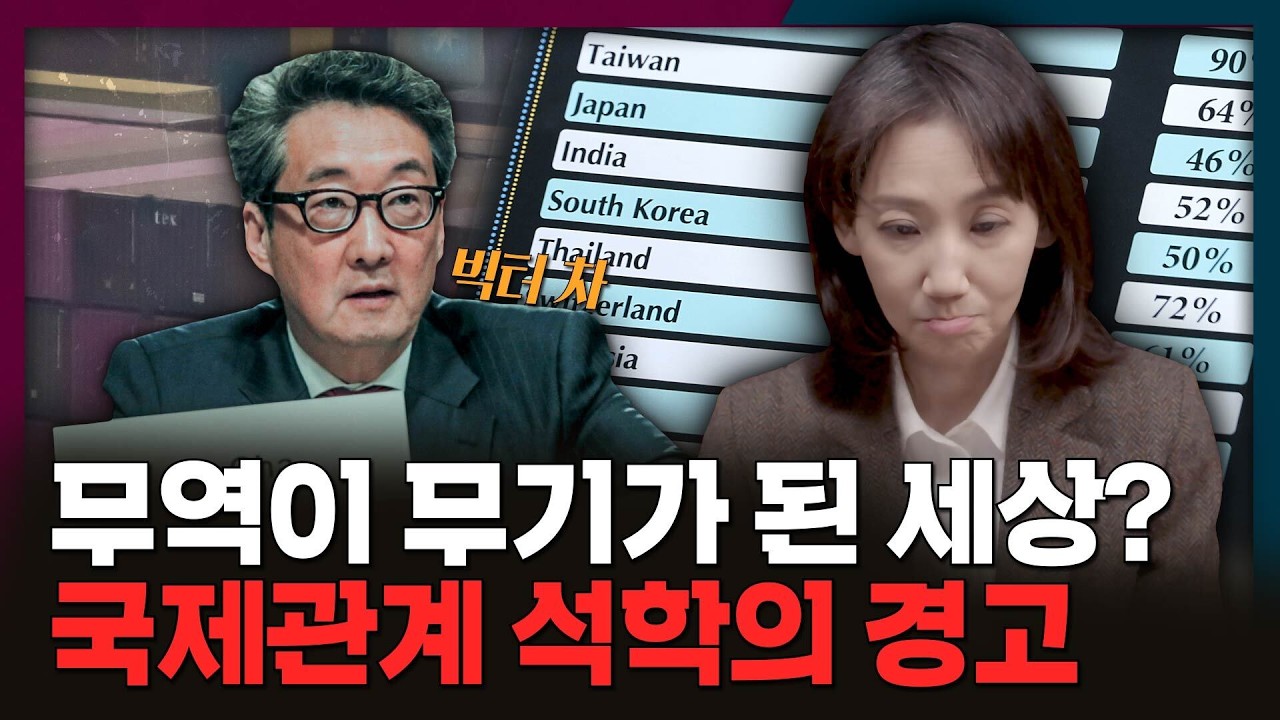
Professor Victor Cha discusses China’s increasing use of trade as a tool to influence other nations' political decisions, distinguishing this "weaponized trade" from traditional protectionism or economic sanctions. A key element enabling this coercion is the self-censorship adopted by companies and countries fearing retaliation, often leading them to avoid actions that might provoke China. The THAAD incident in South Korea serves as a prime example of this tactic, with China implementing economically damaging measures against Korean industries without formal acknowledgement. As the United States shifts defense responsibilities onto South Korea, expecting greater economic and military contributions, South Korea faces pressure from both nations – US tariffs creating dissonance alongside ongoing Chinese coercion. While potential reductions in US troops stationed in South Korea are possible, maintaining alliance stability requires careful framing as "modernization" coupled with increased South Korean investment. Despite opportunities presented by geopolitical shifts, China’s internal challenges currently limit its willingness to escalate conflicts, particularly regarding Taiwan.
Avatars are AI rewrites of the same facts — style changes, not substance.
Key Points
Distinguishing Weaponized Trade from Traditional Protectionism
Professor Cha clarifies that China's 'weaponization of trade' differs significantly from standard economic sanctions or protectionist tariffs. While countries often implement tariffs to protect domestic markets, which can be challenged through organizations like the World Trade Organization (WTO), weaponized trade aims to influence a state’s sovereign political choices by linking them to trade measures – essentially punishing nations for policies unrelated to commerce.
The Mechanism of Self-Censorship in Response to Chinese Economic Pressure
A key element enabling China's economic coercion is the self-censorship adopted by companies and countries fearing retaliation. When targeted, businesses prioritize resolving the issue quickly to minimize financial losses (quarterly returns, profit margins), often through apologies or concessions. This creates a broader climate where entities avoid actions that might provoke China, leading them to remain silent on sensitive issues like human rights in Hong Kong or Taiwan.
Implications for the Liberal International Order
Professor Cha argues that China's economic coercion poses a threat to the liberal international order. By inducing self-censorship among countries and companies, it undermines principles of free expression and open dialogue, compelling entities to align with China’s policies regardless of their stance on issues like Taiwan, Hong Kong, or human rights in Tibet.
The THAAD Incident as an Example of Economic Coercion
The 2016-2017 deployment of the US THAAD missile defense system in South Korea triggered a substantial economic retaliation from China. This campaign, lasting two years, targeted various Korean industries – cosmetics, duty-free shops, tourism – resulting in billions of dollars in damages. Notably, China never formally acknowledged its involvement, a tactic used to obscure its coercive actions and maintain plausible deniability.
Increased South Korean Agency and US Expectations
The United States is shifting the burden of defense onto South Korea, expecting it to play a larger role economically and militarily. This includes significant investment in shipbuilding to close the gap with China and a $350 billion deal for South Korean capital and technology in key US industries like AI, biotech, batteries, and chips, signifying a decoupling dynamic. South Korea is being treated as a more capable partner, though economic coercion persists.
Trump’s Economic Bullying & Dissonance
Despite official messaging of alliance modernization, Trump's economic bullying through tariffs creates dissonance for South Korea. The speaker notes that while the US is publicly promoting a modernized alliance, actions like imposing tariffs contradict this narrative and create uncertainty among Koreans accustomed to different dynamics.
Potential Troop Reduction & Alliance Modernization
A potential reduction of US troops in South Korea within the next three years under a Trump administration is possible, with one rotational brigade potentially not returning. However, this would need to be framed as 'alliance modernization' rather than abandonment, involving increased South Korean defense spending (around $33 billion) and continued joint exercises to avoid signaling weakness.
China’s Internal Challenges Limit Aggression
Despite potential opportunities arising from US distraction in the Middle East, China's internal turmoil – including the purging of military generals and widespread corruption – significantly limits its willingness to initiate conflict. The speaker finds it 'not conceivable' that China would wage war against Taiwan given these internal weaknesses.
Chapters
Claims & Fact Check
China is the 'champion' of using economic pressure to influence other countries' policies.
Companies targeted by China will immediately try to resolve the issue, even if it means apologizing.
China never admits to carrying out economic retaliation campaigns.
South Korea is being treated as a much more capable and mature equal partner.
Trump doesn't want ground troops in Korea.
A reduction of US troops in South Korea within the next three years is possible.
Was this digest good?
Digest any single YouTube video — free.
3 free digests — no card, no sign-up wall.
Or just swap the domain of any YouTube link → instant digest