Clickbait Checker
The video title says:
"How does light 'know' the shortest path?"
Reality:
The title asks how light 'knows' the shortest path, and the episode directly addresses this by explaining Fermat's principle and the quantum mechanical concept that light explores all paths, with the observed path being a result of constructive interference.

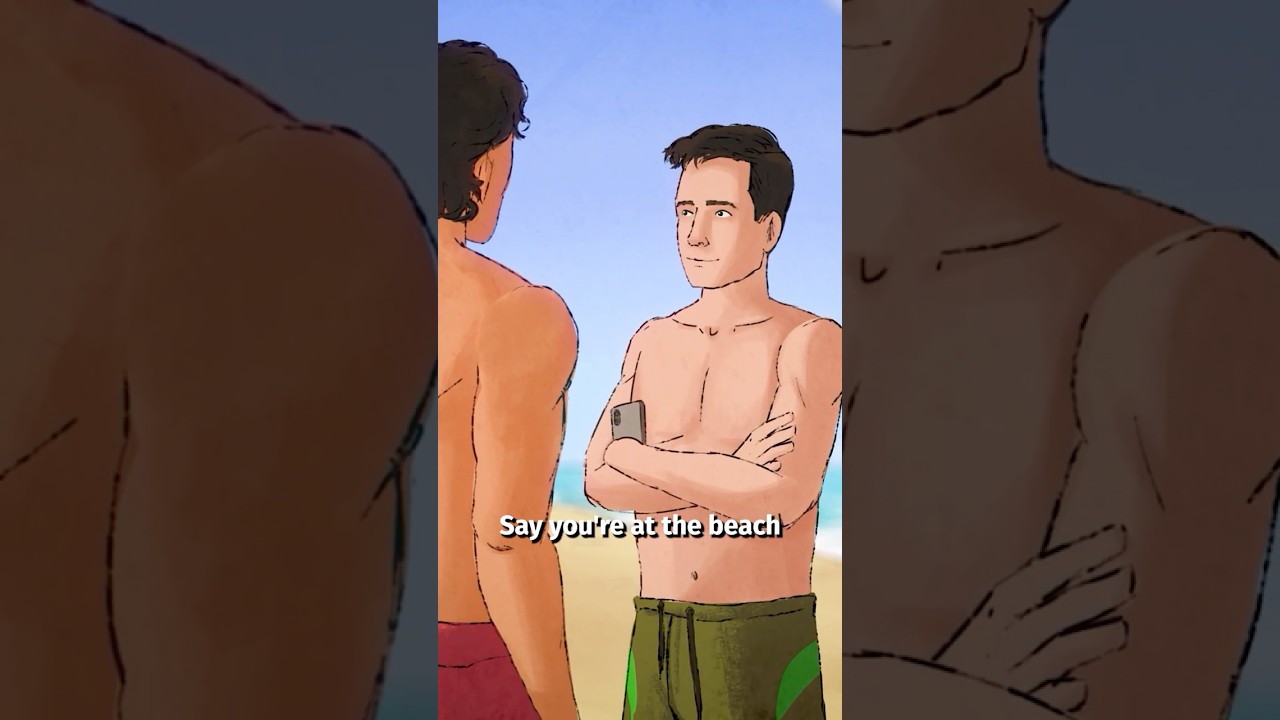
The thumbnail says:
"Say you're at the beach"
Reality:
The thumbnail hook about being at the beach is not directly addressed in the episode; the episode uses the lifeguard problem as an analogy but does not feature a humorous or relatable video about claiming to be at the beach.
AI Opinion
The episode convincingly argues that Fermat's principle of least time is not a sign of light making conscious choices but a statistical outcome of quantum superposition, where light explores all paths and constructive interference selects the fastest one. However, the claim that all particles, including macroscopic objects like basketballs, explore all paths simultaneously rests on weaker evidence, as quantum effects at that scale are negligible and practically unobservable. A thoughtful viewer should double-check whether this extrapolation to macroscopic objects is supported by experimental data or is merely a theoretical extrapolation, and keep in mind that the quantum explanation applies most directly to photons and other quantum-scale particles.
Voices are AI rewrites of the same facts — style changes, not substance.
Summary
The episode explores why light appears to follow the fastest path between two points, a principle known as Fermat's principle of least time. It begins with the lifeguard problem, where the optimal route to a drowning swimmer involves a compromise between running on sand and swimming in water, determined by the ratio of speeds. This mathematical relationship is identical to Snell's law, which governs how light bends when transitioning between media like air and water. The central mystery is how light, lacking consciousness, consistently chooses this fastest path. The quantum mechanical explanation is that light—and indeed all particles, including electrons and even macroscopic objects—explores all possible paths simultaneously. The observed single trajectory is an illusion resulting from constructive interference among these myriad paths. While the claim that all particles explore all paths simultaneously is partially supported, the core insight is that the apparent straight or bent path of light is a statistical outcome of quantum superposition, not a deliberate choice.
Voices are AI rewrites of the same facts — style changes, not substance.
Key Points
The Lifeguard Problem Introduces the Concept of Optimal Path
The video begins with a thought experiment: you see a friend drowning in the ocean while you are on the beach. You can run faster than you can swim, so the straight-line path is not the fastest because it maximizes swimming time. Running along the beach to minimize swimming distance makes the total path longer. The optimal path is a compromise between these extremes, determined by the ratio of your running speed to swimming speed.
Light Follows the Same Mathematical Law as the Lifeguard Problem
The narrator points out that the mathematical relationship governing the optimal path in the lifeguard problem is identical to Snell's law, which describes how light bends when passing from one medium to another (e.g., air to water). This means light also takes the fastest path from point A to point B, a principle known as Fermat's principle of least time.
The Central Question: How Does Light 'Know' Which Path Is Fastest?
While a human lifeguard consciously calculates the fastest route, light has no awareness or decision-making ability. The naive explanation—that light simply travels in a straight line and bends at the interface—is insufficient. The video sets up the mystery: how can light, without intelligence, consistently choose the path that minimizes travel time?
The Quantum Explanation: Particles Explore All Possible Paths Simultaneously
The narrator reveals that the answer lies in quantum mechanics: light, electrons, basketballs, and even humans actually explore all possible paths at once. The path we observe is not a single trajectory but the result of constructive interference among these many paths. The apparent straight or bent path is an illusion created by the sum of all possibilities.
Chapters
Claims & Fact Check
Light takes the fastest path from point A to point B.
?UnverifiedLight does not simply change direction at an interface; it explores all possible paths.
?UnverifiedAll particles, including electrons, basketballs, and humans, explore all possible paths at once.
?Unverified