Clickbait Checker
The video title says:
"Climate Change: What the Data Actually Shows with Geologist Scott Tinker"
Reality:
The title accurately reflects a discussion that examines data related to climate change, including questioning common narratives around renewable energy, but doesn’t definitively declare renewables a myth.
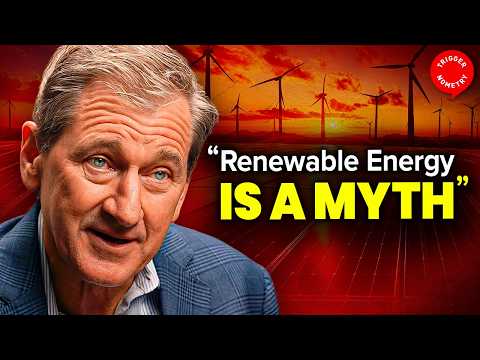
The thumbnail says:
""Renewable Energy IS A MYTH" TRIGGER HOMETRY"
Reality:
The thumbnail's provocative claim that 'Renewable Energy IS A MYTH' is an oversimplification of the episode's nuanced discussion which critiques aspects of renewable energy while not dismissing them entirely.
AI Opinion
The episode most convincingly argues that discussions around climate change often lack nuance and rely on overly simplistic narratives regarding renewable energy and global responsibility; the data presented effectively illustrates how developed nations' consumption patterns are intertwined with emissions in Asia. However, claims about the IEA’s net-zero report and the extent to which young people feel "indoctrinated" require further scrutiny as they rest largely on Tinker's interpretation rather than independently verifiable evidence. Listeners should also investigate the specific data underpinning assertions regarding nuclear power safety and waste volume relative to other industrial byproducts, and consider how India’s economic trajectory might diverge from China’s past patterns.
Avatars are AI rewrites of the same facts — style changes, not substance.
Summary
The discussion challenges common assumptions about renewable energy, highlighting that technologies like solar panels and wind turbines rely on resource extraction and manufacturing processes. It explores nuclear power's role, emphasizing the relatively small volume of waste produced compared to other industrial byproducts and its statistical safety record. Geothermal energy is presented as a promising climate control solution, while historical trends demonstrate humanity’s consistent shift towards higher-energy-density resources. The conversation underscores Asia’s dominant coal consumption and how developed nations have outsourced emissions through manufacturing, contributing to global disparities in energy use and economic development. Critiques of the IEA's net-zero report are offered, alongside a call for more complete and nuanced climate communication, emphasizing critical thinking skills and caution regarding AI implementation. Ultimately, the episode suggests that addressing climate change requires balancing environmental factors, recognizing tradeoffs, and considering internal changes within large companies to drive meaningful progress.
Avatars are AI rewrites of the same facts — style changes, not substance.
Key Points
The Myth of Renewable Energy
Scott Tinker challenges the common perception of 'renewable energy,' arguing that technologies like solar panels and wind turbines rely on materials mined from the Earth. He emphasizes that these systems require collection, manufacturing, and eventual disposal processes, undermining their claim to being truly renewable. This perspective highlights a critical distinction between sustainable practices and the often-misused term 'renewable' in the context of energy production.
Global Energy Consumption Discrepancies
The conversation highlights a disconnect between the perception of widespread renewable energy adoption in Western countries and the reality of global energy consumption patterns. While electric vehicles and solar panels are increasingly visible in affluent urban areas, this doesn't reflect the overall state of energy use worldwide. This discrepancy underscores the need for a more nuanced understanding of energy transitions and their uneven distribution across different regions.
Energy Density and Historical Transitions
Tinker outlines the historical progression of energy sources, starting with wood and culminating in uranium and thorium. Each transition involved a shift towards higher energy density – from wood to coal, then oil, natural gas, and finally nuclear power. He explains that this trend is driven by humanity's desire for more efficient and mobile forms of energy, illustrating how advancements have fundamentally shaped modern civilization.
Asia's Dominance in Coal Consumption
The transcript highlights Asia’s overwhelming dominance in coal consumption, stating they are the largest consumers by a significant margin. Specifically, Asian nations consume more coal than the rest of the world combined and that this reliance is driven by affordability and reliability for electricity generation, often used to manufacture goods exported globally. This demonstrates a shift in global energy production and consumption patterns.
Developed Nations Outsourcing Emissions
The discussion points out that developed nations have effectively outsourced their emissions by manufacturing goods in Asia, where coal-fired power plants are prevalent. This practice creates a 'shell game' where countries appear to be reducing their own CO2 emissions while simply shifting the environmental burden to other regions, ultimately not addressing the global climate change issue.
Energy Poverty and Global GDP Disparity
The segment reveals a stark disparity between population size, energy consumption, and economic output. Three-quarters of the world’s population (Asia and Africa) consume only half of the global energy and generate just one-third of the world's GDP, indicating widespread energy poverty that hinders development and economic growth in these regions.
Flawed Assumptions in IEA's Net Zero Report
Scott Tinker critiques the International Energy Agency’s (IEA) net-zero report, specifically highlighting a fundamental flaw: the assumption that global energy consumption would decrease. He argues this projection is unrealistic given current trends and points out the report's overly optimistic projections for biofuels, bioenergies, solar, and wind power while drastically reducing coal, oil, and gas.
The Importance of Factual Completeness in Climate Communication
Tinker emphasizes that climate communication should strive for 'factual completeness' rather than simply being factual. He recounts sharing this concept with Senator Manchin, highlighting the difficulty in achieving complete accuracy and expressing concern about the current state of information received by many individuals.
The Role of Internal Change within Large Companies
Responding to young people's concerns, Tinker advises them that if they want to make a significant impact on climate change, they should consider working for large power companies or ExxonMobil. He argues that individuals can effect greater change from within these organizations by influencing policies and practices, gaining valuable data and information in the process.
IPCC Report Summary Tables & Extreme Events
Scott Tinker explains that the summary tables within IPCC reports, particularly those projecting extreme weather events in scenarios like 2050 and 2100, often remain within historical norms. He suggests that future IPCC reports (AR7) may not include these tables due to a shift towards a more narrative-driven focus, which he believes is diminishing the prominence of extreme event projections.
Balancing Environmental Pillars & Recognizing Tradeoffs
Tinker stresses that addressing climate change requires balancing various environmental factors—land, air, water, and atmosphere. He points out that there are unavoidable tradeoffs between these elements; for example, widespread solar energy adoption can negatively impact land use. This necessitates an optimization approach tailored to specific regional resources, education levels, and political systems.
India's Economic Growth and Energy Demand
The discussion highlights India’s rapidly growing economy and population (1.4 billion), which is consuming a quarter of the world’s energy, mirroring China’s trajectory from approximately 28 years ago. This suggests an imminent surge in Indian energy consumption, potentially leading to a global increase in energy demand and subsequent CO2 emissions if not addressed with cleaner alternatives.
Human Activity's Contribution to Global Warming
While acknowledging that climate change is occurring, the speakers clarify that human activities significantly contribute to warming. Although a precise percentage isn’t provided, it's stated that a substantial portion of the 1.5 degrees Celsius warming observed in the last century stems from human emissions, emphasizing the direct link between industrial activity and climate impact.
The Potential for Natural Decarbonization
The conversation introduces the concept of natural decarbonization, a gradual shift away from carbon-intensive energy sources like wood, hay, coal, oil, and methane towards less carbon-intensive alternatives such as hydrogen, uranium, thorium, and ultimately fusion. This process is seen as an inevitable trend, with India's adoption of nuclear power potentially accelerating its progress toward a lower-emission future.
Nuclear Power as a Relatively Safe Energy Source
The speaker argues that nuclear power is statistically the safest energy source currently available, citing that fewer deaths have resulted from all nuclear accidents compared to those caused by a single dam collapse in China. However, he acknowledges public fear stemming from incidents like Chernobyl and the perceived link between nuclear reactors and weapons-grade materials.
Nuclear Fission Waste Management Process
The fission process generates radioactive waste products, often referred to as 'fission products,' which require careful management. These materials are initially blended with silica to create a stable molecule that is then locked up and placed into canisters. Subsequently, these canisters are stored in dry casks on the surface or within 30-40 ft thick concrete slabs for long-term storage, with ongoing research exploring geologic solutions like shale deposits.
The Scale of Nuclear Waste Compared to Other Waste Streams
Despite the challenges associated with nuclear waste management, the actual volume of waste produced is surprisingly small relative to other sources. Scott Tinker illustrates this point by stating that a single human's lifetime use of nuclear power generates waste equivalent to the size of a coin, significantly less than coal ash, CO2 emissions from fossil fuels, or toxic materials from discarded batteries and solar panels.
Geothermal Energy as a Climate Control Solution
Geothermal energy offers a promising avenue for climate control, particularly through the use of heat pumps that can circulate water at temperatures around 50-60°F to cool homes in summer or provide supplemental heating in winter. While currently more expensive than other options in some areas, geothermal technology is expected to become increasingly cost-effective over time as advancements are made and adoption expands.
Human Adaptation Throughout History
Scott Tinker emphasizes that human adaptation to changing environmental conditions is an ongoing process, stretching back millions of years. He highlights the resilience and adaptability of humans throughout history, suggesting that while current climate change presents challenges, humanity possesses a long track record of adjusting to various environmental shifts.
Need for Improved Critical Thinking Education
The speaker expresses concern that education, even in wealthy nations, has neglected the development of critical thinking skills. He suggests a return to fostering the ability to entertain ideas without necessarily accepting them, referencing Aristotle's philosophy as a model for constructive discourse and intellectual growth. This emphasizes the importance of civil dialogues and open-mindedness in addressing complex issues.
Human Oversight is Crucial with AI Implementation
The speaker cautions against fully automating processes with artificial intelligence, particularly within the energy, economic, and environmental sectors. He stresses that human involvement remains essential to discern whether AI-generated outputs are accurate or “nonsense.” He advocates for leveraging AI to accelerate progress and improve efficiency but warns against replacing human judgment entirely.
Chapters
Claims & Fact Check
There is no such thing as renewable energy.
Europe has been flat economically for 20 years.
Methane is denser than oil by weight.
Asia consumes more coal than the rest of the world combined.
Developed nations have outsourced their emissions to Asia.
The IEA’s net zero report made the flawed assumption that global energy consumption would decrease.
Extreme weather event projections in IPCC reports often stay within historical norms.
Working within large companies like ExxonMobil is a more effective way to influence climate policy than working for NGOs.
Young people are being indoctrinated with fear about climate change.
India’s energy consumption will likely mirror China's past trajectory, leading to increased global CO2 emissions.
Human activity contributes significantly to global warming.
Nuclear power, on average, is the safest form of energy we currently have.
Nuclear fusion produces steam as waste.
The amount of nuclear waste produced per person is very small.
Wind turbine blades are not recyclable.
We need to find a way to have civil dialogues again.
AI is going to play a big role in the energy world, the economics and environment world.
Was this digest good?
Digest any single YouTube video — free.
3 free digests — no card, no sign-up wall.
Or just swap the domain of any YouTube link → instant digest