No clickbait detected — the title and thumbnail deliver what they promise.
AI Opinion
This episode makes a compelling case that power in any regime ultimately depends on securing a small inner circle’s loyalty through material rewards, offering a clear framework for why resource-rich dictatorships are stable while poor ones are fragile. However, the claim that democracies have lower taxes than dictatorships because representatives must please productive citizens is asserted without comparative data or historical examples, and the argument that stable democracies only fall when they become very poor or discover a resource ignores well-documented coups in middle-income democracies like Chile in 1973. A thoughtful viewer should check whether the model’s neat binary between “treasure spent on backers vs. citizens” holds up in mixed systems, and whether the “zeroth rule” that power is prerequisite to all else risks justifying any means of its acquisition.
Voices are AI rewrites of the same facts — style changes, not substance.
Summary
This episode explores the mechanics of power, arguing that no ruler governs alone and must instead secure loyalty from a small group of key supporters—generals, bureaucrats, or regional leaders—using treasure. In dictatorships, this treasure must be spent on these backers rather than on citizens, as benevolent spending gives rivals a tool to promise rewards and undermine the ruler. Democracies operate differently, rewarding blocks of voters through targeted policies and systemic manipulation like gerrymandering. The stability of a regime depends on its resources: resource-rich dictatorships are stable because they can ignore citizens, while middling dictators who tax the poor directly face greater revolt risk, though such revolts often merely replace one ruler with a similar one. Stable democracies resist coups because their citizens’ high productivity creates wealth that a dictator would destroy, making the gamble of supporting a coup unattractive. However, democracies become vulnerable when they become very poor or discover a resource that dwarfs citizen productivity. The episode concludes with a “zeroth rule”: without power, one can affect nothing, and these principles apply not only to national leaders but also to deans, CEOs, and HOA chairs.
Voices are AI rewrites of the same facts — style changes, not substance.
Key Points
No ruler rules alone; power depends on key supporters
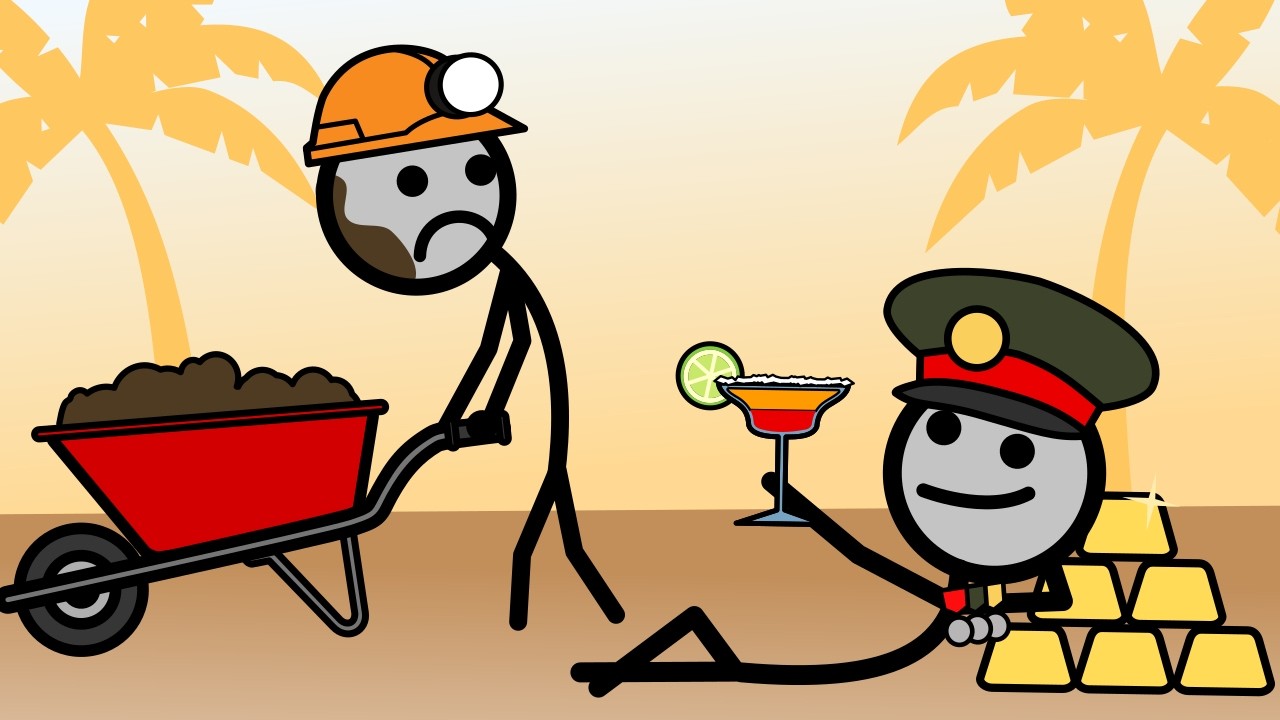
A ruler cannot build roads, enforce laws, or defend the nation alone. Power comes from getting others to act on the ruler's behalf, using treasure to secure loyalty. The individuals needed to make things happen are the 'keys to power.' In a dictatorship, the number of keys is small—perhaps a dozen generals, bureaucrats, and regional leaders. Sway them and you have power; displease them and they will replace you.
Treasure must be spent on loyalty, not citizens
A ruler's control of treasure attracts rivals, so key supporters must be kept loyal. However, treasure is limited: every bit spent on citizens (roads, universities, hospitals) is treasure not spent on loyalty. Benevolent dictators who spend on citizens hand rivals a tool to promise rewards to key supporters if they switch sides. Even loyal supporters must watch for rivals, so they need rewards to maintain their own positions.
Democracies use block rewards and systemic manipulation
In democracies, rulers treat citizens as blocks (e.g., elderly, homeowners, farmers) and reward them as groups through tax codes and laws. For example, farming subsidies exist only where farmers' votes swing elections. Rulers can make it easier for key blocks to vote and harder for others, draw election borders to predetermine results, and use party pre-elections with Byzantine rules to limit who can vote. This perpetuates power even with low approval ratings.
Resource-rich dictatorships are stable; middling ones face revolts
The worst dictatorships have resource wealth (gold, oil, diamonds) that can be extracted without citizen involvement, allowing rulers to ignore citizens entirely. Such regimes are stable. In contrast, middling dictators without resources must take large wealth directly from poor farmers and factory workers, but maintaining minimal citizen welfare makes them more able to revolt. However, popular revolts often succeed only when the army lets them, replacing the ruler with a similar or worse one.
Why stable democracies resist coups
In stable democracies, the high productivity of citizens creates wealth that a dictator would destroy by seizing power. Potential supporters of a coup must weigh the low probability of surviving the dictator's inevitable cull against the risk of ending up outside the new regime. Since most citizens already enjoy healthcare, education, and quality of life, the gamble is terrible and rarely worth taking.
Conditions that make democracies vulnerable to coups
A stable democracy becomes vulnerable when it becomes very poor or when a resource is found that dwarfs the productivity of its citizens. In such cases, the current quality of life is terrible or the wealth no longer depends on citizens, making coups worth the risk. These are the usual reasons democracies fall.
The zeroth rule of power
The video concludes with a 'zeroth rule': without power, you can affect nothing. It argues that these rules apply not only to kings and presidents but also to deans, CEOs, and HOA chairs. To achieve change, one must understand and engage with structures of power, even if distasteful.
Chapters
Claims & Fact Check
In a dictatorship, the number of keys to power is small, perhaps only a dozen generals, bureaucrats, and regional leaders.
✓Well-supportedDemocracies have lower taxes than dictatorships because representatives need to please crowds and citizens are more productive.
✓Well-supportedAfter popular revolts in middling dictatorships, the new ruler is often the same as the old, if not worse, because the court replaces the king using the people's protest.
✓Well-supportedIn a stable democracy, potential supporters of a coup must weigh the probability of surviving the cull versus the risk of being on the outside of a dictatorship they helped create.
✓Well-supportedWhen democracies fall, it is usually because the country becomes very poor or a resource is found that dwarfs the productivity of citizens.
±Partially supported