Clickbait Checker
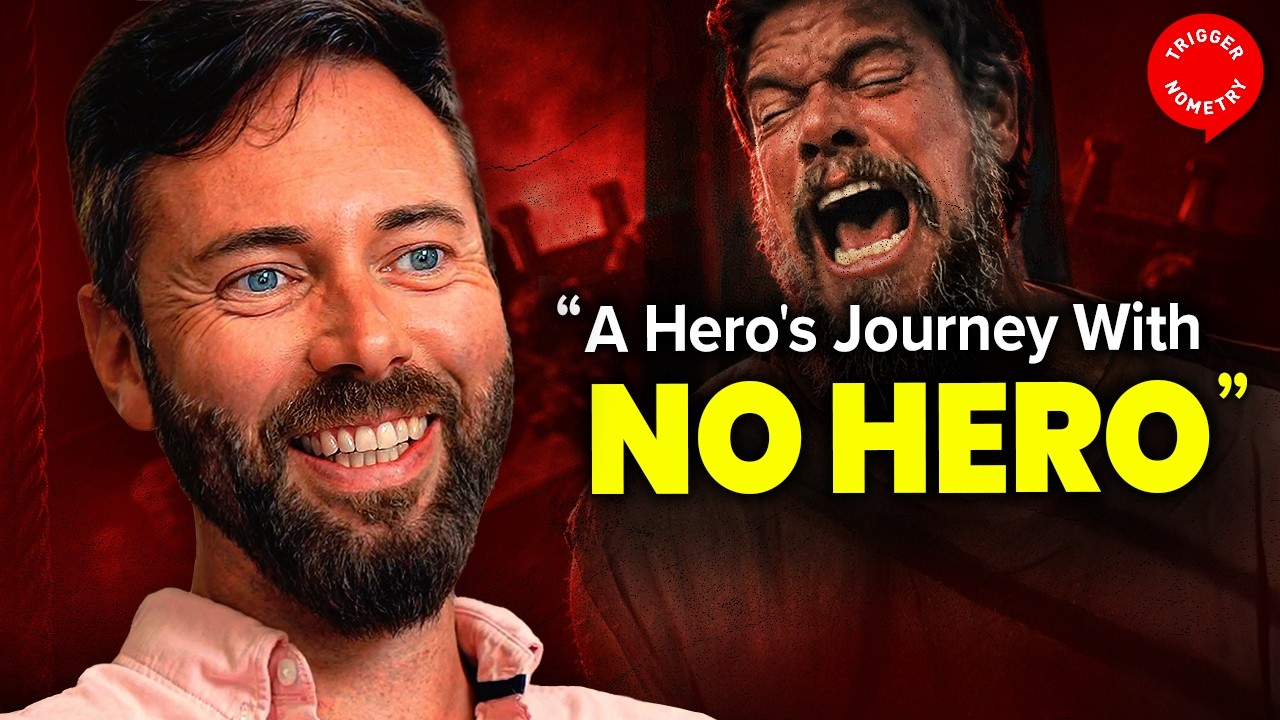
The video title says:
"Critical Drinker: The Real Problem with the Odyssey"
Reality:
The title accurately reflects a critique of Nolan’s ‘Odyssey’ adaptation, specifically addressing the absence of a traditional heroic figure through Achilles' altered portrayal and the film's overall emotional detachment.
The thumbnail says:
""A Hero's Journey With NO HERO" TRIGGER HOMETRY"
Reality:
While the thumbnail highlights the lack of a hero, it overemphasizes this single aspect as the sole focus, when the episode delves into broader industry trends, casting controversies, and technological shifts.
AI Opinion
The video most convincingly argues that Hollywood’s recent financial struggles stem from a miscalculation regarding audience desires, specifically prioritizing progressive messaging over escapist entertainment. However, the claim that Christopher Nolan “saved” Hollywood and the assertion about modern actors lacking nuance due to homogenized upbringings rely on broad generalizations requiring further scrutiny; attributing artistic quality solely to life experience is an oversimplification. Viewers should consider whether the observed shift in audience preferences represents a universal trend or reflects specific factors related to recent film choices, and also evaluate the video’s sweeping judgments about generational differences in acting ability.
Avatars are AI rewrites of the same facts — style changes, not substance.
Summary
The video examines Christopher Nolan’s adaptation of "The Odyssey," focusing on audience reception, creative choices, and broader industry trends. A primary critique centers on the film's perceived emotional detachment, attributed to Nolan’s directorial style and potentially influenced by casting controversies surrounding actors like Lupita Nyong’o and Elliot Page, which sparked intense online backlash despite their limited screen time. The adaptation also significantly altered Achilles’ character, portraying him as a Vietnam veteran with PTSD rather than the traditional heroic figure. Beyond this specific film, the discussion highlights Hollywood's recent realization that audiences prioritize entertainment and escapism over politically charged content, leading to financial setbacks for studios attempting to cater to progressive viewpoints. The video contrasts this with the success of low-budget films like "Obsession," demonstrating profitability can be achieved without massive budgets or special effects. Furthermore, it explores the decline of DVD sales and the fragmentation of audience attention due to streaming services, alongside emerging technologies like AI that could personalize movie experiences and the increasing dominance of the video game industry over film in terms of revenue. Finally, a recurring theme examines the impact of life experience on artistic quality, suggesting modern actors and writers often lack the depth and authenticity found in their predecessors.
Avatars are AI rewrites of the same facts — style changes, not substance.
Key Points
The Odyssey's Lack of Emotional Engagement
Critical Drinker expressed his primary critique of 'The Odyssey' was its lack of emotional engagement, describing it as "cool and sterile." He attributes this characteristic to a recurring element in Christopher Nolan’s filmography. This detachment prevented him from connecting with the narrative on a deeper level, despite acknowledging Nolan's technical competence.
The Impact of Casting Choices on Audience Perception
The online reaction to casting choices in 'The Odyssey,' particularly the roles of Helen of Troy and Achilles, generated an unprecedented level of vitriol. This response mirrored a similar backlash seen with Rachel Zegler's involvement in 'Snow White'. The initial enthusiasm for Nolan tackling such a foundational work quickly turned into intense criticism due to these casting decisions.
The Disconnect Between Casting and Viewer Experience
Despite the controversy surrounding the casting of Lupita Nyong’o and Elliot Page, Critical Drinker emphasized that their limited screen time (approximately five minutes) had minimal impact on his overall viewing experience. He clarified that these characters were ancillary to the main storyline, reinforcing the film's length and shifting focus away from them. This observation challenged the narrative surrounding the casting choices.
The Transformation of Achilles’ Character
The discussion highlighted a significant departure from the original 'Odyssey' in the portrayal of Achilles. Nolan reimagined him as a Vietnam veteran grappling with PTSD and survivor's guilt, a stark contrast to his traditional depiction as a valiant adventurer driven by a desire for home and family. This alteration sparked debate among those familiar with the source material.
The Profitability of Low-Budget Films
Critical Drinker highlights the success of films like 'Obsession,' demonstrating that high budgets and special effects aren't always necessary for profitability. The film cost $750,000 to produce but has generated over $450 million in revenue, potentially becoming the most profitable film relative to its budget. This suggests a demand exists for well-crafted stories with decent scripts and good actors, even at smaller scales.
Audience Rejection of Political Messaging in Entertainment
The discussion emphasizes that audiences primarily seek entertainment and escape from the complexities of daily life. They express frustration with films pushing political agendas or reinforcing specific beliefs, arguing that movies should simply tell a good story regardless of its genre. This sentiment reflects a desire for escapism rather than ideological reinforcement.
Hillsdale College's Free Online Courses on Western Classics
A promotional segment introduces Hillsdale College’s free online courses, focusing on the classics that have shaped Western tradition. The current course explores Homer’s 'The Odyssey,' analyzing themes of courage, loyalty, and family through Professor Benedict Wayland's guidance. They highlight a specific scene involving Calypso offering immortality to Odysseus as pivotal in understanding the poem's core message about choosing mortality over eternal comfort.
Hollywood's Realization of Audience Preferences
The speakers discuss Hollywood’s belated recognition that audiences weren’t receptive to politically charged content. They suggest that the industry, influenced by perceived trends on social media, attempted to cater to a progressive audience and suffered significant financial losses as a result. This realization underscores a disconnect between studio expectations and actual consumer demand.
DVD sales provided a financial safety net for riskier films.
The decline of DVD rentals and sales significantly impacted the film industry's financial model. Studios previously relied on DVD revenue, often accounting for 50% or more of a movie’s total earnings, to recoup costs and turn a profit even if initial box office performance was lackluster. This allowed them to take chances on less proven concepts that might not have thrived solely in theaters.
The rise of streaming and personalized content has fragmented audience attention.
The proliferation of streaming services, YouTube, and other online platforms has created a highly fragmented media landscape. This shift away from shared cultural experiences, where audiences collectively enjoyed and discussed films, diminishes the impact of movies and their ability to become part of the broader culture.
AI may soon enable personalized movie experiences.
Looking ahead, artificial intelligence could revolutionize film consumption by allowing viewers to create customized movie versions. This technology would potentially render a 'shared version' of films obsolete as individuals curate their own unique cinematic narratives, tailoring everything from plot points to endings.
Video game revenue now dwarfs the film industry.
The video game industry has surpassed the film industry in terms of annual revenue, currently exceeding it by a factor of ten. This substantial difference highlights the growing popularity and financial significance of interactive entertainment, leading to increased adaptations of popular video games into cinematic productions.
The Importance of Life Experience for Artists
Critical Drinker argues that current Hollywood actors and writers often lack the depth and nuance found in their predecessors. He suggests modern creatives have led 'less interesting lives' compared to figures from the 1950s, 60s, and 70s who faced hardship and clawed their way into the industry. This background, he contends, shaped them and informed their work, something often missing in today’s more ‘controlled, safe, and boring’ productions.
The Contrast Between Modern and Classic Actors
Comparing Ryan Gosling to Steve McQueen, Critical Drinker highlights a stark difference in the perceived authenticity of actors. McQueen's difficult upbringing – including time spent in a care home and various jobs – seemingly imbued his performances with a raw quality absent in many contemporary actors. This 'authenticity,' he claims, is a key element that modern performers struggle to replicate.
Critique of 'The Rings of Power' and its Actors
Critical Drinker contrasts the actors in Amazon’s ‘The Rings of Power’ with those from Peter Jackson’s original ‘Lord of the Rings’ trilogy. He describes the ‘Rings of Power’ cast as appearing 'soft' and 'amiable,' lacking the ruggedness and resilience embodied by actors like Viggo Mortensen and Sean Bean, attributing this difference to varying life experiences and backgrounds.
The Impact of Production Challenges on Artistic Quality
The discussion explores the relationship between challenging film productions and artistic merit. While difficult shoots, involving clashes between actors or directors, don't always guarantee success (citing 'The Island of Dr. Maro' as an example), they can sometimes lead to exceptional results. Critical Drinker suggests that a degree of friction is often necessary for creating truly great art.
Chapters
Claims & Fact Check
Hollywood has pivoted away from political identity politics pandering due to financial losses.
The online reaction to 'The Odyssey' casting choices was unprecedented, similar to the backlash against Rachel Zegler in 'Snow White'.
'The Odyssey' has generated a surge of individuals claiming expertise on the original text.
Movies like 'Obsession' prove that you don't need big budgets for success.
Audiences primarily want to be entertained and escape from politics.
Marvel has pivoted away from political identity pandering.
Christopher Nolan may have 'saved Hollywood'.
Studios relied on DVD sales to make movies profitable.
The shift away from physical media has led to more franchise films.
Leonardo DiCaprio would have drowned in Titanic if the viewer could customize the ending.
The video game industry generates ten times more revenue than the film industry annually.
Modern Hollywood actors often lack nuance due to a homogenized upbringing.
Artists from the '50s, '60s, and '70s created better art due to their tougher backgrounds.
The actors in 'The Rings of Power' are less compelling than those in the original 'Lord of the Rings'.
Was this digest good?
Digest any single YouTube video — free.
3 free digests — no card, no sign-up wall.
Or just swap the domain of any YouTube link → instant digest