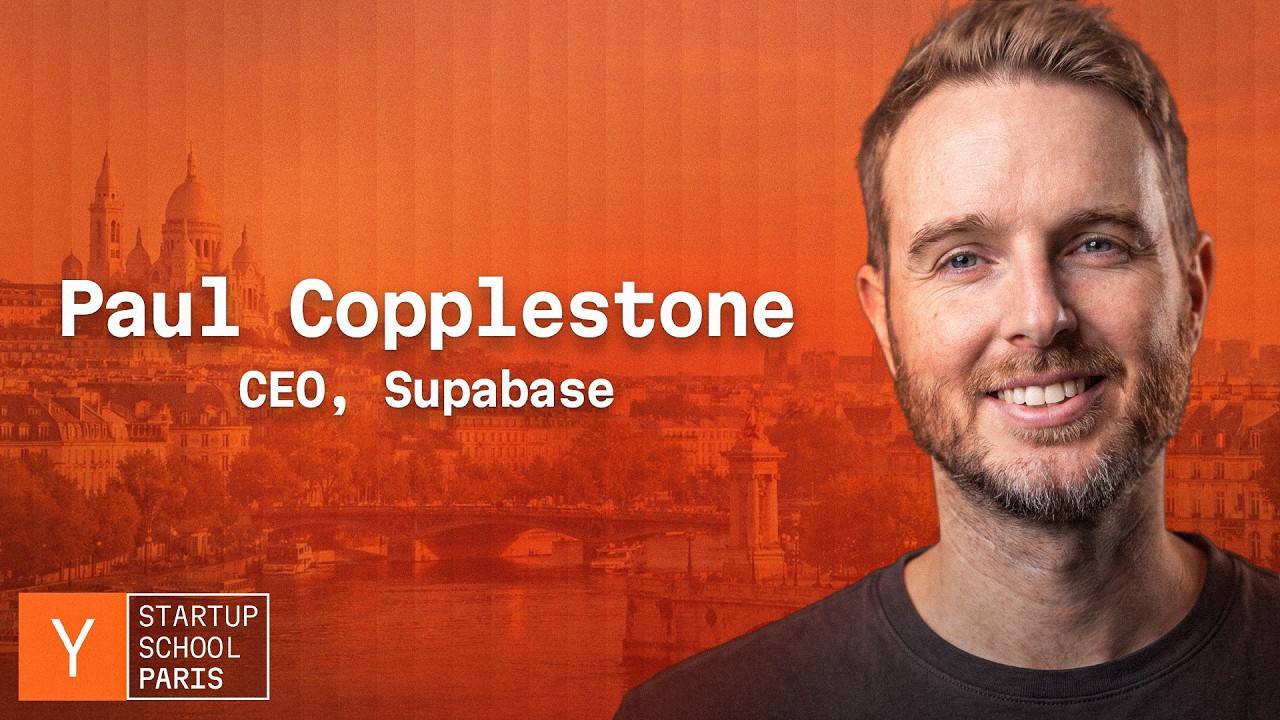
No clickbait detected — the title and thumbnail deliver what they promise.
AI Opinion
The episode’s most convincing argument is that AI coding agents have become the dominant driver of database creation, with Copplestone’s claim that 60-90% of launches now come from agents like Bolt and Lovable—a shift that forced Supabase to rethink its platform strategy. However, the key growth metrics (jumping from 6.5 million to 10 million users after Christmas 2024, with improved conversion and activation) are presented as “needs research” claims, lacking independent verification or granular data on what exactly drove the acceleration. A thoughtful viewer should double-check whether Supabase’s user count includes free-tier signups that may not convert to active usage, and whether the AI agent statistic reflects all database launches or just those on Supabase’s platform. The broader lesson—that the “operate” stage is harder and more valuable than the “build” stage—is compelling but remains a strategic bet rather than a proven market truth.
Avatars are AI rewrites of the same facts — style changes, not substance.
Summary
Paul Copplestone, CEO of Supabase, discusses the company's rapid growth, emphasizing that money alone cannot solve fundamental startup problems like product-market fit. He shares his entrepreneurial journey, noting that Supabase was incubated as a side project while he helped a co-founder, and its spark came from migrating from Firebase to PostgreSQL, which gained traction on Hacker News. A key insight is that by late 2024, AI coding agents like Bolt and Lovable were driving 60-90% of database launches, forcing Supabase to create a unified platform for both AI agents and enterprise needs. This led to an acceleration in growth after Christmas 2024, with users rising from 6.5 million to 10 million, along with improved conversion and activation rates—all without marketing spend, as the company prefers giving free databases to developers over advertising. Copplestone also outlines Supabase's vision for self-driving databases that automate operations like patching and security, arguing that the operate stage is a harder and more valuable problem to solve than the easily replicable build stage.
Avatars are AI rewrites of the same facts — style changes, not substance.
Key Points
Money Does Not Solve Startup Problems
Paul argues that money alone cannot fix fundamental issues like product-market fit, citing that most YC companies close with plenty of cash remaining. He emphasizes that startups should not exist if incumbents like AWS are already good enough, and that persistence and finding the right market are more critical than capital.
Paul's Entrepreneurial Journey and Third Startup
Paul shares his background as a New Zealander with an entrepreneur father, having worked one corporate job he hated before moving to startups. Supabase is his third venture-backed startup, but he has done many others in between. His first startup failed due to lack of product-market fit, and he left because of strategic differences with the CEO.
Incubating Supabase While Helping a Co-founder
Paul agreed to be CTO for a co-founder's business for two years, during which he incubated Supabase as a side project. He knew he wanted to build a dev tools and database company but wasn't sure of the exact form. The company he helped launch is still profitable, but Supabase became his life's work.
The Spark: Migrating from Firebase to PostgreSQL
While using both PostgreSQL and Firebase in a previous company, Paul hit scaling limits on Firebase and decided to migrate to PostgreSQL. He wrote an open-source tool for this migration, posted it on Hacker News, and it gained traction within 3-4 months. This momentum led him to launch Supabase, combining his desire for an open-source database company with the growing interest in PostgreSQL.
AI Agents Drive 60-90% of Database Launches
By late December 2024, Supabase noticed a surge in database launches from AI coding agents like Bolt and Lovable. Initially, the team debated whether to support this use case, as early apps were small and might not grow. However, by the time of the interview, 60% of database launches were measured as agent-initiated, with the actual figure likely around 90%, totaling millions per month. This shift forced Supabase to create a dedicated 'Supabase for Platforms' product.
Supabase for Platforms: Merging AI Agent and Enterprise Needs
The success of Lovable and Bolt led Supabase to iterate on a product that allows companies to launch millions of databases. They realized this same capability—launching many databases, monitoring security, and shutting down overgrown instances—was exactly what enterprise innovation labs wanted. By merging the roadmaps for AI agents and large enterprises, Supabase created a unified platform that serves both millions of small agent-launched databases and fewer but larger enterprise databases.
Post-Christmas 2024 Growth Acceleration: 6.5M to 10M Developers
After Christmas 2024, Supabase saw all metrics accelerate simultaneously: user count rose from 6.5 million to 10 million, while conversion rates and activation rates also increased. This was unusual because typically at that scale, marketing spend would dilute user intent and lower conversion. The growth was driven entirely by AI coding agents building more and larger applications, leading to better product-market fit without any marketing expenditure.
Supabase's No-Marketing Strategy: Free Databases Over Ads
Supabase deliberately avoids spending money on marketing, preferring to give free databases to developers instead. The CEO states, 'If I could give a free database, I'd rather give that to developers than spending on marketing.' This approach has paid off because AI agents naturally drive high-intent users, so conversion and activation rates remain high even as the user base grows rapidly.
Supabase's vision for self-driving databases
Paul Copplestone explains that while many AI agents currently focus on the build stage—prompting to create an application—the harder problem is operating the application once built. For Supabase, this means developing self-driving databases that handle operations like patching, security, and uptime automatically, so developers don't have to wake up at night worrying about database failures. He emphasizes that the operate stage is a much harder area to launch in compared to the easily replicable build stage, and advises focusing on such hard problems.
Chapters
Claims & Fact Check
The number one reason startups fail is founders giving up, not running out of money.
PostgreSQL is about 40 years old in its earlier forms.
Paul read Hacker News about three times a day and monitored Show HN to understand developer trends.
60% of databases get launched by an agent, but more likely it's like 90% and it's in the millions every month.
Supabase went from 6.5 million developers to 10 million developers after Christmas 2024.
Every chart started going up and to the right: number of users accelerating, conversion going up, activation going up.
A lot of startups launching now are very easy to replicate because they're in the build stage.
Was this digest good?
More from Y Combinator



Digest any single YouTube video — free.
3 free digests — no card, no sign-up wall.
Or just swap the domain of any YouTube link → instant digest