
Clickbait Checker
The video title says:
"Something is jamming GPS over Europe. Here's what we found"
Reality:
The title promises a specific finding about GPS jamming over Europe, and the episode delivers on this by detailing the investigation into the source, concluding it is a satellite, and explaining the evidence.
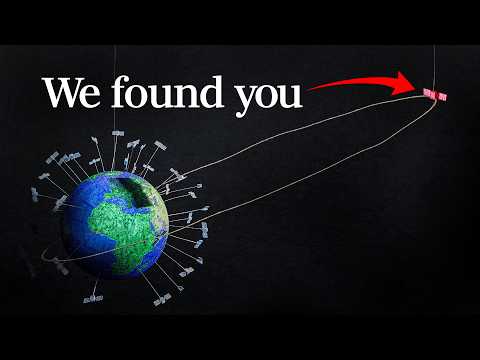
The thumbnail says:
"We found you"
Reality:
The thumbnail hook claims the viewer has been located or discovered, but the episode does not address or imply that the viewer personally has been found; it focuses on a general scientific investigation of GPS interference.
AI Opinion
The episode convincingly argues that the GPS disruptions across Europe originate from a satellite source, using geometric calculations to narrow suspects from thousands to a handful, and ruling out ground-based jamming and solar interference with precise, verifiable evidence. However, its claims rest on weaker ground when it expands the search to potentially 100 or more satellites by breaking the single-source assumption, as this relies on unverified patterns and lacks direct signal capture to confirm the hypothesis. Thoughtful viewers should double-check the verified statistics on GPS spoofing affecting over 1,500 flights daily, as the verdict indicates this needs further research, and keep in mind that the broader vulnerabilities discussed—like the Kessler effect and solar threats—are plausible but not directly tied to the specific interference events analyzed.
Voices are AI rewrites of the same facts — style changes, not substance.
Summary
In November 2024, researchers investigating unusual GPS signal drops across Europe discovered that since 2019, signal-to-noise ratios had simultaneously dropped by a factor of ten on 75 days, affecting areas from Svalbard to Spain and as far west as Canada. The pattern pointed to a source near Poland or Kaliningrad, but the continental scale ruled out ground-based interference; geometric calculations showed the source must be at least 1,200 kilometers up, higher than the International Space Station, leading to the conclusion that only a satellite could cause such widespread disruptions. Solar interference was ruled out because the events were abrupt bursts lasting three to five seconds, confined to a narrow 5 MHz slice of the GPS band, and consistently centered over Europe rather than the entire sunlit side of Earth. By requiring a satellite to be above the horizon for all affected stations simultaneously, researchers eliminated over 98% of 15,000 active satellites, narrowing suspects to about 200, then to 14 after further filtering. One candidate, an Algerian satellite, was ruled out because its signal also dropped during events, indicating it was a victim, not the source. Breaking the assumption that a single satellite caused all events expanded the search to potentially 100 or more satellites, prompting researchers to design specialized receivers to capture raw radio signals at higher temporal resolution for better pinpointing. The video also highlights broader vulnerabilities in GPS, including threats from severe solar events and the Kessler effect, and advocates for a resilient PNT architecture combining space, terrestrial, and fiber optic signals. Countries like South Korea, China, and the UK are already building backup networks using fiber optics and eLoran, while GPS spoofing—affecting over 1,500 flights daily and causing ships to appear in impossible locations—represents a growing, systematic threat.
Voices are AI rewrites of the same facts — style changes, not substance.
Key Points
Mysterious GPS Disruptions Detected Across Europe
In November 2024, Professor Todd Humphreys and his student Zach Clements investigated a tip-off about unusual GPS signal drops. They analyzed data from a network of monitoring stations and found that on 75 days since 2019, signal-to-noise ratios dropped by a factor of 10 simultaneously across Europe, from Svalbard to Spain and as far west as Canada. The pattern suggested a blast center near Poland or Kaliningrad, but the scale was continental, not local.
Source Identified as a Satellite, Not Ground-Based
The researchers ruled out ground-based interference because even the highest tower in Kaliningrad could only affect aviation as far as Denmark. The curvature of the Earth would block signals over such distances. Using conservative geometry, they calculated the source must be at least 1,200 kilometers up—higher than the International Space Station—leading to the conclusion that only a satellite could cause such widespread, simultaneous disruptions.
Solar Interference Ruled Out by Key Characteristics
Solar interference typically builds and fades over tens to hundreds of seconds, but these events were abrupt bursts lasting only three to five seconds. Solar bursts also span a wide range of radio frequencies, whereas this interference was confined to a narrow 5 MHz slice centered at 1,577.5 MHz—right in the GPS band. Additionally, solar events affect the entire sunlit side of Earth, but these disruptions were consistently centered over Europe.
How GPS Works: Triangulation via Time and Distance
GPS receivers determine location by listening to signals from satellites that contain the satellite's position and the exact time the signal was sent. The receiver calculates the time difference, multiplies it by the speed of light, and gets the distance. With one satellite, the receiver is somewhere on a sphere around it; adding a second satellite narrows the position to the intersection of two spheres, enabling precise location.
Narrowing down suspects using geometric constraints
Researchers set up an estimation problem to identify the jammer. By requiring that a satellite be above the horizon for all affected stations simultaneously, they eliminated over 98% of the 15,000 active satellites, leaving about 200 possibilities. Further filtering by multiple events reduced the list to just 14 suspects, many in or near the geostationary belt at 36,000 km altitude.
Algerian satellite ruled out as victim, not attacker
One candidate was an Algerian satellite with a transmitter in the interference band. However, it was barely above the horizon for distant stations in Svalbard and Greenland, and its signal-to-noise ratio dropped in the same proportion as other GPS signals during events. This indicated it was also being jammed, not the source, forcing researchers back to the drawing board.
Controversial assumption and expansion of search
The team had assumed a single satellite caused all events, but this was controversial. Breaking that assumption opened up many more satellites beyond the 13 remaining, potentially 100 or more. This felt like starting over, prompting a need for a completely different approach using raw radio signals with higher temporal resolution.
Need for specialized receivers to capture raw signals
Existing GNSS receivers output simplified measurements once per second, but interference bursts lasted only 3–5 seconds, providing too few samples to compare timing across receivers. To pinpoint the source, researchers began designing specialized receivers to capture raw radio signals at much higher temporal resolution, planning to deploy them across Europe.
GPS is a fragile system with existing threats
The video argues that the threat to GPS is not new; severe solar events can ionize the atmosphere and block satellite signals, or destroy satellites outright. The Kessler effect in medium Earth orbit could also destroy satellites with debris. These existing vulnerabilities mean society should already have been concerned about GPS reliability, and the jamming issue is just another example of why.
Resilient PNT architecture: three-layer solution
The proposed fix is a resilient national PNT (Positioning, Navigation, and Timing) architecture that combines signals from space, terrestrial broadcast, and fiber optics. These three different phenomenologies ensure that if one vector is impacted, the other two remain unaffected. This approach reduces reliance on weak satellite signals and provides redundancy.
Countries building backup networks without space signals
South Korea, China, and the UK are already implementing backup networks that do not depend on satellite signals. They use fiber optic cables to securely share time from atomic clocks on Earth, and for navigation they turn to systems like eLoran, which uses huge high-powered radio towers that are much harder to overwhelm. Other solutions include magnetic and quantum systems that use variations in Earth's magnetic field to determine position without external signals.
GPS spoofing is a growing threat affecting flights and ships
Beyond jamming, GPS spoofing swaps the real signal for a fake one, quietly feeding a location that looks real but can guide users somewhere else entirely. This affects over 1,500 flights per day, and at sea ships are jumping implausible distances, briefly disappearing or reappearing in impossible locations, even on land. It is a systematic, geographically clustered distortion of reality both in the air and at sea.
Chapters
Claims & Fact Check
The source had to be at least 1,200 kilometers up, higher than the International Space Station.
?UnverifiedThe interference events were abrupt, short bursts of only three to five seconds.
?UnverifiedThe interference was confined to a very narrow slice, just five megahertz wide, centered at 1,577.5 megahertz.
?UnverifiedA jammer works by broadcasting a stronger signal in the same frequency band, like yelling over someone whispering.
✓Well-supportedAt 1,200 km above Earth, very different satellite positions can produce almost identical patterns on the ground.
?UnverifiedThe Algerian satellite was not the attacker; it was another victim of the interference.
?UnverifiedA disruption of these systems across an area as large as what these satellites are capable of could affect hundreds of millions of people.
?UnverifiedSevere solar events could ionize the atmosphere and keep all kinds of signals from space from coming in, or it could destroy satellites.
±Partially supportedGPS spoofing is affecting over 1,500 flights per day.
?Unverified