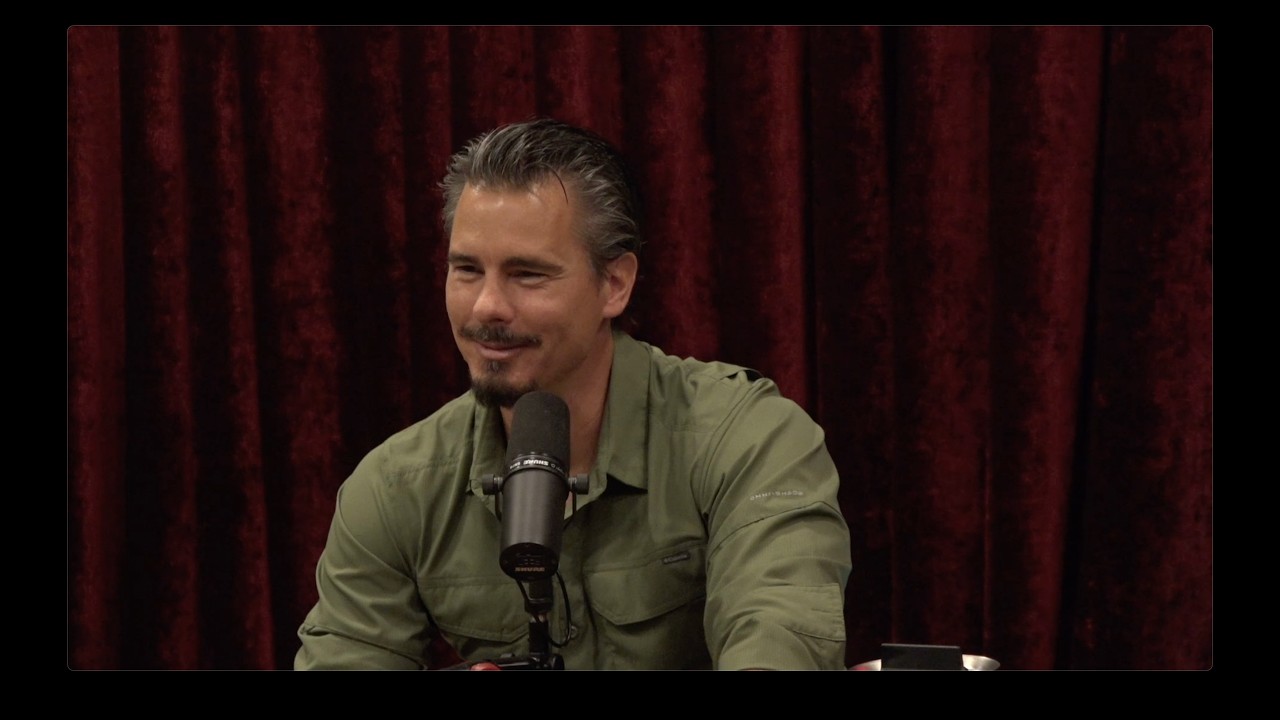
No clickbait detected — the title and thumbnail deliver what they promise.
AI Opinion
Timothy Alberino’s discussion with Joe Rogan compellingly highlights the persistence of cultural memory surrounding lost knowledge and potential historical disruptions, particularly regarding megalithic construction techniques and narratives about giants across diverse cultures. However, claims relating to specific events like the 11,000 BC cataclysm or the existence of giant skeletons rely heavily on interpretations of 19th-century newspaper reports and anecdotal accounts, lacking robust scientific verification; Alberino’s shifting perspective on Peruvian mummies also warrants scrutiny. Listeners should approach assertions about advanced pre-flood civilizations and telepathic abilities with considerable skepticism, recognizing they rest on speculative connections between mythology, fringe archaeology, and interpretations of ancient texts.
Avatars are AI rewrites of the same facts — style changes, not substance.
Summary
Timothy Alberino’s conversation with Joe Rogan explores a range of historical and archaeological topics, beginning with the significance of "kumbi," a restricted fabric worn by Inca nobility. The discussion then delves into recurring patterns of cultural destruction throughout history, including the intentional burning of Aztec and Mayan codices. Alberino presents newspaper accounts of giant skeleton discoveries in North America and discusses evidence suggesting a cataclysmic event around 11,000 BC, potentially triggered by an asteroid impact. He challenges conventional timelines regarding structures like the Great Pyramid of Giza and Machu Picchu, highlighting megalithic construction techniques seemingly lost to later civilizations. Alberino also examines cranial deformation practices across cultures, explores narratives from ancient texts like the Book of Enoch concerning "watchers," and discusses theories about a technologically advanced pre-flood civilization and their potential connection to myths of giants, concluding with observations regarding the unusual reactions some individuals have when discussing these topics.
Avatars are AI rewrites of the same facts — style changes, not substance.
Key Points
Sudden Shift in Reaction to Kandahar Giant Story
During a conversation, the mention of the 'Kandahar giant' caused an immediate and noticeable shift in one individual’s demeanor. He abruptly ceased laughter and adopted a stern expression, warning about potential dangers associated with investigating the topic further. This reaction suggests that the subject is sensitive or potentially controversial within certain circles.
Ubiquitous Nature of Giant Legends Across Cultures
The discussion highlights a recurring theme in ancient cultures worldwide – legends of giants. These stories are not limited to specific regions or religious texts, appearing independently in both the Middle East and North America with consistent details like red hair, six fingers, and six toes. This widespread prevalence suggests a possible shared historical basis for these myths.
Allegations of Smithsonian Suppression of Giant Remains
The conversation references a persistent myth alleging that the Smithsonian Institution has discovered giant skeletal remains and hair samples (often red) but concealed them from public view. This narrative claims these discoveries are hidden in basements or other restricted areas, fueling speculation about a deliberate cover-up of evidence related to giants.
Connection Between Giants, Ancient Cults, and Demons
Timothy Alberino posits that the suppression of information regarding giants might stem from a deeper concern rooted in ancient Near Eastern cosmology. He explains that these beings were often part of giant cults, believed to be hybrids capable of spirit communication after death, and are linked to demonic possession as described in the New Testament.
Joe Rogan's Nervousness About Giants
Joe Rogan expresses significant discomfort and anxiety when discussing giants, particularly the Kandahar giant. He explains that even high-ranking individuals within the Pentagon who freely discuss UFOs become wary and cautious when the topic shifts to giants in Afghanistan, sometimes warning him to be careful with the subject matter.
The Nuragic Civilization's Architectural Legacy
Timothy Alberino introduces the Nuragic civilization, a bronze age culture from Sardinia. Remarkably, over 7,000 of their megalithic towers still stand today, though estimates suggest there were once between 10,000 and 30,000 structures. Some of these towers reached heights exceeding 100 feet, demonstrating advanced construction techniques for the time.
Cyclopian Masonry: A Defining Architectural Style
Alberino explains that cyclopian masonry is a hallmark of megalithic architecture worldwide. This technique involves fitting large stones together without the use of mortar, creating incredibly durable structures. He contrasts Sardinian examples with those found in Peru (Sacsahuaman), noting differences in stone work while maintaining the core principle.
The Purpose and Construction of Tombs of the Giants
Alberino details the unique construction of Sardinian 'tombs of the giants,' explaining that they were built *on top* of interred remains, not to house them. Local legends associate these tombs with giants, a belief Alberino says is often dismissed by archaeologists who haven't physically examined the sites and their dimensions; he personally measured some and found they could easily accommodate individuals up to 10 feet tall.
The Ritual of Incubation in Nuragic Culture
Alberino introduces the concept of 'right of incubation,' a Necromantic rite practiced by the Sardinians. He describes how this ritual is linked to the purpose and construction of the tombs, suggesting it was a significant element in their cultural practices and beliefs surrounding death and giants.
The Scale of the Discovered Remains
Timothy Alberino recounts stories from Sardinia involving the discovery of exceptionally large skeletal remains, often referred to as 'giants.' These individuals were described as being 9 to 12 feet tall, a significantly larger stature than average. He emphasizes that these discoveries weren't isolated incidents but part of a recurring pattern in Sardinian history, with numerous artifacts found alongside them.
Local Authorities and Artifact Handling
Alberino describes an instance where the mayor of Sardinia dismissed concerns about the increasing number of artifacts being unearthed, famously telling a worker to 'Mind your own effing business' and instructing him to simply place the bones and artifacts in the church. This anecdote highlights a seemingly nonchalant attitude towards significant archaeological finds among some local officials.
The Vineyard Excavation Story
Sai Vergilio, a 100-year-old Sardinian man, shared a story about an excavation during vineyard tilling where workers unearthed numerous large skeletal remains arranged in a crisscross pattern. The vineyard owner immediately halted the work and notified authorities, who subsequently removed the bones, with one worker hiding to continue working for pay despite instructions to leave.
Distinction Between Statues and Skeletal Remains
A clarification is made regarding reports of 'giant skeletons' found in Sardinia, revealing that these are actually statues known as the Giants of Monte Pra. These stone figures, approximately seven feet tall, have led some to speculate whether they represent anatomical proportions of actual giants, although this remains unconfirmed.
Kumbi Fabric Significance
Timothy Alberino discusses the significance of 'kumbi,' a fine fabric exclusively worn by Inca nobility. He explains that it was illegal for anyone outside this class to wear kumbi, highlighting its ceremonial importance and legal restriction within Incan society. The discovery of bodies dressed in kumbi within a tomb further supports his claims about ancient customs.
Destruction of Cultural Artifacts
The conversation shifts to the recurring theme of civilizations destroying historical artifacts, drawing parallels with instances like the attempted destruction of the Kyasa temple in India and the intentional burning of Aztec and Mayan codeexes by agents of the Catholic Church. This highlights a pattern of cultural erasure throughout history, emphasizing the loss of invaluable knowledge contained within these destroyed items.
19th-Century Newspaper Reports on Giant Skeletons
Alberino brings up newspaper reports from the 1800s detailing discoveries of giant skeletons in North America, particularly associated with mounds and mound builders. These accounts suggest a historical narrative involving unusually large human remains, often linked to the Smithsonian Institution, adding another layer to the discussion about ancient civilizations and their legacies.
Evidence of a Cataclysmic Event Around 11,000 BC
Timothy Alberino discusses evidence suggesting a cataclysmic event occurred around 11,000 BC. This includes the discovery of frozen mammoths (mastadons), animals swept up in floods (megapods), and evidence of burning biomass on extinct plants. He posits that this event was an 'unimaginable cataclysm' with physical signs like aridium layers and dark carbon deposits.
Asteroid Impact and Nuclear Glass
The discussion highlights the potential for asteroid impacts as a cause of the cataclysm, citing evidence like layers of aridium, dark carbon deposits from intense fires, and the presence of 'nuclear glass' – a substance chemically similar to that found during the Trinity nuclear test. This suggests an immense impact event occurred, aligning with Randall Carlson’s theories about the melting of the North American ice sheet.
The Laurentide Ice Sheet and Comet Impact
Alberino explains how a comet, potentially city-sized, impacting the two-mile thick Laurentide ice sheet would have catastrophic consequences. The impact would superheat the ice, eject material, ignite forests, and lead to massive flooding, reshaping the landscape and creating features like the Great Lakes. This event is linked to the extinction of many North American megafauna.
Challenging Pyramid Chronology with Erosion Studies
Alberino references an Italian engineer's study proposing a significantly older construction date for the Great Pyramid of Giza. Using a 'relative erosion method,' the study suggests the pyramid could be tens of thousands of years older, potentially dating back to the Paleolithic period. This challenges conventional timelines and raises questions about ancient Egyptian history.
Machu Picchu's Construction Layers
Timothy Alberino explains that much of Machu Picchu is an archaeological reconstruction, with the original foundations being megalithic. He points out a clear visual distinction between these ancient foundations and the later Inca construction on top, describing the latter as 'Inca slop' due to its less precise style compared to the perfectly fitted megalithic blocks below. This observation suggests that the Inca utilized pre-existing structures.
The Guide's Explanation at Machu Picchu
During a visit to Machu Picchu, Alberino questioned a guide about the differing construction styles observed in the megalithic foundations and the Inca structures built upon them. The guide’s response – that the Inca simply “liked the way it looked” – was dismissed by Alberino as illogical, leading him to suggest that the Inca lacked the knowledge or ability to replicate the superior megalithic techniques.
Megalithic Construction at Ojante Tambbo
Alberino recommends visiting Ojante Tambbo, located between Cusco and Machu Picchu, as it showcases some of the most exquisite megalithic architecture on Earth. He notes that this site exhibits both polygonal walls similar to those found at Saka Woman in Peru, and interlocking blocks reminiscent of Tiwanaku, highlighting a diversity of ancient construction techniques.
Curved Walls and Masonry Techniques
Alberino describes a specific spot at Ojante Tambbo where the wall curves as you ascend stairs, emphasizing the complexity of this construction. He contrasts this with modern masonry practices, noting that even skilled masons would typically interlock blocks in corners for stability—a technique seemingly absent or simplified in the ancient structures.
Inca Knowledge and Earthquakes
Timothy Alberino discusses the observation that Inca structures, particularly cathedrals, often crumble in earthquakes while megalithic foundations remain intact. He posits that ancient architects likely understood this phenomenon and incorporated it into their designs, suggesting a lost knowledge base within the Inca civilization. This implies an advanced understanding of geology and structural engineering passed down through generations.
The Role of Grandes Almaltas in Inca Society
Alberino explains that within the Inca society, knowledge was primarily transmitted by the 'Grandes Almaltas,' who served as teachers for the Inca nobility and keepers of secrets. These individuals were responsible for passing down crucial information, highlighting a structured system for preserving cultural and technical expertise. The fact that the Inca lacked a written language, relying on Kipus (rope-knot systems), further emphasizes the importance of oral tradition in their society.
Comparison to Modern Knowledge Loss
Alberino draws a parallel between the loss of ancient megalithic building knowledge and modern technological expertise, questioning why such advanced skills would be forgotten. He contrasts this with our current ability to maintain complex technologies like computers, suggesting that the disappearance of ancient techniques points towards a catastrophic event rather than simple attrition or neglect. This implies a sudden disruption in cultural transmission.
Machu Picchu's Name and Divine Origins
The discussion shifts to Machu Picchu, where Alberino reveals that its name, 'Umpu-Qo,' translates to ‘the abode of the gods’ in Quechua. This perspective highlights a common belief among ancient cultures – that megalithic structures were built by deities and served as sacred dwellings. This interpretation suggests that later civilizations may have encountered these pre-existing monuments and attributed them to divine origins, rather than constructing them themselves.
Cranial Deformation Practices Across Cultures
The discussion highlights cranial deformation practices observed in various cultures worldwide, including Africa and among Native American tribes like the flathead tribe of Montana. These groups intentionally altered skull shapes, particularly during infancy, using techniques such as cradle boarding to create elongated or flattened heads. The motivation behind these practices remains unclear, prompting speculation about potential emulation of other entities.
The Significance of Skull Volume and Brain Size
A key point arises regarding the unusual volume of some elongated skulls found in ancient remains. While cranial deformation can account for some elongation, certain specimens exhibit a 20-40% increase in skull volume compared to typical human skulls. This substantial difference raises questions about potential implications for brain size and cognitive function, prompting speculation about what this could mean.
Sex Differences in 'Biobait' Skull Morphology
The transcript reveals a connection between skull morphology and sex. Analysis of Paracas ceramics suggests that 'tubular erect' skulls were more common among both sexes, while 'biobait' (heart-shaped) skulls were observed at a higher rate in female skulls. This association is visually represented in the pottery depictions of men and women with distinct head shapes.
Timothy Alberino's Changing Opinion on Peruvian Mummies
Alberino recounts his experience visiting Peru’s Eco Museum to examine the alleged alien mummies. Initially impressed by specimens like Maria, he initially believed they were likely genuine based on preliminary observations and conversations with Professor Roger Zunya. However, Alberino has since reversed his position, now believing it is more probable that all of the mummies are a hoax.
Shared Narrative Elements Across Cultures
Timothy Alberino highlights recurring themes in ancient stories, including cataclysms, fratricidal wars, and the descent of deities to Earth who interbred with humans. These narratives are found across various cultures, such as those from India and the biblical account of a great flood. He questions whether these shared elements reflect historical truths or are simply cultural myths.
The Significance of the Book of Enoch
Alberino identifies the book of Enoch, specifically its oldest portion called 'the book of the watchers,' as a crucial source for understanding the anti-dolivian world. He distinguishes between the traditional Book of Enoch and this earlier tradition, suggesting it contains the earliest account of beings descending to Earth and procreating with humans, potentially explaining the origin of giants or demigods.
Watchers in Biblical and Enochian Texts
The concept of 'watchers' appears in both the Book of Daniel and the Book of Enoch. In Daniel, they judge Nebuchadnezzar, sentencing him to madness; in Enoch, they are explicitly described as 200 non-human celestial entities who lust after human women and progenerate offspring. Alberino suggests these watchers could be interpreted as extraterrestrial beings.
Technology Exchange in Ancient Myths
According to the Book of Enoch, the watchers who descended to Earth and interbred with humans received technology from the fathers of the women they married. This exchange suggests a potential transfer of advanced knowledge or capabilities, adding another layer of complexity to the narrative and raising questions about its possible origins.
Advanced Technology in Antediluvian Societies
Timothy Alberino posits that advanced technology might not have been broadly distributed within ancient societies, but rather concentrated within specific family lines or dynasties. He suggests the possibility of a 'technologically advanced fraternity' controlling technology while the general population remained at a more primitive level, such as the Bronze Age. This concept distinguishes from the idea of a widespread technologically advanced civilization.
Degeneration of Human Species
Alberino expresses a belief in the degeneration and devolution of the human species over time. He suggests that humanity started as something 'really remarkable' but has gradually declined, citing biblical accounts of pre-flood patriarchs who lived much longer lives (nearly a thousand years) and were considered more ‘human’ than modern humans due to their perceived superiority.
The Concept of Telepathy in Ancient Human Capabilities
Alberino suggests that ancient humans, particularly those pre-flood patriarchs, possessed telepathic abilities. He argues this capability was intrinsic to their design, allowing for instantaneous communication and a greater transfer of information than current verbal methods allow. This ability may be latent within the human species today.
The Purpose of Creation: Fellowship with the Maker
Drawing from a biblical perspective, Alberino argues that humanity's creation had two fundamental purposes: to govern the earth and, more importantly, to fellowship with God. He believes this purpose implies inherent extraordinary capabilities within human anatomy and biology, enabling interaction with both the divine and potentially other entities beyond our current understanding.
The Pilot's Story of a Giant in Afghanistan
A C-130 pilot recounted a story to Steve Quail, involving an encounter with individuals he referred to as 'babysitters' upon landing at Bram airfield in Afghanistan. This pilot claimed that during a routine mission in 2005, he was met by these individuals who seemed to be guarding something or someone of importance.
The Remote and Dangerous Nature of Afghanistan
Tim emphasizes the extreme remoteness and danger associated with Afghanistan, highlighting its mountainous terrain, control by warlords, and difficulty of access. He compares it to Antarctica in terms of accessibility, suggesting that travel within certain areas is significantly more challenging than visiting the South Pole.
Gen 6 Productions' Documentary Work on Giants
Tim explains his previous involvement with Gen 6 Productions, a company dedicated to producing documentary films about giants. They investigated accounts of giants from biblical and historical sources, including the Smithsonian’s collection, often involving travel around the world to gather information.
Chapters
Claims & Fact Check
A C130 pilot recounted a story about encountering an eight-foot tall man in Afghanistan.
The Kandahar giant stories are often linked to the occult.
Afghanistan is more difficult to access than Antarctica.
The existence of giants would affirm not only the biblical narrative but also myths from all ancient cultures.
There's something very sinister going on in regard to the remains of giants.
The Canaanites practiced a ritual called 'Kispam' involving communication with the spirits of dead giants.
There were once up to 30,000 Nuragic towers on Sardinia.
Local legends in Sardinia claim that the tombs of the giants housed giants.
The tombs of the giants were built to house the bodies of giants.
These giants were 9 to 12 feet tall.
A robust black market exists for artifacts from Sardinia, Peru, and Egypt.
The bones were confiscated and carted away by authorities.
Bodies found in tombs were dressed in kumbi fabric, which was reserved for Inca nobility.
The Catholic Church intentionally destroyed Aztec and Mayan codeexes.
Newspaper reports from the 1800s describe discoveries of giant skeletons in North America.
A cataclysmic event occurred around 11,000 BC.
Asteroid impacts caused the observed geological phenomena.
The indigenous people hunted megafauna to extinction.
The Inca built on top of pre-existing megalithic foundations at Machu Picchu.
The Inca did not understand how to construct the megalithic foundations.
Ojante Tambbo possesses some of the most exquisite megalithic architecture on Earth.
Ancient architects likely understood how earthquakes affected structures.
The Inca refused to pass down knowledge of megalithic construction.
A cataclysm likely eliminated civilizations possessing advanced building techniques.
Some elongated skulls have 20-40% more volume than a human skull.
Professor Roger Zunya sincerely believes the Peruvian mummies are real.
The larger Peruvian mummies, like Maria, are likely hoaxes.
The book of Enoch is the beginning of the book of Enoch.
These watchers could be interpreted as extraterrestrial beings.
The angels of heaven, the watchers lusted after the daughters of men and they desired to progenerate families.
The antediluvians were much more remarkable than we are in every way.
Human beings have been gradually devolving over time.
Ancient humans, particularly pre-flood patriarchs, possessed telepathic abilities.
Was this digest good?
Digest any single YouTube video — free.
3 free digests — no card, no sign-up wall.
Or just swap the domain of any YouTube link → instant digest