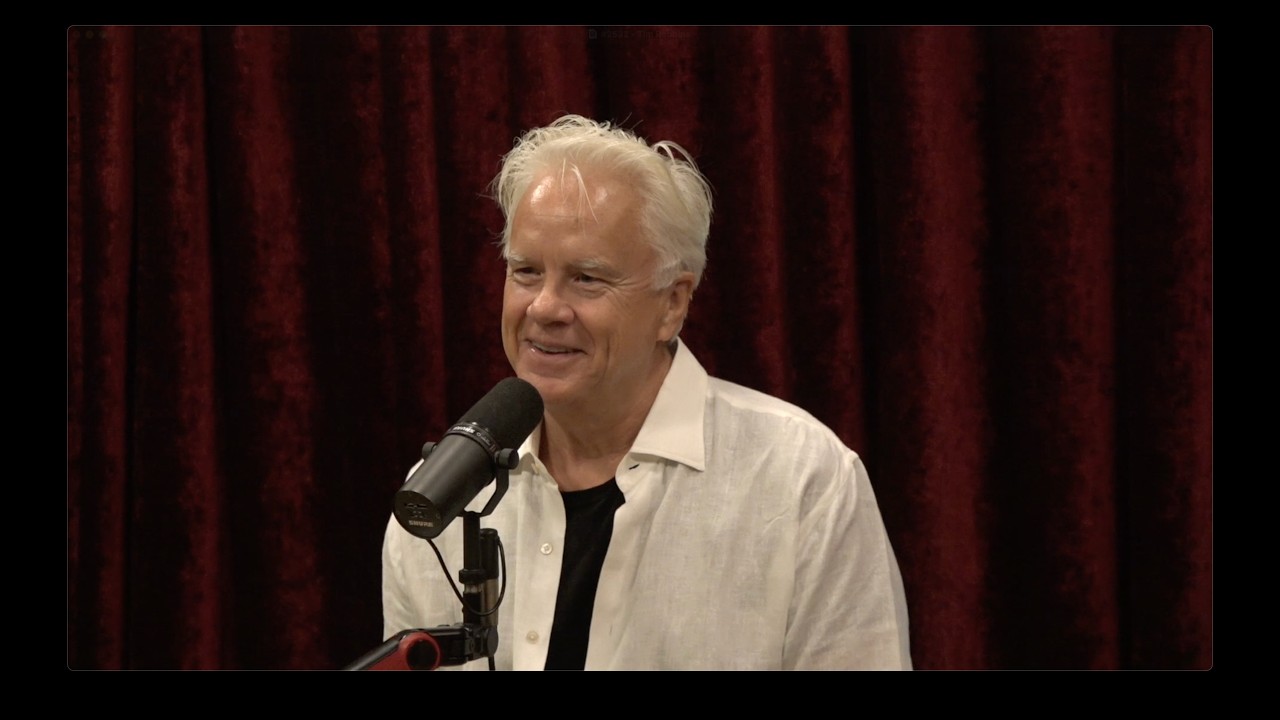
No clickbait detected — the title and thumbnail deliver what they promise.
AI Opinion
The episode most convincingly argues that the proliferation of entertainment options, coupled with technological advancements like AI, risks homogenizing creative output and diminishing the value of human artistry; Robbins’ advocacy for an "AI-free" seal highlights this concern effectively. However, claims regarding the media landscape's independence, the impact of lockdowns, and assertions about phenomena beyond scientific understanding (like post-mortem communication) rely on anecdotal evidence and personal beliefs rather than verifiable data. Listeners should critically evaluate statements concerning political events, particularly those related to the Iraq War or current conflicts, and remain skeptical of broad generalizations about experts or the effects of dietary practices like the master cleanse.
Avatars are AI rewrites of the same facts — style changes, not substance.
Summary
Tim Robbins’ conversation with Joe Rogan covered a wide range of topics, from his career experiences—including the troubled production of "Howard the Duck" and his early work with George Lucas—to broader reflections on entertainment and technology. Robbins discussed his ongoing project cataloging forgotten works by WWII writers like Gore Vidal and Kurt Vonnegut, highlighting a nostalgia for earlier forms of media discovery through record stores and video rentals. The discussion touched upon Stephen King’s prolific writing career, including his use of pseudonyms and periods of substance abuse that fueled creativity. Concerns about the impact of AI on creative industries were raised, with Robbins emphasizing the importance of human individuality and suggesting a potential "AI-free" seal for authentic content. He also shared personal beliefs regarding communication beyond scientific understanding and expressed skepticism towards experts and rigid adherence to dogma, while advocating for entertainment value over political correctness in film. Finally, they explored topics like the master cleanse diet, the evolution of cinema techniques, and the challenges facing free speech today.
Avatars are AI rewrites of the same facts — style changes, not substance.
Key Points
Stephen King's Pseudonym
Joe Rogan explains that Stephen King used the pseudonym Richard Bachmann to publish books at a faster rate. The publishing house was concerned about flooding the market with too many Stephen King titles, so he adopted an alias to release additional works under a different name while maintaining his established brand.
Stephen King's Early Career & Substance Abuse
Joe Rogan and Tim Robbins discuss Stephen King’s prolific writing career, noting a period of intense creativity fueled by substance abuse. King reportedly wrote some of his most celebrated works while struggling with cocaine and alcohol addiction to the point where he didn't remember writing them; for example, his wife retrieved a discarded manuscript for 'Cujo' from the trash because he deemed it worthless.
Stephen King's Disapproval of 'The Shining' Adaptation
Tim Robbins shares that Stephen King reportedly disliked Stanley Kubrick’s film adaptation of ‘The Shining,’ specifically criticizing Jack Nicholson’s portrayal as becoming insane too quickly. King felt the movie deviated from the book, which depicted a more gradual descent into madness and possession by the property.
The Creation of Derinkuyu Underground City
Joe Rogan recounts the discovery of Derinkuyu, a massive underground city in Turkey. The city was accidentally found when a farmer was searching for a lost chicken and broke through a wall, revealing the extensive subterranean complex capable of housing approximately 20,000 people. Its origins remain unknown, with no historical records explaining its construction or purpose.
The Cycle of Media Misinformation
Joe Rogan and Tim Robbins discuss a recurring pattern where individuals who are initially embroiled in controversy, like being involved with the Contras funding situation, later reappear as seemingly authoritative figures on mainstream media outlets such as Fox News. They highlight how those who question narratives or make mistakes often face promotions or better job opportunities within the media landscape, suggesting a systemic issue of rewarding conformity over critical analysis.
The Rise of Independent Media
Rogan observes that the current era is unique due to the emergence of truly independent media outlets, operating on platforms like Substack, YouTube, and X. These platforms allow journalists to bypass traditional corporate control and expose connections between government organizations, intelligence agencies, and mainstream media in a way previously unseen. This shift offers an alternative perspective to narratives often presented by established news sources.
Robbins' Opposition to the Iraq War
Tim Robbins recounts his experience of publicly opposing the 2003 Iraq War, noting that he was among a small number of prominent figures who did so. He explains that his decision was based on reading foreign press reports which questioned the existence of weapons of mass destruction – information not adequately covered in American media at the time. This dissent resulted in significant backlash and attempts to discredit him.
The Use of Discrediting Tactics
Robbins describes how critics attempted to silence his play, 'Embedded,' by publishing a negative review in *The New Republic* during previews. The review employed inflammatory labels such as “conspiracy theorist” and “anti-semite,” despite the play containing no such content. Robbins explains that these accusations are often used as tactics to discredit individuals who challenge prevailing narratives or express dissenting opinions.
Tim Robbins' Skepticism Towards Experts
Robbins expresses a deep distrust of self-proclaimed experts, arguing that considering oneself an expert stifles learning and open dialogue. He cites examples like the 'weapons of mass destruction' claims and other instances where expert opinions led to harmful consequences, emphasizing the importance of multiple perspectives instead.
The Perversion of Science into Dogma
Robbins critiques the tendency for science to become an unquestionable dogma, referencing Fauci's statement that criticizing him is criticizing science. He argues that true scientific inquiry involves constant questioning, data analysis from diverse viewpoints, and open communication – not a rigid adherence to established beliefs.
The Detrimental Effects of Lockdowns on Children
Robbins discusses the negative impact of lockdowns on children's development, highlighting how they were deprived of crucial socialization and education for two years. He describes witnessing children returning to classrooms exhibiting signs of desocialization, trauma, and difficulty making eye contact, emphasizing the long-term consequences of these measures.
The Erosion of Free Speech
Tim Robbins and the guest discuss how freedom of speech, a cornerstone of American society, is increasingly under attack. They highlight that it's not just about suppressing expression but also about concerted efforts to discredit individuals through lies and misinformation, creating an Orwellian environment where truth becomes irrelevant. This tactic aims to silence dissent by instilling fear in others.
The Impact of Speaking Out on Controversial Issues
The conversation turns to the consequences faced by those who express views deemed unpopular, exemplified by Susan Sarandon's experience losing her agent and facing difficulty finding work after voicing opinions about Israel. This illustrates a chilling effect on open discourse, where individuals fear professional repercussions for expressing dissenting viewpoints.
Historical Parallels in Public Opinion
Drawing parallels to his own experiences during the Iraq War era, Robbins suggests that current perspectives on events like the Gaza conflict will eventually become universally accepted. This highlights a pattern where initially controversial views gain broader acceptance over time as more information becomes available and public understanding evolves.
Prison Rehabilitation Through Theater
Robbins describes his non-profit's innovative prison program that utilizes theater techniques to facilitate emotional release and rehabilitation. The program introduces inmates to stock characters from the Kameda Delerte, encouraging them to explore suppressed emotions like sadness, fear, and happiness—emotions often masked by anger for survival within a prison environment. This process helps inmates recognize their potential beyond their criminal actions.
Robbins' Vault of Unfinished Projects
Tim Robbins reveals he is currently editing a documentary about four World War II soldiers who became accomplished writers, including Gore Vidal, Kurt Vonnegut, Norman Mailer, and Howard Zinn. He explains that this project, along with many others, has been unearthed from his storage units as part of a new website launch in September, reflecting a period of rediscovering long-shelved creative endeavors.
The Failed Vision of Howard the Duck
Robbins and Rogan discuss the widely criticized film 'Howard the Duck,' noting that it failed to live up to expectations. Robbins recalls knowing early on that the film was in trouble due to the puppet's appearance, which deviated significantly from the character’s depiction in the original comic books. The duck was portrayed as overly cute compared to its intended gritty and cynical persona.
Ultralight Plane Chase Sequence
Robbins describes a complex ultralight plane chase sequence he filmed for 'Howard the Duck,' which ultimately lasted only about two and a half to three minutes in the final film. He explains that an ultralight plane is essentially a person with wings and a small motor, requiring significant skill to operate safely. Robbins himself did not fly the plane during filming, opting instead for a fake version.
Tim Robbins' Early Career and George Lucas
Tim Robbins recounts his early career experiences, highlighting the unexpected involvement of George Lucas in the film 'Howard the Duck'. Lucas had just achieved immense success with 'Star Wars,' making his subsequent production choices, like 'Howard the Duck,' seem even more surprising. Robbins emphasizes that he was fortunate to have already completed another successful film, 'Five Corners', before 'Howard the Duck' was released, which helped mitigate any potential career damage.
The Impact of Technological Advancements on Entertainment Consumption
Robbins reflects on the evolution of music and film consumption, from eight-track tapes to VHS tapes and now streaming services. He highlights how each technological leap broadened access but also diminished certain aspects of the experience, such as the discovery process in record stores and video rental shops. The conversation underscores a sense of nostalgia for these past forms of entertainment.
The Significance of Personal Recommendation in Entertainment
Tim Robbins and Joe Rogan discuss the loss of personal recommendations for entertainment, contrasting the experience of browsing a video store with algorithmic suggestions. They emphasize how video stores provided curated selections from knowledgeable staff who could introduce viewers to new films based on their tastes. This contrasts with modern algorithms that, while convenient, lack the human element and potential for serendipitous discovery.
The Value of Limited Choices
Robbins expresses that the sheer volume of available content can be overwhelming, suggesting that having fewer choices might have been beneficial. He points out that while modern technology provides access to everything, it also removes the 'arbiter' – a person who could guide and curate experiences. This sentiment reflects a yearning for a more focused and intentional approach to entertainment.
Appreciation for Skilled Acting in The Agency
Tim Robbins praises the CIA series 'The Agency,' starring Michael Fastpender, noting its exceptional writing and acting. He contrasts it with other shows, finding them lacking in comparison to the nuanced performances and sophisticated storytelling of 'The Agency.' This highlights his appreciation for quality television and skilled actors who elevate their work.
AI's Ability to Mimic Creative Styles
The discussion highlights AI’s capability to rapidly generate content mimicking specific artistic styles, such as Quentin Tarantino or Stanley Kubrick. It can incorporate elements like 'weirdness,' 'Easter eggs,' and 'hidden aspects' based on user prompts, effectively synthesizing existing creative works within minutes. While technically original, this process draws heavily from pre-existing material, raising concerns about originality and compensation for artists.
The Challenge of Legal Recourse Against AI
Tim Robbins points out the legal complexities surrounding AI-generated content, questioning who can be held accountable when AI infringes on existing artistic work. This issue is causing significant concern among artists and creators, as current legal frameworks struggle to address the unique challenges posed by AI's creative capabilities.
The Importance of Human Individuality in Creative Work
Despite concerns about AI, Robbins expresses faith in the enduring value of human experience and individuality in creative endeavors. He is currently working on a companion piece to 'The Player,' exploring what would happen if its character were alive today, emphasizing that his unique perspective cannot be replicated by AI.
The Potential for an 'AI-Free' Seal of Approval
Reed Morano’s suggestion of a seal to identify projects created without AI is presented as a potential solution. This concept aims to differentiate human-created content from AI-generated material, appealing to audiences who value authenticity and the human element in artistic expression—similar to 'GMO-free' labeling for food products.
Tim Robbins on the Importance of Entertainment over Correctness in Film
Robbins expresses a dismissive attitude towards the need for films to be 'correct,' prioritizing entertainment value instead. He states that correctness has never been important to him, emphasizing that he cares whether a film is good and entertaining rather than factually accurate or politically aligned. This perspective reflects a broader sentiment about separating artistic merit from social commentary.
The Rapid Evolution of Film & Acting Techniques
Robbins highlights the surprisingly short timeframe between the invention of film and the emergence of iconic acting styles like those of Brando and Montgomery Clift. He notes that early filmmakers had to rapidly innovate, figuring out how to translate stage acting techniques – which relied on projection due to a lack of microphones – to the new medium of film. This resulted in an initial awkwardness that was later revolutionized by actors who embraced naturalism.
Chaplin's Silent Film Genius
The conversation turns to Charlie Chaplin and his contributions to silent film. Robbins expresses admiration for Chaplin’s talent, recognizing the unique skill required to tell stories without dialogue relying solely on visual storytelling and physical comedy. This highlights a different era of filmmaking where conveying narrative through non-verbal means was paramount.
The Early Days of Cinema: A Novel Experience
Robbins reflects on the novelty and wonder experienced by audiences during the early days of cinema. He imagines what it must have been like to witness moving images projected onto a large screen for the first time, emphasizing the sense of magic and alchemy associated with this new form of entertainment. The experience was further enhanced by live musical accompaniment, creating a truly immersive spectacle.
Master Cleanse Protocol
Joe Rogan and Tim Robbins discuss the 'master cleanse,' a 14-day fasting regimen where participants consume only lemon juice, cayenne pepper, and maple syrup. This concoction is intended to help the body eliminate toxins and promote overall health. A crucial component involves daily ‘purges’ to facilitate this detoxification process, followed by a week of reintroducing food with a gradual progression from clear broth to soups, vegetables, and finally, more substantial meals.
Post-Cleanse Reintroduction
Following the 14-day master cleanse, reintroducing food is a gradual process that takes approximately one week. Participants begin with clear broth and soups to ease their digestive systems back into processing solid foods before progressing to vegetables and eventually more substantial meals like steak. This slow transition prevents shock to the body after prolonged fasting.
Ketone Production and Mental Clarity
During a master cleanse, the body shifts into ketosis, utilizing fat as its primary energy source and producing ketones. This metabolic state is associated with increased mental clarity and sustained energy levels throughout the day, eliminating the typical highs and lows experienced after meals or caffeine consumption. Joe Rogan also mentions his experience with ketogenic and carnivore diets which achieve similar results.
The Impact of Modern Sugar Consumption
Tim Robbins highlights the detrimental effects of modern sugar consumption, noting that the concentrated forms and quantities available today are unprecedented in human history. He contrasts this with historical diets where sweetness primarily came from fruit, emphasizing how processed sugary foods like candy bars and blended ice cream concoctions can negatively impact health and lead to addictive behaviors.
Beyond Measurable Reality
Tim Robbins argues that the inability to measure or quantify something doesn't negate its reality. He references experiences like a mother knowing her child is in danger and twins having inexplicable connections, suggesting there are ways of being and communication beyond current scientific understanding. This challenges conventional notions of what constitutes 'real'.
Personal Experience with Post-Mortem Communication
Robbins recounts a dream where his deceased grandfather seemingly communicated with him, warning him about an impending event. Shortly after, his son experienced a near-miss accident that Robbins attributes to his grandfather's intervention, reinforcing his belief in realms beyond the physical and the possibility of communication across them.
The Significance of Human Connection & Electromagnetic Fields
Robbins discusses a cardiologist's research suggesting that human hearts communicate through electromagnetic fields, with the heart containing more neurons than the brain in some areas. He posits that this connection is vital for well-being and longevity, explaining why isolation can be detrimental and why humans crave social interaction – it’s a fundamental need for survival.
Key moments
Claims & Fact Check
Stephen King wrote some of his best books while struggling with cocaine and alcohol.
His wife saved the manuscript for 'Cujo' from the trash.
Derinkuyu could hold approximately 20,000 people.
People who get things wrong in conflicts like the Iraq War are often promoted.
The current media landscape is uniquely characterized by independent journalists free from corporate influence.
Foreign press provided more transparent reporting on the Iraq War's justification than American media did.
Experts who consider themselves experts are done learning.
Criticizing Anthony Fauci is criticizing science.
Lockdowns were a sophisticated propaganda machine.
Freedom of speech is being attacked and suppressed in all sorts of different ways.
The New York Post would do that to [someone] like what the [expletive] man.
90% of Gaza is gone.
If you were one of the early people talking about this [Gaza] is this is you're watching genocide in real time.
The puppet in 'Howard the Duck' was too cute compared to the comic book version.
George Lucas produced Howard the Duck after directing Star Wars.
Robbins felt sympathy for the director of 'Howard the Duck' due to the film’s challenges.
Algorithms are not reliable for discovering great movies.
There are too many shows available to watch now.
'The Agency' is an incredibly well-written and acted series.
AI can rapidly generate creative content mimicking specific artists.
It is economically advantageous to use AI for writing screenplays compared to hiring talented screenwriters.
Audiences crave originality and will ultimately appreciate content created by human beings.
It doesn't have to be correct.
Brando just did it real and everybody's like what the [ __ ] is he doing?
There’s so little time between the invention of film and then movie stars.
The master cleanse provides total mental clarity.
You lose about two pounds a day on the master cleanse.
Sugar is the biggest poison for everybody.
There are ways of being and communication beyond current scientific understanding.
His grandfather saved his son's life through some form of energy or connection.
Human hearts communicate via electromagnetic fields and contribute to well-being.
Was this digest good?
Digest any single YouTube video — free.
3 free digests — no card, no sign-up wall.
Or just swap the domain of any YouTube link → instant digest