Clickbait Checker
The video title says:
"Movement Practice to Strengthen Your Mind-Body Connection | Ido Portal"
Reality:
The title accurately reflects the episode’s exploration of movement practices and their connection to mental well-being, though it leans heavily into Ido Portal’s expertise.
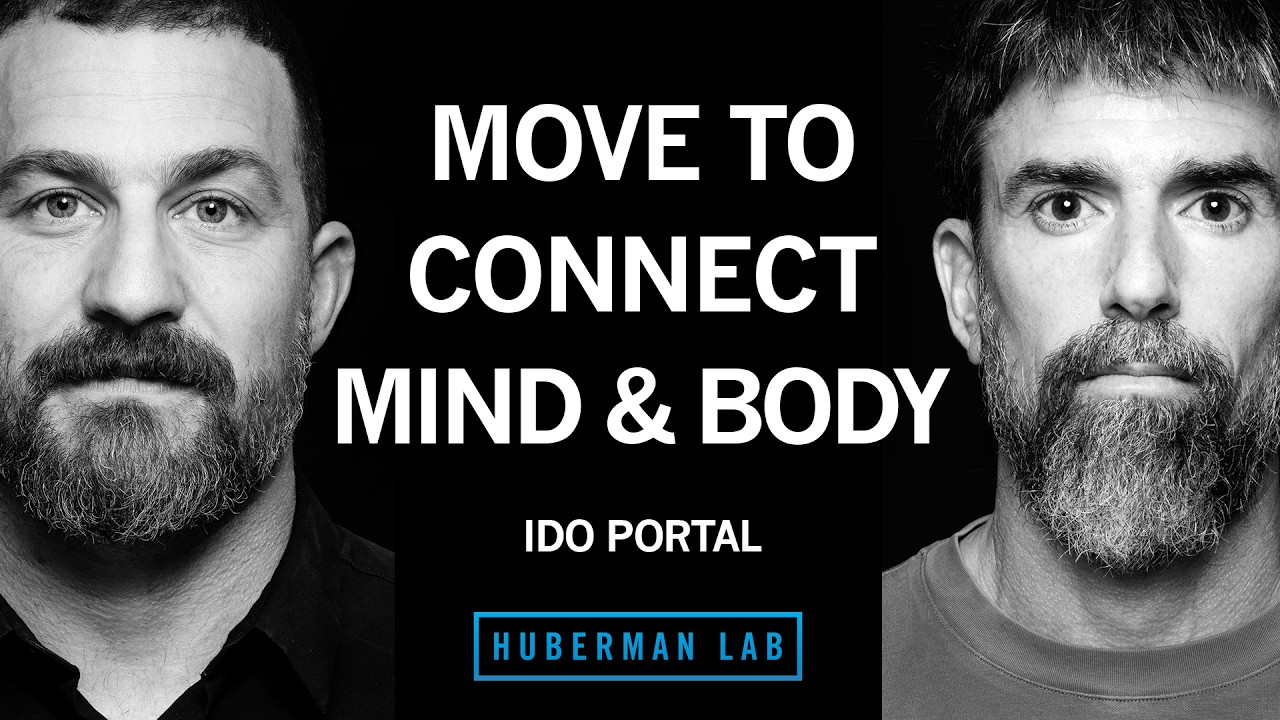
The thumbnail says:
"MOVE TO CONNECT MIND & BODY IDO PORTAL HUBERMAN LAB"
Reality:
The thumbnail's hook aligns with the episode's discussion of mind-body connection through movement, but simplifies a much broader conversation about holistic wellness and cognitive function.
AI Opinion
The episode compellingly argues for a holistic understanding of well-being, demonstrating how physical practices can positively influence mental clarity and emotional regulation through techniques like mindful movement and sensory awareness. However, several claims regarding the physiological mechanisms—such as the link between prolonged anxiety and depression or the impact of Jorge Luis Borges’s writing on bodily change—rest on anecdotal evidence and lack robust scientific backing; listeners should approach these with a degree of skepticism. Furthermore, while the emphasis on hydration and electrolytes is generally sound, the endorsement of specific products like AG1 requires independent research to assess their validity.
Avatars are AI rewrites of the same facts — style changes, not substance.
Summary
This episode explores the interconnectedness of mental and physical well-being, emphasizing that deterioration isn't limited to the body but affects emotional, conceptual, and social schemas as well. Ido Portal introduces techniques for managing distractions through mindful softening of responses and highlights the importance of "granularity"—noticing subtle transitions within the body—for maintaining a refined physical model. He cautions against misconceptions about body structures like the spine and underscores the need for adequate hydration and electrolytes for optimal brain function. The discussion extends to broader themes, including the value of playfulness over rigid discipline, the significance of sensory experiences, and the importance of cultivating controlled thought processes through practices like conscious sentence formation. Ultimately, the episode advocates for a holistic approach to life, prioritizing mindful movement, embracing imperfection, and recognizing that true growth arises from navigating complexity rather than seeking fixed definitions or outcomes.
Avatars are AI rewrites of the same facts — style changes, not substance.
Key Points
The Correct Use of Discipline
Ido Portal explains that discipline should be used as a 'scaffolding' to initiate progress, like writing a book. However, it’s crucial not to overly rely on it, but instead incorporate playfulness, relaxation, and mindful choice into the process. This prevents discipline from dictating actions and fosters a more adaptable approach.
ROA Red Lens Glasses and Melatonin/Cortisol Regulation
Roka's red lens glasses are designed to filter out short-wavelength light emitted by screens and LED lights, which suppresses melatonin production. Unlike traditional blue blockers, these glasses filter a broader spectrum of short wavelengths, ensuring healthy melatonin levels and preventing cortisol spikes in the evening – crucial for sleep and overall well-being. The code 'hubman' provides a 20% discount on first orders at roka.com.
The Paradox of Early Meditation Practice & Stress Inoculation
Richie Davidson’s research reveals that initial meditation practice can statistically increase anxiety due to the stress of forcing oneself into stillness. However, with consistent practice, this phase often gives way to a more beneficial state of consciousness. This early discomfort is valuable as it acts as a form of 'stress inoculation,' preparing individuals for managing challenges in daily life.
The Concept of an 'Under-Reduced State' and Resource Depletion
Ido Portal describes an 'under-reduced state' as a condition where the mind struggles to adapt, leading to metabolic resource depletion. This inability to adjust protective mental membranes results in anxiety, which, over time, can lead to depression due to constant resource bleeding. Simplifying tasks and lowering expectations are crucial tools for overcoming this state.
The Need for a Rudimentary Map of Waking States
Despite extensive scientific understanding of sleep stages, there's a significant lack of descriptive science regarding waking states. Current classifications rely on rudimentary brainwave analysis (alpha, beta, theta waves), and a more nuanced system for defining these states is needed—one that emerges from observation rather than purely theoretical frameworks. This map would allow individuals to better understand their internal state and cultivate greater self-awareness.
The Limitations of Discipline Alone
Ido Portal explains that while discipline is valuable, it can be limiting. He recounts discovering that his own disciplined approach wasn't the sole driver of his achievements, suggesting a deeper element was at play. This highlights how relying solely on structured effort might exclude aspects of oneself and hinder true progress.
The Power of Playful Exploration
Portal shares an experience from his time in San Diego, where he playfully slalomed his car to work due to traffic frustration. This seemingly trivial act led to a realization about the power of playfulness in transforming mundane experiences and potentially applying that approach to other areas of life. He emphasizes how these brief moments can have significant mental impact.
The Significance of Micro-Experiences
Portal discusses the surprising weight given to seemingly insignificant experiences, like urinating in the woods during a hike or his unusual commute. He notes that these 10-15 second moments can occupy significant mental real estate and contribute to a sense of well-being, suggesting that even trivial events can shape our perception of life.
Balancing Discipline with Playfulness
Portal emphasizes the importance of discipline as a foundational element for achieving goals and completing tasks, comparing it to using a wall in handstand training. However, he cautions against over-reliance on discipline, suggesting that an alternative approach—one where playfulness is integrated—can be more effective and prevent dependence.
Moving Beyond Motivation & Discipline
Ido Portal discusses his shift away from relying on motivation and discipline in his movement practice, recognizing their limitations. He emphasizes the pursuit of a more 'gentle' approach that involves returning to fundamental, baby-step exercises. This signifies a move towards a deeper understanding of internal processes rather than solely focusing on external achievements or demonstrating physical feats.
The Importance of 'Edge' Practice
Portal introduces the concept of practicing at an 'edge,' which he defines as a task that is challenging enough to be uncertain, but not overwhelming. This isn’t meant to be the only practice method, but rather one flavor among many—discipline and difficult tasks still hold value. The key lies in cultivating internal qualities and attributes through this type of exploration.
Neuroplasticity & The Role of Play
Huberman highlights the connection between neuroplasticity and 'friction points,' explaining that the nervous system changes in response to autonomic arousal. He contrasts this with the energetic cost of relying on adrenaline and norepinephrine, suggesting that play offers a different, more sustainable pathway for neurological adaptation by incorporating alternative neurochemicals.
Transforming Through Paradoxical Action
Portal emphasizes the critical importance of choosing to do something one doesn't want to do, creating a paradoxical situation. This allows for glimpses into opposing states, enabling individuals to remain functional and move forward despite internal contradictions. He views this as a crucial missing component in many people’s self-development journeys.
Responding to Stimuli with Softness
Ido Portal introduces a technique for managing distractions by recognizing them, softening your response, and then returning to the task at hand. Instead of resisting interruptions like social media notifications, he suggests acknowledging the call, relaxing, and then refocusing. This approach aims to create a more mindful and less reactive relationship with external stimuli, ultimately leading to improved focus and productivity over time.
Deterioration Across Multiple Models
Portal explains that deterioration isn't limited to physical movement; it affects emotional, conceptual, and even social schemas. He argues that a lack of detail and appreciation for nuance in these areas leads to simplification and hardening—a shift towards black-and-white thinking or rigid social structures. This parallels the decline in physical form, suggesting a holistic interconnectedness between mental and physical states.
The Concept of 'Granularity' in Movement
Portal introduces the concept of 'granularity,' or bodily resolution, as a crucial but often missing element in modern movement practices. He distinguishes it from mobility and flexibility, emphasizing the importance of noticing subtle transitions within the body—like the shift between sleep and wakefulness—to maintain a refined and complex physical model. A lack of this granularity leads to a simplification of the body schema and potentially a decline in overall well-being.
The Danger of Misrepresenting Body Structures
Portal cautions against treating the spine as a rigid column, explaining that this misconception can lead to injury and dysfunction. He emphasizes that our understanding of the body is often flawed by language and cultural norms, leading us to apply inappropriate models and practices. Recognizing these limitations is crucial for developing a more nuanced and effective approach to movement and overall well-being.
Importance of Electrolytes for Brain and Body Function
Ido Portal discusses the importance of electrolytes like sodium, magnesium, and potassium for optimal brain and body function. He highlights that even slight dehydration can negatively impact cognitive and physical performance, emphasizing the need to ensure adequate hydration through drinks like Element which provides these electrolytes in a balanced ratio without added sugar.
Lack of Movement Leads to Physical Deformity
Portal observes that individuals who lack sufficient movement, walking, or exercise are beginning to adopt a 'C-shape' internally rotated posture. He suggests that incorporating regular physical activity, including heart-rate elevation and strength training, can counteract this tendency and promote healthier alignment.
Critique of the 30-Minute Exercise Paradigm
A guest pushes back on the common notion that individuals should dedicate 30 minutes daily to exercise, questioning what activities are sacrificed in exchange for this time. This critique challenges the prioritization of structured workouts over mindful movement and engagement with one's physical experience throughout the day.
The Primacy of Sensory Boundaries in Cognition
Portal argues that drawing boundaries – selecting elements from the environment and creating distinctions within one's perception – is a fundamental process underlying cognition. He suggests this boundary-making, rather than abstract concepts like primitive semantics or invariance, represents the core currency of abstraction and schema formation.
Distinguishing Low-Resolution Sensory Input
Ido Portal discusses the importance of discerning between low and high-resolution sensory experiences, drawing a contrast between platforms like TikTok and natural sounds. He characterizes TikTok as 'low resolution' due to its pixelated auditory quality, contrasting it with the rich sound of redwing blackbirds in California. He warns that consuming only low-resolution input can lead to intellectual decline, stating, "if you only look at that, you’ll become an idiot."
Emotional Nutrients for Mind-Body Practice
Drawing a parallel to nutrition and digestion, Ido Portal introduces the concept of 'emotional nutrients' vital for mind-body practice. These include discomfort, emotional contradiction (like loving and hating someone simultaneously), aesthetic intensity, restraint, and stimulating experiences. He emphasizes that these elements are often absent from online content and are crucial for maintaining mental well-being.
Cultivating Intellectual Faculty
Ido Portal explains that intellectual growth requires intentional practices, analogous to nourishing the emotional state. He questions whether thought is merely a series of knee-jerk reactions and rejects this notion, advocating for a more deliberate and controlled approach to thinking—a tool rather than an uncontrolled attractor state.
The Practice of Conscious Thinking
Portal highlights the importance of consciously controlling one's thought processes, contrasting automatic associative thinking with deliberate and structured thought. He recounts a conversation with neuroscientist Carl Dyeroth who actively practiced forming complete sentences after putting his children to sleep as a means of cultivating more controlled and intelligent thinking.
The Pleasure of Kumbaka and Sensory Deprivation
Ido Portal describes a breathing practice called kumbaka, drawing parallels to the experience of orgasm. He notes that similar to the initial sensation during an orgasm—a combination of pleasure and a burning feeling—kumbaka involves holding one's breath and recognizing a pleasurable anticipation of release. This sensory exploration is not unique to kumbaka; it can be triggered by goosebumps or even experiencing coldness, demonstrating how the body creates sensations through focused attention.
Antagonistic Neural Circuits and Push-Pull Dynamics
Portal explains that every neural circuit operates on an antagonistic principle, exemplified by flexor and extensor muscles. When one muscle contracts (flexes), the opposing muscle relaxes (extends). This push-pull dynamic isn't merely a mechanical interaction; it’s fundamental to brain function, influencing everything from visual perception—the ability to see light depends on seeing dark—to emotional states like aggression versus mating desire, as demonstrated by Dulin's research.
Rhythmic Awareness for Enhanced Performance
Portal emphasizes the importance of rhythmic awareness, particularly in combat sports. He argues that being able to perceive and manipulate multiple rhythms—in footwork, breathing, and even blinking—is crucial for control and adaptability. Those who can’t discern these rhythms are at a disadvantage, while those who master them become 'the DJ' controlling the flow of the interaction.
The Value of Sensory Tuning Through Hunger
Neuroscientist Charlie Gilbert shared a story about prioritizing sensory experience by foregoing lunch to fully appreciate the subtleties of food. He explained that when hungry, one is more attuned to flavors and textures, even capable of discerning what they dislike and feeling entitled to reject it. This illustrates a broader principle: dulling our senses prevents us from appreciating nuances in all experiences.
Relationships as an Exploration of Infinite Dimensions
The discussion shifts to relationships, framed not as static entities but as vast and potentially infinite landscapes for exploration. This perspective emphasizes the dynamic nature of human connection, suggesting that meaningful growth arises from navigating these transitions and complexities together, rather than seeking fixed definitions or outcomes.
Relationships Require a Shared 'Game' Mentality
A crucial element for sustaining meaningful relationships is the understanding that they are an ‘infinite game,’ not a competition to be won. This means prioritizing continued engagement and mutual support over achieving individual victory, fostering a shared practice of evolution, transformation, and insight. This contrasts with a 'ping pong' dynamic where one person tries to dominate the other.
Defining Love Beyond Surface-Level Expressions
The discussion moves beyond conventional notions of love, distinguishing it from mere chemical attraction or romantic infatuation. A 'meta' concept of love is introduced – one that transcends legal agreements and superficial expressions, emphasizing a deeper commitment to mutual growth and support throughout life’s challenges, including raising children or navigating crises.
The Role of 'X Quantities' in Creative Expression
Ido Portal and the speaker discuss the importance of leaving room for "x quantities" or unknowns within creative processes, drawing a parallel to Kenichi’s advice. These unpredictable elements are not always present but are crucial for transformative experiences; attempting to control them entirely can stifle innovation and limit potential breakthroughs in movement and art.
Rothko's Technique and Color Perception
The speaker uses Mark Rothko’s paintings as an example of how artists can tap into something beyond language or film. Beville Conway, a vision scientist at NIH, explained that Rothko eliminated the frame and combined colors in ways that create novel color perceptions due to interactions within color space, demonstrating a deeper understanding of visual phenomena.
The Brain's Active Role in Visual Perception
Discussing the work of artists, Portal emphasizes that the eyes don’t function like a camera; rather, our brains actively construct what we see. He explains how artists intuitively create distorted representations that respect how our brains process visual information, highlighting an understanding often developed through experience rather than explicit knowledge.
The Value of Replacing Models
Portal introduces the concept that all models are inherently flawed but remain valuable tools for understanding. This perspective encourages a continuous process of refining and replacing existing models with more useful ones, which is essential not only for artistic creation but also for physical health, cognitive function, and problem-solving.
The Illusion of Peak Experiences
Ido Portal discusses the common misconception that peak experiences are the key to fulfillment. He explains that these moments, by their very nature, cannot occur frequently and chasing them can lead to a sense of lack of meaning or depression. Instead, he suggests focusing on incorporating small, consistent movement practices into daily life.
Reframing Movement in Daily Life
Portal emphasizes that movement practice doesn't require elaborate or unusual activities. He uses the example of a crowded city and commuting as opportunities to move differently, suggesting people view their bodies as vehicles they have agency over. This shift in perspective can motivate exercise beyond just health benefits, encouraging small, intentional movements throughout the day.
Attention and Transformation
Iod Portal suggests that even routine exercises like bench presses can be transformed through mindful attention. By focusing on aspects of the movement, such as pulling the bar close rather than just pushing it away, individuals can alter their experience and cultivate a broader sense of agency over their bodies and actions.
The Importance of Investment
Portal stresses that lasting change requires active investment in specific concepts or practices. He advises viewers to actively engage with ideas, take notes, and revisit them regularly. Without this deliberate effort, progress is unlikely, and individuals may find themselves stuck in familiar patterns of thought and behavior.
The Concept of 'Meta Movement'
Ido introduces the idea of a 'meta movement,' which is a fundamental movement pattern capable of adapting to various conditions and achieving a task regardless of circumstance. He contrasts this with boxing's jab versus kung fu punches, highlighting that while the latter may appear more visually impressive, the former’s adaptability makes it superior in real-world application due to its development under chaotic conditions.
Instagram's Influence on Movement Quality
Ido criticizes the impact of platforms like Instagram, arguing that they incentivize practitioners to prioritize capturing a single 'good rep' over genuine skill development. This leads to movements lacking adaptability and life, as individuals focus on aesthetics rather than functional proficiency, ultimately hindering their ability to perform effectively in real-world scenarios.
The Value of Imperfection in Skateboarding
Discussing skateboarding, Ido emphasizes that the sport rewards approaches from different angles and a degree of imperfection. He contrasts robotic, technically perfect performances with those demonstrating genuine artistry and adaptability, highlighting how true skill lies in finding an endpoint while embracing variability in entry points – something exemplified by skateboarders like Reese Nelson.
Aesthetics as a Side Effect, Not a Goal
Ido warns against the pursuit of aesthetics in movement practice, stating that it ultimately destroys genuine functionality. He argues that beauty should be an unintended consequence of effective training, not the primary objective, as prioritizing aesthetics can lead to a disconnect from natural and purposeful movements.
Understanding Liinal States Between Sleep and Wakefulness
Ido Portal discusses experiencing and stabilizing 'liinal' states, the transitional phase between sleep and wakefulness. He explains that through practices like meditation and yoga nidra, individuals can become more aware of these states, pause them, and even navigate them with greater control, contrasting this with a typical binary understanding of sleep.
Rick Rubin's Advice on Dream Navigation
Ido Portal recounts advice from Rick Rubin regarding dream navigation. Rubin suggests that if one wakes up from a nightmare, movement and awareness of the surroundings can be helpful, while re-entering a pleasant dream involves keeping eyes closed – highlighting the potential for conscious interaction with these states.
Granularity of States & Stabilizing Fragile Boundaries
Ido Portal explains that individuals with less experience often have a simplified perception of sleep and wakefulness, leading to a binary understanding. Through practices like meditation, one can gain greater granularity in perceiving these states and stabilize fragile boundaries between them.
Chapters
Claims & Fact Check
Discipline should be used as scaffolding, not a dictator.
Practices like meditation can help stabilize 'liinal' states.
People with less experience have a simplified perception of sleep and wakefulness.
Filtering shortwavelength light with Roka glasses ensures normal, healthy increases in melatonin.
Early meditation practice can statistically increase anxiety.
Anxiety over a long duration will turn into depression because you're bleeding resources.
Discipline alone isn't sufficient for achieving deep progress.
Playful experiences, even brief ones, can have a lasting impact on our mental state.
A languid and intentional approach to creative work can be beneficial, but may require effort to implement.
Motivation and discipline are not sufficient for long-term movement progression.
AG1 is the highest quality and most comprehensive foundational nutritional supplement on the market.
Playful practice can be more energy-conserving than pushing through difficult tasks.
Recognizing stimuli and softening your response leads to improved focus.
Modern movement culture lacks 'granularity,' a crucial element for physical refinement.
Depression simplifies emotional perception, reducing it to black and white.
Even slight dehydration can diminish cognitive and physical performance.
People who don't move enough are starting to approximate a C-shape internally rotated.
The best answer for the raw currency of cognition is drawing boundaries, selecting what to focus on.
Consuming only low-resolution sensory input like TikTok can lead to intellectual decline.
Neuroscientists describe thought as a series of disjointed, psychotic associations.
Practicing complete sentences can cultivate more controlled and intelligent thinking.
The sensation of holding one's breath during kumbaka is similar to the pleasure experienced during an orgasm.
Dulin’s work showed that stimulating certain brain areas in cats and monkeys can induce either rage or mounting behavior.
Reading the works of Jorge Luis Borges can physically change one’s body.
Dulling our senses prevents us from appreciating nuances in all experiences.
A 'finished product' mentality is detrimental to meaningful relationships.
Relationships are a form of practice together and must be cultivated as such.
Great artists often tap into something beyond language or film.
Rothko's paintings create novel color perceptions due to interactions within color space.
The eyes don’t operate like a camera; our brains actively construct what we see.
Changing models can alleviate physical pain.
Chasing peak experiences can lead to a sense of lack of meaning.
Even routine exercises can be transformed through mindful attention.
Without deliberate investment, lasting change is unlikely.
There exists a 'meta movement' capable of adapting to any condition.
Instagram has negatively impacted the quality and adaptability of movement practice.
Skateboarding rewards a degree of imperfection and variability in approach.
Was this digest good?
More from Huberman Lab
Essentials: How to Become Resilient, Forge Your Identity & Lead Others | Jocko Willink
Jul 30, 2026
Accelerate Learning & Increase Cognitive Capacity | Dr. Tommy Wood
Jul 20, 2026

The Science & Treatment of Bipolar Disorder | Huberman Lab Essentials
Jul 16, 2026
How to Improve Your Memory & Cognitive Function at Any Age | Dr. Alan Castel
Jul 13, 2026
Digest any single YouTube video — free.
3 free digests — no card, no sign-up wall.
Or just swap the domain of any YouTube link → instant digest