No clickbait detected — the title and thumbnail deliver what they promise.
AI Opinion
Antje Barth compellingly illustrates the critical need for reliability in AI agents moving beyond simple automation, drawing a clear distinction between the testing-supported success of coding agents and the current limitations in more complex workflows. The episode’s claims about agents processing auditory information and directly implementing design changes are supported by demonstrations, but the assertion that an agent failing only one in four times would be unusable likely overstates general user tolerance—variations in task criticality could significantly impact this threshold. Listeners should consider how broadly applicable these demonstrated capabilities are across different knowledge work domains and remain mindful of potential biases embedded within training data for visual and auditory processing.
Avatars are AI rewrites of the same facts — style changes, not substance.
Summary
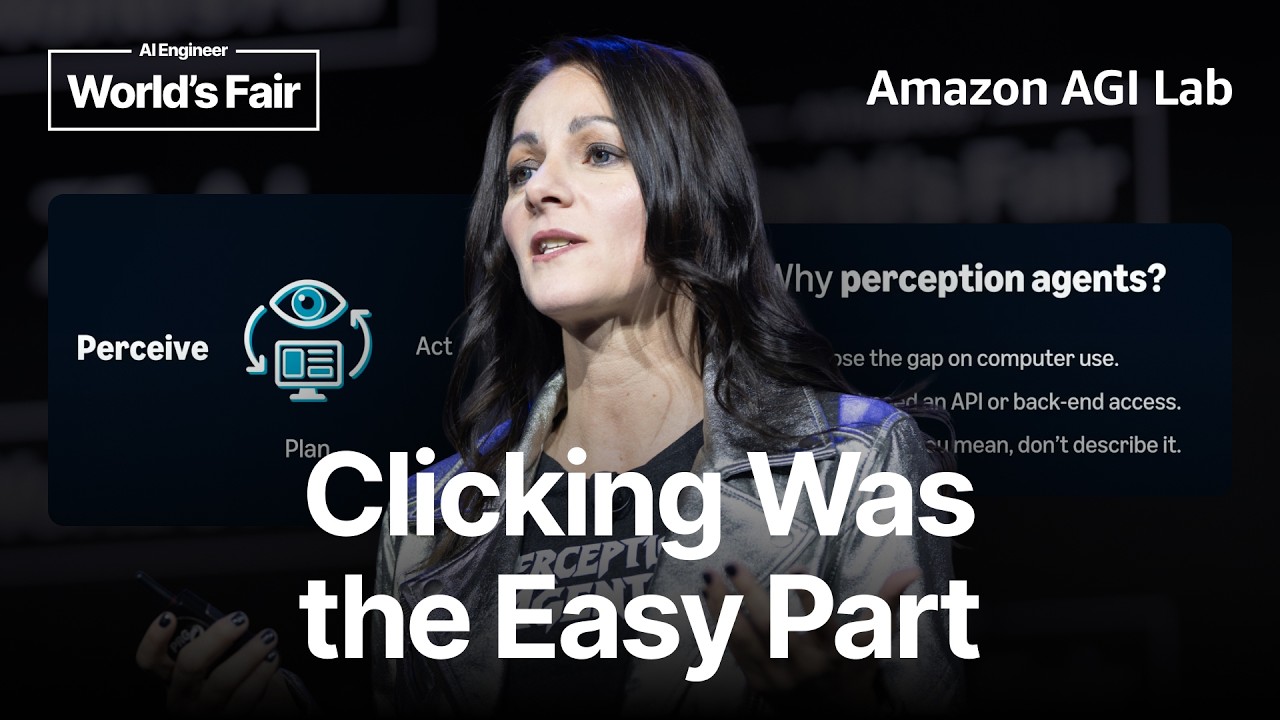
Antje Barth, from Amazon’s AGI Lab, discusses the evolution of AI agents beyond simple task automation toward handling complex workflows like employee onboarding. A key challenge identified is reliability; even a moderate failure rate renders these systems unusable, contrasting with the success of coding agents where automated testing ensures code quality. The speaker highlights a critical limitation in current agent capabilities: the lack of shared context that humans leverage through collaboration and visual observation. To address this, research focuses on enabling agents to process both visual and auditory information – demonstrated by an agent transcribing design meetings and directly implementing changes while adhering to design specifications. These perception agent tools are open-source, with a focus on community feedback and collaborative development to improve performance and broaden their applicability across various knowledge work tasks.
Avatars are AI rewrites of the same facts — style changes, not substance.
Key Points
The Shift from Button Clicking to Complex Workflows
Initially, the challenge for AI agents was simply clicking buttons on screens. However, the focus has now shifted to enabling agents to handle more complex workflows like onboarding new employees – which involves setting up accounts, adding them to Slack channels, booking meetings, and ordering laptops. This shift highlights a significant hurdle: agents struggle with end-to-end processes due to the fragmented nature of work across different systems.
The Importance of Reliability in Agent Performance
While AI agents have made progress in capabilities like tool use and stringing actions together, the next critical challenge is reliability. Without it, trust cannot be established in these systems. The speaker emphasizes that a failure rate of even 20% – such as an agent deleting a database one out of five times – would render the system unusable.
Coding Agents: A Model for Reliability
The rapid advancement of coding agents, which now write code and submit pull requests, serves as a successful example of achieving reliability. This progress stemmed from the ability to verify code through testing and execution – a feature absent in most knowledge work tasks. The speaker contrasts this with the current state where generated code was initially scrutinized but is now largely trusted due to its reliability.
The Need for Shared Context
The speaker proposes that a key limitation of current AI agents is the lack of shared context. Humans often resolve complex work issues by collaborating and viewing the same screen, enabling rapid problem-solving. Replicating this shared understanding within an agent system – allowing it to 'see' what a human sees – is crucial for improving reliability in messy, unverified knowledge work.
Automated Design Verification via Agent
The agent can verify design work against defined rules documented in a design MD file. It checks both visual aspects like branding and layout, as well as user flows by simulating user interactions such as adding or deleting tasks within an application. This automated process generates a report highlighting passed and failed tests, freeing designers from manual review.
Perception Agents Extend to Auditory Input
The concept of 'perception' extends beyond visual input; agents can also process auditory information. A demonstration involved an agent transcribing a design meeting and incorporating insights from the discussion directly into website changes, showcasing how spoken ideas can be translated into actionable modifications. This highlights the potential for agents to understand context and contribute actively in collaborative environments.
Real-time Application of Meeting Insights
The agent transcribes design meetings, summarizes key discussion points, and captures actionable insights. These insights are then directly applied to the website through an 'apply' button, enabling immediate implementation of changes. This process also triggers verification checks, ensuring adherence to design guidelines, and allowing for adjustments based on feedback.
Open Source Initiative & Community Feedback
The perception agent tools are open-source and available on GitHub, encouraging community involvement. The speaker emphasizes the importance of user feedback and collaborative development to improve these patterns, highlighting that collective intelligence is crucial for advancing AI capabilities and making everyone smarter together.
Chapters
Claims & Fact Check
Agents can now drive browsers and desktop apps.
The real work lives within the seams of different applications.
If your agent deletes a database one in four times, you will never touch that agent again.
We don't need bigger brains; we need shared context.
The agent can check its own work against design specs.
Agents can process auditory information from meetings.
The tools are open-source and available on GitHub.
Was this digest good?
More from AI Engineer


Digest any single YouTube video — free.
3 free digests — no card, no sign-up wall.
Or just swap the domain of any YouTube link → instant digest