No clickbait detected — the title and thumbnail deliver what they promise.
AI Opinion
Professor Kim’s episode effectively conveys the initial excitement surrounding the discovery of LBCO and the subsequent validation of Leggett's macroscopic quantum tunneling theory as a potential explanation for high-temperature superconductivity. The presentation of Bednorz and Müller's work, alongside the community’s reaction, is well documented and convincing. However, the episode simplifies the complex theoretical landscape; while Leggett’s model gained support, alternative explanations for LBCO’s behavior remain actively debated within the field, a nuance not fully explored. Listeners interested in a more complete picture should seek out additional resources detailing competing theories of high-temperature superconductivity beyond the tunneling framework.
Voices are AI rewrites of the same facts — style changes, not substance.
Summary
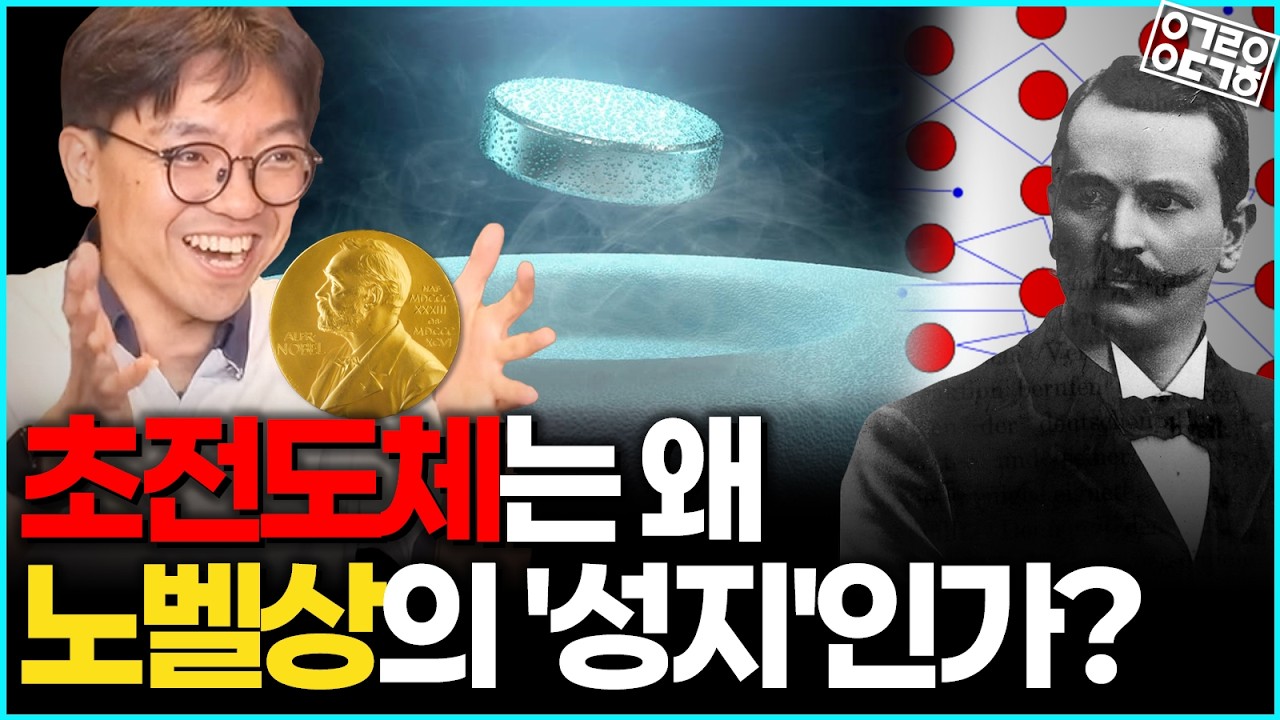
The episode explores the discovery of the LBCO superconductor in 1986 by Bednorz and Müller, a breakthrough that achieved superconductivity at 35 Kelvin and spurred significant research into high-temperature superconductors. This finding generated considerable excitement within the scientific community, leading to packed conferences and intense investigation. A key theoretical explanation for this phenomenon came from Anthony Leggett’s work on macroscopic quantum tunneling, where billions of electrons tunnel through a barrier simultaneously; initially controversial, his theory was later supported by calculations and experimental verification demonstrating a transition from thermal fluctuations to quantum tunneling at lower temperatures. This experimental confirmation provided crucial evidence for the process and has implications for advancements in fields like quantum computing.
Voices are AI rewrites of the same facts — style changes, not substance.
Key Points
Each key point shows the surrounding transcript with the exact relevant line highlighted — tap the timestamp to jump there.
Key points and summaries are AI-generated by Sumzup; the highlighted quotes are verbatim from the video's auto-generated captions.
Want the full transcript?
We show short source quotes as evidence — not the full transcript, which belongs to the creator (republishing it could infringe copyright). The Sumzup desktop & mobile app (coming soon) generates the full transcript locally on your own device, for your personal use.
The LBCO Superconductor and the 35K Breakthrough
In 1986, Bednorz and Müller discovered superconductivity in a lanthanum barium copper oxide (LBCO) alloy. This material exhibited superconductivity at 35 Kelvin, surpassing the previously established limit of 25 Kelvin. This discovery triggered intense research into similar materials, leading to the emergence of high-temperature superconductors like IBC with temperatures reaching up to 90K. The initial findings were unexpected due to the presence of oxygen and magnetism in the material's composition.
겨우르그 베드노츠와 알렉스 밀러가 소위 이제 LBCO라고 부르는 이제 저 란타넘원 발음 카파 합금으로 되어 있는 물질에서 초전상을 발견합니다. 근데이 초전도 상전 연도가 35K였어요. 야 아까 절대 25K가 넘으면 안 된다라고 했는데 넘어버렸어요. 넘어버렸죠. 그래서이 LBCO랑 유사한 물질에서 엄청나게 많은 저항 측정 실험이 막 이루어집니다.
The Intense Response from the Scientific Community
Following the LBCO discovery, the scientific community reacted with immense excitement. Physics conferences, such as the American Physical Society meeting in New York City in 1987, were overwhelmed with attendees eager to learn about the new findings. The conference featured 50 presentations within a single session and drew approximately 2,000 participants, extending late into the night.
사람들이 초전도체 상원 초전도체 나오면 그다음에 노벨상원 그냥 당신 거 당신 거다. 그런 얘기가 나오는게 저런 일이 있었어요. 그래서 난리났었어요. 그다 그에 그다음에 막 물리학회에서 미국 물리학회했을 때 막 두시간 전부터 사람들이 막 줄 싸 가지고 저걸 막 듣겠다고 막 엄청 자료 화면 보여 주시면 그때 사진이 있거든요.
Macroscopic Quantum Tunneling Explained
Anthony Leggett's Nobel Prize-winning work focused on macroscopic quantum tunneling – a phenomenon where billions of electrons tunnel through a barrier simultaneously. While initially dismissed by many physicists, Leggett theorized that this could occur if external interactions were minimized and the temperature was sufficiently low. His student, Kaldea, provided calculations supporting this theory, ultimately leading to experimental verification.
실험으로 전자가이 장백을 넘어서 터널링하는 현상은 실제로 존재할 수 있다라는게 실험적으로 이제 우연이 됐죠. 근데 이제 거시적 양자 터널링이라는 거는이 전자의 수십억 개의 덩어리가 그 상태를 유지하면서 장벽을 넘을 수 있느냐에 대한 질문이었어요. 그래서 이게 가능하냐 불가능하냐에 대한 싸움이 1980년에 있었습니다.
Experimental Verification of Macroscopic Quantum Tunneling
The experiment involved measuring the probability of electrons transitioning between states at different temperatures. Initially, thermal fluctuations dominated, but as the temperature decreased, a transition occurred where macroscopic quantum tunneling became the dominant mechanism. This was visually demonstrated through a graph showing a distinct change in behavior, providing definitive evidence for the phenomenon and paving the way for advancements in quantum computing.
되고요. 양자 터널링은 온도의 관계 없이 항상 일정한 확률로 전의를 하게 됩니다. 그렇죠? 그래서 이분들은 온도를 낮춰 가면서 전위 확률을 측정을 했어요. 어. 그래서 x축을 보시면은 온도 밀리켈빈이고요. y축을 보시면 저것도 뭐 온도 단위로 되어 있긴 한데 대충 전 확률 같은 겁니다. 처음에 보시면 온도가 떨어지면서 서서히 줄어들다가 보라색 영역에 오면은 일정해지는게 보이기 시작해요.
Chapters
Claims & Fact Check
The LBCO superconductor exhibited superconductivity at 35 Kelvin.
?UnverifiedThe discovery of the LBCO superconductor led to a rapid increase in research and development efforts.
±Partially supportedMacroscopic quantum tunneling was initially met with skepticism within the physics community.
?Unverified