

안될과학
3 episodes — every digest for 안될과학.
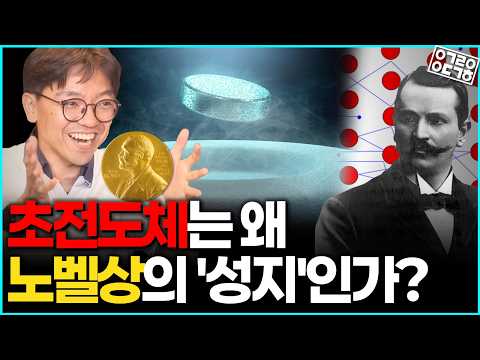
The episode explores the discovery of the LBCO superconductor in 1986 by Bednorz and Müller, a breakthrough that achieved superconductivity at 35 Kelvin and spurred significant research into high-temperature superconductors. This finding generated considerable excitement within the scientific community, leading to packed conferences and intense investigation. A key theoretical explanation for this phenomenon came from Anthony Leggett’s work on macroscopic quantum tunneling, where billions of electrons tunnel through a barrier simultaneously; initially controversial, his theory was later supported by calculations and experimental verification demonstrating a transition from thermal fluctuations to quantum tunneling at lower temperatures. This experimental confirmation provided crucial evidence for the process and has implications for advancements in fields like quantum computing.
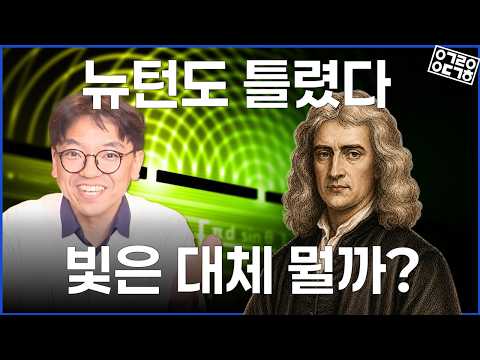
This discussion explores the historical development of our understanding of light, culminating in Einstein's Nobel Prize-winning explanation of the photoelectric effect. The conversation highlights that scientific progress isn’t solely about factual accuracy but also hinges on societal acceptance and persuasive communication, drawing parallels to figures like Galileo and Newton. Dr. Lee Geun-hee emphasizes the value of studying the history of science to grasp complex concepts like quantum mechanics, illustrating how revolutionary ideas often face resistance before gaining widespread acceptance. Early experiments with the photoelectric effect revealed unexpected anomalies that Einstein resolved by proposing light exists as discrete particles or quanta, a concept later validated by Robert Millikan’s precise measurements and further supported by Arthur Compton's scattering experiments. These findings demonstrated that light exhibits both wave-like and particle-like properties, fundamentally changing our understanding of physics.

Bernard Verber, in this discussion, explores the role of storytelling as a means of psychological balance and future exploration. He views writing as a way to envision potential futures unburdened by present-day constraints, contributing individual narratives to a larger, interconnected worldview that will be fully revealed with his final work. Verber expresses concern about the rarity of life in the universe and the potential consequences if Earth is destroyed, highlighting humanity’s unique position and responsibility. His writing process itself stems from an underlying anxiety, serving as a form of self-reassurance and offering explanations for complex issues like the historical conflict between Sapiens and Neanderthals, and the recurring pattern of brutality driving power dynamics. He observes a paradox where technological advancements enhance our understanding of history while interest in it declines, emphasizing the importance of preserving lost civilizations and learning from past mistakes to avoid repeating them.