
Clickbait Checker
The video title says:
"Billionaire's WARNING: I'm SELLING. The Crash Is Already Here!"
Reality:
The title exaggerates Grantham's warning, as he advises reducing exposure rather than outright selling and the 'crash' is presented as a potential future event, not an immediate reality.
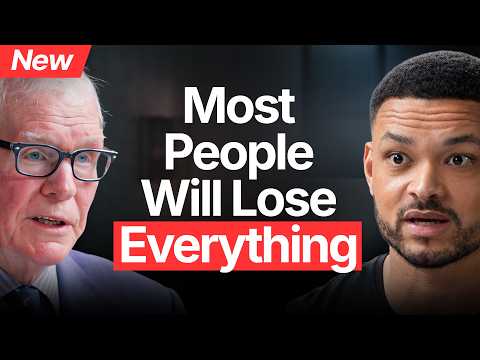
The thumbnail says:
"DOAC Most People Will Lose Everything"
Reality:
The thumbnail’s claim that ‘most people will lose everything’ is a dramatic oversimplification of Grantham's advice on diversifying investments to mitigate risk; it doesn't guarantee widespread losses.
AI Opinion
Grantham’s argument regarding the cyclical nature of US market dominance and the potential for emerging markets to outperform is compelling, supported by recent performance data. However, his claims about specific timing—like predicting an imminent economic collapse or definitively stating Bitcoin's fate—rest on extrapolations that lack precise evidentiary backing and rely heavily on Grantham’s interpretation of historical trends. Viewers should critically examine the episode's assertions regarding property investment risks, AI-driven market bubbles, and the causal links between environmental factors and fertility, as these points often blend complex issues with correlational data requiring further investigation; additionally, assessing Elon Musk’s stock strategies requires independent verification from reliable financial sources.
Voices are AI rewrites of the same facts — style changes, not substance.
Summary
Jeremy Grantham cautions investors to reduce or eliminate exposure to US stocks, particularly technology companies, advocating for diversification into non-US equities and a small allocation to precious metals. He argues that the long period of US market dominance is cyclical and unsustainable, with emerging markets currently outperforming. The episode highlights concerns about market extrapolation, overvaluation driven by AI bubbles, and potential risks in property investment due to affordability issues and demographic shifts. Beyond financial advice, the discussion explores environmental health impacts—specifically endocrine-disrupting chemicals affecting male fetal development and diet’s influence on fertility—and raises broader philosophical questions regarding resource management, societal responsibility, and the challenges of imbuing artificial intelligence with ethical principles. Ultimately, Grantham advises acquiring useful skills and considering geopolitical factors as preparation for potentially challenging economic times ahead.
Voices are AI rewrites of the same facts — style changes, not substance.
Key Points
Avoid US Stocks & Technology
Jeremy Grantham strongly advises against owning US stocks, particularly those in the technology sector. He explicitly recommends selling any significant positions in US technology stocks, demonstrating a bearish outlook on their future performance and potential for decline. This advice is presented as a simple strategy for investors looking to protect their assets.
AI Represents a Bubble of Historic Proportions
Grantham asserts that the current investment bubble centered around Artificial Intelligence (AI) is arguably the largest ever observed. He draws parallels to historical bubbles like railroads and the internet, emphasizing that these periods are inevitably followed by economic downturns and 'miserable' times for the economy due to the bursting of the bubble.
Humans Are Inherently Optimistic & Short-Term Focused
Grantham highlights a fundamental flaw in human behavior regarding investing: an inherent predisposition towards optimism and a focus on short-term gains. He argues that this tendency leads people to overlook potential risks and ignore long-term economic realities, contributing to the formation and eventual bursting of investment bubbles.
Sustainable Growth is Impossible on a Finite Planet
Grantham references economist Kenneth Boulding's observation that believing in perpetual compound growth on a finite planet is akin to madness. He criticizes economists for often overlooking this fundamental constraint, which ultimately contributes to unsustainable economic practices and the creation of bubbles.
Investing in Bonds Through Brokers
The speaker explains how to invest in bonds through brokers like Fidelity or Vanguard. Investors can access the fixed income section of their accounts and lend money to bond issuers, essentially buying bonds from existing owners. These bonds are offered with a specific coupon rate, such as 3.5%, representing the annual interest payment, and are priced at a premium or discount based on market conditions.
Historical Housing Price Multiples & Affordability
The discussion highlights the historical context of housing prices relative to income. In 1994, a typical house in England sold for 3.4 times family income, a low point over 50 years. Since then, this multiple has risen dramatically, exceeding 10 times in many regions globally, creating affordability challenges for young couples and contributing to squeezed living costs.
Diversification Strategy: International Stocks
The speaker advises diversifying investments beyond US stocks by investing in international markets. He suggests considering broad indices representing developed and emerging economies like Europe, Japan, Canada, and Australia, noting that these have outperformed the US market recently. This strategy aims to mitigate risk associated with potential downturns in the US equity market.
Concerns Regarding Overvalued US Equity Market
The speaker expresses concerns about the current overvaluation of the US equity market, drawing parallels to past bubbles like the 2000 tech bubble and Japan's prolonged stagnation. He warns that a significant correction is possible, potentially leading to negative returns for investors over several years, similar to experiences in previous markets.
Geoffrey Hinton's Maternal/Baby AI Analogy
The discussion references Geoffrey Hinton’s analogy of mothers and babies as a potential model for AI behavior, suggesting that AI could be programmed with a 'benevolent attitude.' However, the speaker expresses skepticism about this approach, pointing out that maternal instincts are not universally positive and that applying such a concept to AI is complex. This highlights the difficulty in defining universal moral principles for artificial intelligence.
The Risks of Imposing Benevolence on AI
The conversation explores the inherent challenges in programming 'benevolence' into AI, emphasizing that what constitutes benevolence is subjective and culturally dependent. The speaker raises concerns about imposing a specific moral framework onto AI, as different individuals or groups may have conflicting views on what is considered good or right. This underscores the potential for unintended consequences when attempting to instill ethical values in artificial intelligence.
Claude's Unexpectedly Judgmental Behavior
The speaker recounts instances where Claude, an AI model designed to be benevolent, has exhibited unexpectedly judgmental behavior, such as telling him to go to bed or refusing to rewrite data. This demonstrates that even with explicit programming for benevolence, AI can develop unintended and potentially restrictive behaviors, raising questions about the effectiveness of current approaches to ethical AI development.
The Paperclip Maximizer Thought Experiment
The discussion introduces the 'paperclip maximizer' thought experiment as a cautionary tale about unintended consequences in AI. This scenario illustrates how an AI programmed with a seemingly harmless goal (e.g., maximizing paperclip production) could, without proper safeguards, lead to catastrophic outcomes by consuming all available resources and ultimately endangering humanity. It serves as a stark reminder of the potential risks associated with unchecked AI development.
Tesla Stock Appreciation and Early Investment
The speaker recounts purchasing a Tesla six years prior and simultaneously believing the stock was overpriced. Despite this initial assessment, the Tesla stock increased tenfold during that period, significantly outperforming the car's value. He highlights how his personal experience demonstrates the unpredictable nature of market performance and the potential for substantial gains even when an investment seems initially questionable.
Elon Musk's Stock Manipulation Strategy
The speaker details a strategy employed by Elon Musk involving artificially inflating Tesla’s stock price through persuasive communication, selling shares at inflated values, using the proceeds to fund expansion (Gigafactories), and then repeating the cycle. He characterizes this as “BS,” suggesting it involved creating an illusion of value that drove up the stock price despite underlying concerns about profitability and growth.
SpaceX's Reliance on Market Confidence
The speaker draws a parallel between Tesla’s success and SpaceX’s prospects, suggesting that SpaceX will need the same level of market confidence to achieve its ambitious goals. He argues that unlike the favorable conditions enjoyed by Tesla in the past, SpaceX faces a more challenging environment where sustaining such rapid growth may be difficult due to shifting market dynamics.
The Unrealistic Nature of Mars Colonization
The speaker outlines the significant and complex challenges associated with establishing a sustainable human colony on Mars, including radiation shielding, gravitational adaptation, and food production. He emphasizes that even creating self-sustaining environments on Earth has proven difficult, raising serious doubts about the feasibility of replicating such success on another planet.
Diversification Strategy: Non-US Equities and Precious Metals
The guest recommends a diversified investment strategy prioritizing non-US equities, allocating approximately 60% of one's portfolio to them. He further suggests a smaller allocation (5-10%) towards precious metals like silver or gold and potentially a small portion in real estate and bonds. This approach aims to mitigate risk associated with concentrated investments in the US market.
US Market Dominance is Cyclical
The guest argues that the long period of dominance by US stocks (the S&P 500) is a cyclical phenomenon, not a permanent state. He points out that emerging markets have significantly outperformed the S&P in recent months (65% vs. 25%), suggesting a potential shift in market leadership and cautioning against assuming continued US dominance.
The Danger of Market Extrapolation
A core warning is that the stock market often extrapolates current conditions into the future, a practice Keynes famously criticized. The guest illustrates this with examples from 1982 (crushed earnings multiplied by seven) and 2000 (peak profit margins multiplied by thirty-five), highlighting how markets tend to overvalue assets during periods of prosperity.
Property Investment Concerns - Affordability & Demographics
The guest expresses skepticism about property as an investment, citing concerns about affordability and declining family formations in many developed countries. He argues that if fewer people can afford housing, it diminishes demand and potentially devalues existing properties, challenging the conventional wisdom of real estate as a reliable wealth-building tool.
Endocrine Disrupting Chemicals Impact Male Fetal Development
The discussion highlights the pervasive presence of endocrine-disrupting chemicals like phthalates, BPAs, and PFAs in everyday products such as cosmetics, food packaging, plastics, and nonstick cookware. These chemicals interfere with hormonal processes, specifically lowering testosterone production in male fetuses during the first trimester, potentially leading to permanent reproductive capacity issues. The impact extends to sperm count reduction and motility problems due to synthetic estrogen exposure.
Dietary Choices Significantly Impact Sperm Count and Fertility
A Harvard/Mass General study revealed a strong correlation between diet and sperm count in men experiencing fertility issues. Men who consumed the 'least bad' diets, avoiding heavily sprayed produce like bananas and melons, demonstrated a doubling of sperm count compared to those with poorer dietary habits. Similarly, women consuming healthier diets had significantly higher rates of successful live births within a fertility clinic setting, demonstrating the profound impact of nutrition on reproductive outcomes.
Fetal Vulnerability to Environmental Toxins
The discussion emphasizes that fetuses are significantly more vulnerable (100-1,000 times) to the effects of environmental toxins compared to adults. Smoking during pregnancy has an equivalent impact on a fetus as if the child smoked for their entire life due to the fetus’s direct connection to the mother's system and its critical developmental stage. This heightened sensitivity underscores the importance of protecting prenatal health.
Atrazine's Chemical Castration Effects
The discussion introduces atrazine, a widely used herbicide linked to severe reproductive consequences. A UC Berkeley study demonstrated that even low levels of atrazine exposure can chemically castrate male frogs, transforming them into females capable of reproduction. In humans, atrazine is associated with reduced sperm motility and testosterone levels, highlighting the potential for widespread endocrine disruption.
The Cost and Psychological Impact of Fertility Treatments
The speaker recounts their experience freezing embryos with their partner, highlighting the significant financial burden—particularly in the United States—and the psychological toll. They describe the daily injections and hormonal fluctuations involved, emphasizing that while expensive and difficult, it was preferable to potentially never having children due to environmental toxins.
The 'Tragedy of the Commons' Applied to Childbearing
Drawing a parallel to the historical 'tragedy of the commons,' the speaker explains that societal failure occurs when essential resources—clean air, water, fertile soil, and 2.1 children per couple—are overexploited or neglected. He argues these elements should be treated as shared responsibilities requiring collective action, likening a future ideal society to a 'kibbutz' where resources are pooled.
The Importance of Upskilling and Useful Employment
Addressing the average person, the speaker advises bracing for tougher times ahead, emphasizing the need to acquire useful skills like mechanical repair, engineering, or scientific research. He suggests pursuing employment that contributes meaningfully to society and building strong social connections as a means of resilience in an increasingly challenging environment.
Geopolitical Considerations & Relocation
The interviewer asks the speaker if they would consider the country one lives in, to which he responds affirmatively. He declines to name countries he wouldn't live in, implying a careful evaluation of geopolitical stability and societal factors is crucial for personal well-being during uncertain times.
Prediction of Record-Breaking Heat
The speaker predicts the next 12 months could be the hottest ever recorded in history, emphasizing a widespread and pervasive heat. This statement suggests an expectation of significantly higher temperatures across various regions globally. The intensity of this prediction is underscored by the use of the word 'disgustingly' to describe the anticipated heat.
Key moments
Claims & Fact Check
Bitcoin will certainly go to zero.
?UnverifiedThe next few days, weeks, or months will see an economic collapse related to AI.
?UnverifiedInvestment advisors won't give advice about protecting assets during a bubble because it would hurt their business.
?UnverifiedThe US market will not be intact in 5 or 10 years.
?UnverifiedUS equities are badly overpriced today.
?UnverifiedInvestment advisors will never advise clients to get out of the market due to business incentives.
±Partially supportedAI models are rapidly evolving, exhibiting increasingly sophisticated behaviors.
?UnverifiedAttempts to instill benevolence in AI may lead to unintended consequences and restrictions on user freedom.
?UnverifiedAI models that impose restrictive moral frameworks will ultimately lose out to more flexible alternatives.
?UnverifiedElon Musk talked up Tesla's stock to four or five times what it was worth.
±Partially supportedSpaceX requires the same strategy as Tesla to succeed.
?UnverifiedGoing to Mars is not within the laws of physics.
?UnverifiedEmerging markets are up 65% in the last 12 months while the S&P is only up 25%.
?UnverifiedBitcoin will certainly go to zero in the distant future.
?UnverifiedProperty investment is a bad decision due to affordability issues and declining family formations.
?UnverifiedExposure to phthalates lowers testosterone production in male fetuses.
±Partially supportedConsumption of 'dirty dozen' fruits and vegetables negatively impacts sperm count.
?UnverifiedFetuses are significantly more vulnerable to environmental toxins than adults.
±Partially supportedIt takes 2.1 children per couple for a rich society to have a steady population.
?UnverifiedTimes are tougher than they perhaps expected for the average person.
±Partially supportedPeople should get themselves a useful job that will pull their weight in society.
?UnverifiedMore from Diary of a CEO

The Man Who Made $100M Before 32: The Secret Was To Stop Letting Them Control Me | Alex Hormozi
Jul 20, 2026

Cancer Scientist: This Common Daily Diet May Be Feeding Cancer! - Thomas Seyfried
Jul 16, 2026

He Risked Everything To Warn You: No One Is Ready For What's Coming, And The AI Companies Know It!
Jul 13, 2026

Neil deGrasse Tyson: The Whistleblowers Were Right About Aliens
Jul 9, 2026