Clickbait Checker
The video title says:
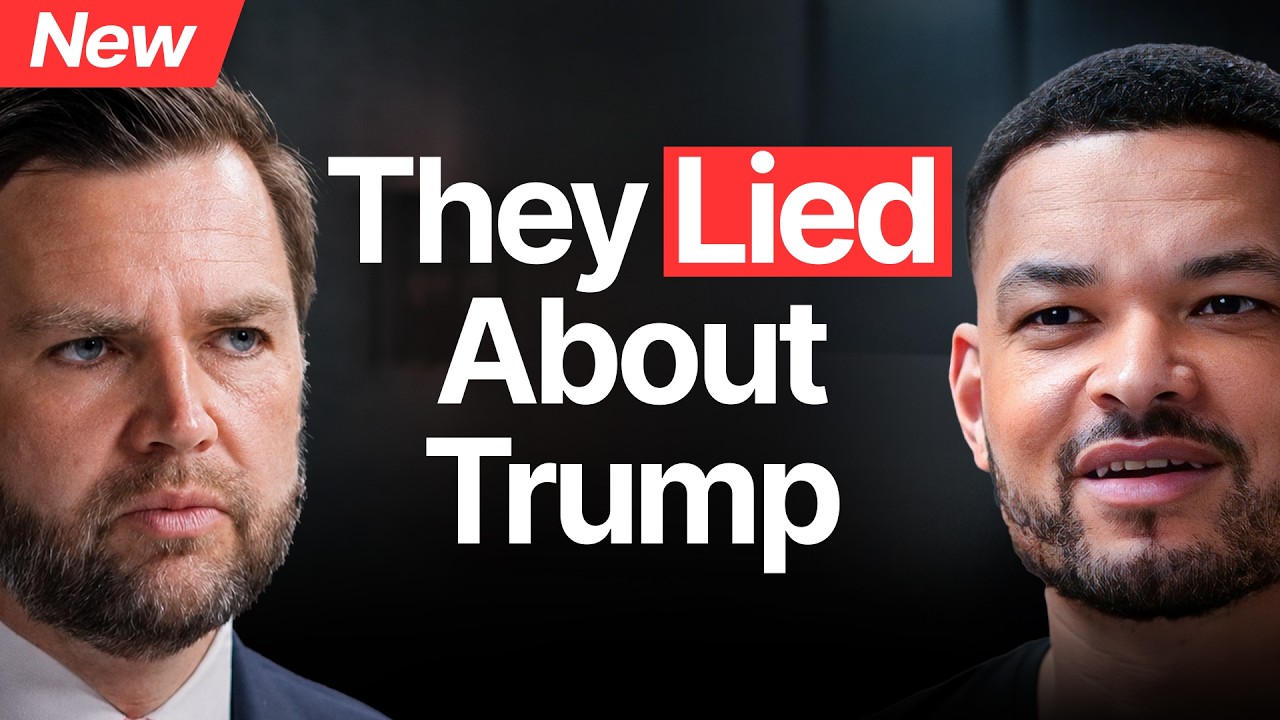
"Vice President JD Vance: They Tricked Me About Trump, I Was Wrong!"
Reality:
The title accurately reflects Vance’s admission of being wrong about Trump, a central theme discussed in the episode regarding his evolving perspective.
The thumbnail says:
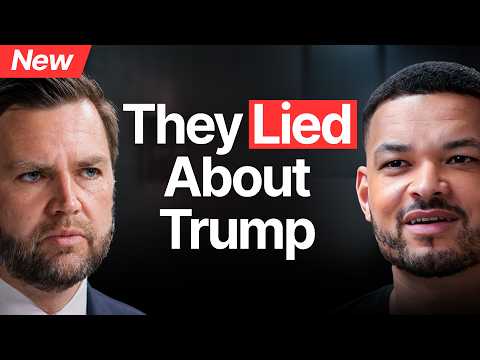
"DOAC They Lied About Trump"
Reality:
While the thumbnail references lies about Trump, the episode's focus is more on Vance's personal shift and acknowledgement of misjudgment rather than exposing specific instances of deception by others.
AI Opinion
Vance’s candid discussion of his evolving views on Trump and American institutions is arguably the episode's strongest element, demonstrating a willingness to revise long-held beliefs—a valuable trait in any public figure. However, claims regarding the primary drivers of manufacturing job losses, attributing them solely to outsourcing and immigration, lack sufficient nuance and ignore the demonstrable impact of automation; further economic data would be needed to substantiate this assertion. Similarly, Vance’s observations about societal trends and the virtues of religious communities rely heavily on anecdotal evidence and personal reflection, requiring listeners to consider alternative explanations for observed phenomena.
Voices are AI rewrites of the same facts — style changes, not substance.
Summary
Vice President JD Vance discusses a significant shift in his perspective on Donald Trump and American institutions, acknowledging he initially underestimated Trump's capabilities and overestimated the stability of U.S. systems. He emphasizes the importance of recognizing when predictions are incorrect and adapting viewpoints accordingly. The conversation explores the dynamics of the US-Israel relationship, asserting America’s position as the senior partner while expressing uncertainty about Prime Minister Netanyahu’s goals regarding Iran. Vance also addresses his personal journey away from a strictly rational worldview, reflecting on the impact of public life on his family and the importance of acknowledging their sacrifices. He challenges conventional narratives surrounding manufacturing job losses, attributing them primarily to outsourcing and immigration rather than automation, and cautions against the potential for AI-driven surveillance technologies to restrict freedoms. Finally, Vance shares observations about societal trends, including a perceived lack of purpose in modern society and the virtues he observes within religious communities.
Voices are AI rewrites of the same facts — style changes, not substance.
Key Points
Vance's Shift in Perspective on Trump
JD Vance initially believed Donald Trump would be a failed president and that American institutions were functional. He acknowledges he was wrong about both, emphasizing the importance of acknowledging mistakes when one’s predictions fail to materialize. This shift highlights his willingness to re-evaluate his beliefs in light of new information and experiences.
Trump's Unconventional Approach
Vance explains that Donald Trump’s unconventional methods make previously unimaginable possibilities, like a peace deal with Iran, actually achievable. This suggests Trump operates outside traditional political norms and is willing to pursue unorthodox solutions, which Vance now views as a positive attribute after initially being skeptical.
The Impact of Instability
Vance quotes from his book, describing the negative impact of a revolving door of father figures during his childhood. He explains that this constant disruption and loss created a sense of instability and resentment. This personal experience provides context for understanding Vance's later perspectives on family, stability, and leadership.
Vance's Childhood and Grandmother
JD Vance describes his working-class upbringing and the significant role his grandmother played in raising him. He shares a photo of them together, emphasizing her importance as a stabilizing force during a childhood marked by instability due to his mother’s addiction struggles. This early experience shaped his perspective on family dynamics and resilience.
Vance's Discomfort with Traditional Therapy
J.D. Vance recounts his experience with therapy, finding it uncomfortable and overly self-referential. He felt the process encouraged him to blame others or his past, leading him to feel he was relinquishing agency over his life. He emphasizes that this isn't a criticism of therapy in general, as it helps many people, but rather reflects his personal discomfort with its approach.
Vance's Approach to Political Opponents
Discussing empathy and understanding in politics, Vance explains that he doesn’t necessarily understand individuals like Kamala Harris but lacks animosity towards those on the opposing side. He believes a rational approach is possible, focusing on policy disagreements rather than personal attacks, and maintains a fundamental bias toward viewing most people as inherently good.
The Nature of Political Salesmanship
Vance articulates the inherent nature of political campaigning as a sales pitch, arguing that it requires highlighting both the positives of one's own platform and the negatives of the opposition. While acknowledging this necessity, he stresses his preference for focusing on policy flaws rather than personal character attacks.
Vance's Perspective on Immigration Policy
Vance identifies the Biden administration’s immigration policies as a significant failure, emphasizing the potential dangers of these decisions. He clarifies that his criticism is directed at the policy itself and not towards individuals like Kamala Harris, maintaining his commitment to pointing out flaws without resorting to personal animosity.
The Instinct for Community in Immigration
Vance argues that humans have a natural instinct to form communities with shared values, and rapid immigration can disrupt this sense of belonging. He draws an analogy using spice – a little is good, but too much changes the dynamic. Vance believes that while change is inevitable, swift shifts in demographics, particularly through immigration, are detrimental to a country's stability and have been experienced by both Europe and America.
The Hypothetical of Family Safety and Migration
Vance poses a hypothetical scenario where his family faces danger and there's a safer location available, suggesting he would prioritize their safety by relocating. He extends this thought experiment to the listener, asking if they would move their family to Mexico if America were in crisis. This illustrates Vance’s perspective on prioritizing familial well-being even when it involves unconventional choices.
American Patriotism and National Devotion
Vance references a poll comparing American and European attitudes toward sacrificing for one's country, highlighting a significant difference. He emphasizes that his connection to America goes beyond economic opportunity, encompassing deep-rooted memories, traditions, and a sense of belonging – elements he finds profoundly valuable and independent of the nation’s prosperity.
Resentment Towards George W. Bush Regarding Military Service
Vance expresses genuine anger towards former President George W. Bush concerning his decision to join the military, indicating a feeling of being pressured or manipulated into service. He acknowledges that he tries to be charitable but ultimately resents the circumstances that led him to enlist, suggesting a sense of disillusionment with the political climate surrounding the Iraq War.
Understanding Iran's Internal Power Structure
Vance explains that the Iranian system has three distinct poles of power: a political pole comprised of leadership figures like the foreign minister and president, a clerical pole holding authority through the Supreme Leader, and the military (IRGC). These factions interact in complex ways, creating internal fractures which were previously unclear but are now reportedly coalescing. This understanding is crucial for navigating negotiations and assessing their intentions.
Shifting Iranian Priorities: A Desire for Economic Change
According to Vance, Iran is signaling a desire for a fundamentally different economic arrangement with the West. They are willing to commit to never developing nuclear weapons in exchange for sanctions relief and an opportunity to prosper economically. This represents a significant shift from previous positions and opens up possibilities for long-term negotiations.
Trump's Approach to Iran: Unconventional Diplomacy
Vance highlights how Donald Trump’s foreign policy approach, characterized by a willingness to challenge established norms and consider previously unthinkable options, has opened new avenues for engagement with Iran. He suggests that Trump's willingness to offer incentives like sanctions relief in exchange for nuclear restrictions would have been deemed unrealistic under previous administrations, demonstrating a shift in the possibilities of US-Iranian relations.
The Economic Impact of Potential Strait of Hormuz Blockade
Vance discusses the potential for Iran to block the Strait of Hormuz, a critical waterway for global oil shipments. He notes that Brent crude oil prices spiked to $126 per barrel when this threat was considered, but have since fallen to around $82 due to US actions and a broader recognition that such a blockade would be unsustainable.
US as Senior Partner in US-Israel Relationship
Vance asserts with confidence that the United States functions as the senior partner in its relationship with Israel, emphasizing America's status as a world superpower. He draws an analogy to the U.S.-UK alliance, acknowledging a degree of fondness and shared interests despite occasional disagreements, illustrating a similar dynamic he anticipates within the US-Israel partnership.
Vance's Uncertainty Regarding Netanyahu’s Goals
When questioned about Prime Minister Netanyahu’s objectives, Vance expresses genuine uncertainty, stating he doesn't know what Netanyahu wants. He clarifies that while he cannot read minds, he acknowledges speculation within Israeli society regarding a desire to destabilize Iran and transform it into a failed state, though he personally lacks insight into Netanyahu's specific intentions.
Shared Objectives Regarding Iran
Vance explains that both the United States and Israel share a common objective of weakening Iranian conventional military power. He acknowledges that while he doesn't know if Prime Minister Netanyahu personally shares this view, some within Israeli society might desire to transform Iran into a failed state akin to Libya, which Vance believes would be detrimental to U.S. interests.
Vance's Shift in Perspective on Trump
The conversation reveals a significant shift in Vance’s relationship with Donald Trump, noting they were not previously friends and Vance had publicly criticized Trump. He references an Atlantic article where he critiqued Trump's exploitation of the working class, highlighting a past divergence in perspectives that has since evolved.
JD Vance's Guilt Regarding His Son's Experience with Public Attention
JD Vance expresses deep guilt about the impact of his public life on his 9-year-old son, acknowledging he 'conscripted' him into a life filled with attention and pressure. He initially felt responsible for disrupting his son’s normalcy, stating, “Sometimes I feel like I ruined his life without even asking him.” To mitigate this, Vance has prioritized isolating his son within supportive communities, particularly a Christian school.
The Balance Between Nature and Nurture in Child Development
Vance discusses the realization that nature plays a more significant role than nurture in shaping children’s personalities. He observes his oldest son is an introvert while his 6-year-old exhibits extroverted traits, mirroring Vance's own personality. This understanding informs how he approaches parenting and attempts to balance external influences with inherent characteristics.
The Importance of Acknowledging Sacrifices Made by Children
Vance emphasizes the importance of acknowledging the sacrifices his children make due to his position as Vice President, a lesson he credits Charlie Kirk for helping him understand. He explains that it’s crucial not to pretend that these changes haven't impacted their lives significantly. However, he also balances this by highlighting the unique opportunities and experiences they gain from his role.
JD Vance's Early Relationship with His Wife
Vance shares a personal anecdote about meeting his wife’s mother on the High Line in Brooklyn, describing it as symbolic of their relationship. He felt intimidated by New York City initially but was drawn to spend time there due to his feelings for her, demonstrating an early commitment and willingness to overcome challenges.
Challenging the Automation Narrative in Manufacturing Job Loss
Vance argues against the common narrative that automation and technology were solely responsible for manufacturing job losses in the United States. While acknowledging productivity gains from robots, he points out that manufacturing employment declined due to outsourcing and immigration rather than just technological advancements. He emphasizes that focusing on automation as the cause allows societies to avoid confronting the real drivers of economic shifts.
Historical Context: The Industrial Revolution and Social Upheaval
Drawing parallels between the current AI revolution and the Industrial Revolution, Vance notes that while the latter led to job disruption, it ultimately resulted in more people employed than before. He highlights a crucial consequence of the Industrial Revolution: increased wealth concentration among the wealthy, which fueled both fascism and communism as societal responses.
The Role of Christianity and Social Harmony
Vance references Pope Leo XIII's encyclical advocating for worker bargaining power and respect from capitalists to maintain social harmony. He suggests that societies must either follow this Christian model of social cohesion in the age of AI or risk exacerbating inequality, leading to potential unrest similar to historical reactions against concentrated wealth.
AI's Potential for Surveillance
Vance expresses concern about the surveillance capabilities enabled by AI, likening it to a 'communist technology' due to its potential for governments and corporations to monitor citizens. He specifically warns against the implementation of social credit systems driven by AI algorithms, fearing restrictions on personal freedoms based on opaque scoring mechanisms.
Vance's Shift from Rationalism to Open-Mindedness
JD Vance recounts his personal journey away from a staunchly rational, 'new atheist' perspective and towards an agnostic viewpoint. He explains that he previously engaged in debates with Christians as part of his effort to formulate his own beliefs. This transition involved a period of questioning and ultimately led him to embrace open-mindedness and curiosity regarding new ideas.
The Absence of Meaning and Purpose in Modern Society
Vance observes a significant lack of meaning and purpose within contemporary society. He suggests that many individuals feel they have been misled by societal or cultural forces, prompting them to seek alternative sources of fulfillment. This search often involves re-examining faith and exploring avenues for finding deeper significance.
Observations on the Virtues of Religious Individuals
Vance expresses a surprising observation regarding individuals he has interviewed who are religious, particularly Christians. He notes that they consistently exhibit qualities such as virtue, stability, happiness, empathy, and charitable behavior. This pattern leads him to believe it may be indicative of something profound.
Promotion of Vance's Book 'Communion'
Vance’s book, ‘Communion,’ is presented as a guide for those on a similar journey of re-evaluating faith and seeking meaning. He describes it as a valuable resource for individuals at any stage in their spiritual exploration, emphasizing its potential to offer direction and understanding.
Chapters
Claims & Fact Check
Donald Trump is much different as a human being than the media makes him out to be.
?UnverifiedThis peace deal with Iran is real.
±Partially supportedWe're the world's superpower.
±Partially supportedTraditional therapy encourages blame.
±Partially supportedMost people are fundamentally good.
?UnverifiedPolitical campaigns inherently involve highlighting flaws in opponents' products.
?UnverifiedRapid immigration is very bad for a country.
±Partially supportedThe United States has a uniquely strong sense of patriotism compared to Europe.
?UnverifiedHe is genuinely still angry at George W. Bush over his decision to join the military.
?UnverifiedThe Iranian system has coalesced, reducing internal fractures.
?UnverifiedDonald Trump's foreign policy approach makes previously unthinkable options viable.
±Partially supportedBrent crude oil prices reached $126 per barrel due to the threat of a Strait of Hormuz blockade.
?UnverifiedThe US is the senior partner in the US-Israel relationship.
?UnverifiedSome within Israeli society might want to turn Iran into Libya.
?UnverifiedTransforming Iran into a failed state would be detrimental to the United States.
?UnverifiedI felt really guilty about that.
?UnverifiedSometimes I feel like I ruined his life without even asking him.
?UnverifiedCharlie Kirk was probably the person who was most influential in helping me think through this conversation.
?UnverifiedThe narrative that automation caused manufacturing job losses is false.
±Partially supportedAI will likely lead to mass unemployment.
±Partially supportedThe US and UK avoided fascism/communism due to Christianity’s influence on labor relations.
?UnverifiedThe hyper-rational view of the world is not totally accurate.
±Partially supportedMany individuals feel they've been lied to by themselves or society.
?UnverifiedChristians are the most virtuous, anchored, stable, happy, empathetic, charitable individuals.
?UnverifiedMore from Diary of a CEO
The Man Who Made $100M Before 32: The Secret Was To Stop Letting Them Control Me | Alex Hormozi
Jul 20, 2026
Cancer Scientist: This Common Daily Diet May Be Feeding Cancer! - Thomas Seyfried
Jul 16, 2026

He Risked Everything To Warn You: No One Is Ready For What's Coming, And The AI Companies Know It!
Jul 13, 2026
Neil deGrasse Tyson: The Whistleblowers Were Right About Aliens
Jul 9, 2026