
Clickbait Checker
The video title says:
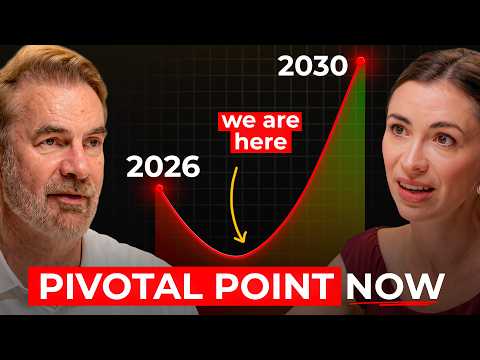
"The 3-Year AI Deadline: How to Stay Relevant (2026-2028)"
Reality:
The episode discusses the impact of AI over the next three years and strategies for staying relevant, but doesn’t present a specific '1% plan' as the thumbnail suggests.

The thumbnail says:
"THE 1% PLAN LIBERMAN BROTHERS INVESTORS, GIONKA AI FOUNDERS"
Reality:
While the speakers are investors and founders in the AI space, the thumbnail's promise of a concrete '1% Plan' for elite success isn't reflected in the episode's broader discussion about adapting to AI’s impact.
AI Opinion
The episode compellingly argues that shifts in information consumption habits, driven by tools like ChatGPT, are already impacting critical thinking and source verification—a point supported by observed user behavior. However, claims about specific productivity increases (fourfold) and the timeline for AI to handle “most intellectual work” rely on speculative projections requiring further scrutiny; the episode doesn’t sufficiently address potential limitations or uneven adoption rates. Listeners should critically assess any predictions regarding widespread societal transformation or economic disruption, particularly those tied to assumptions of equitable AI access and pricing.
Avatars are AI rewrites of the same facts — style changes, not substance.
Summary
The discussion centers on the rapidly approaching impact of artificial intelligence, particularly within the next three years, and how individuals can adapt to maintain relevance. Key concerns revolve around who controls access to AI – whether it’s gatekept by large corporations or freely available – as this dictates potential societal benefits like increased productivity versus risks of exploitation and manipulation. The conversation highlights a shift in information consumption habits due to tools like ChatGPT, potentially diminishing critical thinking skills if users rely solely on single sources. While AI promises practical problem-solving capabilities and the possibility of significantly boosting individual productivity, leading to transformative changes such as automated infrastructure and increased abundance, speakers caution against centralized data control and the erosion of freedom through reliance on controlled information streams. Ultimately, proactive learning, embracing new technologies, and focusing on uniquely human skills like creativity and collaboration will be crucial for navigating this evolving landscape, alongside advocating for decentralized AI solutions and equitable access to ensure widespread benefit.
Avatars are AI rewrites of the same facts — style changes, not substance.
Key Points
AI Control and Societal Impact
David and Daniel Lieberman, founders of Gonka, emphasize that the future reality hinges on who controls access to artificial intelligence. They highlight a scenario where big tech companies gatekeep AI access, contrasting it with an ideal where AI is freely accessible and affordable for everyone, leading to increased productivity.
Shifting Information Consumption & Critical Thinking
The conversation raises concerns about how AI-powered tools like ChatGPT are changing information consumption habits. Instead of conducting independent research across multiple sources, people increasingly rely on a single source (like ChatGPT), potentially leading to consequences and a decline in critical thinking skills.
AI's Potential for Practical Problem Solving
The Liebermans illustrate AI’s potential with an anecdote about using ChatGPT to diagnose a plumbing issue. Instead of costly replacements, the AI identified a missing part, demonstrating how AI can provide practical solutions and improve efficiency in traditionally manual fields – even if physical labor is still required.
Adaptation & Proactive Participation in Technological Change
The discussion turns to the future of work, with a focus on industries like transportation. The Liebermans stress that professions facing disruption have time to adapt if they proactively embrace innovation and collaborate rather than passively consuming technological advancements; otherwise, their roles could be significantly altered 15 years down the line.
AI Model Pricing Dynamics & Potential for Exploitation
The speakers discuss how AI corporations can easily increase prices on their systems, potentially exploiting users' dependence. They experienced recently that models haven’t become cheaper, highlighting a concerning trend where access to these powerful tools could be controlled and priced at the discretion of a few companies. This creates a power imbalance with significant implications for productivity and accessibility.
Potential for Increased Productivity & Societal Transformation
If access to AI models is guaranteed and affordable, the speakers envision a future where individual productivity increases fourfold. This surge in output could lead to a societal shift where people work less or adapt to increased abundance, potentially resulting in larger homes, smarter appliances (like self-buying refrigerators), and automated infrastructure like self-repairing pipes.
The Risk of AI-Driven Manipulation & Erosion of Freedom
Drawing parallels to the addictive nature of social media, the speakers express concern that AI could exacerbate issues related to information consumption and decision-making. They warn that controlled sources of information can shape perceptions of reality, potentially eroding individual freedom if users are unable to critically evaluate AI-generated content or advice.
The Shifting Power Dynamics in the AI Landscape
The speakers emphasize that successful AI labs now rely on attracting and retaining brilliant AI researchers, not just engineers, as engineering tasks are increasingly automated by AI itself. They note a trend of researchers leaving organizations due to ethical disagreements, suggesting that the influence of these individuals will grow while consumer power diminishes over time, increasing dependence on specific models.
Concerns Regarding Centralized AI Data Control
The discussion highlights concerns about centralized control of AI data, specifically referencing 'World ID' as a black box controlled by a single company. This lack of transparency raises anxieties among users and creates a need for decentralized solutions where access isn't limited to one entity. The speakers emphasize the importance of open-source approaches that demonstrate data security and prevent monopolistic control.
AI's Potential for Democratizing Access & Opportunity
The speakers express optimism about AI’s ability to foster equality by providing equal access to technology. They envision a future where individuals facing job displacement can leverage AI tools for guidance and new opportunities, such as starting businesses or learning new skills. This democratization of resources could unlock the highest potential for everyone, regardless of background.
The Importance of Continuous Learning & Adaptation
A key takeaway is the necessity of embracing and experimenting with new AI tools. The anecdote about the artist who consistently adopted new technologies demonstrates how proactive learning can lead to rapid advancement. The speakers recommend dedicating time, even just an hour a day, to explore these tools rather than passively consuming entertainment.
AI's Projected Capabilities & Enduring Human Roles
A bold claim is made that AI will be capable of performing most intellectual work within three years. Despite this, the speakers assert that core human attributes like creativity, collaboration, and personal decision-making will remain essential. This suggests a shift in focus towards uniquely human skills rather than tasks susceptible to automation.
Chapters
Claims & Fact Check
Everything will be disrupted. Every single job will be disrupted.
People started trusting one source of information like in the chat [ChatGPT] and they don't check multiple sources as they used to with the internet.
If artificial intelligence will be freely accessible by every human on earth, then each of us for sure will use AI to increase our productivity.
AI corporations can easily increase prices on their systems.
If access to AI models is guaranteed and affordable, individual productivity could increase fourfold.
AI-generated content could erode individual freedom if users are unable to critically evaluate it.
Everyone can achieve their highest potential if everyone has equal access to this technology.
We will see the explosion of smaller businesses like we will see the decorivization of industries if we have equal access to AI.
AI will be able to do most intellectual work for humans in three years.
Was this digest good?
More from Silicon Valley Girl


Digest any single YouTube video — free.
3 free digests — no card, no sign-up wall.
Or just swap the domain of any YouTube link → instant digest