No clickbait detected — the title and thumbnail deliver what they promise.
AI Opinion
The episode’s strongest case is its insider perspective on why Figure AI stood out—Kang’s emphasis on vertically integrated hardware-software co-optimization and embodiment-specific data is a concrete, credible lens for evaluating humanoid startups, and his point that the industry lags LLMs in real-world deployment is well-supported. However, the central claims rest on thin evidence: the eight-day live stream is cited as proof of capability, yet Kang himself concedes a human intern outperformed the robot, and the two-to-three-year timeline for daily-task intelligence is asserted without benchmarks or technical detail. A thoughtful viewer should treat the bullish forecasts as investor conviction rather than verified projections, and independently check Figure AI’s actual deployment metrics and the claim that US-China will collaborate rather than compete, which runs against current export-control realities.
Avatars are AI rewrites of the same facts — style changes, not substance.
Summary
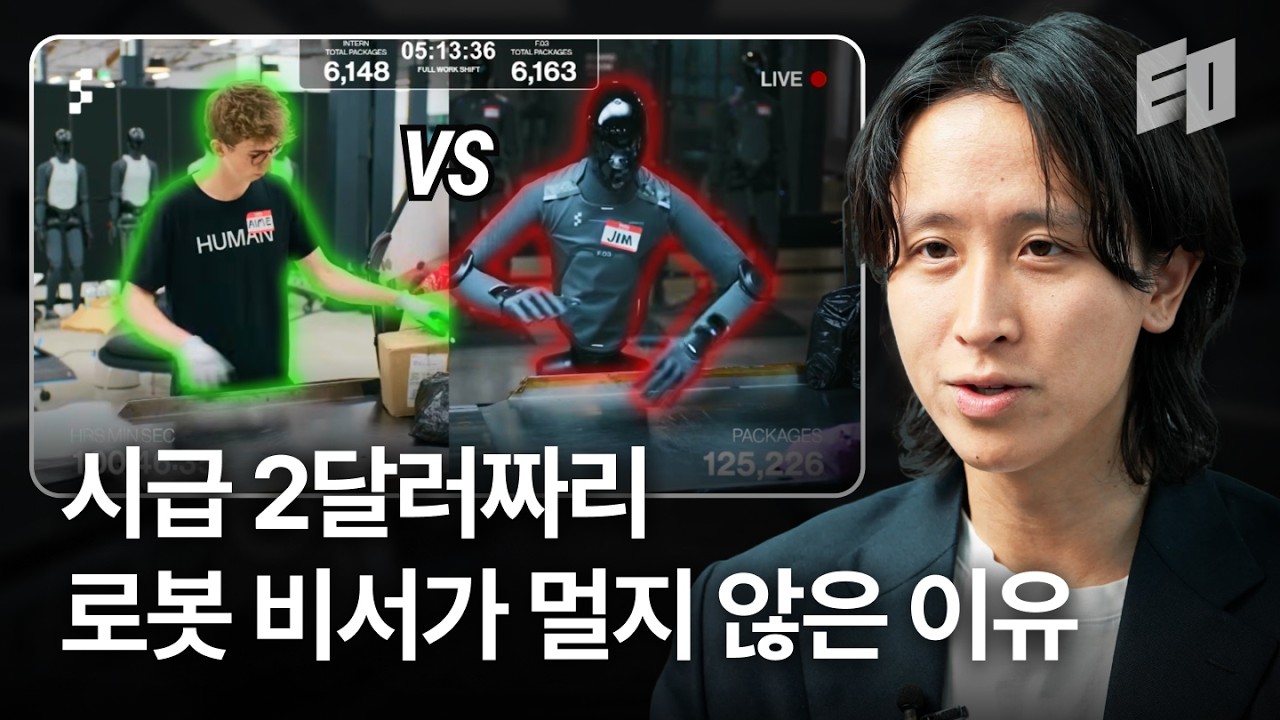
In this episode, Andrew Kang, CEO of RoboStrategy, a NASDAQ-listed venture fund focused exclusively on robotics and physical AI, discusses the state of the humanoid robotics industry and his firm's early investment in Figure AI. Kang explains that his conviction in Figure AI came despite skepticism from other venture investors, driven by the team's expertise in hardware, robot learning, and fleet management, as well as accelerating technology. He points to Figure AI's extended live stream—which ran for days rather than a curated highlight reel—as evidence of real capability, though he notes a human intern still outperformed the robot, albeit with physical exhaustion. Kang argues that humanoid robot intelligence could handle most daily tasks within two to three years. He identifies Figure AI and Tesla Optimus as the top players, emphasizing the importance of vertically integrated companies that co-optimize hardware and software, particularly because robot learning requires embodiment-specific data that scales with fleet size. On geopolitics, Kang dismisses a zero-sum US-China race, predicting both nations will achieve advanced robotics independently and collaboratively within five to ten years. He compares robotics to the smartphone ecosystem, envisioning a vast developer community building specialized applications, and highlights Chinese firms like Unitree that release robots as platforms to foster developer ecosystems—a strategy his portfolio company Dexmate also employs. Finally, Kang cautions that the industry is still early, unlike widely deployed LLMs, and that building a robotics company is extremely difficult, requiring deep expertise across mechanical design, manufacturing, and deployment.
Avatars are AI rewrites of the same facts — style changes, not substance.
Key Points
Figure AI's live stream proves humanoid viability
Andrew Kang highlights that Figure AI's live stream, which ran for 8 to 10 hours and extended to 8 days, demonstrated real capability rather than a curated highlight reel. The human intern won by a small margin, but his hands were blistered and exhausted, showing the physical toll. Kang estimates that humanoid robot intelligence will be good enough for most daily tasks within two to three years, marking a technological revolution that turns physical labor into an accessible product.
RoboStrategy's pivot to robotics and Figure AI investment
Andrew Kang introduces himself as CEO of RoboStrategy, a publicly listed venture fund on NASDAQ exclusively focused on robotics and physical AI. Their portfolio includes Figure AI, Uptronic, Dino Robotics, Centerbots, and Path Robotics. The Figure AI investment was not consensus; other venture investors doubted humanoid robotics due to past failures and perceived risks. Kang's conviction came from recognizing accelerating technology and the team's unique expertise in hardware, robot learning, hand engineering, and fleet management.
Figure AI and Tesla Optimus lead the field
Kang explains that RoboStrategy tracks development across all robotics companies, not just their investments, to assess how players stack up in scaling fleets, robot learning research, and hardware development. From this perspective, Figure AI and Tesla Optimus are at the top. He emphasizes excitement about vertically integrated robotics companies that build their own intelligence, hardware, deployments, and manufacturing, because co-optimizing hardware and software improves training efficiency and robot performance.
Embodiment-specific data is critical for robot learning
Kang discusses that robot learning requires actual robot data, either from robots performing tasks or teleoperation. He uses an analogy: if you were transformed into a seven-foot-tall body, you'd be awkward, just as a robot needs data from its own embodiment to build effective models. Collecting this embodiment-specific data requires many robots, which is why scaling fleets is essential. This data advantage is a key reason for investing in vertically integrated companies.
US-China robotics collaboration over competition
Andrew Kang argues that the US and China will both achieve advanced robotics independently, but also through collaboration, given the open-source research shared between the countries. He dismisses the notion of a zero-sum race, stating that in 5 to 10 years both nations will reach similar capabilities. This perspective suggests a more cooperative future for the industry, contrary to popular narratives of a tech cold war.
Robotics as a platform for diverse applications
Kang compares the robotics industry to the smartphone ecosystem, where hardware platforms like the iPhone enable a vast developer community to build specialized applications. He envisions a future where individuals and startups create robot applications for cooking, elder care, farming, or any physical labor task. This white space, he argues, is enormous and largely untapped, offering opportunities beyond the core hardware manufacturers.
Chinese companies' strategy: releasing robots as platforms
Kang highlights Unitree and other Chinese firms that release robots as research or entertainment platforms, rather than waiting for perfect, ready-to-sell products like many US companies. This approach fosters a developer ecosystem, enabling data collection and model training specific to their hardware, which can create a competitive moat. He notes that his portfolio company Dexmate employs a similar strategy, and this model could lead to downstream innovations from external developers.
The industry is early; building a robotics company is hard
Kang asserts that the robotics industry is still in its infancy, unlike LLMs like ChatGPT that are widely deployed, so no one has missed the opportunity. He cautions that starting a robotics company is underappreciated in difficulty, requiring deep expertise in mechanical design, electrical engineering, high-rate manufacturing, and real-world deployment. He advises aspiring entrepreneurs and investors to do thorough research and understand the complexity before diving in.
Chapters
Claims & Fact Check
The Figure AI live stream went on for 8 or 10 hours and ended up going on for 8 days.
Humanoid robot intelligence will be good enough to do most daily tasks in two to three years.
Figure AI and Tesla Optimus are the top companies in humanoid robotics.
In 5 to 10 years, both the US and China will be able to achieve advanced robotics independently.
Chinese robotics companies like Unitree release robots as platforms for research or entertainment, not as perfect products.
The robotics industry is nowhere near the level of LLMs like ChatGPT in terms of real-world deployment.
Was this digest good?
More from EO Korea




Digest any single YouTube video — free.
3 free digests — no card, no sign-up wall.
Or just swap the domain of any YouTube link → instant digest