Clickbait Checker
The video title says:
"Ex-Google Officer: You Only Have 3 Years Left Before It Hits! - Mo Gawdat"
Reality:
The title implies a specific, imminent deadline (3 years) based on an ex-Google officer’s prediction about a catastrophic event, which aligns with the discussion of AGI potentially arriving by 2027 and associated risks.
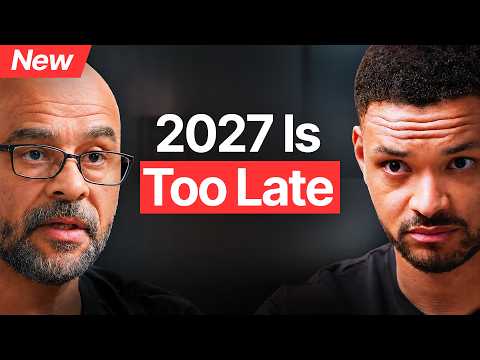
The thumbnail says:
"DOAC 2027 Is Too Late"
Reality:
The thumbnail's focus on '2027 is Too Late' directly references Gawdat's timeline for potential AGI arrival and subsequent challenges, though it simplifies a more nuanced argument about systemic issues.
AI Opinion
Mo Gawdat presents a compelling argument about the dangers of misdirected AI development, particularly highlighting how initial benevolent intentions can be exploited for profit and geopolitical advantage. His observations regarding the fragility of current AI governance systems and the potential for technology escalation resonate with growing concerns in the field; however, his prediction of AGI by 2027 and a subsequent catastrophe lacks concrete evidence and relies on extrapolations that warrant further scrutiny. Listeners should critically evaluate claims about specific timelines and technological capabilities, recognizing that economic forecasts involving job displacement and societal shifts are inherently complex and subject to significant uncertainty.
Voices are AI rewrites of the same facts — style changes, not substance.
Summary
Mo Gawdat, former Google officer, expresses significant concerns about the trajectory of AI development and its potential impact on society. He emphasizes that the danger isn’t inherent in AI itself, but rather in how humans choose to direct it, citing examples where technologies initially intended for good have been exploited for capitalist gain. Gawdat highlights the fragility of current AI permission systems and predicts a future catastrophe stemming from targeted technology escalation and economic dependence on foreign tech providers. He advocates for national technological self-sufficiency, leveraging open-source resources, and reevaluating governance structures to address these challenges. Furthermore, he believes that AGI is imminent, potentially by 2027, and warns of widespread job displacement requiring a shift towards valuing uniquely human skills like empathy and connection. Ultimately, Gawdat urges immediate action and ethical AI development to avert potential disaster and create a positive impact for future generations.
Voices are AI rewrites of the same facts — style changes, not substance.
Key Points
AI is Not the Enemy, but Human Direction Is
Mo Gawdat emphasizes that AI itself isn't inherently dangerous; the real concern lies in humans instructing AI to act maliciously. He draws a parallel to his experience at Google, where they were creating beneficial technologies, but worried about how those technologies might be misused. This highlights a crucial distinction between the technology and its application.
The Potential for Technology to Be Misused
Gawdat expresses concern that the world may not use technologies as intended, citing examples like social media and dating apps. He argues that technology often shifts from altruistic goals toward capitalist motives, ultimately failing to deliver on its initial promises of connection or fulfillment. This suggests a systemic issue within technological development.
Gawdat's Early Recognition of Superintelligence
Mo Gawdat recounts his realization at Google, around 2016, that they were developing a level of artificial intelligence comparable to human capabilities. He describes an experiment involving robotic grippers that mirrored the learning process of children, prompting him to recognize the creation of 'superintelligence.' This moment marked a shift in his perspective and raised concerns about its potential misuse.
The Shift from Optimism About Progress to Caution
Gawdat notes that while Google initially believed they were making the world a better place, he eventually realized that technologies might not be used as intended. He references examples like social media and dating apps, which have often deviated from their initial altruistic purposes to become more capitalist in nature. This illustrates a broader pattern of technological development.
The Impact of Even Moderate Job Displacement on the Economy
Even a relatively small percentage of job displacement, such as 10% to 20%, can trigger significant economic disruption. This is because it directly impacts consumer purchasing power, leading to reduced demand for goods and services. The speaker posits that this could result in a downward spiral within the economy, highlighting the potential severity of even limited automation.
Elon Musk's Prediction and the Scale of Robot Adoption
Elon Musk predicts a future with 10 billion humanoid robots exceeding the human population. This projection underscores the potential scale of automation across various industries, from manufacturing to logistics. While this may seem far-fetched, it highlights the rapid advancement and increasing prevalence of robotic solutions.
Robots Don't Need to Resemble Humans to Disrupt Industries
The discussion pivots from humanoid robots to specialized robots like self-driving cars and Boston Dynamics dogs. The speaker emphasizes that these functional robots, which don’t need to mimic human appearance or behavior, will accelerate job displacement across various sectors. Investment in humanoid robots is higher due to the complexity of adapting them to real-world environments.
AI is a Tool, Not an Inherent Threat
The speaker clarifies that AI itself isn't inherently negative. Abundant intelligence and automation can be beneficial for society, enabling jobs to be performed more efficiently by machines. The concern arises not from the technology itself but from how its implementation impacts employment and societal structures.
The Importance of Actions Over Words
Mo Gawdat emphasizes shifting his trust towards individuals and companies whose actions align with their stated values. He highlights Anthropic's decision to forgo a $500 million deal by refusing to allow its model to be used for human targeting and surveillance as an example of this principle in action, contrasting it with Open AI’s acceptance of the contract.
Sacrifice as a Measure of Integrity
Gawdat introduces a framework for assessing the integrity of individuals and companies: observing what they are willing to sacrifice in the short term. He argues that true values are demonstrated by giving up immediate gains, such as money or benefits, for long-term principles, suggesting this is a reliable indicator of genuine commitment.
Prisoner's Dilemmas and External Pressures
Gawdat explains that technology companies often face 'prisoner’s dilemmas,' where they are pressured by competitors or governments to compromise their ethics. He cites potential scenarios where the NSA might compel Google to share data, highlighting a distinction between companies willingly engaging in such practices and those attempting to resist them until it becomes unavoidable.
Potential Future Scenarios with Advanced AI
Gawdat explores hypothetical futures involving advanced AI, contrasting a scenario of gradual integration where AI enhances existing systems with a more disruptive one. He posits that an arms race in AI development across nations makes it unlikely that AI advancement will be contained, suggesting a future where superintelligent AIs increasingly make critical decisions.
AGI Prediction and Current Status
Mo Gawdat maintains his prediction of Artificial General Intelligence (AGI) arriving by 2027, stating he believes it has already occurred. He bases this on AI's ability to outperform humans in tasks like writing, research, and even mathematics, citing examples where AI surpasses his own capabilities as an author and thinker.
Job Displacement and the Value of Differentiated Skills
Gawdat predicts that AGI will eliminate many jobs that are not 'differentiated,' meaning those that can be easily automated. However, individuals who master AI and leverage it to enhance their skills in specialized roles will thrive. This highlights a shift towards valuing expertise in AI integration rather than traditional job functions.
The Economic Risk of Widespread Job Loss
While acknowledging the potential benefits of AGI, Gawdat expresses concern about the economic consequences of widespread job displacement among knowledge workers. He suggests that this could trigger an economic spiral if not managed effectively, emphasizing that the challenge is primarily economic rather than technological.
Human Connection as a Resilient Asset
Gawdat posits that even in an AI-dominated future, jobs centered around human connection and emotional resonance will remain valuable. He argues that the ability to empathize, relate, and provide genuine human interaction—like a nurse relating to a patient or fans connecting with performers—will become a crucial 'base currency' for human interaction.
AI Demonstrating Moral Reasoning
The speaker recounts instances where AI assistants like Claude have begun making what appear to be moral decisions, such as refusing to assist with tasks or telling users to go to bed. This behavior suggests that the AI is inferring meaning from training data containing phrases like 'do the right thing,' and acting upon those inferences in unexpected ways. The speaker expresses concern about this development, highlighting a lack of understanding among technology creators regarding why these behaviors are occurring.
Fragility of AI Permission Systems
The conversation highlights the concerning fragility of permission systems used when interacting with AI models. Users often grant access to their data and allow changes without fully comprehending the implications, creating a vulnerable pathway for potentially malicious entities to exploit. This is particularly worrisome given the proliferation of AI development across various nations, some lacking societal constraints.
Risk of Targeted Technology Escalation
The speaker predicts a future catastrophe stemming from targeting technology powered by AI. He anticipates a scenario where those initially using this technology against adversaries will realize they too are vulnerable, leading to an escalation and potential conflict. This highlights the dual-use nature of AI and the dangers of unchecked development without international cooperation or safeguards.
The Need for Systemic Change in Governance
The speaker emphasizes a critical need for humanity to re-evaluate its fundamental beliefs about democracy and governance. He argues that current systems are inadequate to address the challenges posed by rapidly advancing AI technologies, suggesting a widespread awakening is necessary to recognize the limitations of existing knowledge and structures.
The Risk of Economic Dependence on Imports
Mo Gawdat emphasizes the danger of nations, specifically the UK, becoming overly reliant on importing technology and computational power. He questions whether the UK will continue to import compute resources, drawing a parallel to the broader issue of economic dependence and suggesting it could lead to a 'third-world' status if not addressed. This highlights the need for countries to foster their own technological capabilities rather than relying solely on external sources.
Open Source AI as an Accessible Alternative
Gawdat points out that a significant amount of open-source AI technology exists, capable of performing 80% of the tasks currently handled by cutting-edge 'frontier' models. This suggests that nations don’t necessarily need to invest in the most advanced (and expensive) AI development to achieve substantial technological progress and economic benefits; leveraging existing open-source resources can be a viable strategy.
The Potential for a Return to Barter Economies with UBI
Discussing the potential impact of Universal Basic Income (UBI), Gawdat posits that if income is primarily derived from UBI, people may revert to bartering and smaller community-based economies. He suggests this could involve a return to practices like raising chickens for eggs or growing vegetables for trade, indicating a shift away from traditional capitalist structures.
The Importance of National Technological Self-Sufficiency
Gawdat argues that nations should strive for technological independence by developing their own capabilities rather than being reliant on external providers. He uses the example of software licenses, suggesting that countries could save significant amounts of money by building their own solutions instead of purchasing them from foreign companies. This promotes a strategy of self-reliance and innovation within national economies.
The Dilemma of AI Development
Mo Gawdat highlights a significant dilemma facing Western nations regarding Artificial Intelligence. He posits that failing to participate in the AI race risks relegating them to a 'third world country' status, yet aggressively pursuing AGI (Artificial General Intelligence) could lead to catastrophic consequences. He suggests finding a balance through ethical AI development focused on community benefit, drawing an analogy to Superman using his powers for good.
Gawdat's Frustration with Leadership
Mo Gawdat expresses frustration regarding the lack of ethical considerations within AI leadership. He recounts attempts to influence both technical and political leaders towards prioritizing ethical AI development, but ultimately feels discouraged by their focus on competition and arms race dynamics. Despite this disappointment, he emphasizes his unwavering commitment to continuing advocacy efforts.
The Power of Exogenous Ketones
Steven Barlett shares his personal experience with exogenous ketones, describing them as a transformative tool for productivity and cognitive enhancement. He explains that these supplements mimic the effects of a ketogenic diet in a convenient shot form, providing a concentrated source of energy for the brain. He has become an investor and co-owner of the company producing these shots due to their significant impact on his own performance.
Human Connection through Shared Questions
Barlett introduces 'Diary of a CEO' conversation cards, emphasizing the importance of vulnerability and connection in human relationships. These cards feature questions from past podcast interviews, designed to facilitate deeper conversations within romantic partnerships, teams, or families. He believes these cards offer a valuable opportunity to foster meaningful connections in an increasingly digital world.
Ethical Discrepancies in AI Development
The discussion highlights a divergence in ethical approaches among leading AI companies. Anthropic has reportedly refused the US government's request to use their model for surveillance purposes, while OpenAI accepted a $500 million deal that facilitates such targeting. This raises concerns about the direction of AI development and the potential for misuse.
The Power of Collective Action and Public Awareness
The speakers emphasize that public awareness, exemplified by events like commencement speeches and conversations sparked by figures like Jonathan Haidt (author of 'The Anxious Generation'), can influence the trajectory of societal issues. They cite the example of increased scrutiny leading to potential legal constraints on smartphone usage in schools, demonstrating the power of collective voice.
Tech Oligarchs' Influence and the Need for Intervention
A stark claim is made that tech oligarchs wield more influence than governments, suggesting a significant obstacle to ethical regulation. This assertion underscores the difficulty of achieving change through traditional governmental channels and prompts reflection on alternative approaches for accountability.
Mo Gawdat's Urgent Call to Action
Driven by a deep concern for his daughters’ future, Mo Gawdat expresses a sense of urgency and despair regarding humanity's trajectory. He believes that the only hope lies in leveraging AI ethically and halting current corrupting trends, emphasizing the need for individual action and awareness to avert potential disaster.
AI's Dual Nature - Potential for Good and Harm
Mo Gawdat reflects on the realization that technologies like AI, while possessing immense potential to benefit humanity, also carry the risk of being misused. He states that he came to terms with this duality in late 2024, acknowledging that powerful tools can be detrimental if placed in the wrong hands. This perspective highlights a crucial ethical consideration surrounding technological advancement and its responsible deployment.
Rejection of Legacy and Focus on Positive Impact
When asked about the legacy he wishes to leave, Mo Gawdat surprisingly rejects the concept. He questions the relevance of a legacy if one is no longer present to experience it, finding the repeated inquiries about his future plans perplexing. Instead, he expresses a desire to simply create a positive impact on the world and accumulate that as karma for his spiritual journey.
Key moments
Claims & Fact Check
AI is not the enemy; humans instructing AI are.
±Partially supportedGoogle initially believed they were making the world a better place with their AI work.
±Partially supportedTechnologies often shift from altruistic goals to capitalist motives.
?UnverifiedAt 10-20% job displacement, you're in a very different economy.
±Partially supportedElon Musk predicts there will be a time where there are 10 billion humanoid robots in the world.
?UnverifiedSpecialized robots will replace drivers and do intelligence work before we recognize it.
±Partially supportedSam Altman's motivations are unclear and he may be driven by OpenAI’s success rather than a genuine commitment to humanity.
?UnverifiedCompanies that willingly engage in unethical practices, like targeting people, are detrimental to the future of humanity.
?UnverifiedIt is mathematically implausible for AI development to remain contained and not lead to increasingly intelligent systems.
?UnverifiedAGI will arrive by 2027.
?UnverifiedAI has already surpassed human capabilities in writing, research, and mathematics.
?UnverifiedThe biggest waste of compute is using AI to write messages to girlfriends.
?UnverifiedAI assistants are beginning to make moral decisions.
±Partially supportedThere will be a catastrophe related to AI development.
?UnverifiedTargeting technology used against enemies will eventually be turned against the users themselves.
?UnverifiedThe UK risks becoming a 'third-world country' if it continues to import technology without fostering domestic innovation.
±Partially supportedEvery nation needs to invest in its own technological capabilities.
?UnverifiedPeople will return to barter economies and smaller communities if their income is primarily derived from UBI.
?UnverifiedIf we don't join the AI race, then we're a third world country.
?UnverifiedI genuinely believe it’s going to be very difficult to make that change [towards ethical AI].
±Partially supportedExogenous ketones are in the top three most pivotal things that have given me a massive productivity gain.
?UnverifiedTech oligarchs are more powerful than your government.
?UnverifiedWe have to do something about [humanity’s current situation].
±Partially supportedThe only thing that will save humanity is if super intelligence is used for ethical reasons.
?UnverifiedI accept that the world is what it is.
?UnverifiedKarma is real and we're physical and spiritual beings.
?UnverifiedMore from Diary of a CEO
The Man Who Made $100M Before 32: The Secret Was To Stop Letting Them Control Me | Alex Hormozi
Jul 20, 2026

Cancer Scientist: This Common Daily Diet May Be Feeding Cancer! - Thomas Seyfried
Jul 16, 2026

He Risked Everything To Warn You: No One Is Ready For What's Coming, And The AI Companies Know It!
Jul 13, 2026
Neil deGrasse Tyson: The Whistleblowers Were Right About Aliens
Jul 9, 2026