Clickbait Checker
The video title says:
"How to Increase Your Emotional Intelligence & Never Get Angry or Bothered by Anyone"
Reality:
The episode discusses developing emotional intelligence through self-awareness, understanding emotions as signals, and practicing regulation strategies to manage responses, but doesn't promise complete immunity from anger or being bothered by others.
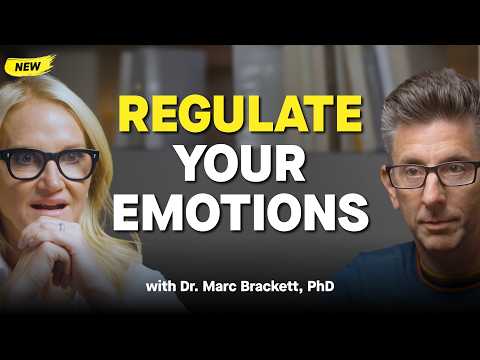
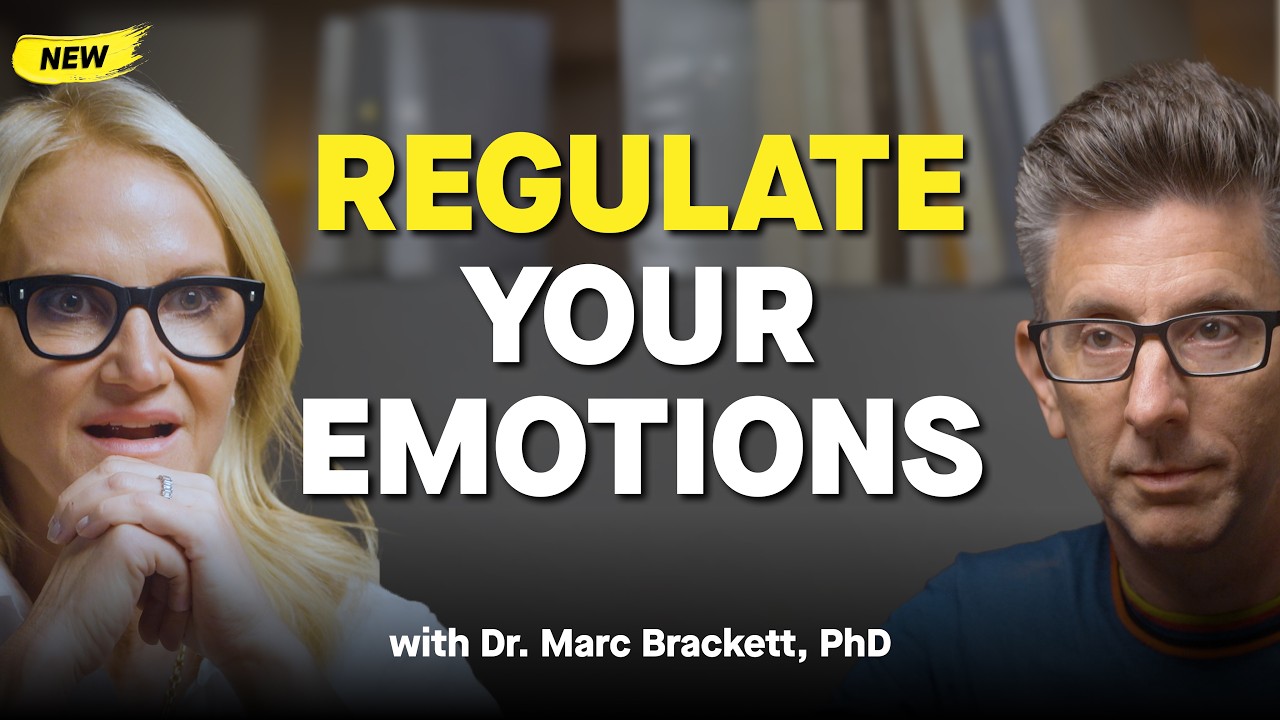
The thumbnail says:
"NEW REGULATE YOUR EMOTIONS with Dr. Marc Brackett, PhD"
Reality:
The thumbnail accurately reflects the presence of Dr. Brackett and the discussion around regulating emotions, though it implies a more immediate and comprehensive solution than the episode delivers.
AI Opinion
The episode effectively argues that emotional intelligence is a cultivable skillset, emphasizing the value of recognizing emotions as signals and taking responsibility for reactions—a perspective supported by readily observable behavioral patterns. However, claims regarding the external origin of negative self-talk, while plausible, lack specific developmental or neurological evidence presented here; listeners should consider individual experiences in this area. Ultimately, viewers would benefit from cross-referencing the suggested emotional regulation strategies with established psychological practices and tailoring them to their own circumstances rather than adopting them wholesale.
Voices are AI rewrites of the same facts — style changes, not substance.
Summary
This episode explores the concept of emotional intelligence and how it can be developed as a learned skill, rather than an innate trait. The discussion centers around understanding emotions—recognizing them as signals that guide our actions and relationships—and taking responsibility for our responses to challenging situations. Key insights include recognizing that unaddressed small emotions can escalate into larger problems impacting mental health, negative self-talk often originates from external sources, and anxiety can be reframed as a signal of care or unmet needs. The episode emphasizes the importance of allowing oneself permission to feel all emotions, identifying the root causes of difficult feelings like anger and disappointment, and actively practicing emotional regulation strategies to foster greater well-being and achieve goals. Ultimately, it advocates for self-awareness, proactive emotional processing, and reframing negative patterns to cultivate resilience and a more positive outlook on life.
Voices are AI rewrites of the same facts — style changes, not substance.
Key Points
Emotions Accumulate Like Debt
The episode begins with the analogy of emotions accumulating like debt. Dr. Brackett explains that if these emotions aren't expressed in healthy ways, they will 'come due,' leading to negative consequences such as denial, suppression, and shame. This highlights the importance of emotional processing and communication.
Negative Self-Talk Originates Externally
Dr. Brackett explains that negative self-talk doesn’t arise from within but is learned from external sources, often during childhood. This challenges the common misconception of internal negativity and suggests that addressing these patterns requires understanding their origins in interactions with others. He encourages a daily mindset focused on new beginnings.
Emotional Intelligence is a Skillset
Dr. Brackett emphasizes that emotional intelligence isn't inherent but rather a set of skills that can be learned and developed. These skills enable individuals to navigate emotions effectively, build strong relationships, achieve goals, and ultimately experience greater well-being. The Yale Center for Emotional Intelligence has developed an evidence-based framework used in over 5000 schools.
Recognizing Emotional Leakage
The speaker describes a situation where they felt intense irritation during a meeting, stemming from an unrelated event the previous day. This illustrates 'emotional leakage,' where past experiences can unexpectedly influence present reactions. They suggest acknowledging this by simply stating, "Oh, I'm really irritable," to recognize and address the source of the feeling rather than projecting it onto others.
Emotions as Signals
Dr. Brackett emphasizes that emotions serve as signals, guiding our approach or avoidance in relationships. He explains that facial expressions, body language, and vocal tone communicate whether someone feels liked, respected, or conversely, unwanted. This concept highlights the immediate impact of emotional cues on interpersonal interactions.
The Link Between Small Emotions and Mental Health
Dr. Brackett explains that unaddressed small emotions can escalate into larger, more damaging ones, impacting mental and physical health. He provides a specific progression: sadness becomes hopelessness, which leads to despair and ultimately depression; irritation escalates to anger and rage. This underscores the importance of proactively managing minor emotional discomforts.
Emotional Intelligence and Performance
Dr. Brackett shares his experience teaching at Yale, observing that academic achievement alone isn't enough for success. He notes many high-achieving students fail to reach their goals due to an inability to manage feelings like disappointment, anxiety, and feedback. This highlights the critical role of emotional intelligence—the ability to navigate emotions effectively—in achieving life’s objectives.
The Importance of Permission to Feel
Dr. Brackett introduces the concept that the first step towards emotional intelligence is 'permission to feel.' He shares his personal history, including childhood trauma and years of suppression, illustrating how denying emotions can lead to significant long-term consequences. Acknowledging and accepting one's feelings is crucial for healthy emotional processing.
Identifying the Root Cause of Emotions
The process for understanding difficult emotions begins with identifying their root cause. For anger, this often involves recognizing feelings of injustice; for disappointment, it's about examining unmet expectations. By asking 'what has happened that makes me feel like something’s unfair?' or 'what was my expectation?', individuals can begin to unpack the underlying reasons behind their emotional responses.
Reframing Anxiety as a Signal of Caring
Mark shares a conversation with a friend who studies anxiety, highlighting that anxiety often signals something one cares deeply about. Instead of viewing anxiety negatively, it can be reframed as an opportunity to examine areas of life where attention and action are needed. This perspective shifts the focus from avoidance to proactive engagement.
Distinguishing Anxiety from Other Emotions
Mark presents a detailed breakdown of various emotions, differentiating them through precise definitions. Anxiety is characterized by perceived uncertainty about the future; stress arises from having too many demands and insufficient resources; pressure involves a sense that outcomes depend on one's behavior; fear signals impending danger; and overwhelm signifies emotional saturation. This granular distinction provides a framework for targeted regulation strategies.
Operationalizing Stress vs. Emotional Overwhelm
Mark emphasizes that stress, defined as too many demands and limited resources, is a distinct operational problem compared to feeling emotionally overwhelmed – a state of being flooded with emotion and unable to act. Recognizing this difference allows for targeted interventions; physical exertion might temporarily alleviate stress but won't resolve emotional overwhelm.
The Importance of Savoring Experiences
Mark emphasizes the importance of consciously savoring experiences rather than quickly moving on. He suggests that taking time to reflect and appreciate moments can contribute to overall well-being and emotional regulation, as it allows for a deeper understanding and appreciation of life's events.
Unhelpful Emotion Regulation Strategies
Mark introduces the concept of unhelpful emotion regulation strategies, highlighting common responses like venting, telling oneself to 'not feel,' and avoidance. He encourages listeners to identify their own automatic go-to reactions when overwhelmed or stressed, recognizing that these behaviors often exacerbate negative emotions rather than resolving them.
The Power of Reframing in Childhood
Mark shares the story of his niece Esme, who experienced a racially charged comment in kindergarten. He underscores the critical role of early intervention and positive reframing in helping children develop emotional resilience and self-esteem, particularly when facing challenging situations or societal biases.
Negative Self-Talk as a Masterful Saboteur
Mark identifies negative self-talk as a significant obstacle to emotional well-being, characterizing it as a form of self-sabotage. He suggests that this internal criticism can be a learned behavior and emphasizes the importance of recognizing and challenging these patterns to foster greater self-compassion and resilience.
Taking Responsibility for Responses
A core message is the power individuals have to choose their responses in life. This highlights a shift from feeling victimized by emotions to actively managing them, suggesting that emotional regulation isn't about suppressing feelings but rather selecting how one reacts to them. This empowers viewers to take control of their behavior and outcomes.
Emotional Intelligence is a Learned Skill
Dr. Brackett emphasizes that emotional intelligence isn't an innate trait but rather a skill developed through learning and practice. This involves recognizing, understanding, labeling, expressing, and regulating emotions effectively to achieve goals, build strong relationships, and enhance overall well-being. He explicitly states, 'You weren't born that way. It’s a learned skill.'
The Importance of Giving Yourself Permission to Feel
Dr. Brackett encourages viewers to grant themselves and others permission to experience the full spectrum of emotions, both positive and negative. This acceptance is crucial for emotional processing and growth. He suggests building a 'toolbox of strategies' to manage these feelings constructively, ultimately leading to emotional freedom and goal attainment.
Applying Learned Tools for Personal Growth
The speaker encourages actively applying the tools and insights gained from Dr. Brackett's teachings to understand oneself better. This process of self-reflection and emotional awareness is expected to lead to a transformative shift in perspective, fostering greater freedom and a more positive outlook on life.
Chapters
Claims & Fact Check
Emotions pile up like a debt, and if we don't know how to express them in ways that are healthy, the debt comes due.
?UnverifiedNegative self-talk starts early and it doesn't come from within; it comes from without.
?UnverifiedEmotional intelligence is a set of skills that helps us to use our emotions wisely to achieve our goals in life.
±Partially supportedIt's useful to understand that a simple thing you could do in that moment if you notice that the volcano or tidal wave is leaking, is just say 'Oh, I'm really irritable.'
?UnverifiedEmotions drive the quality of our relationships.
±Partially supportedLittle emotions become big emotions if they're not dealt with.
±Partially supportedAnger often stems from feelings of injustice.
±Partially supportedDisappointment is about unmet expectations.
✓Well-supportedAnxiety signals that something may not be going exactly right with something you care about.
±Partially supportedTelling yourself 'don't feel' is an unhelpful strategy.
?UnverifiedAvoidance, eating/drinking, and negative self-talk are common unhelpful coping mechanisms.
±Partially supportedEarly intervention is crucial for children facing emotional challenges.
±Partially supportedEmotional intelligence is not a fixed trait.
±Partially supportedWe can learn to regulate our emotions.
±Partially supportedGiving yourself permission to feel is important.
?UnverifiedMore from The Mel Robbins Podcast
The Happiness Expert: How to Find Your Purpose & Live a Meaningful Life
Jul 13, 2026
How to Build a Better Future: 2 Simple Questions That Uplevel Your Life Immediately
Jul 11, 2026

8 Simple Reminders You Need to Hear Right Now
Jul 9, 2026

Try it For 1 Week: Small Ways to Make Your Life Fun & Exciting Again
Jun 22, 2026