Clickbait Checker
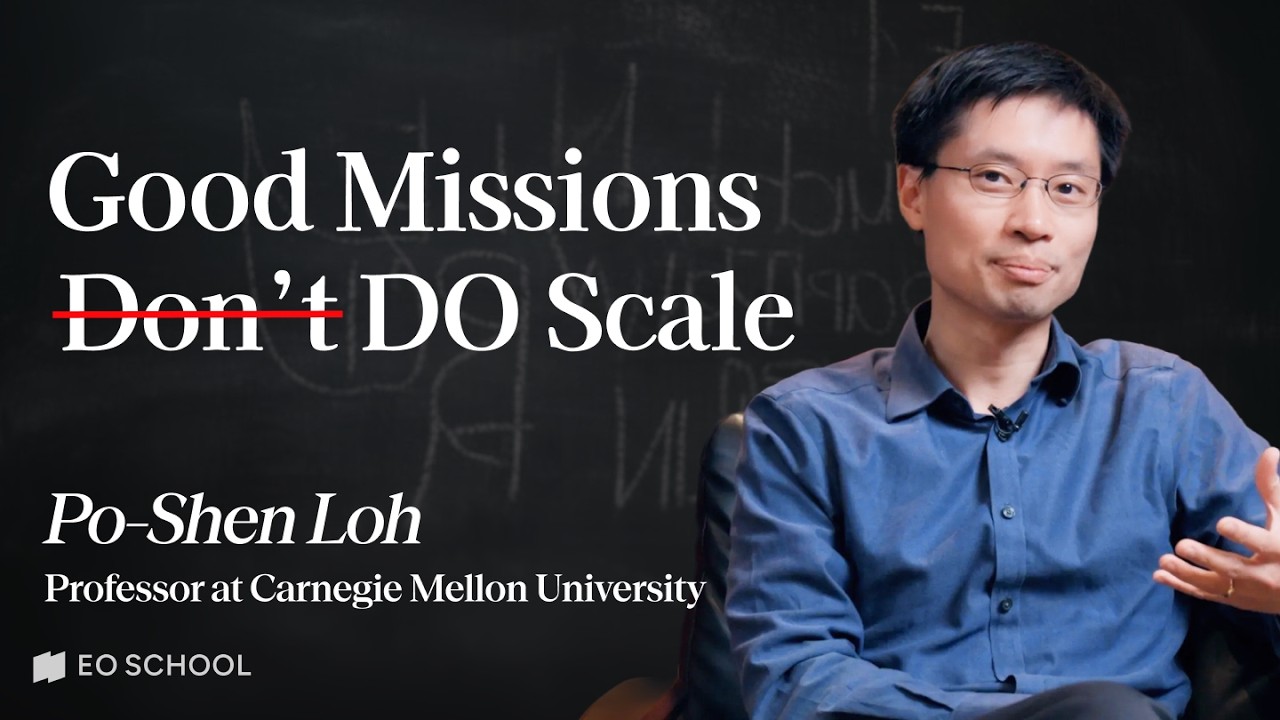
The video title says:
"How to Do Good AND Make Money | Carnegie Mellon University Po-Shen Loh"
Reality:
The title accurately reflects Loh's argument that combining social impact and financial gain is possible, emphasizing profitability as crucial for sustainability.
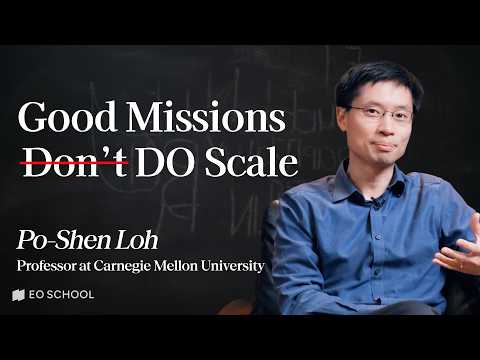
The thumbnail says:
"Good Missions Don’t DO Scale Po-Shen Loh Professor at Carnegie Mellon University EO SCHOOL"
Reality:
While the thumbnail’s hook 'Good Missions Don’t DO Scale' hints at a challenge to conventional wisdom about scaling, it oversimplifies Loh's nuanced discussion which focuses on bootstrapping and building a core business rather than explicitly rejecting scale itself.
AI Opinion
Loh’s argument that profitability provides essential flexibility and control for social ventures resonates strongly, particularly his emphasis on bootstrapping through revenue generation—a strategy clearly demonstrated by his own experience. However, the episode's assertion that generating income *is* the best way to do good relies more on Loh’s personal philosophy than conclusive evidence; alternative models relying on grants or donations can also achieve significant impact. Listeners should consider whether a profit-driven approach aligns with their values and carefully evaluate the potential trade-offs between financial independence and mission alignment when pursuing similar strategies.
Avatars are AI rewrites of the same facts — style changes, not substance.
Summary
Po-Shen Loh discusses a philosophy centered on combining social impact with financial sustainability, arguing that profitability is essential for long-term success in social ventures. He advocates for creating value through network connections and implementing “live product” models—systems where multiple parties benefit from an exchange, such as online tutoring programs leveraging global time zones to provide opportunities for students, actors, and teaching assistants. Loh emphasizes bootstrapping a business using revenue generated rather than seeking external investment, citing his own experience funding ventures with profits from math classes. He highlights the importance of financial discipline, operating with limited funds, and reinvesting earnings. Furthermore, he advises establishing a core business to gain financial freedom and suggests partnering with a nonprofit fiscal sponsor to facilitate charitable donations while maintaining control over operations. Ultimately, Loh believes that pursuing income generation as a means to fund philanthropic endeavors is more effective than relying solely on donations or grants, and that a commitment to something larger than oneself fosters collaboration and meaningful impact.
Avatars are AI rewrites of the same facts — style changes, not substance.
Key Points
Social Entrepreneurship Requires Profitability
Po-Shen Loh emphasizes that social ventures need to generate profit, not solely rely on philanthropy. He explains that dependence on donations creates instability and limits the ability to help more people. The goal is to create a system where each person helped generates revenue, allowing for greater impact.
Value Creation Through Network Connections
Loh introduces the concept of creating value by connecting individuals with complementary needs. He illustrates this with a simple example: someone with an excess of one resource and another lacking it, who can mutually benefit through exchange. This principle extends to more complex networks where everyone experiences a net gain.
The 'Live Product' Model - A Win-Win System
Loh describes his ‘live product’ model, exemplified by online math tutoring. This system benefits high school students (improving communication skills), professional actors (providing paid remote work), and teaching assistants (offering daytime employment). The geographic distribution leverages time zone differences to create a mutually beneficial arrangement.
Global Talent Acquisition for Win-Win Opportunities
To staff his live product, Loh realized that US-based talent was unavailable during evening hours. He then strategically sought teaching assistants from Malaysia and the Philippines, where those times represent daylight hours. This demonstrates a proactive approach to finding win-win solutions by leveraging global time zones.
Bootstrapping as a Viable Path to Funding
Po-Shen Loh emphasizes the importance of bootstrapping, which is funding a company through revenue generated rather than external investment. He explains that even though XP.com initially didn't succeed, subsequent ventures were funded using profits from math classes sold in China. This approach allowed them to maintain control and avoid reliance on outside investors.
The Philanthropist’s Advice: Make Money to Do Good
Loh recounts a pivotal conversation with a philanthropist who advised him to focus on generating income first and then using those profits for philanthropic endeavors. This shifted Loh's perspective, encouraging the pursuit of profitability as a means to amplify positive impact rather than solely relying on donations or grants.
The Necessity of Financial Discipline
Loh highlights the critical role of financial discipline in sustainable growth. He explains that they operated with limited funds, reinvesting earnings to develop better versions of their products and services. This disciplined approach ensured they maintained control over their company's direction and avoided unsustainable spending.
The Role of a Nonprofit Fiscal Sponsor
Loh details the structure used to receive donations for their charitable initiatives. They partner with a separate 501(c)(3) nonprofit organization that acts as their fiscal sponsor, receiving donations on their behalf and then contracting them to deliver services like free classes. This arrangement allows them to accept tax-deductible donations while maintaining control over their core business.
Building a Core Business for Freedom
Po-Shen Loh suggests that generating income provides greater freedom. He advises starting with a small, manageable core business and gradually expanding it to create more financial flexibility. This initial cash flow allows individuals to pursue larger goals and initiatives without the immediate pressure of needing to sustain themselves.
The Value of Caring About Something Bigger Than Yourself
Loh emphasizes the significant value in people who are driven by a purpose beyond personal gain. He believes that connecting with individuals who share this commitment is crucial for achieving meaningful impact and fostering collaboration. This focus on altruism can be a powerful motivator and source of inspiration.
Chapters
Claims & Fact Check
Social entrepreneurship can create value 'out of nothing' if it makes the world better.
2 plus 2 can equal 5 when creating value through networks and collaborations.
Profitability allows for greater control over a company's decisions, enabling social impact focus.
It is okay to make money.
The best way to do good is to first generate income and then allocate those funds to charitable causes.
Profitability without losing control of the company is crucial.
Was this digest good?
More from EO

Digest any single YouTube video — free.
3 free digests — no card, no sign-up wall.
Or just swap the domain of any YouTube link → instant digest