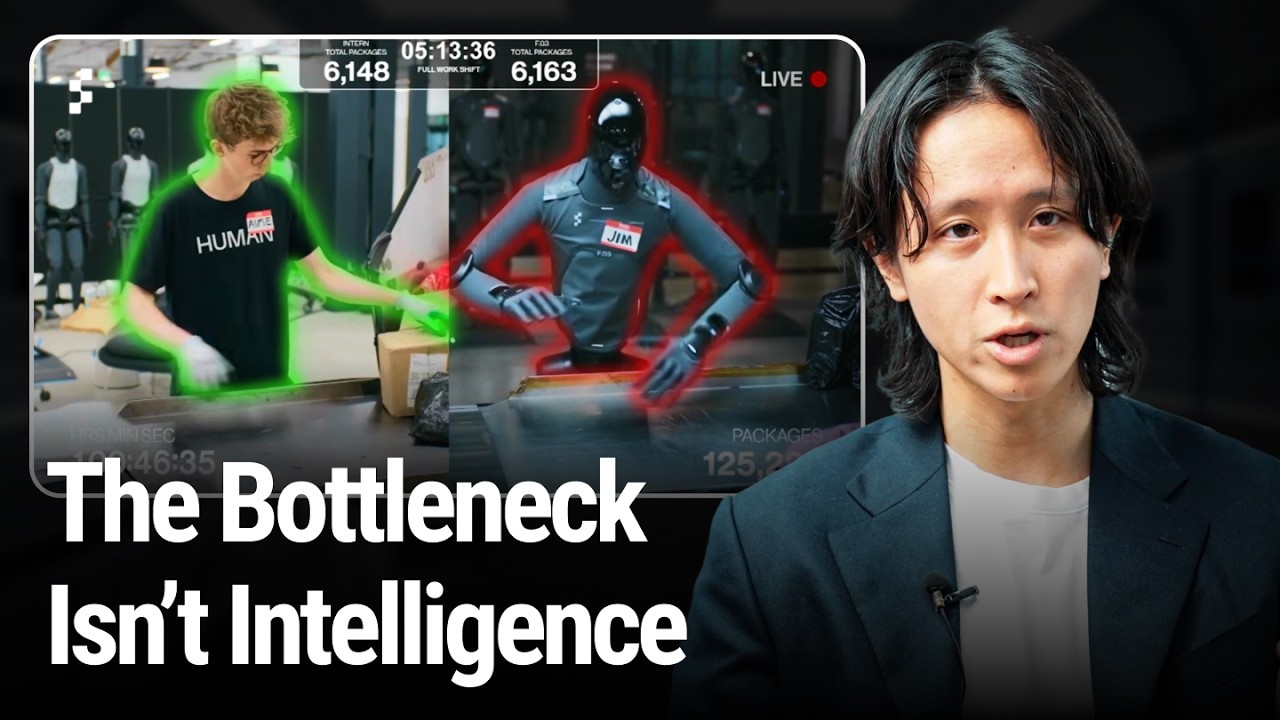
No clickbait detected — the title and thumbnail deliver what they promise.
AI Opinion
Kang convincingly argues that the current bottleneck in humanoid robot development isn't AI capabilities themselves, but rather challenges in hardware integration and establishing robust developer ecosystems—a point well illustrated by drawing parallels to the smartphone industry’s evolution. His claims regarding Figure AI's progress and the necessity of vertical integration are supported by observable advancements and industry trends, though the assertion that US-China collaboration will occur within 5-10 years rests on optimistic projections about geopolitical factors. Listeners should independently assess the long-term viability of companies like Unitree and consider how quickly hardware limitations might impede software innovation, even with a thriving developer base.
Avatars are AI rewrites of the same facts — style changes, not substance.
Summary
Andrew Kang, of Robo Strategy—a venture fund specializing in robotics and physical AI—discusses recent advancements and future trends in humanoid robotics. The Figure AI live stream demonstrated significant progress, showcasing robots capable of performing challenging tasks that even require human exertion. Robo Strategy’s early investment in Figure AI highlights a contrarian approach to recognizing the accelerating pace of technological development within the field. Kang emphasizes the importance of vertical integration for robotics companies, allowing for optimized hardware and software design. He notes ongoing parallel advancements in humanoid robotics research between the United States and China, suggesting potential collaboration within 5-10 years. Drawing parallels with the smartphone industry, Kang stresses the need for a robust developer ecosystem to foster innovation and data collection, citing Unitree’s platform strategy as an example. While progress is evident, Kang argues that robotics remains in an early stage compared to advancements in areas like Large Language Models, indicating substantial opportunities for future development and investment.
Avatars are AI rewrites of the same facts — style changes, not substance.
Key Points
The Figure AI Live Stream Demonstrated Real Progress
Andrew highlights the significance of the Figure AI live stream, emphasizing that it wasn't a cherry-picked demonstration but rather an 8-day continuous challenge. A human intern participated and ultimately won, though they experienced physical exhaustion (blistered hands), illustrating the difficulty of the tasks even for humans. This demonstrates tangible progress in humanoid robotics.
Robo Strategy's Focus on Robotics Investing
Andrew Kang introduces Robo Strategy, a publicly listed venture fund exclusively focused on investing in robotics and physical AI. They are one of the first to do so, demonstrating their commitment and specialized expertise within this rapidly evolving sector. Their portfolio includes companies like Figure AI, Apptronik, Sanctuary Robotics, Center Bots, and Path Robotics.
Robo Strategy's Contrarian Investment in Figure AI
Robo Strategy made a significant investment in Figure AI despite skepticism from other venture investors who doubted the viability of humanoid robotics. They recognized that technology and progress were accelerating faster than traditional perspectives allowed, leading them to pivot their entire company’s focus towards robotics investments. This highlights their willingness to challenge conventional wisdom.
The Importance of Vertical Integration in Robotics
Andrew emphasizes the importance of vertically integrated robotics companies, which build their own robot intelligence, hardware, handle deployments, and scale manufacturing. This approach allows for co-optimization of hardware and software, leading to more efficient training, research, and ultimately, higher performance robots. They are currently investing heavily in this model.
The US and China are Collaborating in Robotics Research
Andrew Kang suggests that the United States and China are both making progress in humanoid robotics research, with a likelihood of eventual collaboration due to open-source research. He dismisses any notion of one country being significantly ahead, emphasizing their parallel development and potential for shared advancements within a relatively short timeframe (5-10 years).
Unitree's Platform Strategy
Kang highlights Unitree’s unique approach of releasing robots as platforms for research and entertainment, rather than fully functional products. This strategy fosters a developer ecosystem where users can build upon the hardware, leading to data collection, specialized tools, and potentially even improved performance on Unitree robots compared to alternatives. This contrasts with US companies' tendency to wait for product perfection before release.
Robotics Needs a Developer Ecosystem
Drawing an analogy to the smartphone industry, Kang emphasizes the importance of a robust developer ecosystem in robotics. He explains that just as Apple's iPhone spawned a vast community of application developers, robotics companies can benefit from external researchers and startups focusing on AI applications without needing to handle hardware manufacturing themselves.
Robotics is Still Early Compared to LLMs
Kang points out that while robotics has made significant progress, it remains in a relatively early stage compared to the advancements seen in Large Language Models (LLMs) like ChatGPT. He argues that there's substantial room for improvement and innovation, creating exciting opportunities for both individuals seeking employment and investors looking to enter the space.
Chapters
Claims & Fact Check
Humanoid intelligence will be good enough to do most daily tasks within 2-3 years.
Figure AI and Tesla Optimus are currently the top companies in humanoid robotics.
Robots performing tasks or under teleoperation generate essential data for robot learning.
Both the US and China will be able to develop advanced humanoid robots within 5-10 years.
Releasing hardware as a platform can lead to a developer ecosystem and data collection opportunities.
Building a robotics company is significantly harder than building a software company.
Was this digest good?
More from EO
Digest any single YouTube video — free.
3 free digests — no card, no sign-up wall.
Or just swap the domain of any YouTube link → instant digest