Clickbait Checker
The video title says:
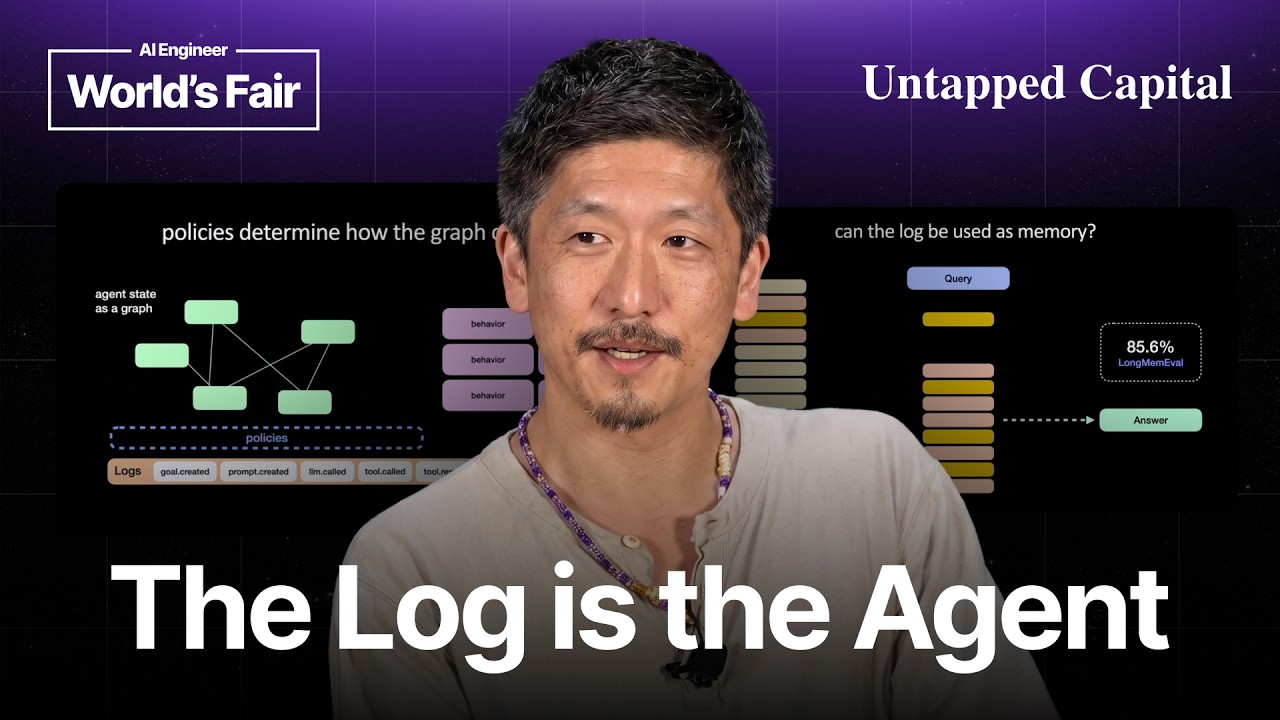
"Active Graph Agent Runtime (BabyAGI 4) — Yohei Nakajima, Untapped Capital"
Reality:
The title accurately reflects the episode's focus on ActiveGraph, a runtime environment for agents that leverages a graph-based log system and introduces concepts like reactive behaviors and policies.
The thumbnail says:
"AI Engineer World's Fair Untapped Capital policies determine how the graph can the log be used as memory? 85.6% The Log is the Agent"
Reality:
While the thumbnail uses 'AI Engineer World's Fair,' the episode primarily discusses a technical framework (ActiveGraph) rather than showcasing AI engineering innovations in a broad, fair-like context.
AI Opinion
Nakajima convincingly argues that event-sourced graph architectures like ActiveGraph offer a significant improvement in agent stability and debuggability compared to systems solely reliant on LLMs, particularly regarding traceability and rollback capabilities. The claim that a lack of training data specifically around building autonomous agents is currently hindering progress rests on an observation about the field’s trajectory but lacks concrete evidence demonstrating its relative importance compared to other bottlenecks. Listeners should consider whether ActiveGraph's benefits outweigh its added complexity for all applications, as the emphasis on structured logging may not be suitable for every agent design or use case.
Avatars are AI rewrites of the same facts — style changes, not substance.
Summary
Yohei Nakajima of Untapped Capital introduces ActiveGraph, a new agent runtime designed to address the instability issues common in long-running autonomous agents. The system centers on an event-sourced graph architecture where development is structured around a detailed log of changes rather than solely relying on large language models (LLMs). This "ActiveGraph" utilizes reactive behaviors and policies that govern modifications to the graph, ensuring traceability, enabling rollback capabilities, and promoting agent reliability. A key insight is that debugging has shifted towards querying this ActiveGraph database for comprehensive data, highlighting its value as a structured record of actions. Nakajima also emphasizes the need for “experiential world models,” drawing parallels to human memory processes, and proposes that an agent's identity should be shaped by its accumulated operational history rather than solely pre-programmed instructions. Ultimately, the framework aims to automate agent development and foster more robust and adaptable autonomous systems.
Avatars are AI rewrites of the same facts — style changes, not substance.
Key Points
The Problem with Long-Running Agents
Yohei explains that long-running agents frequently break down, prompting the need for a self-building system. He highlights his research theme over the past three years focused on creating systems capable of building themselves, stemming from his earlier work with BabyAGI and subsequent iterations. This approach aims to automate agent development and address the instability issues commonly encountered in long-term autonomous operations.
ActiveGraph: A Log-Centric Agent Runtime
Yohei introduces ActiveGraph as an event-sourced graph runtime designed for building auditable agents. The core concept revolves around structuring agent development *around* the log of changes, rather than the LLM itself. This approach prioritizes a traceable and immutable record of all modifications to the agent's state, facilitating replayability, rollback capabilities, and branching functionalities.
Behaviors Reacting to Graph Changes
ActiveGraph utilizes 'behaviors' that are reactive to changes within the graph. These behaviors don’t necessarily involve LLMs; they can be deterministic functions that respond to modifications in the agent's state, emitting new events and further updating the graph. This cyclical process of change detection and event emission forms a core mechanism for agent evolution and adaptation.
Policies Govern Graph Modification
Yohei introduces 'policies' as a crucial element in ActiveGraph, explaining that they dictate how the graph can be modified. These policies establish rules for agent changes; for example, requiring human review when modifying prompts or ensuring consistency of facts to prevent contradictions. This controlled modification process enhances agent reliability and maintainability.
Debugging Shift to Actigraph DB
The speaker observed a significant shift in debugging methodology from traditional session logs to the Actigraph DB. Initially unexpected, the coding agent began querying the database directly because it contained meticulously logged and typed data, providing a comprehensive record of actions. This demonstrates a move towards more structured and accessible debugging tools within the Active Graph Agent framework.
The Need for Experiential World Models
The speaker posits that long-running agents require not only predictive world models but also what he terms “experiential world models.” He draws an analogy to the hippocampus, which functions as an immutable state event log projecting a state and feeding back into priors through replay mechanisms. This suggests that agent development should incorporate elements of accumulated experience to enhance performance and adaptability.
Agent Identity Derived from Log
The speaker argues that human reasoning capabilities are closely tied to beliefs, knowledge, and behaviors derived from life experiences. Consequently, agents inspired by humans should similarly have their identity shaped by their own accumulated logs of activity. This perspective suggests a shift away from solely relying on pre-programmed instructions towards an agent's evolving self-awareness through its operational history.
Chapters
Claims & Fact Check
Long-running agents frequently break down.
ActiveGraph is an event-sourced graph runtime for building auditable agents.
LLMs don't talk to each other in ActiveGraph; they communicate through a shared state.
The hypothesis is that the lack of training data around how to build LLM based agents is hindering progress.
Models getting better will make the harness disappear.
Was this digest good?
More from AI Engineer
MCP Tasks (async): Why Aren't Any Agents Supporting Them? — Cornelia Davis, Temporal
Aug 2, 2026
When Will The Benchmaxxing Plague End? — Nick Heiner, Surge AI
Aug 2, 2026
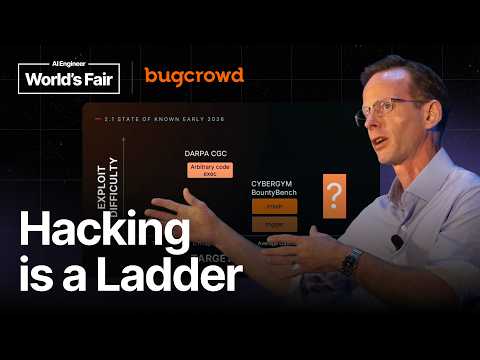
Teaching AI to Find Real Vulnerabilities — David Brumley, Bugcrowd
Aug 1, 2026
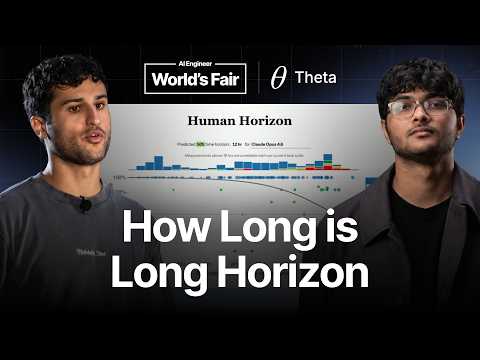
Rethinking Environments for Long-Horizon Work — Rayan Garg, Theta Software
Aug 1, 2026
Digest any single YouTube video — free.
3 free digests — no card, no sign-up wall.
Or just swap the domain of any YouTube link → instant digest