No clickbait detected — the title and thumbnail deliver what they promise.
AI Opinion
The episode convincingly argues that Forward Deployed Engineering, as pioneered by Palantir, is essential for successfully deploying complex technical products to clients lacking internal expertise—a particularly valuable insight for companies selling sophisticated platforms. However, the assertion that Fortune 500 companies across industries consistently lack data engineering skills requires further investigation; while common in some sectors, it's likely not universal. Listeners should also consider that Bai’s perspective is inherently shaped by his experience at Palantir and Rippling, potentially overlooking alternative approaches to customer onboarding or product simplification.
Avatars are AI rewrites of the same facts — style changes, not substance.
Summary
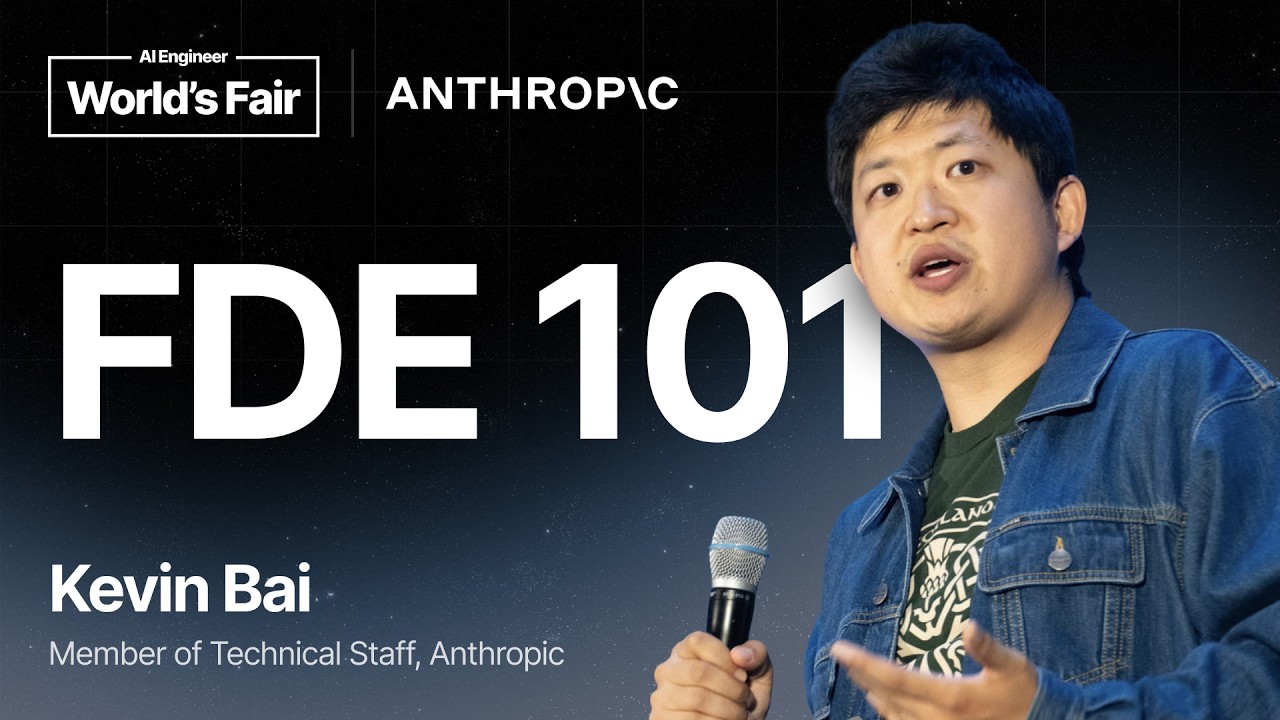
Kevin Bai, formerly of Palantir and Rippling, discusses Forward Deployed Engineering (FDE), a practice born from Palantir’s experience with its Foundry platform. Foundry centralizes organizational data into a standardized format enabling application development, but requires customer expertise to be effective; initially, Palantir addressed this by combining software sales with on-site engineering support to build custom solutions for clients. FDE is particularly crucial when selling complex technical products to non-technical buyers, like Fortune 500 companies in industries lacking data engineering skills. Bai emphasizes the importance of avoiding single points of failure in customer projects through collaborative knowledge sharing and distinguishes between platform improvements and bespoke client customizations which should remain isolated. He describes FDE as a valuable scouting tool for identifying new product features and defines the ideal Forward Deployed Engineer as a customer-facing software engineer with strong communication skills, adaptable to evolving needs.
Avatars are AI rewrites of the same facts — style changes, not substance.
Key Points
Palantir's Foundry Platform Centralizes Data and Enables Application Building
Palantir’s core product, Foundry, is a software platform designed to centralize all data for organizations of any size into a single location. This centralization creates an 'ontology,' essentially assigning proper nouns (standardized labels) to data elements instead of relying on disparate tables or warehouses. The platform then allows companies to build applications upon this centralized and organized data foundation, but its success hinges on the customer’s ability to effectively utilize it.
Palantir's Shift Towards a Combined Product & Services Model
Initially, Palantir struggled because customers were burdened with the cost of both the platform itself and the training required to use it effectively. To address this, Palantir shifted its business model from selling solely software or services to offering a combined solution. This involved sending experienced engineers directly to customer sites to build solutions on top of Foundry, delivering tangible outcomes rather than just technology.
The Unique Situation Requiring Forward Deployed Engineering
Forward Deployed Engineering (FDE) is necessary when a company sells a highly technical product to non-technical buyers. This scenario arises because large tech companies have internal engineering resources, while organizations in industries like oil and gas often lack the expertise to fully leverage complex platforms like Foundry. The FDE role bridges this gap by providing specialized knowledge and implementation support.
FTE Addresses a Gap Between Technical Products and Non-Technical Buyers
Palantir's adoption of FDE was driven by the nature of Foundry as an application building platform. Because it is not as appealing to large tech companies with robust engineering teams, Palantir needed a way to ensure its Fortune 500 clients – who often lack in-house data expertise – could fully realize the value of the platform. FDE fulfills this need by providing direct support and implementation.
Avoiding Single Points of Failure in Customer Work
Kevin Bai emphasizes the critical importance of avoiding single points of failure when performing custom work for customers. He illustrates this with the example of a key person possessing all project information going on vacation, which would effectively halt progress. To mitigate this risk, he suggests collaborative approaches involving multiple teams or individuals to distribute knowledge and ensure continuity.
Differentiating Platform vs. Forward Deployed Engineering Changes
A question arises regarding the distinction between engineering changes applicable to a platform versus those specific to forward-deployed environments. Kevin Bai clarifies that bespoke and unique solutions tailored for individual customers should remain isolated to those clients. Conversely, any functionality or improvement with broader applicability should be generalized and integrated into the core platform over time.
Forward Deployed Engineering as a Scouting Tool
Kevin Bai highlights that even when starting out in forward-deployed engineering (FDE), a limited set of primitives is acceptable. He explains that FDE serves as a valuable scouting mechanism, allowing teams to identify opportunities for new product services and features that can further enhance customer success and overall business enablement.
The Ideal FTE Profile: Customer-Facing Software Engineer
Responding to a question about the ideal profile for an FTE, Kevin Bai succinctly defines them as 'customer-facing software engineers.' This means they possess the technical skills of a standard software engineer but also the communication and interpersonal abilities necessary to interact directly with customers. He emphasizes that this role requires adaptability and ongoing learning.
Chapters
Claims & Fact Check
Palantir's success is determined by how well its customers can use Foundry.
Software engineers are often the last people that should be customer-facing.
Fortune 500 clients in industries like oil and gas often lack data engineering expertise.
Custom engineering work should avoid single points of failure.
Forward-deployed changes specific to a customer should remain isolated.
FTEs are essentially customer-facing software engineers.
Was this digest good?
More from AI Engineer


Digest any single YouTube video — free.
3 free digests — no card, no sign-up wall.
Or just swap the domain of any YouTube link → instant digest