No clickbait detected — the title and thumbnail deliver what they promise.
AI Opinion
The episode convincingly argues that complex workflows benefit from holistic design, demonstrating how breaking down a pharmaceutical analytics pipeline into isolated agents ultimately diluted coherence and actionable insights. While the team rightly identifies LLM limitations as less of a factor than architectural choices, their assertion that statistical methods are *always* sufficient for simple signal detection feels somewhat premature; nuanced patterns might still be obscured by such approaches. Listeners should consider whether ZS Associates’ specific workflow is representative across all commercial analytics applications and whether alternative agentic designs might have yielded better results.
Avatars are AI rewrites of the same facts — style changes, not substance.
Summary
ZS Associates initially attempted to automate their pharmaceutical commercial analytics workflow using a multi-agent pipeline, dividing the process into distinct agents for signal detection, source localization, driver attribution, and synthesis, connected by an orchestrator. However, this approach ultimately failed not due to limitations in the language models themselves, but because it lacked end-to-end understanding and coherence. The fragmented nature of the agentic system resulted in disjointed recommendations and a synthesized "information packet" that, while comprehensive in its components—detected signal, reason, recommended action, and predicted outlook—lacked overall clarity. ZS Associates found that using LLMs for simple tasks like sales drop detection was unnecessary, as statistical methods are sufficient, and the absence of an agent responsible for the complete workflow hindered effective analysis.
Avatars are AI rewrites of the same facts — style changes, not substance.
Key Points
Why the Multi-Agent Approach Failed
The failure wasn't due to limitations in the language models themselves, but rather how ZS Associates structured the multi-agent system. Splitting the workflow into discrete agent tasks resulted in a lack of end-to-end understanding and coherence. Specifically, using LLMs for simple signal detection (like sales drops) was unnecessary, and the absence of an agent owning the complete picture led to disjointed recommendations.
Multi-Agent Pipeline Design
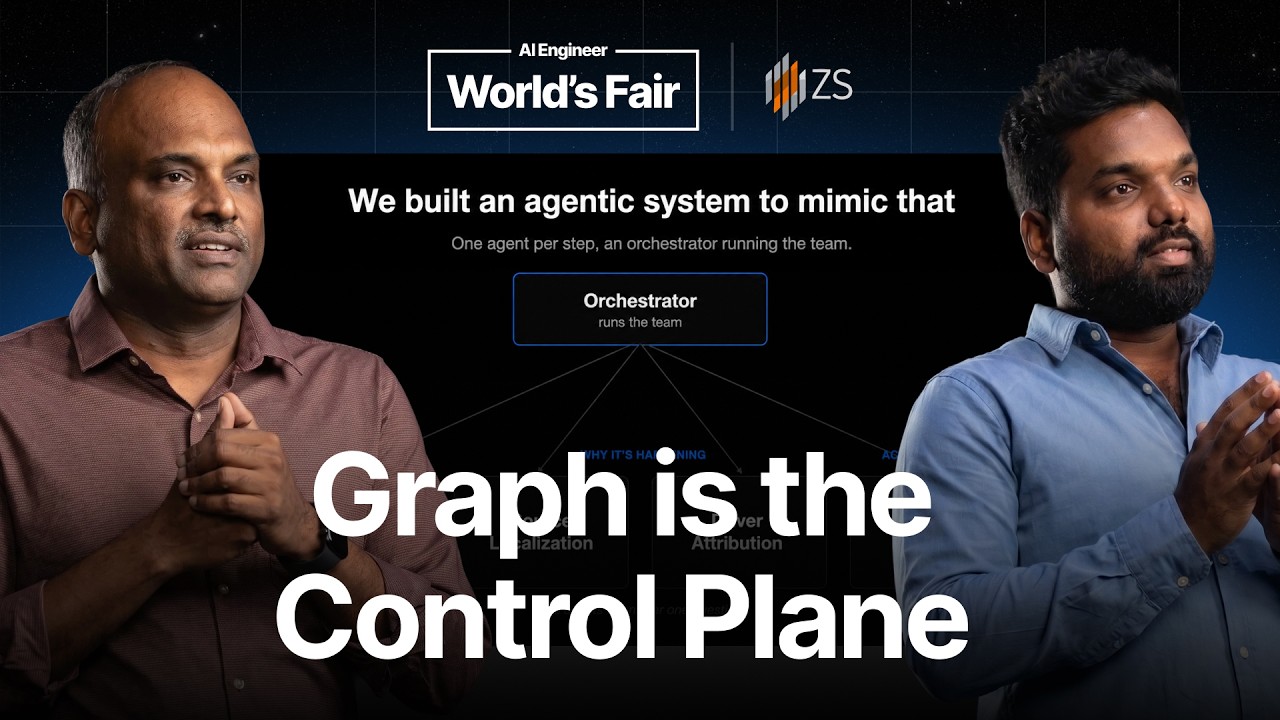
To mimic the pharma commercial analytics process, ZS Associates built a multi-agent pipeline. They created distinct agents for each step in the workflow: signal detection, source localization (identifying the geographic or payer origin of a problem), driver attribution (determining the underlying cause), and synthesis (combining information to recommend actions and predict outcomes). An orchestrator agent connected these specialized agents.
The Information Packet Output
The multi-agent pipeline generated an 'information packet' summarizing its findings. This packet included the detected signal (e.g., a prescription drop), the identified reason (e.g., payer tier change), recommended actions (e.g., increase sales rep engagement), and predicted outlook (e.g., improved sales performance). While seemingly comprehensive, this output lacked coherence due to the fragmented nature of the agentic system.
Pharma Commercial Analytics Workflow
ZS Associates works with pharmaceutical companies and identified a standard workflow for commercial analytics. This process involves four key steps: signal detection (identifying changes like prescription drops), root cause analysis (determining why the signal is occurring, such as competitor drugs or payer coverage changes), action determination (deciding what actions to take based on the root cause), and outlook assessment (predicting the impact of those actions on sales performance). Understanding this workflow was crucial for their initial attempt at automation.
Chapters
Claims & Fact Check
The failure of the multi-agent pipeline was not due to limitations in the LLMs but rather how the work was split.
Using language models for simple signal detection, such as identifying sales drops, is unnecessary and can be handled with statistical methods.
The multi-agent pipeline generated an information packet that included a detected signal, reason, recommended action, and predicted outlook.
Was this digest good?
More from AI Engineer
MCP Tasks (async): Why Aren't Any Agents Supporting Them? — Cornelia Davis, Temporal
Aug 2, 2026

When Will The Benchmaxxing Plague End? — Nick Heiner, Surge AI
Aug 2, 2026

Teaching AI to Find Real Vulnerabilities — David Brumley, Bugcrowd
Aug 1, 2026

Rethinking Environments for Long-Horizon Work — Rayan Garg, Theta Software
Aug 1, 2026
Digest any single YouTube video — free.
3 free digests — no card, no sign-up wall.
Or just swap the domain of any YouTube link → instant digest