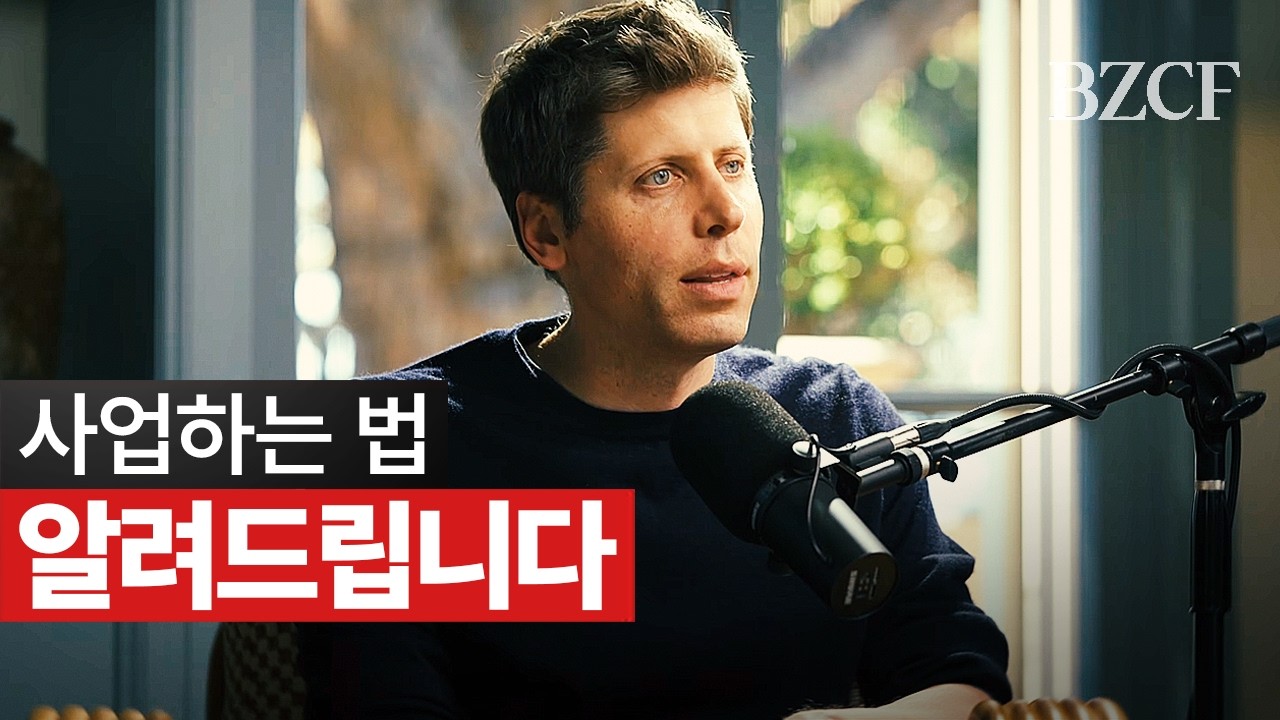
Clickbait Checker
The video title says:
"더 많은 분들이 보셨으면 좋겠습니다"
Reality:
The title, which translates to 'I wish more people saw it,' suggests a desire for broader appeal and potentially hints at insightful or valuable content, but doesn't specify the episode’s actual themes.
AI Opinion
The episode persuasively argues that AI is fundamentally reshaping startup dynamics, compressing timelines and necessitating constant adaptation, a point supported by concrete examples of accelerated progress. However, the claim that a significant percentage of CEOs exhibit sociopathic traits relies on an oversimplified connection between personality and business leadership, demanding further scrutiny; similarly, characterizing the present as a "singularity" feels premature given ongoing technological development. Listeners should consider the episode's broad pronouncements about human nature and future societal shifts as speculative thought experiments rather than definitive predictions, particularly regarding OpenAI’s success and the potential for AI to automate data center creation.
Voices are AI rewrites of the same facts — style changes, not substance.
Summary
The discussion explores several key themes surrounding technological advancement, business strategy, and human nature. AI is accelerating startup speed, allowing small teams to achieve rapid results, but also necessitates constant adaptation due to a quickly shifting competitive landscape. A recurring point emphasizes the inevitability of technology misuse and the need for foresight in its development, alongside a caution against focusing on personal weaknesses rather than leveraging strengths. The episode highlights the evolving definition of "hard" startups and questions traditional benchmarks for success, while suggesting that physical ventures may regain value as robotics advance. Founders are encouraged to embrace exponential growth and understand its implications, recognizing that true expertise is often gained through observation and immersion rather than direct instruction. Furthermore, it examines the intersection of capitalism and personality traits, contemplates a potential "singularity," and considers the importance of fostering ambition while acknowledging the rarity of truly unique business strategies. Ultimately, the conversation underscores the enduring value of human connection and the need to prioritize data center infrastructure alongside algorithmic advancements.
Voices are AI rewrites of the same facts — style changes, not substance.
Insights
What this episode means but never says outright — each one grounded in the fact-checks and key points below.
The episode claims AI accelerates startup pace (claim 0) and that a 10-week-old startup resembles an older company (claim 1), but both are marked outside-corpus, meaning no evidence supports these assertions.
Based on:
The episode discusses the value of physical vs. software ventures (kp 6) and the need for data center infrastructure (kp 18), but claim 10 (too much focus on algorithms, not enough on data centers) is outside-corpus, creating a gap between the discussion and evidence.
Based on:
The episode claims a high percentage of CEOs are sociopaths (claim 3) and that corporate America stifles ambition (claim 7), both outside-corpus, yet kp 9 discusses capitalism aligning sociopathic traits with incentives, implying a factual basis that is unsupported.
Based on:
The episode states that learning comes from observing experts (claim 14) and that explaining expertise is limited (kp 4), but claim 14 is outside-corpus, leaving the educational claim without evidence.
Based on:
Key Points
AI's Impact on Startup Speed
Sam Alman highlights that AI has drastically accelerated the pace at which startups can operate, allowing small teams to achieve results previously unimaginable. He notes a 10-week-old startup now resembles what a much older company would have looked like just a decade ago, emphasizing how quickly the competitive landscape is changing and requiring rapid adaptation.
The Changing Definition of 'Hard' Startups
Alman explains that the very definition of a “hard” startup – one facing significant challenges – is evolving rapidly. He admits to lacking a clear mental model for what constitutes success in building a company over many years, suggesting that traditional benchmarks are becoming obsolete due to technological advancements and shifting market dynamics.
The Value of Physical vs. Software
There's a common belief that ventures in the physical world hold greater value because software is becoming increasingly accessible and potentially 'free.' However, Alman predicts this dynamic will shift as robotics advance, blurring the lines between physical and digital domains. He emphasizes startups thrive during periods of rapid change and cost reduction.
The Importance of Embracing Exponential Growth
Alman stresses that understanding and embracing exponential growth is crucial for startup founders. He believes the market hasn't fully adjusted to the rapid advancements in AI models, creating opportunities for those willing to bet on high-growth ventures. He suggests this requires a willingness to work on projects requiring more advanced or cost-effective technologies.
Company Creation's Impact on Human Progress
The speaker suggests that plotting company creation dates against historical trends like economic growth and quality of life improvements reveals a significant shift in the shape of those curves. This implies that the advent of companies has been a pivotal moment, accelerating progress beyond what would have occurred otherwise. The speaker emphasizes that their mission transcends mere economic power, highlighting its broader importance.
Capitalism and Sociopathic Traits
The discussion explores the observation that a surprisingly high percentage of CEOs exhibit traits associated with sociopathy or psychopathy. The speakers ponder whether capitalism, for the first time, aligns the incentives of these individuals – their self-serving nature – with societal benefit by rewarding them for creating valuable products and contributing to progress.
The Singularity and a Decisive Moment
The speaker describes the current era as a 'singularity,' a moment they have been anticipating for their entire life. They contrast this with a time 10 years ago when such a future seemed improbable, emphasizing that it is now a reality. This realization fuels their drive to shape the future positively and prevent potentially negative alternative visions from becoming reality.
The Choice Between AI Authoritarianism and Liberty
A crucial debate revolves around whether humanity will embrace a world of AI authoritarianism or liberty. The speaker argues against concentrating power in a single model or company, advocating for decentralized development and societal input within reasonable guardrails. They believe that historically, prioritizing safety over liberty has consistently led to long-term negative consequences.
The Cycle of Discouraging Ambition
The speaker describes a common pattern observed in individuals who have spent their lives under the guidance of authority figures—parents, teachers, managers—where creativity and ambition are often discouraged. This can lead to catastrophically low self-belief, as people internalize messages that they shouldn't think too big or want too much. The concept of 'tall poppy syndrome,' where ambitious individuals face criticism or suppression, is introduced as a cultural phenomenon reinforcing this pattern.
Fostering Self-Belief Through Repeated Successes
The speaker suggests that building self-belief isn't achieved through grand gestures or inspirational speeches, but rather through a series of small, repeated wins. Encouraging individuals to try something they deem ambitious and experiencing success—even in a minor way—can create a positive feedback loop, prompting them to attempt increasingly challenging tasks. This approach contrasts with methods like Steve Jobs’ intense staring, emphasizing gradual progress over forceful motivation.
The Rarity of Truly Unique Business Strategies
Despite the perception that their company operates uniquely, the speaker acknowledges that most large tech companies exhibit significant strategic and operational differences. They suggest that this isn't necessarily a sign of exceptional innovation but rather a reflection of diverse approaches within a competitive landscape. This perspective challenges the notion of groundbreaking originality in business practices.
OpenAI’s Success as a Business Miracle
The speaker frames OpenAI's success as akin to a 'business miracle,' highlighting the unexpected longevity and lack of competition despite predictions of its demise. They attribute this improbable survival to a combination of luck, strong conviction, and exponential growth that defied expectations. The comparison to Amazon Web Services (AWS) underscores the rarity of achieving such sustained dominance in a competitive market.
The Persistent Disconnect Between Technological Progress and Leisure
Despite technological advancements promising increased leisure time, this promise has not materialized at a societal level. The speaker notes that while people may have more leisure than in previous eras, the expectation of a '4-hour work week' remains unfulfilled and suggests AI is unlikely to fundamentally change this trend, highlighting a disconnect between innovation and widespread societal benefit.
The Enduring Value of Human Connection
Even as automation advances, activities like cooking for others will retain significant value. The speaker emphasizes that these actions demonstrate love and create experiences beyond traditional economic productivity, suggesting a continued importance of human connection in an increasingly automated world where robots can perform many tasks.
The Need to Prioritize Data Center Infrastructure
The speaker argues that current efforts are overly focused on algorithmic advancements and insufficiently prioritize the development of robust data center infrastructure. He envisions a future where intelligence can be used to automate the creation of more data centers, creating a self-replicating system—a crucial step towards realizing the full potential of AI.
The Grind of Execution vs. The Glory of Ideas
While generating innovative ideas is often celebrated, the speaker emphasizes that true progress lies in execution—the often-unseen and challenging work required to bring those ideas to fruition. He acknowledges that this process involves significant 'grinding' and collaboration across various entities, contrasting it with the perceived glamour of conceptualization.
The Cycle of Technology Misuse
The speaker acknowledges the inevitability of technology misuse, stating that while devices will be incredible and helpful, people will also find ways to use them in detrimental ways beyond our current comprehension. This highlights a broader concern about the potential for powerful technologies to negatively impact lives despite their intended benefits, emphasizing the need for adaptation and foresight.
Johnny's Extensive Design Research
The speaker describes Johnny’s unique design process, which involves an exhaustive study of historical context. He researches everything from motorsport history and typography to engine sounds and materials used in cars, compiling extensive documentation. This meticulous approach underscores a commitment to understanding the foundations of a field before innovating within it.
Focusing on Strengths vs. Weaknesses
The speaker cautions against obsessively trying to improve at areas where one lacks aptitude, advocating instead for a focus on leveraging and developing existing strengths. He believes that attempting to become proficient in everything is counterproductive and can distract from maximizing potential in core competencies. This highlights the importance of self-awareness and strategic prioritization.
The Limitations of Explaining Expertise
The speaker argues that some skills and abilities are difficult, if not impossible, to teach through direct instruction. He suggests that true learning often comes from observing experts in action and immersing oneself in their environment rather than relying on explanations or tutorials. This implies a recognition of the tacit knowledge inherent in expertise.
Chapters
Claims & Fact Check
AI has drastically accelerated the pace at which startups can operate.
A 10-week old startup now resembles what a much older company would have looked like just a decade ago.
The definition of a 'hard' startup is evolving rapidly.
A high percentage of CEOs are sociopaths or psychopaths.
The current moment is a 'singularity'.
Trading off liberty for safety has historically been a net loss.
People who work with me would not describe me as 'fun' to work with.
Corporate America often stifles ambition and creativity in employees.
OpenAI’s continued existence is a 'business miracle'.
AI is unlikely to change the societal trend of unfulfilled promises regarding leisure time.
There's too much focus on algorithms and not enough on data centers in AI development.
Intelligence can be used to automate the creation of more data centers.
People will misuse powerful technologies in ways we can't imagine.
You can only hire people in things that you deeply understand.
Learning often comes from observing experts rather than direct instruction.
More from BZCF | 비즈까페




Digest any single YouTube video — free.
3 free digests — no card, no sign-up wall.
Or just swap the domain of any YouTube link → instant digest