No clickbait detected — the title and thumbnail deliver what they promise.
AI Opinion
Miraje convincingly argues that framing modular functionality as "skills," rather than traditional feature blueprints, unlocks broader participation in agentic product development and promotes long-term maintainability; the presentation’s strength lies in detailing practical implementation steps like skill registries and versioning. However, the claim that this approach entirely democratizes development may overstate its accessibility, as it still requires a baseline understanding of system architecture for non-engineers to contribute effectively. Listeners should critically evaluate how FactSet's specific context shapes these recommendations, considering whether this "skills" framework is universally applicable across different product complexities and team structures.
Avatars are AI rewrites of the same facts — style changes, not substance.
Summary
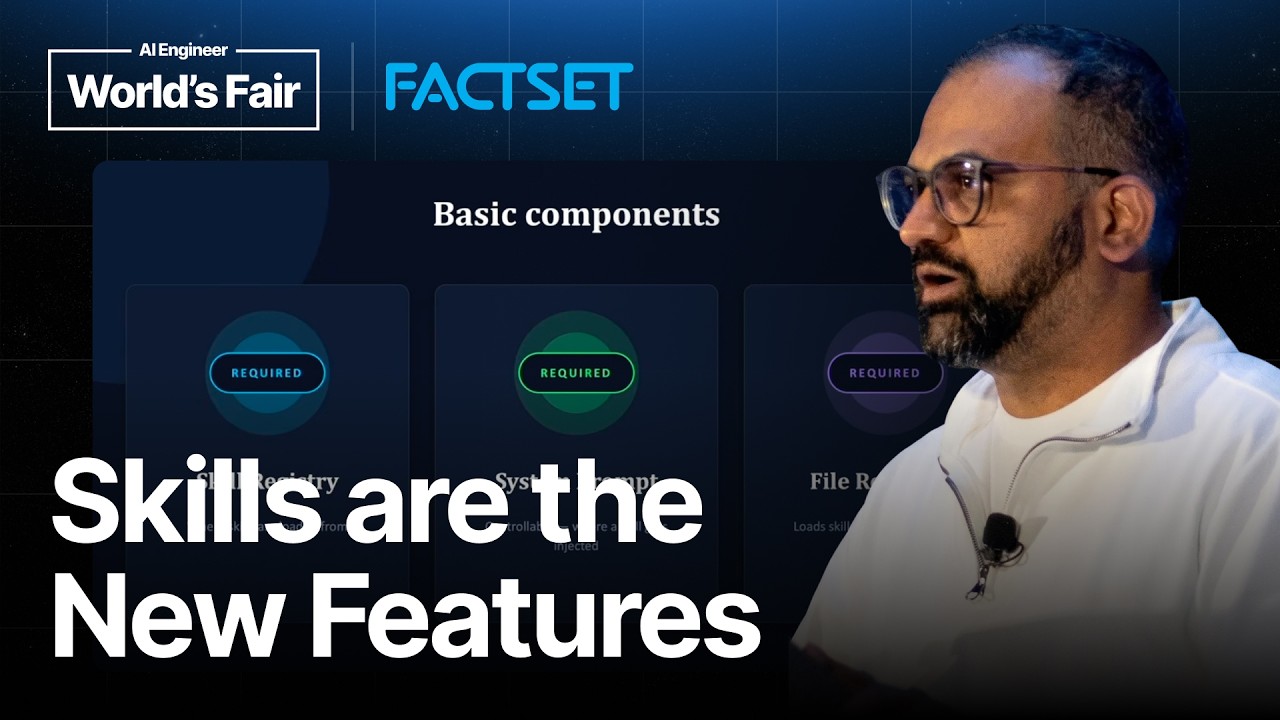
Yogendra Miraje of FactSet presented an evolved approach to building agentic products, moving away from a blueprint-based system and embracing "skills" as the fundamental units of functionality. This shift allows individuals beyond engineers – those with strong product domain knowledge – to create and deploy these skills, effectively democratizing feature development. Engineers are now primarily focused on constructing “harnesses,” which provide the infrastructure for executing and integrating skills, requiring a skill registry, system prompt incorporating that registry, and basic file read capabilities. Maintaining these skills requires dedicated ownership, versioning practices similar to software development, deprecation warnings, change logs, and periodic audits to ensure cohesion within the library. The presentation highlights a significant shift in both product development methodology and engineering roles, emphasizing maintainability and long-term system usability.
Avatars are AI rewrites of the same facts — style changes, not substance.
Key Points
Shift from Blueprints to Skills
Yogi explains that in his previous talk, he discussed 'blueprints' as a way to guide agents. However, the approach has evolved significantly; they have moved away from blueprints and fully adopted the concept of 'skills,' inspired by Antropic’s open-source skills implementation. This shift represents a fundamental change in how agentic products are built.
Skills as New Features Empowering Non-Engineers
The presentation emphasizes that 'skills' represent the new features within a product. Crucially, these skills can be created and shipped by individuals across the company who possess a strong understanding of the product domain, not just engineers. This democratization of feature development significantly broadens the pool of potential contributors.
The Engineer's Role: From Feature Shipping to Harness Creation
With skills empowering a wider range of employees to create features, the role of engineers is evolving. Instead of directly shipping individual features, engineers are now primarily responsible for building 'harnesses' – robust and streamlined environments that facilitate the execution and integration of these skills.
Minimum Requirements for Skill Support in a Harness
To integrate skill support into a harness, Yogi outlines three essential components: a skill registry (a collection of skills with their names, descriptions, and paths), a system prompt that incorporates this information, and a basic file read tool. The inclusion of these elements provides the foundational infrastructure for agents to discover and utilize skills effectively.
Skills Require Dedicated Maintenance and Ownership
Just as application teams maintain features, skills necessitate similar upkeep. The speaker advocates for designated 'skill owners' or named maintainers to ensure ongoing quality and relevance. This mirrors the concept of code ownership, promoting accountability and facilitating skill evolution over time.
Skill Versioning, Deprecation, and Change Logging are Essential
To manage skills effectively throughout their lifecycle, semantic versioning is crucial. When removing skills, deprecation warnings should be implemented to alert users of impending changes. Maintaining comprehensive change logs ensures transparency and facilitates debugging or understanding the evolution of skill functionality.
Skill Libraries Need Periodic Audits for Cohesion
As the number of skills grows, maintaining a cohesive library becomes paramount. The speaker emphasizes periodic audits and validation checks to ensure that individual skills remain logically consistent and contribute effectively to the overall system's functionality. This proactive approach prevents fragmentation and ensures long-term usability.
Chapters
Claims & Fact Check
Antropic warned us not to build agents.
Skills are the new features.
The role of engineer is shifting from shipping features to shipping harnesses.
A simple skill could contain just like a markdown but a very complex can have multiple references to the files and executable scripts.
Skills are the features in your agentic products.
Our role is shifting from shipping features to shipping harnesses.
Was this digest good?
More from AI Engineer
Teaching AI to Find Real Vulnerabilities — David Brumley, Bugcrowd
Aug 1, 2026

Rethinking Environments for Long-Horizon Work — Rayan Garg, Theta Software
Aug 1, 2026
What's Next After RLHF? — Diogo Almeida, TypeSafe AI
Jul 31, 2026

Data Quality Is the Compute Multiplier — Ari Morcos, DatologyAI
Jul 31, 2026
Digest any single YouTube video — free.
3 free digests — no card, no sign-up wall.
Or just swap the domain of any YouTube link → instant digest