Clickbait Checker
The video title says:
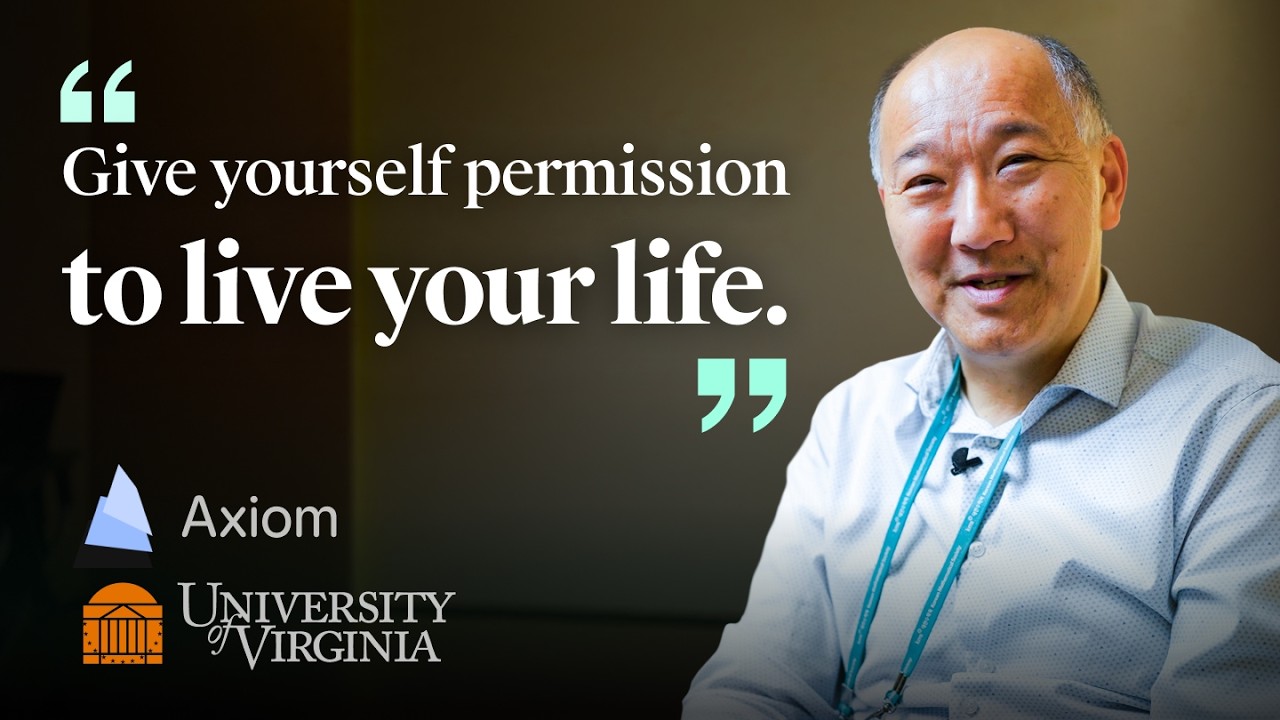
"A Top Mathematician's 9 Lessons for Anyone Who Feels Behind | Ken Ono, Axiom Math"
Reality:
While Ken Ono does touch on authenticity and avoiding regrets, the '9 lessons' framing feels stretched given the episode primarily focuses on AI’s impact on mathematics and related philosophical shifts.
The thumbnail says:
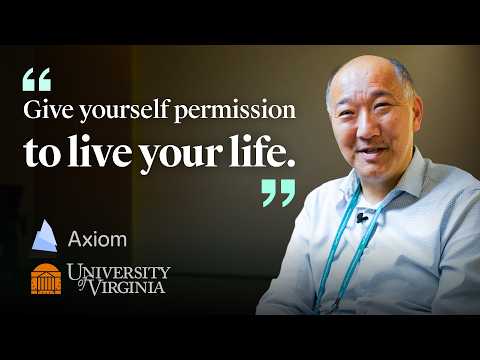
"Give yourself permission to live your life. Axiom UNIVERSITY OF VIRGINIA"
Reality:
The thumbnail's inspirational message about granting yourself permission to live fully is a superficial connection to Ono's broader discussion of authenticity and avoiding regrets, which are presented within the context of his mathematical career and reflections on technological change.
AI Opinion
Ono’s argument that prioritizing mathematical truth through formalization, as demonstrated by his work on Almond's theorem, offers a compelling response to the increasing capabilities of AI in mathematics feels particularly persuasive. However, claims about AI generating genuinely novel ideas or definitively knowing when human judgment is required for high-stakes decisions rest on speculative projections and require further investigation; Ono’s anecdotes don’t offer definitive proof. Listeners should also consider that while the comparison trap is harmful, framing success solely as avoiding regret may oversimplify complex life choices and individual definitions of fulfillment.
Avatars are AI rewrites of the same facts — style changes, not substance.
Summary
Ken Ono, a mathematician, explores the evolving landscape of his field and offers life lessons drawn from personal experiences and current technological shifts. He discusses how AI's rapid advancement is prompting mathematicians to reconsider their role and the value of accumulated knowledge in an age of automation. Ono highlights the importance of shifting focus away from simply increasing computational power towards prioritizing mathematical truth through formalization, exemplified by his work revisiting Robert Almond’s theorem on disagreement. Throughout the discussion, he emphasizes that human judgment remains crucial for high-stakes decisions and cautions against the detrimental effects of comparing oneself to others, advocating instead for authenticity and pursuing one's talents to avoid future regrets. Ultimately, Ono encourages a reevaluation of personal perspectives and professional pursuits in light of these changes, drawing parallels between past technological revolutions and the current AI era.
Avatars are AI rewrites of the same facts — style changes, not substance.
Key Points
The Significance of a Third Place Ribbon
Ken Ono recounts an experience from fifth grade where he received third place in a math contest, initially interpreting it as failure. However, after his father's passing and finding the plaque commemorating this event, he realized his father valued his effort and desire to do well, regardless of winning. This highlights the importance of self-perception and not letting external benchmarks define one’s worth.
The Rise of AI and its Impact on Mathematical Identity
Ken Ono describes his experience working with Epoch AI to create challenging math problems for large language models. He was surprised by how quickly these models progressed, noting their reasoning traces were 'frightening.' This realization sparked an identity crisis within the mathematical community, prompting reflection on the future role of mathematicians in a world where AI can solve complex problems.
The Shift from Physical to Mental Labor and Automation
Ono draws parallels between past technological advancements like the wheel, engine, calculators, and computers, all of which reduced physical labor. He points out that AI now threatens mental work—the core of many professions—and discusses the implications of 'selfplay' in AI development where systems learn from themselves. This shift raises concerns about the future value of accumulated mathematical knowledge.
Re-evaluating Pride in Accumulated Knowledge
Ken Ono reflects on his previous pride in solving complex problems by combining years of learned techniques. He now questions whether this process, reliant on accumulating and applying knowledge, is inherently automatable. This realization prompts a re-evaluation of what constitutes valuable mathematical work and encourages viewers to consider their own perspectives.
Formalizing Economics and Foundational Theorems
Ken Ono's company is partnering with Harvard economist Scott Commoners to formalize mathematical theories in economics. This process has revealed inaccuracies in some foundational theorems, demonstrating that even established fields benefit from rigorous formalization. As an example, they are revisiting Robert Almond’s theorem on disagreement, which will have its 50th anniversary in 2026.
Almond's Theorem: Challenging the Notion of 'Agree to Disagree'
Robert Almond’s theorem, often invoked when people disagree and say “we’ll just have to agree to disagree,” actually asserts that this isn’t possible. The theorem posits that differing perspectives can be reconciled through deeper understanding rather than simply accepting disagreement as a final state. Formalization has brought renewed attention to the nuances of Almond's work, particularly regarding shared prior knowledge.
The Shift from Compute Power to Mathematical Truth
Ono argues that the current focus should shift away from simply increasing computational power and towards prioritizing mathematical truth through formalization. He believes this approach, particularly in 2026 and beyond, will be crucial for ensuring accuracy and safety across various fields, including AI development and cybersecurity. This represents a fundamental change in how technological advancement is approached.
Human Judgment Remains Essential in High-Stakes Decisions
While AI can automate many tasks, Ono emphasizes that human judgment remains indispensable in high-stakes situations such as targeting decisions or assessing risks. He believes it is relatively straightforward to identify scenarios where a person's involvement is crucial for ethical and responsible decision-making, even if driverless vehicles are becoming commonplace.
AI's Role in Scientific Advancement
Ken Ono discusses how AI can accelerate scientific discovery by providing access to the accumulated knowledge of mankind tirelessly. He suggests that AI lowers the bar for solving complex problems, potentially bringing together expertise from diverse fields more effectively than humans could alone. While he doubts AI will generate entirely novel ideas, he acknowledges its ability to compute beyond human capabilities and identify patterns across different areas of science.
The Toxicity of Comparison
Ono strongly condemns the habit of comparing oneself to others, labeling it 'toxic.' He argues that such comparisons prevent individuals from living authentically and recognizing their own worth. He emphasizes that regardless of achievement levels, someone will always appear superior, making constant comparison a futile and detrimental pursuit.
Reinterpreting Past Experiences
Ono shares a personal anecdote about a fifth-grade math contest where he placed third. He initially felt like he had disappointed his parents, who were both accomplished mathematicians. Upon discovering a plaque from that competition amongst his father's belongings after his passing, Ono realized his parents likely viewed the event with more positivity than he perceived at the time, valuing his effort and desire to succeed.
Avoiding End-of-Life Regrets
Drawing on conversations from his age group, Ono highlights a common regret among people nearing the end of their lives: wishing they had lived a life more true to themselves. He encourages listeners to proactively consider what those regrets might be and to take steps now to avoid them, emphasizing the importance of creativity, wonder, and pursuing one's talents.
Chapters
Claims & Fact Check
Someone with a higher IQ score is not necessarily smarter.
If you're not LeBron James or a Nobel Prizewinning scientist, there will always be someone who looks better or achieves more.
Many of the skills mathematicians and other professionals possess can now be automated due to large language models.
The race should be for more truth, not compute power.
Formal verification means the statement is true.
It's very clear when you want a human in the room (for high-stakes decisions).
AI may generate genuinely new ideas that people have never thought of before.
Comparing yourself to others is toxic and prevents you from living authentically.
The number one regret people have at the end of their lives is wishing they had lived a life meant for them.
Was this digest good?
More from EO
Digest any single YouTube video — free.
3 free digests — no card, no sign-up wall.
Or just swap the domain of any YouTube link → instant digest