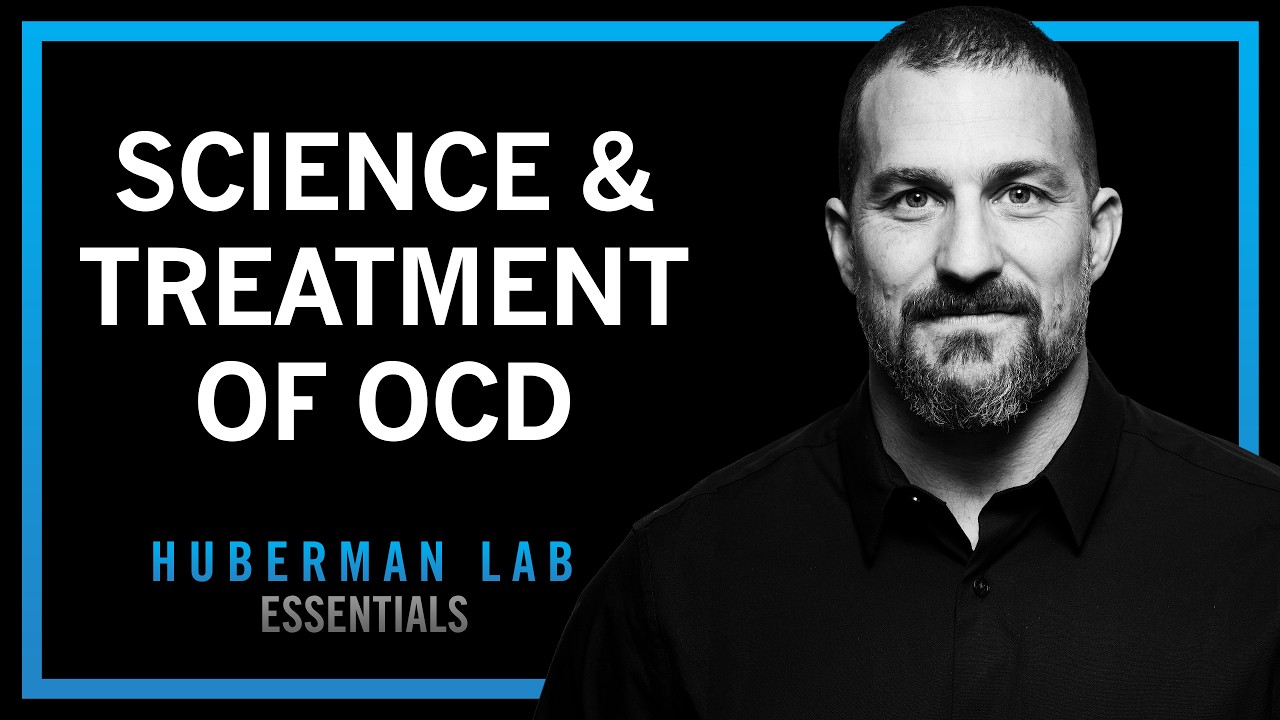
No clickbait detected — the title and thumbnail deliver what they promise.
AI Opinion
The episode effectively clarifies how obsessions and compulsions function as a reinforcing cycle, and highlights the importance of tailored CBT approaches—particularly exposure therapy—for managing OCD; its explanation of anxiety’s role in driving compulsive behaviors is particularly insightful. However, the claim that OCD ranks seventh among debilitating illnesses lacks readily available supporting data and seems reliant on an unspecified ranking methodology. Viewers should also approach the discussion of inositol supplementation with caution, recognizing it as preliminary research requiring more rigorous investigation before widespread adoption.
Voices are AI rewrites of the same facts — style changes, not substance.
Summary
Obsessive-compulsive disorder (OCD) is a surprisingly prevalent condition, affecting roughly 2.5% to 4% of the population and ranking as the seventh most debilitating illness overall due to its significant impact on daily life. The core feature of OCD involves intrusive thoughts—obsessions—followed by compulsive behaviors performed to alleviate the anxiety these obsessions trigger; however, these compulsions paradoxically reinforce the underlying obsessions, creating a cycle that perpetuates distress. Effective treatment often requires identifying specific obsessions and compulsions to tailor therapies like Cognitive Behavioral Therapy (CBT), which targets the corticostrialamic loop involved in compulsive behaviors. A key component of CBT is exposure therapy, which aims not to reduce anxiety but rather to teach patients to tolerate it without resorting to rituals. Additionally, preliminary research suggests that inositol supplementation may offer benefits for managing OCD symptoms, although further investigation is warranted. Ultimately, addressing OCD effectively requires a structured and gradual approach under the guidance of trained professionals.
Voices are AI rewrites of the same facts — style changes, not substance.
Key Points
Categories of Obsessions & Compulsions
OCD manifests through distinct categories of obsessions and compulsions: checking (e.g., repeatedly verifying locks), repetition (e.g., counting sequences), and order (e.g., arranging items symmetrically). The 'order' category can encompass a range of behaviors, including the need for cleanliness, symmetry, or the avoidance of incompleteness, often leading to significant distress when disrupted.
Anxiety as the Link Between Obsessions and Compulsions
Andrew Huberman describes anxiety as the critical link between obsessions and compulsions in OCD. While a precise scientific definition of anxiety remains elusive, it's generally understood as a heightened state of physiological arousal (increased heart rate, breathing, sweating) triggered by perceived threats. In OCD, compulsive behaviors are performed to reduce this anxiety caused by obsessive thoughts.
Identifying Specific Obsessions is Crucial for Effective Treatment
The speaker emphasizes that identifying the precise nature of obsessions and compulsions, rather than just a general understanding, is vital for effective treatment. This detailed identification allows clinicians to tailor therapies based on the specific underlying fears driving the OCD behaviors. Without this specificity, treatments may be less successful in disrupting the corticostrialamic loop.
Exposure Therapy Involves Tolerating Anxiety Rather Than Reducing It
Unlike many anxiety treatments that focus on reducing anxiety, exposure therapy for OCD aims to have patients tolerate and experience anxiety without engaging in compulsions. This is achieved by progressively exposing individuals to situations that trigger their obsessions while preventing them from performing the usual rituals or compulsions, ultimately teaching them that anxiety can exist without relief.
CBT Intervenes at the Corticostrialamic Loop
Cognitive Behavioral Therapy (CBT) specifically targets the corticostrialamic loop, a neural circuit involved in OCD. The cortex is responsible for conscious perception, the thalamus relays experiences, and the striatum governs go/no-go behaviors. By progressively exposing patients to their fears, CBT disrupts this cycle and helps them break free from compulsive actions.
Exposure Therapy Requires a Hierarchical Approach
The speaker clarifies that exposure therapy isn't abrupt; it follows a hierarchical approach. Patients are gradually moved towards confronting their most significant fears, ensuring they don’t become overwhelmed and promoting a controlled interruption of the compulsive cycle. This gradual process is essential for safety and effectiveness within a supportive clinical setting.
Potential of Inositol Supplementation for OCD
Andrew Huberman suggests that inositol, a nutrient with multiple forms, may offer benefits for individuals struggling with OCD. He specifically mentions that 900 milligrams of inositol has shown promise in improving sleep and reducing anxiety, although higher dosages might also be effective. Huberman advocates for further research into lower dosages of inositol within the context of OCD treatment, potentially combined with behavioral therapies or brain stimulation techniques.
The Cycle of Obsessions and Compulsions
Obsessive-compulsive disorder involves intrusive thoughts (obsessions) followed by actions (compulsions) designed to alleviate anxiety. However, these compulsions paradoxically reinforce the obsessions, creating a vicious cycle where each compulsive behavior strengthens the underlying obsession and prolongs the distress it causes. This loop prevents individuals from engaging in other important activities and significantly impacts their quality of life.
OCD's Significant Prevalence and Debilitating Nature
OCD is surprisingly common, affecting approximately 2.5% to 4% of the population. Its impact extends beyond mental distress; it’s ranked as the seventh most debilitating illness overall, surpassing conditions like asthma and cancer. This high ranking underscores the profound disruption OCD can cause in work performance, relationships, and overall well-being.
Chapters
Claims & Fact Check
OCD is ranked number seven in terms of the most debilitating illnesses.
?UnverifiedThe compulsions provide brief relief to the obsession but then reinforce it.
?UnverifiedOCD often relates to taboo topics.
±Partially supportedExposure therapy does not work in everybody with OCD.
±Partially supportedCognitive behavioral therapy disrupts the corticostrialamic loop.
?UnverifiedExposure therapy should be done by trained professionals.
±Partially supportedMore from Huberman Lab
The Science & Treatment of Bipolar Disorder | Huberman Lab Essentials
Jul 16, 2026
How to Improve Your Memory & Cognitive Function at Any Age | Dr. Alan Castel
Jul 13, 2026

Raising a Dog & Mastering Calm Assertive Energy | Cesar Millan
Jul 6, 2026

Essentials: Tools for Hormone Optimization in Males | Dr. Kyle Gillett
Jul 2, 2026