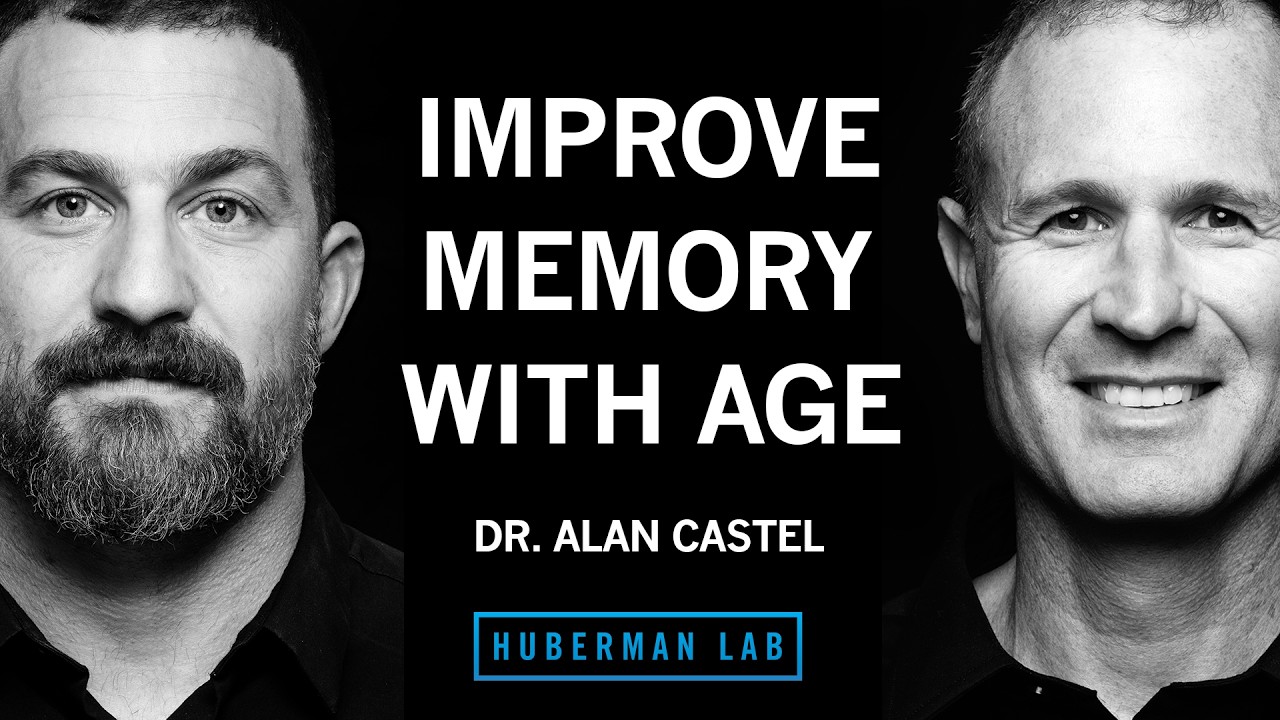
Clickbait Checker
The video title says:
"How to Improve Your Memory & Cognitive Function at Any Age | Dr. Alan Castel"
Reality:
The episode does discuss memory and cognitive function, but primarily within the broader context of healthy aging and well-being, covering strategies like exercise and mindset rather than direct memory improvement techniques.
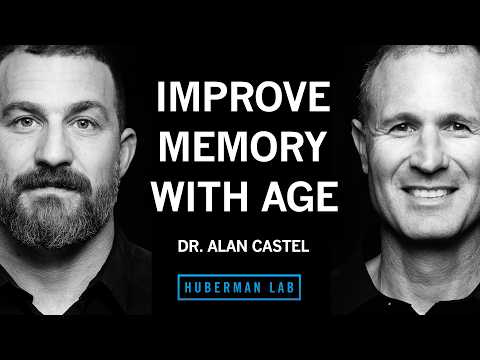
The thumbnail says:
"IMPROVE MEMORY WITH AGE DR. ALAN CASTEL HUBERMAN LAB"
Reality:
While the thumbnail highlights 'IMPROVE MEMORY WITH AGE,' the episode's focus is more on maintaining cognitive health through lifestyle factors and positive psychology than providing specific memory training methods.
AI Opinion
Dr. Castel convincingly argues that maintaining a positive outlook and fostering social connections are vital for healthy aging, supported by research linking subjective age to lifespan and the demonstrable impact of isolation during the pandemic. However, claims regarding cartilage regeneration and overcoming age-related pain through movement rest on specific Stanford research that listeners should investigate further to understand scope and limitations; similarly, the assertion that older pilots are preferable in emergencies lacks broader context. A thoughtful listener might also consider how individual experiences with aging may vary significantly from the generalized frameworks presented, recognizing that "successful aging" is a multifaceted concept.
Voices are AI rewrites of the same facts — style changes, not substance.
Summary
This episode explores strategies for maintaining cognitive function and overall well-being throughout life, emphasizing that aging doesn’t necessarily equate to decline. Dr. Alan Castel discusses the importance of physical activity for oxygen delivery to the brain and overcoming age-related pain through movement, referencing research on cartilage regeneration. External accountability and a positive attitude toward aging are highlighted as key motivators for healthy habits, with subjective age – how one *feels* about their age – proving a stronger predictor of lifespan than chronological age. The discussion extends to emotional well-being, acknowledging the intensity of experiences for young adults and recognizing that resilience develops with accumulated life experience. Several frameworks, including the "ABCs" (Attitude, Balance, Connection), are presented to guide successful aging, alongside concepts like selective optimization with compensation and socioemotional selectivity theory. Ultimately, maintaining curiosity, embracing novelty, and prioritizing meaningful connections are crucial for a vibrant and fulfilling later life.
Voices are AI rewrites of the same facts — style changes, not substance.
Key Points
Learning Through Error and Struggle
Dr. Castel illustrates the concept of learning through error by using the example of the Apple logo, demonstrating that simply seeing something repeatedly doesn't guarantee retention. He suggests that actively struggling to recall information, like attempting to draw the logo from memory and correcting mistakes, leads to better understanding and longer-lasting retention than passive observation.
The Importance of Beginner's Mind
Dr. Castel discusses how individuals who excel in one area are often comfortable being beginners in another, demonstrating a willingness to embrace learning and avoid frustration. He suggests these people may experience autonomic arousal differently, conceptualizing it less as frustration and more as an opportunity for growth. This 'beginner's mind' can be crucial for continued cognitive flexibility.
Curiosity Drives Learning & Memory
Dr. Castel emphasizes that curiosity is a key driver of learning and memory, describing it as closing the gap between one's current state and desired knowledge. He notes that this motivation can lead to intense focus on specific topics, even if seemingly obsessive, reflecting the brain’s desire for information. Research with older adults suggests selective attention driven by interest may be beneficial.
Balance Between Maintaining & Acquiring Knowledge
The discussion explores whether it's more important to actively learn new information or focus on maintaining existing memories. Dr. Castel proposes a balance is ideal, citing his father’s continued piano playing as an example of strengthening existing skills while also highlighting the benefits of new experiences like travel and conversations for neurogenesis.
Breaking Routines Enhances Cognitive Experience
Dr. Castel observes that routines, while often comforting, can limit cognitive stimulation. He suggests that intentionally disrupting these routines – taking a different route to work or trying new foods – can create novel experiences and potentially enhance memory and overall cognitive function. This highlights the value of novelty in maintaining mental sharpness.
Eyewitness Memory is Reconstructive, Not a Perfect Recording
Dr. Castel explains that eyewitness memory isn't a perfect recording of events but rather a reconstruction influenced by interpretation and subsequent information. He cites examples like the feeling of remembering everything during a traumatic event (taking a 'picture') while only recalling specific details like clothing or weather, demonstrating how memories can be inaccurate despite high confidence. Research shows these inaccuracies can lead to misidentification and wrongful convictions.
The Ronald Cotton Case Highlights Memory's Fallibility
The case of Ronald Cotton, who was wrongly convicted based on eyewitness testimony, exemplifies how memory can be flawed. Despite the witness’s conscious effort to remember her attacker after a traumatic event and her careful consideration during identification (treating it like a multiple-choice test), she misidentified him. This occurred due to factors like cross-race identification bias and the tendency for memories to become contaminated by subsequent information, ultimately leading to his exoneration decades later through DNA evidence.
Confidence Doesn't Equal Accuracy in Memory
Dr. Castel emphasizes a crucial distinction: high confidence in a memory doesn’t guarantee its accuracy. This is particularly relevant in eyewitness testimony, where individuals may be highly confident in their identification despite being mistaken. He connects this to metacognition – our understanding of how we learn and remember – noting that people often overestimate their ability to accurately recall events.
Repeated Exposure Can Paradoxically Hinder Memory
Counterintuitively, repeated exposure to something doesn't always lead to better memory. Dr. Castel uses the example of the Apple logo – familiarity can actually decrease attention to its details, making it less memorable. This highlights a predictable memory principle where we stop actively processing information we perceive as familiar, demonstrating that repetition isn’t always a reliable learning strategy.
Prospective Memory and Routine Habits
The discussion highlights the dangers of autopilot routines, exemplified by scenarios like forgetting a child at daycare. The speaker emphasizes that these incidents aren't rare and often stem from ingrained habits where individuals perform actions without full awareness, leading to potentially dangerous consequences. Some modern cars are even equipped with reminders to check the backseat for infants, illustrating how reliant we’ve become on external prompts.
Skill Decay in Certifications (Scuba Diving)
The conversation touches upon the issue of skill decay in certifications like scuba diving. It's noted that one doesn’t necessarily need to regularly update their skills or knowledge after obtaining a certification, and it's possible to legally practice even years after the initial training. This raises concerns about competency and potential risks associated with outdated skills, mirroring similar issues with driving.
Repetitive Storytelling as Nostalgia & Memory Changes
The speakers discuss the common phenomenon of older adults retelling the same stories and jokes repeatedly. This behavior is attributed to a combination of factors, including age-related decline in source memory (difficulty remembering where information was learned) and a desire for nostalgia and connection through shared family histories. The repetition can be enjoyable for the storyteller, even if it's frustrating for listeners.
Exercise Improves Oxygen Delivery to the Brain
Dr. Castel explains that as people age, it becomes more difficult for their brains to receive sufficient oxygen. He suggests exercise is a mechanism to address this issue and highlights that other methods might be discovered in the future. This underscores the importance of physical activity for cognitive health throughout life.
The Importance of External Accountability
Dr. Castel notes that a key factor in maintaining healthy habits is being observed by others, as it creates an external pressure to follow through. He shares an anecdote about a young man commenting on his gym routine, highlighting how accountability can be a surprisingly effective motivator for consistent exercise.
Overcoming Age-Related Pain Through Movement
Dr. Castel discusses how many people attribute pain and discomfort to simply getting older, leading them to believe their bodies are inevitably wearing down. He emphasizes that movement and exercise can potentially overcome these issues, challenging the notion of inevitable physical decline with age.
Stanford Research on Cartilage Regeneration
Dr. Castel references a study from Helen Blau's lab at Stanford University that identified an inhibitor of cartilage regeneration in mice and humans. The research suggests the possibility of drugs or therapies to promote knee cartilage regeneration, potentially revolutionizing how age-related joint issues are treated.
The Disconnect Between Feeling Great and Biological Age
Dr. Castel discusses the phenomenon where people feel great at younger ages (e.g., 50, 60) and extrapolate that feeling into later decades, creating a perceived possibility of sustained vitality. He clarifies he isn't focused on longevity itself but rather on maintaining a vibrant life for as long as possible, emphasizing the importance of healthy years over simply extended lifespan due to the increased risk of dementia with age.
Subjective Age and its Predictive Power
The concept of 'subjective age' is introduced, which differs from biological or chronological age. Subjective age reflects how someone *feels* about their age, both physically and mentally; after 40, most people feel approximately 20% younger than their actual age. Notably, subjective age is a stronger predictor of lifespan than biological age, suggesting that maintaining a youthful mindset can positively impact longevity.
The Importance of Role Models in Aging
Dr. Castel highlights the significance of having role models who exemplify successful aging, often family members like grandparents or parents. These individuals provide tangible examples of healthy habits and behaviors across generations, demonstrating that aging can be a positive experience. He emphasizes that these role models frequently share genetic similarities with us, reinforcing the power of inherited traits in longevity.
Career Shifts and Continued Engagement in Later Life
Dr. Castel uses his father's career transition from theoretical physics to editing a literary arts journal as an example of how people can find renewed purpose and vitality later in life. This shift allowed his father to remain engaged and fulfilled, demonstrating that retirement isn’t always the answer and that new roles can reinvigorate individuals even at ages 60 or 70.
The Importance of Acknowledging Emotional Pain in Young Adults
A clinician working with young adults experiencing crises, such as a breakup, initially attempted to offer platitudes like 'there are other fish in the sea.' However, he quickly realized that for young people, these experiences can feel catastrophic because they haven't yet accumulated the life experience to provide perspective. Acknowledging the intensity of their feelings and validating their sense of loss is crucial for effective support; it recognizes that a breakup at a younger age can feel like the end of one’s entire future.
Resilience Develops with Experience
The speaker reflects on how older adults are better equipped to handle setbacks due to accumulated life experience. They can draw upon past challenges and recognize that difficult situations are temporary, leading to a sense of resilience – the ability to bounce back from adversity. This perspective allows them to view current difficulties with greater equanimity, understanding that they have overcome hardships in the past and will likely do so again.
Emotional Memory Shapes Perception
The discussion explores how intensely negative experiences can amplify the perceived goodness of subsequent positive events. By contrast, difficult times create a baseline against which later joys are measured; the absence of suffering makes even ordinary moments feel exceptionally pleasant. This phenomenon highlights the complex interplay between emotional memory and our overall perception of well-being.
The Positivity Bias in Aging
As people age, there's a tendency to focus on positive information and events – a phenomenon known as the positivity bias. While this may not always be beneficial for identifying potential problems, it can contribute to improved mood and overall well-being. Younger individuals are more prone to dwelling on negative experiences, potentially due to survival instincts, whereas older adults often prioritize positive aspects of life.
Coach Wooden's Advice and Later Life
The discussion turned to Coach John Wooden, highlighting his advice of 'love and balance.' It was revealed that while initially portrayed as having died from a fall, he lived for several years after the incident. He maintained a modest lifestyle despite his fame, demonstrating a lack of interest in wealth, which Dr. Castel found inspiring and reflective of a fulfilling life.
The ABCs of Successful Aging: Attitude
Dr. Castel introduced the 'ABCs' framework for successful aging, beginning with 'A' for attitude. He emphasized that maintaining a positive outlook on aging is linked to increased longevity and reduced risk of dementia, likely due to lower stress levels and healthier behaviors. Recent research indicates a more positive attitude towards what one *can do* during aging leads to longer life than simply having a generally positive outlook.
The Importance of Balance in Aging
Building upon the previous discussion, Dr. Castel highlighted the 'B' for balance within the ABC framework. He clarified that achieving successful aging isn’t about extreme measures like intense exercise or restrictive diets but rather finding a sustainable and personalized approach to well-being. The concept of ‘friction,’ representing the challenge between current state and desired goals, is crucial for growth.
The ABCs of Successful Aging: Connection
Dr. Castel introduced 'C' in his ABC framework - connection. He emphasized the importance of social interaction and relationships, noting that the COVID-19 pandemic underscored how vital these connections are for well-being. He stated that maintaining meaningful relationships and engaging in enjoyable activities is a key component of successful aging.
The Role of Curiosity in Memory
Dr. Castel explains that we tend to remember things we're curious about, while often forgetting what doesn’t capture our interest. This highlights the importance of active engagement and intentionality when it comes to memory formation; simply encountering information isn’t enough – genuine curiosity is a key driver.
Selective Optimization with Compensation
Dr. Castel introduces the concept of 'selective optimization with compensation,' a strategy for maintaining well-being as we age. This involves focusing on activities that are enjoyable and manageable, rather than attempting to do everything. For example, instead of scuba diving and hiking widely, one might focus on enjoying a single hike weekly.
Socioemotional Selectivity Theory
Laura Carstensen's socioemotional selectivity theory posits that as people age, their focus shifts towards emotionally meaningful experiences. This is because older adults have a heightened awareness of their limited time remaining, leading them to prioritize relationships and activities that bring joy and fulfillment over pursuing novel or abstract goals.
Time Perspective and Decision-Making
Dr. Castel references research demonstrating how altering someone's perception of time influences their choices. If a younger person is told they have only 5 to 10 years left, they make decisions similar to those of older adults who are more aware of their limited time – prioritizing what truly matters and letting go of less significant concerns.
The Value of Accumulated Knowledge
Dr. Castel uses the example of Captain Sully Sullenberger, who successfully landed a plane on water after both engines failed, to illustrate the importance of accumulated knowledge and experience. He emphasizes that while younger pilots might have faster reaction times, Sully’s prior glider training and years of experience allowed him to make a critical decision under immense pressure – demonstrating how past investments in learning can be drawn upon for extraordinary situations.
Distinction Between Knowledge and Wisdom
Dr. Castel differentiates between 'knowledge,' which is simply possessing information, and 'wisdom,' which involves knowing how to apply that knowledge appropriately. He suggests wisdom comes from experience and understanding when to use what you've learned, highlighting the practical application of accumulated insights in real-world scenarios.
AI as a Tool for Learning
Dr. Castel acknowledges the growing use of AI tools like ChatGPT, specifically highlighting its potential for generating self-tests to assess knowledge. He recognizes that while readily available information can be valuable, it's crucial to possess a foundational understanding and critical thinking skills to utilize it effectively – emphasizing the importance of learning beyond simply seeking answers.
The Benefits of Self-Testing
Dr. Castel reiterates that self-testing is a highly effective learning method, allowing individuals to identify gaps in their understanding and correct misconceptions. He contrasts this with passive methods like reciting or highlighting information, emphasizing that the 'delta' – the difference between current knowledge and desired knowledge – is best addressed through active recall and testing.
Memory as a Reconstructive Process
Dr. Castel explains that memory is not a perfect recording of events but rather a reconstructive process, meaning it's subject to change and inaccuracies over time. He shares his personal anecdote from a childhood play as an early example of this phenomenon, highlighting how even individuals can recall the same event differently. This emphasizes that memories are inherently malleable.
The Role of Metacognition in Memory
Dr. Castel introduces the concept of metacognition, which is awareness of one's own cognitive processes and understanding how well you know something. He recounts an experience from high school where he memorized the periodic table but lacked a true understanding of chemistry, illustrating that rote memorization isn’t always indicative of genuine comprehension.
Early Interest in Memory Research
Dr. Castel describes how his early experiences with memory, including a childhood play and memorizing the periodic table, sparked his interest in the field of learning and memory. He realized that people study these processes, specifically focusing on false memories and the accuracy (or lack thereof) of recall, which led him to pursue psychology.
Chapters
Claims & Fact Check
Simply seeing something many times doesn't mean you'll remember it well.
?UnverifiedMemory is never always accurate and is a reconstructive process.
✓Well-supportedRote memorization isn't always indicative of genuine comprehension.
✓Well-supportedPeople who are good learners may experience autonomic arousal differently.
?UnverifiedCuriosity is a key driver of learning and memory.
?UnverifiedMemory declines with age, but not all systems change equally.
±Partially supportedWe don't intentionally muck up our memories.
?UnverifiedEyewitness identification can contaminate memory, leading to misidentification.
✓Well-supportedConfidence in a memory doesn't necessarily mean it’s accurate.
±Partially supportedPeople often forget they’ve left an infant in their car due to ingrained routines.
?UnverifiedScuba diving certifications don't require frequent updates, potentially leading to skill decay.
?UnverifiedOlder adults repeat stories and jokes due to a combination of memory changes and nostalgia.
±Partially supportedExercise helps deliver more oxygen to the brain as we age.
?UnverifiedAge-related pain is often attributed to simply getting older, preventing people from exercising.
±Partially supportedStanford researchers have identified a molecule that inhibits cartilage regeneration and are developing potential therapies.
±Partially supportedLiving longer doesn't necessarily equate to living a vibrant life.
±Partially supportedSubjective age is a better predictor of lifespan than biological age.
?UnverifiedHaving role models who exemplify successful aging can positively influence one's own aging process.
±Partially supportedYoung adults experiencing crises may feel like a breakup represents the end of their entire future.
?UnverifiedOlder adults are more likely to focus on positive information and events than younger people.
?UnverifiedRepeating stories, even positive ones, may be a way older adults try to counteract negative memories.
±Partially supportedHaving a positive attitude about aging can lead to increased longevity and reduced dementia risk.
?UnverifiedSuccessful aging isn't about extreme measures but finding a sustainable balance.
±Partially supportedSocial connection is important for well-being, as highlighted by the COVID-19 pandemic.
✓Well-supportedPeople tend to remember things they're curious about.
?UnverifiedAs we age, it takes longer to learn new skills.
?UnverifiedSteve Jobs had a mission to maximize his life.
?UnverifiedOlder pilots with more experience are preferable in emergency situations.
±Partially supportedSelf-testing is one of the best ways to learn information.
±Partially supportedIt's important to have a basic level of knowledge before relying on readily available information.
?UnverifiedMore from Huberman Lab
The Science & Treatment of Bipolar Disorder | Huberman Lab Essentials
Jul 16, 2026
The Science & Treatment of Obsessive Compulsive Disorder (OCD) | Huberman Lab Essentials
Jul 9, 2026
Raising a Dog & Mastering Calm Assertive Energy | Cesar Millan
Jul 6, 2026
Essentials: Tools for Hormone Optimization in Males | Dr. Kyle Gillett
Jul 2, 2026