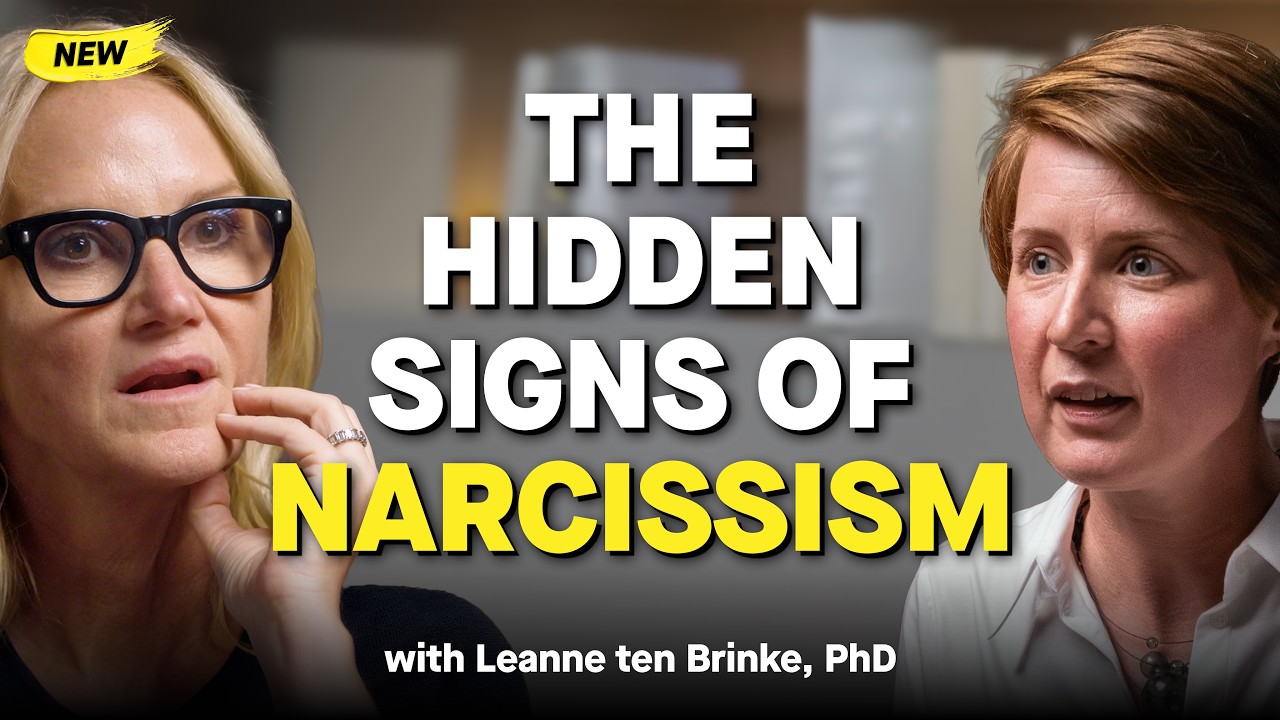
No clickbait detected — the title and thumbnail deliver what they promise.
AI Opinion
The episode’s most convincing argument is that toxic personalities—encompassing the dark tetrad—are often self-aware and unapologetic, a claim backed by verified research showing they admit to lacking remorse and manipulating others. However, the assertion that “one person is probably causing 90% of the stress in your life” is flagged as needing research, and the recommendation that being more strategic will make life “a whole lot better” is only partially supported, leaning on anecdotal rather than robust evidence. A thoughtful viewer should double-check the prevalence of such individuals in everyday settings and the reliability of untrained detection from brief video clips, as the episode’s practical advice hinges on these less-verified claims. Keep in mind that while the core traits and warning signs are well-documented, the episode’s sweeping generalizations about stress distribution and outcomes may overstate the ease of managing these dynamics.
Voices are AI rewrites of the same facts — style changes, not substance.
Summary
Dr. Tenbrink discusses the core traits of toxic personalities—psychopathy, narcissism, Machiavellianism, and sadism—which together form a "dark tetrad." These individuals are often superficially charming but mask underlying callousness, manipulation, and hostility. A key insight is that dark personalities are typically self-aware and unapologetic about their behavior. Early warning signs include inconsistent treatment of others (especially those with lower status), inappropriate emotional expressions like smiling while saying hostile things, boundary pushing, and impulsive dominance. Research cited shows that even untrained observers can detect psychopathic traits from very brief video clips, and that narcissists are initially seen as competent but are later viewed as arrogant and hostile. The episode emphasizes that toxic people are common in everyday settings, not just in crime, and that a single such individual can erode norms and cause disproportionate stress. The recommended approach is to assume they will not change, pause to assess the situation, and then act strategically rather than reactively. The overall message is to avoid a cynical worldview by recognizing that most people are good, while learning to manage the few who are not.
Voices are AI rewrites of the same facts — style changes, not substance.
Key Points
Summary, Key Points and AI Opinion are shown in the selected voice. Claims & fact-checks, chapter names and clickbait checks always show in the neutral voice.
The Dark Triad Plus Sadism: Core Traits
Dr. Tenbrink identifies four key dark personality types: psychopathy, narcissism, Machiavellianism, and sadism. These individuals are incredibly manipulative and often come across as superficially charming, masking underlying hostility and anger. She notes that people with minimal training can detect psychopathic traits in as little as five seconds of interaction.
Poisonous People Are Everywhere, Not Just in Crime
Dr. Tenbrink clarifies that toxic individuals are not limited to true crime cases; they are found in boardrooms, public office, living rooms, and workplaces. The conversation aims to teach listeners how to spot them and reduce the stress they cause, including a simple way to know if you're being manipulated and a key rule for communicating with dark personalities.
Toxic People Cause Widespread Stress and Erode Norms
Dark personalities, even at non-clinical levels, are a major source of stress in everyday life—examples include a manipulative sister-in-law, a credit-taking boss, or a callous mother-in-law. They divide people, make others think everyone is terrible, and replace cooperation with competition. Dr. Tenbrink emphasizes that one 'bad apple' can ruin the entire environment, and her goal is to provide tools to stop that rot.
Dark Personalities Are Self-Aware and Unapologetic
Dr. Tenbrink explains that people with dark personalities—characterized by callousness, manipulativeness, and hostility—are typically aware of their traits. Self-report measures show they admit to lacking remorse, enjoying manipulation, and not caring about the impact on others. This awareness distinguishes them from being oblivious; they simply do not value the harm they cause.
Psychopathy defined: callousness, manipulation, impulsivity, and antisocial behavior
The expert explains that psychopathy is a combination of four core traits: callousness, manipulation, impulsivity, and antisocial tendencies. Impulsivity leads to reckless, unplanned behavior and a parasitic lifestyle, where individuals mooch off others instead of building a career or family. Antisocial behavior involves breaking rules, which can range from legal violations to disregarding social norms like kindness or workplace conduct.
Psychopathy exists on a continuum, from kind and honest to superficially charming and remorseless
Dr. Tenbrain clarifies that psychopathy is not binary but a spectrum. At the low end are most people who are kind, honest, and follow rules. At the high end, but not necessarily violent, are individuals who lie frequently, are superficially charming, lack remorse, break rules, and act without forethought. In the workplace, such a person might initially be seen as a charismatic go-getter but actually fails to deliver on work and constantly bends rules.
Early warning signs: inappropriate emotions, superficial charm, boundary pushing, and impulsive dominance
To spot a toxic personality early, look for consistent patterns over time and across contexts. Key signs include inappropriate emotional expressions, such as smiling while saying hostile things or appearing to enjoy others' pain. Superficial charm feels good in the moment but lacks substance upon reflection. They also push personal and professional boundaries, answer impulsively, interrupt frequently, and become angry if interrupted themselves, aiming to dominate conversations.
Number one sign of manipulation: inconsistent treatment of others
Dr. Tenbrink explains that the biggest red flag for manipulation is when someone treats you differently than they treat others, especially people with lower status like Uber drivers or baristas. This pattern of cruelty, even when they think you're not watching, indicates a dark personality that will eventually turn on you. The key is to observe how they behave when they don't have a direct incentive to impress you.
Narcissism defined by entitlement and exploitation
Both grandiose and vulnerable narcissism share core traits of entitlement and exploitation of others to get what they believe they deserve—more than most people. These traits initially appear attractive (confidence, style, charm) but are the exact same characteristics that cause problems later. Dr. Tenbrink cites a study by Delroy Paulhus at UBC where narcissistic individuals were rated as agreeable and competent in week one, but by week seven were seen as arrogant, hostile braggarts who overestimated their abilities.
Vulnerable narcissism: fragile ego and defensive avoidance
Unlike grandiose narcissists who react with anger to failure, vulnerable narcissists have a fragile ego that requires constant admiration to prop up. They tend to be defensive and avoidant, seeking validation to fill an internal void. Their entitlement and willingness to exploit others remain, but they are sneakier because they appear insecure rather than overtly arrogant, making them harder to identify early in relationships.
Untrained observers can detect psychopathy in seconds
Research by Scott Lilienfeld showed that people with minimal training—just a brief definition of psychopathy—could watch 5- to 10-second clips of incarcerated men in semi-structured interviews and rate psychopathy levels that correlated reasonably with assessments by trained psychologists who had full interviews and criminal case files. This suggests that even short behavioral samples can reveal dark personality traits, though accuracy improves with more information over time.
Key behavioral cues of psychopathy: hostile speech with smiling, interruptions, and odd calmness
Dr. Tenbrink and colleagues coded the same videos and found that individuals high in psychopathy often said hostile things while smiling broadly—a 'douche smile' with eye crinkles—creating a discordance between words and expression. Other cues include interrupting others but refusing to be interrupted, ignoring personal and professional boundaries, appearing oddly calm when guilt or shame would be expected, displaying moral superiority, unusual anger, and frustration when they cannot bait someone into an argument. No single behavior is definitive, but patterns across interactions increase confidence.
Why dark personalities rise to leadership: desire for power and confusion of confidence with competence
People with dark personality traits often end up in powerful roles for several reasons. First, they actively want leadership—narcissism self-report items like 'I am a born leader' correlate with pursuing promotions. Second, observers frequently mistake confidence for competence, believing self-assured claims and bravado even when they involve lies. This combination of ambition and misleading self-presentation helps them ascend in hierarchies.
Gaslighting defined: psychological manipulation, not mere disagreement
Dr. Tenbrink clarifies that gaslighting is often overused in casual conversation. It is not simply having a different perspective or a disagreement. Instead, gaslighting is a specific type of psychological manipulation where one person deliberately distorts another's reality to gain power, making the victim question their own perceptions and sanity.
Final Encouragement: Focus on the Many Good People, Not the Few Toxic Ones
Dr. Tenbrink reminds viewers that while callous, manipulative, impulsive, and antisocial individuals exist, most people are honest, kind, and helpful. He urges the audience not to let a malevolent few destroy trust in society or prevent them from enjoying relationships with benevolent people. The host reinforces that the bigger picture is usually just one person causing the majority of stress, and that recognizing this helps avoid a dark, cynical worldview.
Strategic Approach to Dark Personalities: Assume No Change, Be Smarter
The host advises that once you spot the traits of a toxic person, you must assume that person is not going to change. If you choose to remain in their presence, you can be smarter about how you show up by understanding what motivates a dark personality and getting strategic about your interactions. This approach can dramatically reduce the stress and pain caused by that one person who is responsible for 90% of your stress.
Core Takeaway: Pause, Assess, and Be Strategic
The host summarizes the episode's key lesson by quoting Dr. Tenbrink: 'Pause, assess, and then be strategic about how you move forward.' Recognizing the truth of who you're dealing with and taking a step back allows you to relate to others more effectively. The host promises that when you start being more strategic, your life will get a whole lot better, and encourages viewers to apply this mindset immediately.
Chapters
Claims & Fact Check
People with very little training can detect psychopathic personality traits in just 5 seconds.
?UnverifiedOne bad apple can ruin the barrel—toxic individuals erode norms and replace cooperation with competition.
?UnverifiedDark personalities are aware of their traits and admit to lacking remorse and manipulating others without guilt.
?UnverifiedPsychopathy includes impulsivity, leading to a parasitic lifestyle where individuals mooch off others because they don't put in consistent work or planning.
?UnverifiedHigh-functioning psychopaths in the workplace are often seen as charismatic go-getters who break rules but don't actually do their work.
?UnverifiedEarly warning signs of a toxic personality include inappropriate emotional expressions, such as smiling while saying hostile things or enjoying others' pain.
?UnverifiedThe core of both grandiose and vulnerable narcissism is entitlement and exploitation of other people.
±Partially supportedNarcissistic individuals are initially seen as agreeable, well-adjusted, and competent, but by week seven they are viewed as arrogant, hostile braggarts who overestimate their abilities.
?UnverifiedVulnerable narcissists are triggered by failure and become very angry, similar to grandiose narcissists.
?UnverifiedUntrained people given a brief definition of psychopathy can rate psychopathy levels from 5-second video clips with ratings that correlate reasonably with trained psychologists' assessments.
?UnverifiedPeople with high psychopathy often say hostile things while smiling broadly, creating a discordance between words and expression.
?UnverifiedPeople with dark personality traits rise to leadership partly because observers confuse confidence with competence.
?UnverifiedOne person is probably causing 90% of the stress in your life.
?UnverifiedWhen you start being more strategic about how you relate to other people, your life is going to get a whole lot better.
?UnverifiedMore from The Mel Robbins Podcast

#1 Hormone Doctor: The Ultimate Guide to Perimenopause, Fertility, Birth Control, PCOS, & Menopause
Jul 23, 2026
How to Increase Your Emotional Intelligence & Never Get Angry or Bothered by Anyone
Jul 16, 2026
The Happiness Expert: How to Find Your Purpose & Live a Meaningful Life
Jul 13, 2026
How to Build a Better Future: 2 Simple Questions That Uplevel Your Life Immediately
Jul 11, 2026
Digest any single YouTube video — free.
3 free digests — no card, no sign-up wall.
Or just swap the domain of any YouTube link → instant digest