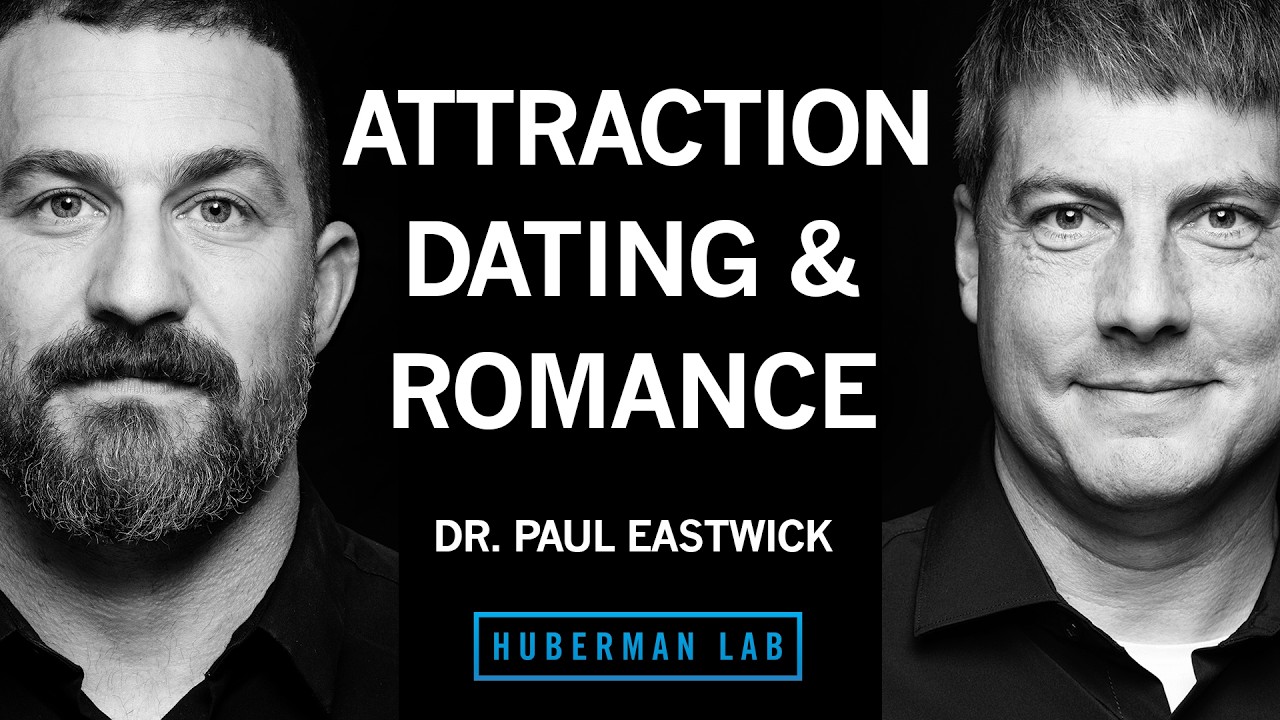
No clickbait detected — the title and thumbnail deliver what they promise.
AI Opinion
Eastwick makes a persuasive case that spending time together softens the pull of first impressions, a point grounded in his own published work on how attraction develops. But the episode's headline claims — that dating apps create an unequal market, that men and women equally prefer younger partners, and that financial status matters to both genders — are unverified here and rest more on observed trends than settled evidence. His advice to largely tune out outside feedback about a partner also cuts against the real value of honest input from people who know you well. Before repeating the app-market or age-preference claims, check the underlying studies.
Voices are AI rewrites of the same facts — style changes, not substance.
Summary
Dr. Paul Eastwick’s discussion explores the science behind attraction, compatibility, and romance, particularly in the context of modern dating. He highlights how dating apps often create an unequal market where popular individuals are favored, but that spending time together can mitigate this effect. Contrary to previous assumptions, both men and women tend to prefer younger partners, and financial status is a significant factor for both genders. The episode cautions against relying on dating apps to find lasting partnerships, emphasizing the importance of intimacy, unique qualities, and social bonding for relationship stability. It also addresses the impact of technology on socialization, suggesting a potential generational shift away from excessive screen time towards more in-person interaction. Ultimately, trusting one's own perception of a partner, pursuing what feels right rather than seeking constant external validation, and limiting outside input are presented as key strategies for navigating relationships successfully.
Voices are AI rewrites of the same facts — style changes, not substance.
Key Points
Market Forces in Dating Apps
Dating apps often favor popular individuals, creating an unequal market.
Attractiveness and Time Together
Spending time together reduces the impact of 'market forces' in attraction.
Age Preference in Mate Selection
Both men and women tend to select younger partners, challenging previous assumptions.
Financial Status - A More Balanced Perspective
Financial status is equally important for both men and women when seeking partners.
Dating Apps & Partnership Longevity
Dating apps often prioritize qualities that don't contribute to lasting partnerships.
Importance of Intimacy and Uniqueness
Physical intimacy and the perception of unique qualities are key predictors of relationship stability.
Social Bonding & Relationship Maintenance
Activities with others (couples or singles) are crucial for both meeting partners and maintaining relationships.
Perceptual Bias in Relationships
People often have a biased perception of their romantic partners, viewing them more favorably than others do.
Trusting Your Own Impression
It's generally better to trust your own impression of a partner rather than relying on external consensus, as it’s often more accurate.
The Food Analogy for Relationships
Treating romantic relationships with the same approach as taste in food – pursuing what you enjoy without excessive external validation – can lead to better outcomes.
Navigating Social Dynamics in Relationships
Finding a balance between enjoying a relationship and managing the potential for social competition or unwanted attention from friends is crucial.
The Dangers of Constant Relationship Analysis
Constantly seeking input on a relationship can be detrimental, similar to avoiding participation in activities and instead critiquing from the sidelines.
Validation Through Shared Experiences
Experiencing a relationship firsthand with couple friends provides validation without direct assessment.
The Limits of Outside Perspective on Relationships
Even close friends lack the full context and information within a relationship, making judgment unhelpful.
Observing Others' Relationship Behavior as a Learning Experience
The anecdote about observing peers at a junior high dance highlights how some avoid genuine connection by critiquing others’ experiences.
Gender Differences in Social Support and Relationship Feedback
Women tend to cultivate broader social support networks, while men often rely more heavily on their romantic partners for intimacy and validation.
Technology's Impact on Socialization
The discussion highlights how technology, including phones and television, contributes to people staying indoors instead of socializing in person.
Rebellion Against Technology & Return to In-Person Interaction
The hosts suggest that younger generations may rebel against excessive technology use and return to forming groups and meeting people in person.
Pandemic Hangover & Social Architecture
They describe the current trend of reduced socialization as a 'pandemic hangover,' suggesting that social interaction is returning after a period of disruption.
Human Nature and Social Drive
Despite potential reluctance, humans are inherently social creatures, and even with limited motivation, people can be encouraged to interact.
Chapters
Claims & Fact Check
Dating apps create an unequal market favoring popular people.
?UnverifiedMen and women equally select younger partners.
?UnverifiedFinancial status is more important to women when choosing male partners.
?UnverifiedPeople are biased when it comes to their romantic relationships.
±Partially supportedIt's better to listen to the consensus that your partner is a jerk.
?UnverifiedIt doesn't make good adaptive sense to pay too much attention to relationship feedback.
±Partially supportedMen are generally better at cultivating social support from their romantic partners.
?UnverifiedEntertainment companies and apps try to keep people away from real socialization.
?UnverifiedMore from Huberman Lab

The Science & Treatment of Bipolar Disorder | Huberman Lab Essentials
Jul 16, 2026

How to Improve Your Memory & Cognitive Function at Any Age | Dr. Alan Castel
Jul 13, 2026

The Science & Treatment of Obsessive Compulsive Disorder (OCD) | Huberman Lab Essentials
Jul 9, 2026

Raising a Dog & Mastering Calm Assertive Energy | Cesar Millan
Jul 6, 2026