Clickbait Checker
The video title says:
"Essentials: The Science of Eating for Health, Fat Loss & Lean Muscle | Dr. Layne Norton"
Reality:
The title accurately reflects the episode's focus on nutrition science related to health, fat loss, and muscle building with Dr. Layne Norton, though it leans into a slightly broader scope than just 'essentials'.
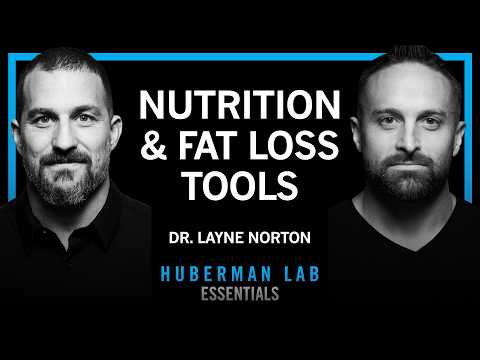
The thumbnail says:
"NUTRITION & FAT LOSS TOOLS DR. LAYNE NORTON HUBERMAN LAB ESSENTIALS"
Reality:
The thumbnail promises specific 'nutrition & fat loss tools,' but the episode primarily delivers scientific explanations and general strategies rather than concrete, actionable tools.
AI Opinion
The episode most convincingly argues that while nutritional science is complex, consistent tracking and a focus on whole foods remain valuable for achieving body composition goals, underpinned by the fundamental principle that energy balance dictates outcomes. Claims regarding metabolizable energy’s impact—particularly concerning gut microbiome interactions—rest on emerging research still requiring broader validation across diverse populations. Listeners should independently investigate the cited studies on ultra-processed foods and artificial sweeteners to assess the nuances of those findings, as interpretations can vary. Ultimately, Dr. Norton's emphasis on consistent training and building confidence offers a grounded perspective that transcends fleeting dietary trends.
Voices are AI rewrites of the same facts — style changes, not substance.
Summary
This discussion with Dr. Layne Norton explores the science of nutrition for health, fat loss, and muscle building, emphasizing practical considerations over overly complex approaches. The episode addresses inaccuracies in food labeling – acknowledging a potential 20% error margin – while highlighting that consistent tracking can still provide useful data. It clarifies that a "calorie" is simply a unit of energy measurement, though the *source* of those calories significantly impacts appetite and metabolism, particularly due to differences in metabolizable energy influenced by factors like fiber digestion and gut microbiome composition. The conversation also delves into vegan protein sources, emphasizing the importance of leucine content for muscle protein synthesis and suggesting strategies like isolated proteins or leucine supplementation. Furthermore, research on ultra-processed foods demonstrates a tendency towards increased calorie intake when these options are readily available, and Dr. Norton shares a revised perspective on artificial sweeteners based on recent data. Ultimately, he stresses that consistent, challenging training remains the most crucial factor for achieving body composition goals, alongside building confidence through tackling difficult endeavors.
Voices are AI rewrites of the same facts — style changes, not substance.
Key Points
Food Label Inaccuracies and Variability
Dr. Norton points out that food labels can have up to a 20% error margin, which introduces uncertainty into calorie tracking. He suggests that while this variability exists, consistent tracking methods over time can help individuals gain a better understanding of their typical intake, despite the inherent inaccuracies in labeling.
Metabolizable Energy and Gut Microbiome
The conversation touches upon 'metabolizable energy,' which is the portion of food's energy that can actually be utilized by the body. Insoluble fiber, common in plant-based foods, often reduces metabolizable energy because it’s difficult to digest; furthermore, individual differences in gut microbiome composition may influence how effectively people extract energy from fiber.
Resting Metabolic Rate Dominates Energy Expenditure
The discussion highlights that resting metabolic rate (RMR) accounts for a significant portion – typically 50 to 70% – of an individual's total daily energy expenditure. Sedentary individuals tend to have a higher proportion of their energy expenditure attributed to RMR compared to more active people, who expend a greater percentage through physical activity.
Calories as a Unit of Measurement
Dr. Norton clarifies that the term 'calorie' simply refers to a unit of energy, akin to seconds on a clock – it’s a measurement rather than an inherent property of the food itself. While people often say 'not all calories are created equal,' he argues this is inaccurate because calories are just units; however, different sources of those calories *can* have differential effects on energy expenditure and appetite.
Vegan Protein Bioavailability & Leucine Content
Dr. Norton explains that soy is a unique vegan protein source because it contains all essential amino acids in sufficient quantities. He notes that isolated potato protein has a similar essential amino acid profile to whey, but can be difficult to find. A key factor for muscle protein synthesis in vegans is leucine content; studies showed wheat and soy lacked the response seen with egg or whey until free leucine was added.
Practical Strategies for Vegan Protein Intake
For vegans aiming to maximize muscle protein synthesis, Dr. Norton suggests utilizing isolated protein sources or supplementing with free leucine. He highlights corn as a source of leucine that can be blended with other proteins like soy and pea to create complementary amino acid profiles, ensuring adequate intake of all essential amino acids.
The Impact of Ultra-Processed Foods on Calorie Intake
Kevin Hall's research demonstrated that providing individuals with access to ultra-processed foods led to a spontaneous 500 calorie increase per day. While minimally processed foods are generally recommended, Dr. Norton emphasizes this is primarily due to the tendency for overconsumption associated with highly palatable, processed options rather than inherent harm of those foods themselves.
Artificial Sweeteners: A Shift in Perspective
Dr. Norton reveals he has changed his view on artificial sweeteners based on new data, now feeling comfortable with their consumption. He clarifies that this doesn't mean excessive intake is encouraged, but rather a reassessment of previous concerns, particularly regarding their impact on blood sugar and the gut microbiome.
The Primacy of Hard Training
Dr. Norton emphasizes that one cannot "outscience hard training" when aiming to build muscle and improve body composition. He references Mike Israel, a PhD and bodybuilder, who made this point. The core message is that consistent effort and dedication to challenging workouts are paramount for achieving desired results, regardless of intricate nutritional strategies.
Building Confidence Through Challenge
Norton addresses a common question about gaining confidence, stating there's no shortcut. He advocates for engaging in challenging endeavors like pursuing a PhD or tackling difficult goals, which fosters self-discovery and resilience. This process of pushing oneself beyond comfort zones builds the necessary mental fortitude for consistent progress.
Chapters
Claims & Fact Check
Food labels can have up to a 20% error margin.
?UnverifiedNot all calories are created equal.
✓Well-supportedIsolated potato protein has a similar essential amino acid content to whey.
±Partially supportedKevin Hall's study showed that access to ultra-processed foods led to a 500 calorie increase per day.
±Partially supportedDr. Norton has changed his view on artificial sweeteners based on new data.
?UnverifiedYou can't outscience hard training.
?UnverifiedMore from Huberman Lab
The Science & Treatment of Bipolar Disorder | Huberman Lab Essentials
Jul 16, 2026
How to Improve Your Memory & Cognitive Function at Any Age | Dr. Alan Castel
Jul 13, 2026
The Science & Treatment of Obsessive Compulsive Disorder (OCD) | Huberman Lab Essentials
Jul 9, 2026

Raising a Dog & Mastering Calm Assertive Energy | Cesar Millan
Jul 6, 2026