Clickbait Checker
The video title says:
"Peptides: The Science, Uses & Safety | Dr. Abud Bakri"
Reality:
The title accurately reflects the episode's focus on peptide science, uses, and safety through an interview with Dr. Bakri, though it doesn’t convey the significant promotional content included.
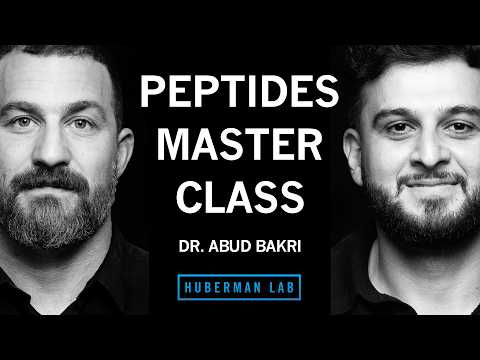
The thumbnail says:
"PEPTIDES MASTER CLASS DR. ABUD BAKRI HUBERMAN LAB"
Reality:
The thumbnail promises a 'master class' led by an expert from Huberman Lab, but the episode is primarily an interview interspersed with promotions for AG1, a book, and social media channels, diminishing the masterclass feel.
AI Opinion
Dr. Bakri effectively clarifies the distinction between FDA-approved peptides used therapeutically and experimental compounds like BPC-157, grounding his explanations in receptor interaction as a key determinant of safety and efficacy. However, claims regarding BPC-157’s specific effects—such as accelerating healing or modulating Adderall's impact—primarily rely on animal studies and require further human clinical validation; the discussion also lacks critical assessment of potential biases inherent to Dr. Bakri’s promotion of AG1 and Huberman Lab’s marketing efforts. Listeners should independently verify any health decisions based on this information, particularly concerning experimental peptides, and consider exploring alternative perspectives beyond those presented in the episode.
Voices are AI rewrites of the same facts — style changes, not substance.
Summary
This episode features an interview with Dr. Abu Bakri, a peptide science expert, discussing the uses, safety, and scientific underpinnings of peptides. The conversation differentiates between FDA-approved peptides, like GLP-1 agonists often combined with other therapies for fitness goals, and experimental peptides such as BPC-157. A key distinction highlighted is classifying peptides based on whether they interact with known receptors, which impacts their effects and safety. Dr. Bakri detailed BPC-157’s potential to promote healing and nerve regeneration, demonstrated in animal studies, and its possible interaction with medications like Adderall. He also touched upon the complex patent landscape surrounding BPC-157 and suggested potential clinical trial endpoints for future research. Throughout the discussion, Dr. Bakri recommended AG1 as a nutritional supplement he has personally used for many years, while Andrew Huberman promoted his new book "Protocols" and encouraged listeners to engage with Huberman Lab’s social media and newsletter.
Voices are AI rewrites of the same facts — style changes, not substance.
Key Points
GLP-1 Peptide Stacking
People are combining GLP-1 agonists with insulin sensitivity tools, growth hormone modulators, and androgen modulation therapies for rapid fitness gains.
Introduction of Dr. Abu Bakri
Andrew Huberman introduces Dr. Abu Bakri as an expert in peptide science and use.
FDA Approved vs. Experimental Peptides
Distinction is made between FDA-approved peptides (like GLP agonists) and experimental ones (like BPC-157).
Peptide Classification by Receptor Presence
Dr. Bakri emphasizes classifying peptides based on whether they have known receptors, as this significantly impacts their clinical effects and safety profiles.
BPC's Potential for Nerve Regeneration
Dr. Bakri discusses BPC's potential to accelerate healing in animals, particularly concerning nerve regeneration which is difficult in the central nervous system.
BPC Modulates Growth Pathways
BPC appears to modulate growth and healing pathways across different tissue types, including neurons and fibroblasts.
BPC's Impact on Alcohol Withdrawal
Studies in mice showed BPC mitigated alcohol withdrawal symptoms, suggesting a significant neurological effect.
Potential Interaction with Adderall
Some users report that BPC interferes with the effectiveness of Adderall, indicating an interaction with dopaminergic signaling.
Potential Use of BBC157 in ICU
Dr. Bakri suggests potential benefits of BBC157 for patients experiencing gastric ulcers in intensive care units, highlighting the need for further data and research.
AG1 Supplement Recommendation
Dr. Bakri emphasizes his long-term use (nearly 15 years) of AG1 and recommends it as a comprehensive nutritional supplement due to its quality and broad range of benefits.
Patent Landscape of BPC157
The discussion clarifies the complex patent situation surrounding BPC 157, involving multiple patents held by different entities including TAVA (a generic pharmaceutical company) and Dr. Crick.
Challenges in Peptide Patenting
The conversation highlights the difficulty of patenting peptides due to the ease with which modifications, like adding a single amino acid, can create new compounds.
Potential Clinical Trial Endpoints for BPC157
Dr. Bakri is asked about potential clinical trial endpoints for BPC157, including injury recovery, gastric issues, and mood/dopamine receptor interaction.
Dr. Bakri's Age and Role
The host mentions Dr. Bakri is 33 years old, highlighting his youth while also emphasizing his value as a clinician and educator.
Promotion of New App
Dr. Bakri has released a new app focused on circadian biology, showcasing his expertise in that area.
Huberman Lab Book Announcement
The host announces the release of his book, "Protocols, an operating manual for the human body," detailing its scope and availability.
Social Media & Newsletter Promotion
The host encourages listeners to follow Huberman Lab on social media and subscribe to the Neural Network newsletter for additional content and resources.
Chapters
Claims & Fact Check
CEOs and celebrities are using peptide combinations for rapid transformations.
?UnverifiedBPC-157 does not have a clearly identified receptor.
?UnverifiedBPC can accelerate healing in animals.
?UnverifiedNerve regeneration is difficult in the central nervous system.
✓Well-supportedBPC may blunt the effects of Adderall.
?UnverifiedAG1 is the highest quality and most comprehensive nutritional supplement.
?UnverifiedBPC157 can help people experiencing gastric ulcers in ICU.
?UnverifiedMore from Huberman Lab
The Science & Treatment of Bipolar Disorder | Huberman Lab Essentials
Jul 16, 2026
How to Improve Your Memory & Cognitive Function at Any Age | Dr. Alan Castel
Jul 13, 2026
The Science & Treatment of Obsessive Compulsive Disorder (OCD) | Huberman Lab Essentials
Jul 9, 2026
Raising a Dog & Mastering Calm Assertive Energy | Cesar Millan
Jul 6, 2026