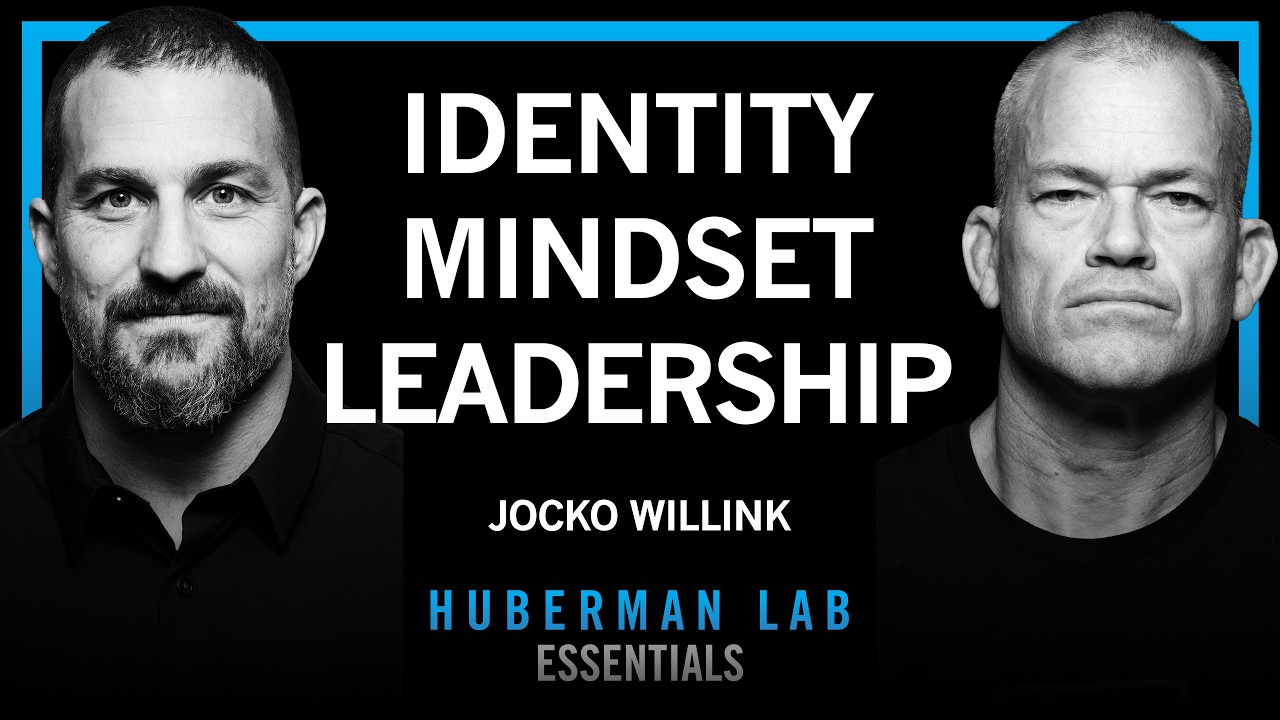
No clickbait detected — the title and thumbnail deliver what they promise.
AI Opinion
Willink’s argument that discipline outweighs motivation and prioritizing action over inherent talent offers a compelling framework for personal development, particularly resonating with listeners drawn to structured approaches. However, the episode's claims regarding strategic fasting’s cognitive benefits and the universality of wealth-seeking as autonomy require further independent research; Willink’s experiences don’t necessarily translate universally. Listeners should critically evaluate how these principles apply to their own contexts, recognizing that individual responses to practices like fasting or conflict resolution can vary significantly based on personal circumstances and professional environments.
Avatars are AI rewrites of the same facts — style changes, not substance.
Summary
Jocko Willink’s discussion centers on developing resilience and leadership through principles he observed in the military and applies to all aspects of life. He emphasizes that identity can be forged by prioritizing performance and taking control over one's actions, rather than relying on pre-existing achievements. The pursuit of wealth is reframed as a means to gain autonomy and self-determination, while consistent exercise fosters a positive feedback loop of energy and vitality. Willink advocates for discipline over motivation, strategic practices like fasting to enhance cognitive function, and an indirect approach to conflict resolution that prioritizes relationship building. He highlights the value of detachment—observing oneself from a third-person perspective and prioritizing listening in conversations—as trainable skills crucial for emotional regulation and effective problem-solving, ultimately suggesting that resilience is built through deliberately seeking out uncomfortable experiences.
Avatars are AI rewrites of the same facts — style changes, not substance.
Key Points
The Military as a Blank Slate for Identity Formation
Jocko Willink describes joining the military as providing a 'blank slate,' removing prior academic achievements from consideration. This system prioritized performance and recognition, offering individuals control over their destiny through demonstrated competence. He emphasizes that this structure fostered a sense of impact and personal agency, which he later realized was crucial for overall life satisfaction.
Autonomy as the Ultimate Compensation
Jocko Willink posits that even immense wealth is meaningless without a degree of autonomy and control over one's daily activities. He argues that people pursue financial success primarily to gain this sense of self-determination, highlighting the importance of agency in achieving fulfillment. This perspective reframes the pursuit of material possessions as a means to an end: greater personal freedom.
Exercise and Energy - A Feedback Loop
Jocko Willink explains that exercise generally provides energy rather than depleting it, noting a common misconception. He describes a spectrum of daily energy levels, from needing motivation to start the day to feeling tired only after intense physical exertion. This highlights the positive feedback loop between movement and vitality, encouraging consistent activity regardless of initial motivation.
Strategic Fasting for Cognitive Performance
Jocko Willink details his practice of fasting before cognitively demanding tasks like consulting or podcast recording. He finds that avoiding meals prior to these activities enhances mental clarity and focus, suggesting a strategic approach to nutrition aligned with performance goals. This demonstrates an understanding of how dietary choices can directly impact cognitive function.
The Role of Hardcore Music in Identity Formation
Jocko Willink credits his early exposure to hardcore music, specifically bands like Cromax, Agnostic Front, and the Bad Brains, as a significant influence on his identity. He describes feeling an immediate connection to the music's rebellious attitude and DIY ethos, which encouraged self-reliance and standing up for one’s beliefs. This experience instilled in him a willingness to challenge authority and question conventional wisdom, values that later proved crucial during his military career.
Discipline as the Foundation of Action
Jocko emphasizes that relying on motivation is unreliable because it's an emotion that fluctuates. Instead, he advocates for discipline as the driving force behind daily actions. He rejects internal debates about whether one 'feels like' performing a task, asserting that consistent action stems from disciplined commitment rather than fleeting emotional impulses—a philosophy applicable to both personal and professional endeavors.
The Indirect Approach in Conflict Resolution
Jocko explains the concept of an indirect approach to conflict resolution, contrasting it with direct confrontation. He argues that directly confronting someone can escalate a situation and lead to negative outcomes. Instead, he suggests building relationships through adjacent conversations, gradually revealing underlying issues and fostering a collaborative environment for problem-solving, minimizing potential casualties in interpersonal interactions.
The Value of Third-Person Perspective
Jocko references the practice of 'third-personing'—observing oneself as an external observer—as a tool for self-awareness and emotional regulation. He acknowledges having explored this concept previously, suggesting it’s linked to meditation practices that promote detachment from immediate emotions and facilitate more objective decision-making, though he doesn't explicitly state whether he currently meditates.
The Value of Active Listening in Meetings
Jocko emphasizes the importance of detachment during meetings, achieved by prioritizing listening over speaking. He explains that remaining silent and actively listening allows for a clearer perception of flaws or shortcomings in plans, as one isn't clouded by their own contributions or immediate reactions. This approach fosters better understanding and problem-solving capabilities.
Managing Emotional Escalation in Conversations
Jocko advises that when engaged in conversations, particularly with significant others, observing signs of frustration is crucial. He suggests taking a mental step back to analyze the root cause; often, it's not a need for solutions but rather a desire to vent. Allowing someone to vent can de-escalate emotional arguments and improve communication.
Detachment as a Trainable Skill
Jocko clarifies that the ability to detach oneself from emotionally charged situations is not an innate talent but rather a skill that can be cultivated through training. He shares his experience witnessing this development in both military personnel and business professionals, highlighting its applicability across various contexts.
Resilience Through Deliberate Discomfort
Drawing a parallel to physical training, Jocko suggests that resilience is developed through repeated exposure to deliberately uncomfortable situations. Just as squats build leg strength and pull-ups strengthen the back, facing challenges and pushing beyond one's comfort zone builds mental toughness and adaptability.
Chapters
Claims & Fact Check
Joining the military provides a 'blank slate' where performance dictates recognition.
People primarily seek wealth to gain control over their lives, not for the money itself.
Exercise generally provides energy rather than depleting it.
Fasting before cognitively demanding tasks improves mental clarity.
Many people have a rigid sense of self that limits their ability to adapt.
Motivation is unreliable and should not be the primary driver for action.
Direct confrontation in conflict resolution often leads to negative outcomes; an indirect approach is preferable.
Detachment can be achieved by prioritizing listening over speaking in meetings.
People often seek to vent rather than receive solutions when frustrated.
The ability to detach oneself is a trainable skill, not an innate gift.
Was this digest good?
More from Huberman Lab
Accelerate Learning & Increase Cognitive Capacity | Dr. Tommy Wood
Jul 20, 2026

The Science & Treatment of Bipolar Disorder | Huberman Lab Essentials
Jul 16, 2026
How to Improve Your Memory & Cognitive Function at Any Age | Dr. Alan Castel
Jul 13, 2026
The Science & Treatment of Obsessive Compulsive Disorder (OCD) | Huberman Lab Essentials
Jul 9, 2026
Digest any single YouTube video — free.
3 free digests — no card, no sign-up wall.
Or just swap the domain of any YouTube link → instant digest