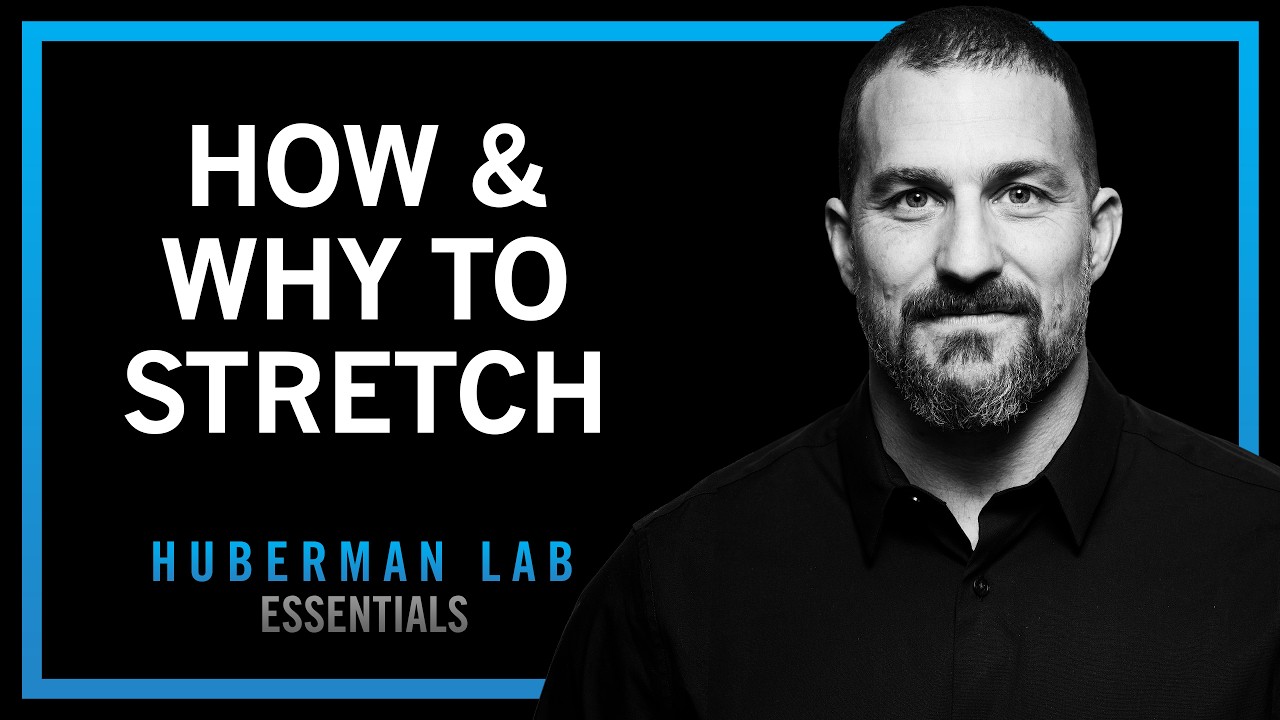
No clickbait detected — the title and thumbnail deliver what they promise.
AI Opinion
The episode convincingly demonstrates the significant role of neural factors, particularly acetylcholine and muscle spindle feedback, in regulating flexibility and preventing injury; this explanation is grounded in established neurophysiological principles. However, claims regarding specific effectiveness thresholds—like the "5 minutes per week" or the optimal "30-second hold"—rely on selectively presented research findings that require further scrutiny of study methodologies and sample sizes. Listeners should independently verify these quantitative recommendations with broader reviews of stretching protocols and consider individual responses to different techniques, as flexibility is likely influenced by factors beyond what’s discussed.
Voices are AI rewrites of the same facts — style changes, not substance.
Summary
This episode explores the science behind flexibility, outlining its three components: neural, muscular, and connective tissue. The nervous system plays a critical role through mechanisms like acetylcholine release, muscle spindle feedback, and Golgi tendon organ activation to protect against injury. Research indicates that static stretching protocols are more effective than ballistic or PNF methods for improving range of motion, requiring at least five minutes per week to see meaningful changes—ideally achieved through frequent short sessions. A recommended hamstring protocol involves repeated 30-second static stretches with rest periods. Warming up before stretching is advised, and while static stretching can improve flexibility, performing it immediately before cardiovascular exercise may negatively impact performance. The episode also touches on the Anderson method’s philosophy of daily range adjustments and highlights how practices like yoga can influence nervous system regulation and pain tolerance.
Voices are AI rewrites of the same facts — style changes, not substance.
Key Points
Three Components of Flexibility
Flexibility involves neural, muscular, and connective tissue components.
Neural Control via Acetylcholine
Motor neurons release acetylcholine to cause muscle contraction.
Muscle Spindle Feedback Loop
Muscle spindles sense stretch and trigger muscle contractions to protect range of motion.
Golgi Tendon Organs Prevent Injury
GTOs shut down motor neurons when excessive load is detected, preventing injury.
Interoception and Human Uniqueness
The brain's interoceptive abilities, involving unique neuron types, play a crucial role in physiology and emotional regulation.
Static Stretching Effectiveness
Research shows static stretching protocols significantly improve range of motion compared to ballistic or PNF, with a statistically significant p-value (less than 0.05).
Weekly Stretch Duration
Range of movement improvements require at least 5 minutes of stretching per week, not 5 minutes per stretch.
Hamstring Protocol Example
A hamstring flexibility protocol involves three sets of 30-second static stretches with rest periods in between, ideally performed 5 times a week.
Warm-up Importance
Warming up before stretching is crucial to avoid injury and allows for more effective stretching.
Stretching Timing & Performance
Static stretching *before* cardiovascular or resistance training may negatively impact performance, although the specifics are complex and debated.
Anderson Method Philosophy
The Anderson method emphasizes stretching to the end of your range of motion each day, adjusting based on daily factors like tension and temperature rather than a fixed goal.
Yoga's Impact on Nervous System & Pain Tolerance
Yoga not only improves flexibility but also teaches control of the nervous system, reshaping one's relationship with pain and stress.
Minimum Static Stretching Duration for Change
At least 5 minutes per week of static stretching is needed to create meaningful changes in limb range of motion, best achieved with frequent short sessions.
Chapters
Claims & Fact Check
Your nervous system controls your muscles.
✓Well-supportedThere are neurons uniquely enriched in humans that regulate physiology and emotional state.
?UnverifiedStatic stretching protocols showed significant gains with a P value less than 0.05.
?UnverifiedAt least 5 minutes of stretching per week is needed for range of movement improvements.
?UnverifiedStatic stretching prior to cardiovascular training can limit performance.
±Partially supportedMicro-stretching of low intensity is more effective for increasing end range of motion.
?Unverified30 seconds of static hold seems to be a key threshold for maximum benefit.
?UnverifiedMore from Huberman Lab
The Science & Treatment of Bipolar Disorder | Huberman Lab Essentials
Jul 16, 2026

How to Improve Your Memory & Cognitive Function at Any Age | Dr. Alan Castel
Jul 13, 2026
The Science & Treatment of Obsessive Compulsive Disorder (OCD) | Huberman Lab Essentials
Jul 9, 2026

Raising a Dog & Mastering Calm Assertive Energy | Cesar Millan
Jul 6, 2026