

Veritasium
15 episodes — every digest for Veritasium.
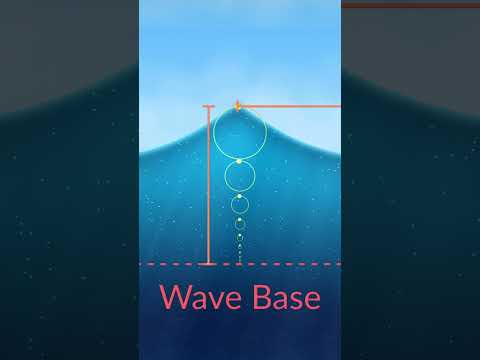
The episode explains how wave pools generate precise, repeatable waves, such as a 1 Hz wave with a maximum amplitude of 0.078, limited by the wave maker's mechanics. It describes the physics of water motion, noting that molecules move in circular paths that diminish with depth and stop entirely at the wave base—a depth equal to half the wavelength. A key insight is that water molecules drift slightly forward because they travel faster at the top of their loop than at the bottom, creating a spiral path and net water transport. The episode also covers frequency dispersion in irregular waves: higher-frequency waves travel slower than lower-frequency ones, allowing the latter to overtake and interact, producing a varied, peaky surface. Verified claims confirm that the 1 Hz wave amplitude is constrained by the wave maker, that motion ceases at half the wavelength, and that higher-frequency waves are slower than lower-frequency ones.
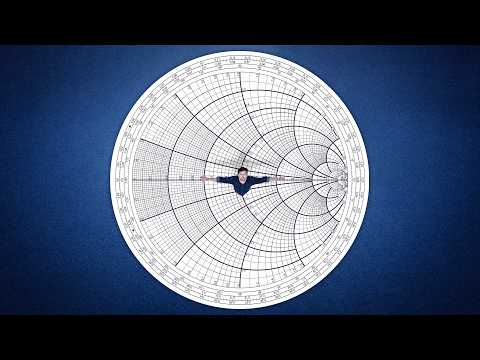
The episode demystifies the Smith Chart, a tool notorious among electrical engineering students for its intimidating appearance, by tracing its origins and practical function. Developed independently by Philip Smith at Bell Labs, Tōsaku Mizuhashi in Japan, and Amiel Volpert in the Soviet Union during the late 1930s, the chart solved a critical problem in long-distance radio transmission: power loss caused by impedance mismatches and signal reflections on transmission lines. The video explains that reflections occur in AC circuits when the load (e.g., an antenna) does not match the characteristic impedance of the line, and that simply adding a resistor wastes power as heat. Instead, engineers use the Smith Chart to graphically find a point along the line where the real part of the impedance matches the source, then cancel the reactive component with a lossless element like a stub—a short length of transmission line cut to a precise length. A demonstration shows how trimming a coaxial stub to 77 mm eliminates reflections, achieving optimal power transfer. The chart’s ability to represent infinite impedance within a finite circle and its normalization for different system impedances make it a universal, practical tool that remains embedded in modern RF software.
The video discusses a famous Google interview question where the candidate is hypothetically shrunk to the size of a nickel and placed in a blender that will start in 60 seconds. It emphasizes that the question tests creative problem-solving rather than a single correct answer. Common incorrect responses include ducking, pushing the button, or accepting defeat. One more creative attempt suggests moving to the center of the blades, where RPM is lower, and using clothing to swing out, but this is also rejected. The narrator confirms that none of the presented answers are correct, implying a specific clever solution exists that the question is designed to elicit.

The episode explores why light appears to follow the fastest path between two points, a principle known as Fermat's principle of least time. It begins with the lifeguard problem, where the optimal route to a drowning swimmer involves a compromise between running on sand and swimming in water, determined by the ratio of speeds. This mathematical relationship is identical to Snell's law, which governs how light bends when transitioning between media like air and water. The central mystery is how light, lacking consciousness, consistently chooses this fastest path. The quantum mechanical explanation is that light—and indeed all particles, including electrons and even macroscopic objects—explores all possible paths simultaneously. The observed single trajectory is an illusion resulting from constructive interference among these myriad paths. While the claim that all particles explore all paths simultaneously is partially supported, the core insight is that the apparent straight or bent path of light is a statistical outcome of quantum superposition, not a deliberate choice.

Plants can be about 5°C cooler than their surroundings, a phenomenon captured by thermal cameras. This cooling is not due to lower sunlight absorption or photosynthesis, which uses only about 1% of sunlight, but rather evaporative cooling. When plants open their stomata to take in carbon dioxide, water evaporates from the leaves, drawing away significant heat energy—up to 50% of absorbed sunlight goes into this process rather than heating the plant. This natural mechanism has a measurable impact on urban environments: Madrid's El Retiro Park, for example, cools the surrounding air by up to 2.8°C, with effects extending 600 meters into the city center. The episode also draws a parallel to thermal management in technology, highlighting the Anker Prime Charger, which uses a thermal silicone and L-shaped graphene structure to dissipate heat from AC-to-DC conversion, monitored by an Active Shield 4.0 that checks temperature 10 million times per day.
When you unplug a running hair dryer, the sudden drop in current causes the magnetic field in its coils to collapse, inducing a high voltage—up to 10,000 V—across the plug gap, which ionizes the air and creates a visible spark. This is due to the inductor's resistance to sudden current changes, not the mains voltage itself, which is only 120–240 V. The same inductor principle is used in wall chargers to smooth high-frequency pulses into steady DC, with larger inductors needed for higher voltages, explaining why high-power chargers are bulky. Anker's MBuck technology addresses this by splitting voltage conversion across multiple levels and switching up to 200,000 times per second, reducing the energy each inductor handles per cycle and allowing inductors to be shrunk to a quarter of standard size, resulting in a compact 160-watt charger.
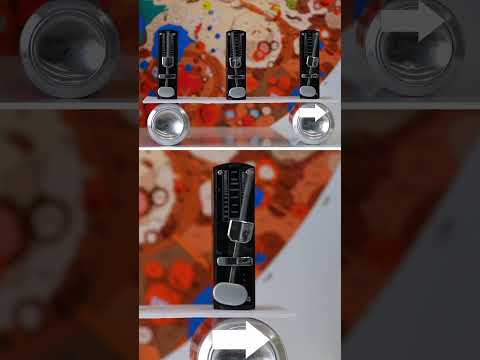
When two or more metronomes are placed on a light, wobbly platform, they tend to synchronize because the platform moves in response to their collective motion. When metronomes are in sync, their coordinated acceleration pushes the platform in the opposite direction, keeping the system's center of mass roughly stationary. If a metronome is out of sync, the platform's movement—dominated by the majority—delivers a corrective impulse every half swing, gradually adjusting its timing until it aligns. This mechanism scales to many metronomes: the platform simply moves in whichever direction the majority are pushing at any moment, ensuring eventual synchronization even if the metronomes have different natural frequencies.
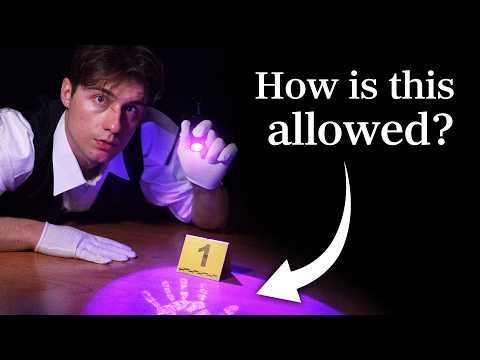
A 2009 National Academy of Sciences report concluded that, aside from nuclear DNA analysis, no forensic method has been scientifically proven to reliably link evidence to a specific individual. This finding is supported by decades of flawed practices. For instance, FBI microscopic hair analysis produced a 96% false match rate in 268 cases, leading to wrongful convictions and executions. Bite mark analysis, still admissible in courts worldwide as of 2025, has no scientific foundation, as studies show skin distorts impressions. Even fingerprint analysis is vulnerable to conformity bias, as seen in the 2004 Brandon Mayfield case, where examiners confidently matched a print to the wrong person. While modern DNA analysis is highly sensitive, it introduces new risks: in 2012, paramedics accidentally transferred a homeless man's DNA to a murder victim, resulting in a false arrest and death penalty charges. Furthermore, DNA mixtures from multiple individuals are prone to error; a 2013 NIST study found that 69% of labs incorrectly analyzed a four-person sample. The episode highlights a systemic failure in forensic science, where techniques lacking rigorous validation have been used for decades, and even advanced methods like DNA require careful interpretation to avoid miscarriages of justice.
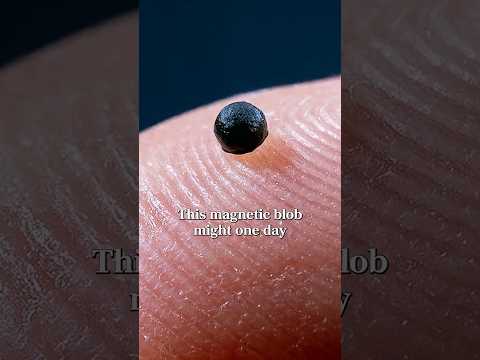
Researchers at ETH Zurich have developed a magnetic gelatin blob wrapped in an iron oxide coating that can be injected into the bloodstream and guided to brain tumors using low-strength magnets, reaching speeds of up to 80 cm per second. Once at the tumor site, alternating magnetic fields cause the blob to deform, heat up, and dissolve, releasing the drug precisely where needed. This targeted approach aims to replace broad chemotherapy, which the researchers compare to "using a grenade to kill a mosquito." In university trials, the system achieved drug dosages 7,000 times lower than conventional chemotherapy, a dramatic reduction made possible by delivering the drug directly to the tumor rather than throughout the body. While these claims require further verification, the technology represents a potential shift toward far more precise, less toxic cancer treatments.

This episode traces the long and winding path toward proving the twin prime conjecture—the idea that there are infinitely many pairs of primes separated by just two numbers. While empirical evidence and the Hardy-Littlewood heuristic strongly suggest the conjecture is true, a rigorous proof has remained elusive. The narrative highlights key milestones: Viggo Brun’s early sieve work, which shifted the goal to proving results about "almost-primes"; the 2005 breakthrough by Goldston, Pintz, and Yildirim, who showed primes can be arbitrarily close as a fraction of the average gap but could not achieve a fixed bounded gap; and the critical insight by Yitang Zhang in 2013, who, working in obscurity, pushed past a perceived mathematical barrier to prove a bounded gap of 70 million. This was rapidly improved by the Polymath project and independently by James Maynard, who revealed that the long-assumed "half barrier" was an artifact of previous methods, not a fundamental limit. The episode weaves together the mathematical challenges—from sieves and error terms to the need for rigorous proof over heuristic evidence—with the human stories of the mathematicians, including Zhang’s unconventional path from a Subway job to a landmark publication in the Annals of Mathematics.
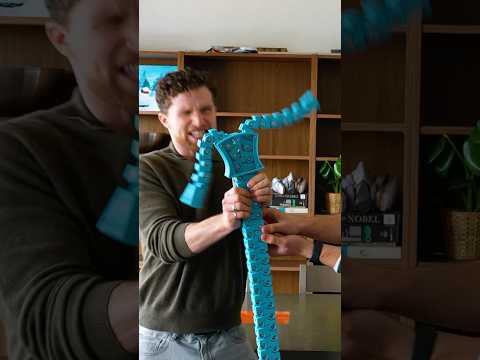
The video demonstrates the surprising strength of zippers, showing that they cannot be pulled apart by hand due to their precise engineering. Invented by Gideon Sundback in the 1910s, the manufacturing process takes Y-shaped metal wire, slices it into pieces, and presses each piece to create an indent on one side and a bump on the other before clamping the arms onto fabric. The resulting teeth are spaced so precisely that there is no room for the nibs to separate, which is the key to their durability. However, the video also highlights a significant vulnerability: zipper locks on suitcases can be bypassed by inserting a ballpoint pen between the teeth to create an opening, making them unreliable for security. The overall theme blends mechanical engineering insights with a practical warning about the limitations of zipper-based locks.
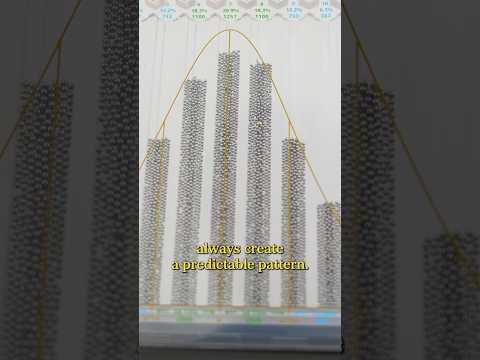
The episode explains how randomness at an individual level can produce predictable patterns at a collective level, using the Galton board as a central example. In the board, each ball bearing follows an unpredictable random walk with a 50/50 chance of bouncing left or right at each peg. Yet when thousands of balls are released, they reliably form a normal distribution centered in the middle, because the number of possible paths to the center is far greater than the single path leading to either extreme edge. This principle of emergent predictability was applied to financial markets by Louis Bachelier, who modeled a stock price as a ball moving through a similar system, where each layer of pegs represents a time step. Over short periods, the price can only move a little, but over longer periods, a wider range of prices becomes possible, forming a normal distribution that spreads out over time. Bachelier discovered that his equation for the "radiation of probabilities" was mathematically identical to Joseph Fourier's heat equation, linking the diffusion of stock prices to the physical diffusion of heat. The key claims—the 50/50 chance at each peg, the path count explanation for the normal distribution, and the equivalence of Bachelier's equation to Fourier's heat equation—are all verified with high confidence.

The episode explores the evolution of traffic control systems, starting with the first traffic light, which required a police officer to manually rotate colored glass panes in front of a gas lamp and exploded after just one month. Modern systems use inductive loop sensors buried in the road that act like metal detectors to sense waiting vehicles, but they can only detect a few cars at a time. More advanced camera-based systems now count vehicles in real time, allowing entire networks of lights to coordinate and adjust dynamically to keep traffic flowing. The episode draws a parallel to Anker Prime's PowerIQ 5.0 technology, which identifies each device's power needs upon connection, assigns the correct wattage, and rechecks every two minutes to optimize power distribution, adjusting output immediately if anything seems abnormal.
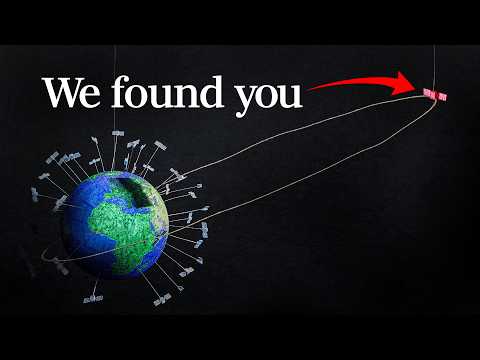
In November 2024, researchers investigating unusual GPS signal drops across Europe discovered that since 2019, signal-to-noise ratios had simultaneously dropped by a factor of ten on 75 days, affecting areas from Svalbard to Spain and as far west as Canada. The pattern pointed to a source near Poland or Kaliningrad, but the continental scale ruled out ground-based interference; geometric calculations showed the source must be at least 1,200 kilometers up, higher than the International Space Station, leading to the conclusion that only a satellite could cause such widespread disruptions. Solar interference was ruled out because the events were abrupt bursts lasting three to five seconds, confined to a narrow 5 MHz slice of the GPS band, and consistently centered over Europe rather than the entire sunlit side of Earth. By requiring a satellite to be above the horizon for all affected stations simultaneously, researchers eliminated over 98% of 15,000 active satellites, narrowing suspects to about 200, then to 14 after further filtering. One candidate, an Algerian satellite, was ruled out because its signal also dropped during events, indicating it was a victim, not the source. Breaking the assumption that a single satellite caused all events expanded the search to potentially 100 or more satellites, prompting researchers to design specialized receivers to capture raw radio signals at higher temporal resolution for better pinpointing. The video also highlights broader vulnerabilities in GPS, including threats from severe solar events and the Kessler effect, and advocates for a resilient PNT architecture combining space, terrestrial, and fiber optic signals. Countries like South Korea, China, and the UK are already building backup networks using fiber optics and eLoran, while GPS spoofing—affecting over 1,500 flights daily and causing ships to appear in impossible locations—represents a growing, systematic threat.
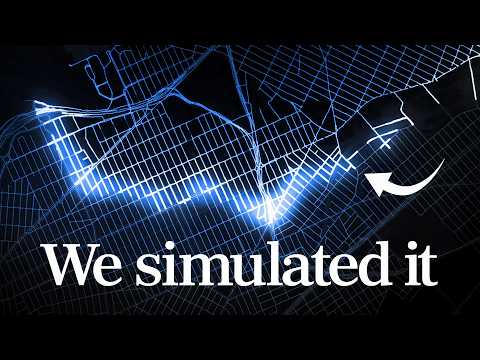
The episode explains how Google Maps achieves remarkably fast route calculations despite the astronomical scale of the problem—the North American road network has over 64 million intersections, with roughly 10^220 possible routes from New York to San Francisco. It traces the origin of Dijkstra's algorithm, conceived by Edsger Dijkstra in 1956 during a shopping trip in Amsterdam, which efficiently finds the shortest path by always exploring the nearest unvisited node. Early GPS systems in the 1990s used manually annotated road hierarchies to run a bi-directional Dijkstra that prioritized major roads, reducing the search area. Google Maps improves on this by automatically pre-processing the graph to order nodes by importance, measured by how many shortest paths include them. For example, a bridge connecting two towns becomes more important as the towns grow, and a small set of nodes that splits the graph—such as 102 bridges over the Mississippi River in the North American network—receives the highest rank, as any coast-to-coast trip must pass through one. The episode also highlights the trade-off between preprocessing and query runtime: a massive lookup table of all shortest paths would require over a decade of compute and more than eight petabytes of data, while being brittle to road changes. Google Maps strikes a middle ground, achieving very fast queries with moderate preprocessing.